




Silver Plated Bonbon Basket
A silver plated bonbon basket brings delicate colour and pierced metalwork to the table, offering a refined way to serve sweets.
Silver Plated Bonbon Basket
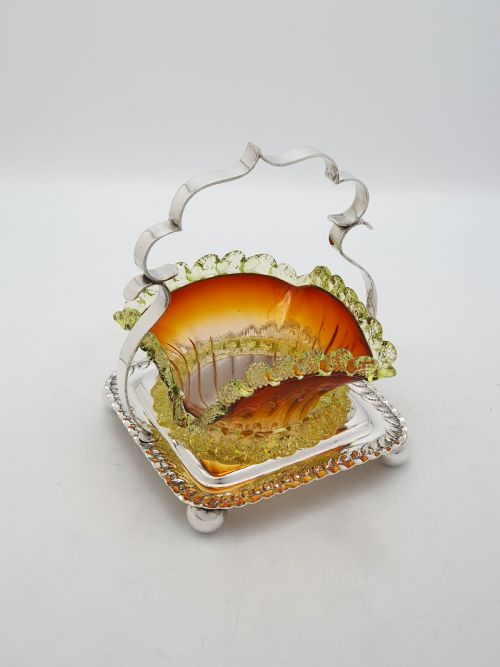
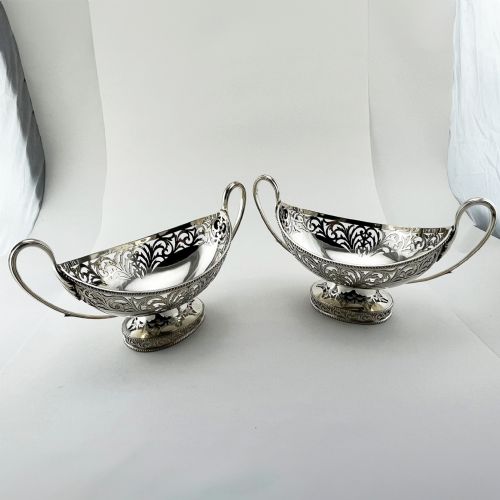
A silver plated bonbon basket is a decorative receptacle intended for serving confectionery, sweetmeats, or small preserves at the dining table. These pieces often take the form of small bowls, swing-handled baskets, or pierced vessels designed to hold brightly coloured glass liners.
The selections available here span several distinct periods, most notably the Victorian and Edwardian eras, alongside earlier Georgian and 18th Century examples in Old Sheffield plate. Stylistic influences range from the flowing lines of Art Nouveau and the Aesthetic Movement to classic Victorian decorative motifs.
Makers utilised various metals and glass types, pairing silver plate and copper with cranberry, vaseline, ruby, amber, and pink opaque glass inserts. Form and function merge in these tablewares, which served as both practical serveware and decorative centrepieces.
Materials and construction
Makers created the metal frameworks using silver plate or Old Sheffield plate, frequently applying a gold wash to the interior surfaces for a rich tone. Piercing techniques formed intricate openwork patterns along the bowls and rims, allowing the coloured glass liners to show through.
Coloured glass elements, such as cranberry, vaseline, and amber glass, were blown or moulded into frilled, fluted, or smooth liners that fitted snugly into the metal stands. Swing handles and reeded mounts were attached securely to complete the portable baskets.
Materials recorded across the inventory include silver plate, copper, gold wash, and coloured glass such as cranberry, vaseline, and amber.
Distinctions in quality
Quality rests upon the crispness of the metal piercing, the weight and uniformity of the silver plate, and the integration of the glass liner. Finer baskets display balanced proportions, clean soldering, and crisp detail in decorative handles and rims.
The glass liners themselves separate the ordinary from the exceptional, particularly where unusual colours like vaseline or rich cranberry glass retain their depth and smooth, undamaged rims. Designer involvement, such as pieces by Dr Christopher Dresser or production by notable firms, elevates the standing of an individual basket.
Thomas Bradbury·Roberts and Belk·W M F
The Silver Plated Bonbon Basket Glossary
- Old Sheffield plate
- An early form of plated metal produced by fusing a sheet of silver to a copper core before rolling into sheets.
- Cranberry glass
- A rich red-pink transparent glass created by adding gold chloride to the molten metal mix during the manufacturing process.
- Vaseline glass
- A transparent or translucent yellow-green glass that owes its characteristic hue to the inclusion of uranium oxide.
- Sweetmeat basket
- A small table vessel specifically intended for holding sweet confections, sugar-plums, or preserved fruits.
- Gold wash
- A thin layer of gold applied to the interior of a silver plated vessel to protect the metal from acidic foods.
Silver Plated Bonbon Basket: Frequently Asked Questions
What were silver plated bonbon baskets used for?
These baskets served as elegant receptacles for presenting small sweets, sugared almonds, or preserves during formal dining.
Hostesses placed them on the table as part of the dessert course or afternoon tea service, where guests could help themselves.
How do I clean the glass liners?
Wash the glass liners gently in warm soapy water using a soft cloth, avoiding abrasive pads that might scratch the surface.
Remove the glass from the metal frame before cleaning to prevent moisture from becoming trapped between the silver plate and the glass.
How do I date an Edwardian basket?
Edwardian pieces generally date from the period around 1901 to 1910, often displaying lighter, more delicate piercing than heavier Victorian items.
Stylistic cues such as late Art Nouveau curves or specific Edwardian registration marks help narrow the decade of manufacture.
What is Old Sheffield plate?
Old Sheffield plate is an early layering technique where a thin sheet of sterling silver is fused to a heavier copper base.
Items made this way often reveal faint traces of the underlying copper along edges and high points where the silver has worn thin over generations.