

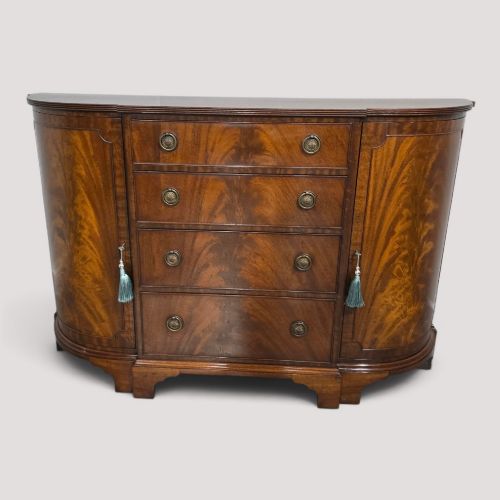
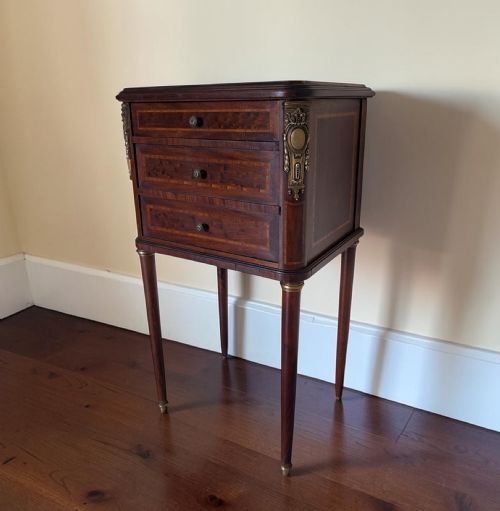
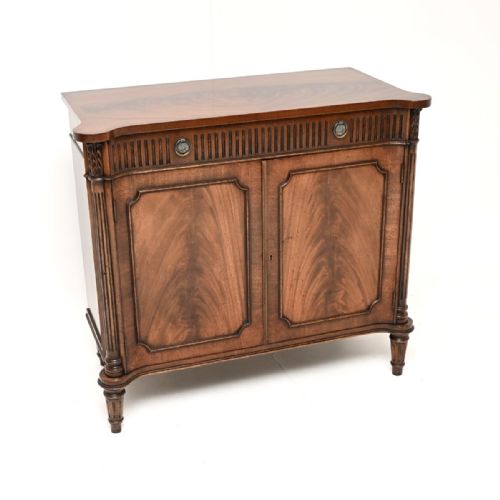
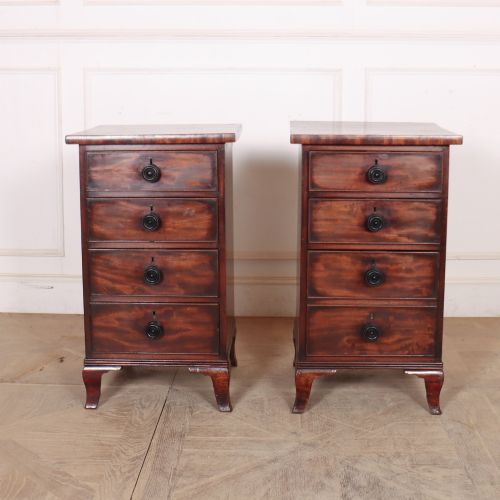
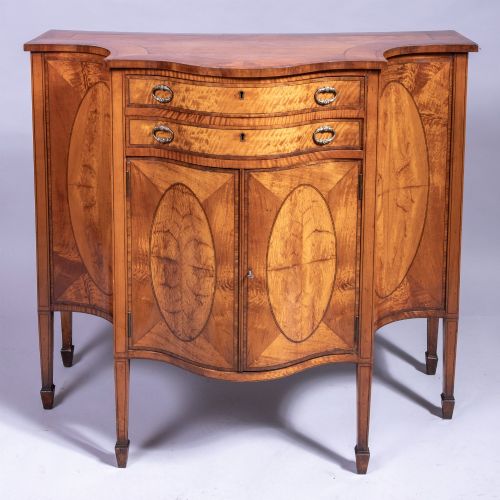
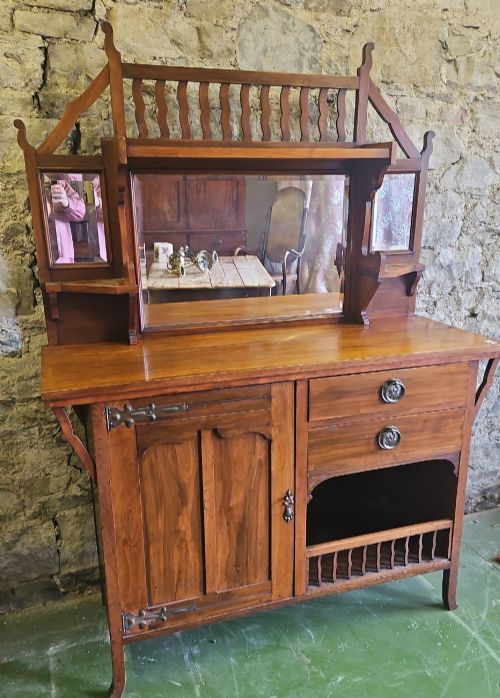

Edwardian Style Side Cabinet
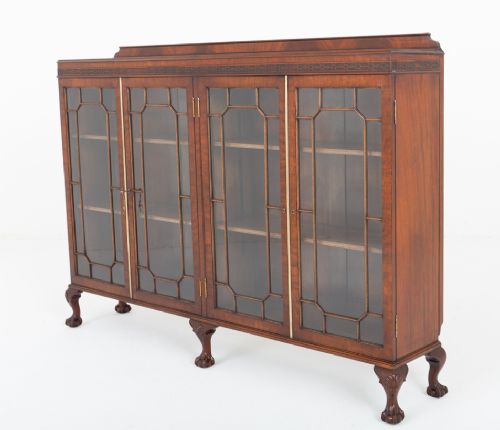
These edwardian style side cabinet examples bring mahogany, satinwood, and elaborate marquetry into the room, offering storage with refined historic revival design.
Edwardian Style Side Cabinet
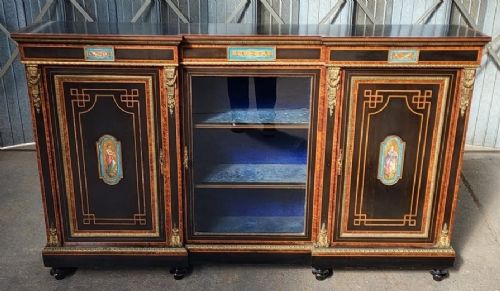
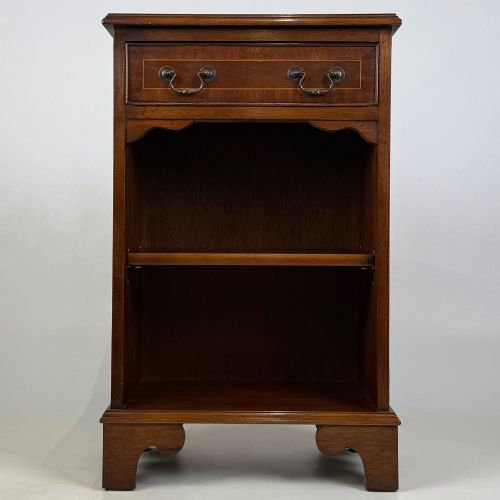
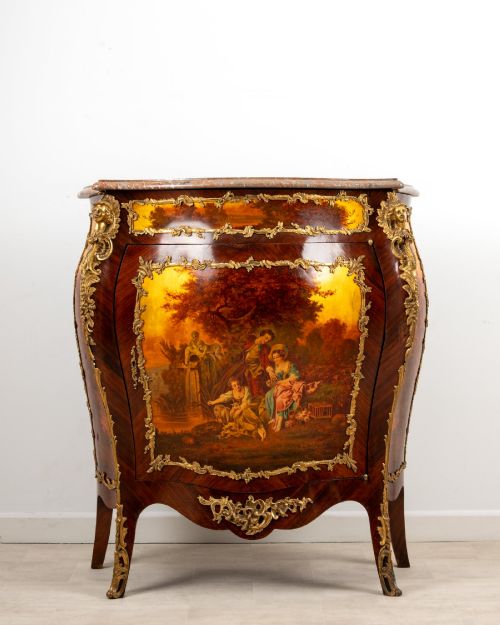
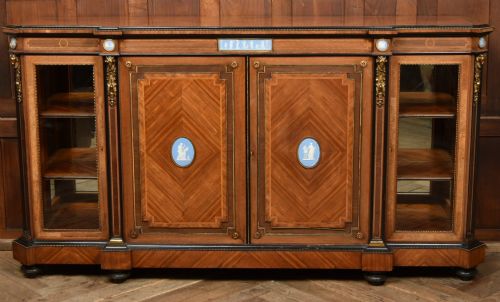
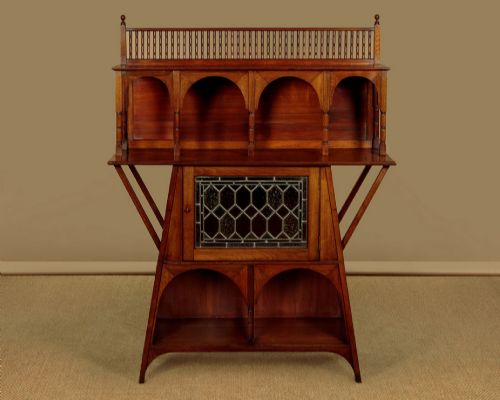
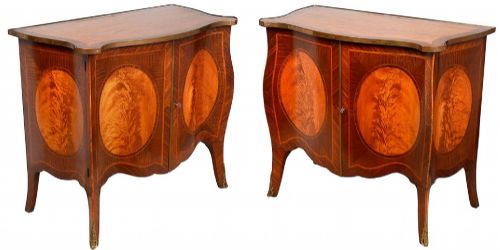
An edwardian style side cabinet spans forms from bedside tables and tall display units to serpentine commodes and low credenzas. Pieces range across the Edwardian era itself, the Victorian period, and revival decades up to nineteen thirty.
The selection includes variations in timber like burr walnut, mahogany, and satinwood alongside pieces finished in black lacquer or giltwood. Makers draw heavily on earlier vocabularies, producing items styled after Sheraton, Georgian, and Chinoiserie traditions.
Materials and Construction
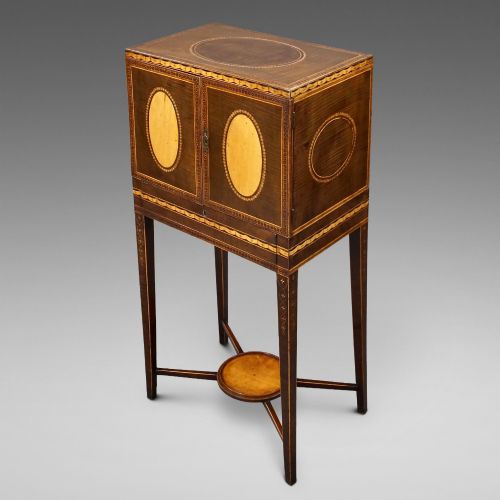
Cabinetmakers constructed carcases in solid oak, mahogany, or walnut, frequently applying fine veneers of satinwood, harewood, or rosewood to exterior surfaces. Surface ornament relies on intricate marquetry inlay, crossbanding, and hand-painted classical panels.
Metal mounts in brass and ormolu accent corners and doors, while glazed panels appear on display variants. Some items incorporate marble tops, particularly on Continental and serpentine forms.
Some cabinets hide their contents behind intricate fretwork or japanned Chinoiserie scenes depicting distant landscapes.
Assessing Quality and Execution
Quality rests in the crispness of the marquetry and the selection of timber veneers, where highly figured burr walnut or banded satinwood elevates a piece. The integration of cast ormolu mounts and finely fitted brass hardware distinguishes superior examples from plainer utility storage.
Proportion and execution of revival styles dictate distinction, separating simple vernacular items from ambitious cabinet work that closely mimics eighteenth-century prototypes.
Liberty & Co.·Maple & Co.
The Edwardian Style Side Cabinet Glossary
- Satinwood
- A durable exotic hardwood with a lustrous yellowish sheen, heavily utilised in cabinetmaking for marquetry and veneering.
- Ormolu
- Gilded bronze mounts applied as decorative highlights on furniture carcases and drawer fronts.
- Marquetry
- The art of applying small pieces of veneer to a structure to form decorative patterns and pictorial designs.
- Credenza
- A low dining room or parlour cabinet, typically enclosed by doors, originating in Renaissance Italy and revived in the nineteenth century.
- Demi-lune
- A half-moon shape characteristic of commodes and console tables designed to sit flat against a wall.
Edwardian Style Side Cabinet: Frequently Asked Questions
What is an edwardian style side cabinet?
An edwardian style side cabinet is a storage piece originating around nineteen hundred or built in later revival styles, drawing on earlier Georgian and Sheraton aesthetics.
These items serve multiple rooms as sideboards, low cupboards, or display units, constructed in woods like mahogany, satinwood, and walnut.
How do I date an edwardian style side cabinet?
Dating relies on timber choice, construction methods, and stylistic revival cues such as Sheraton or Arts and Crafts motifs.
Pieces span the Victorian era through the nineteen thirties, often blending traditional cabinetmaking with the lighter decorative preferences of the early twentieth century.
Where were these cabinets used?
These cabinets function primarily in living spaces, dining rooms, and hallways for general storage and display.
Smaller variants also serve beside beds or as lamp tables, holding domestic items while contributing to period interior schemes.
Are all these cabinets Edwardian?
The selection includes pieces from the Victorian and Edwardian periods, alongside later twentieth-century interpretations.
Revival pieces frequently replicate eighteenth-century Georgian designs, utilising period timbers and traditional marquetry techniques.