

Louis XVI Nightstand
A louis xvi nightstand brings classical French proportion and refined bedside storage into a room.
Louis XVI Nightstand
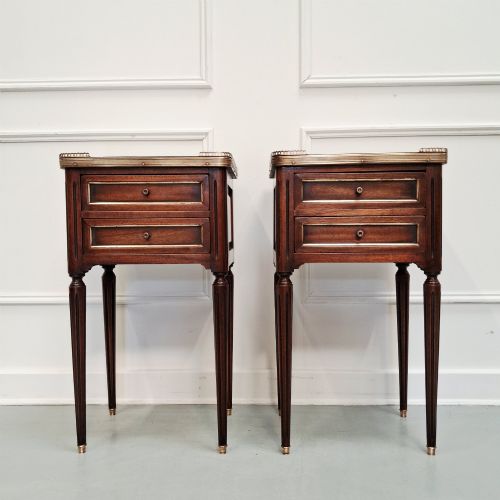
A louis xvi nightstand takes the form of compact bedside cabinets, commodes, and pot cupboards designed for functional placement beside a bed. These items emerge predominantly through nineteenth-century revival periods, alongside early twentieth-century examples shaped by French stylistic tastes.
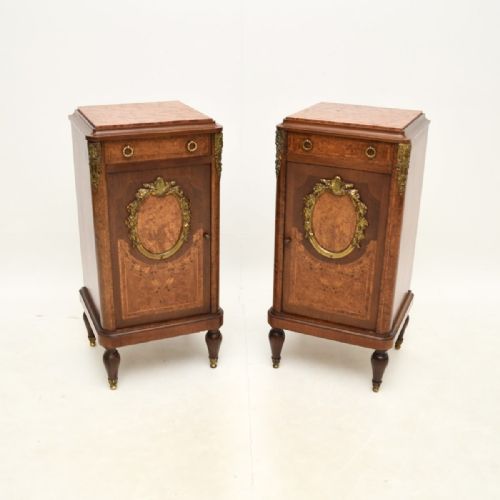
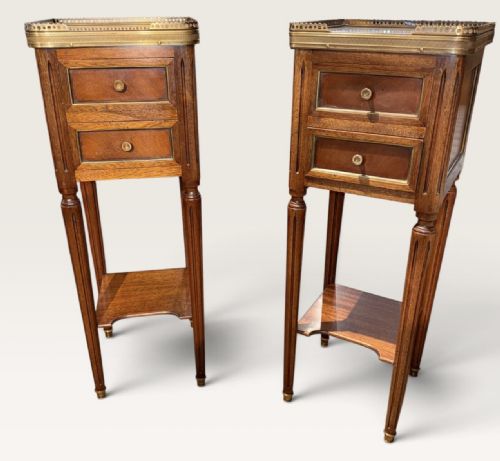
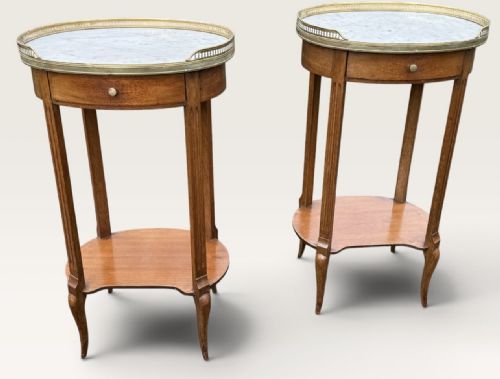
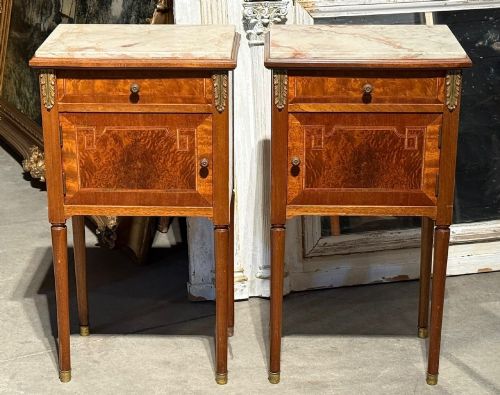
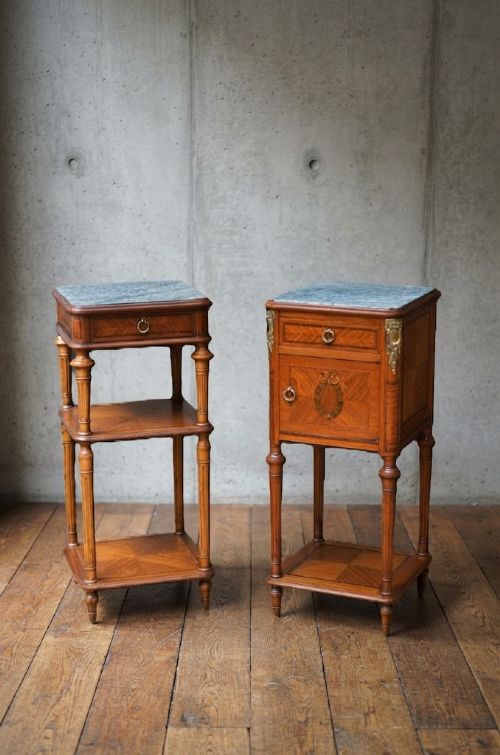
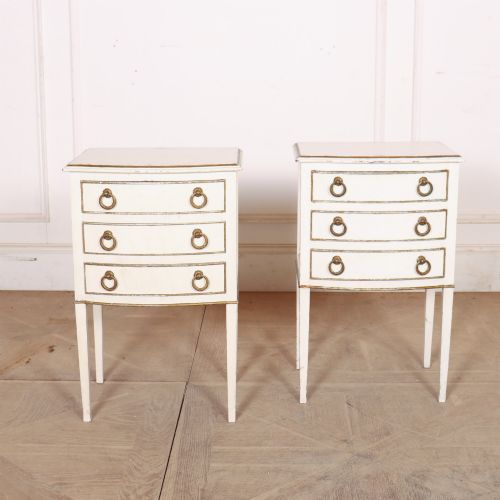
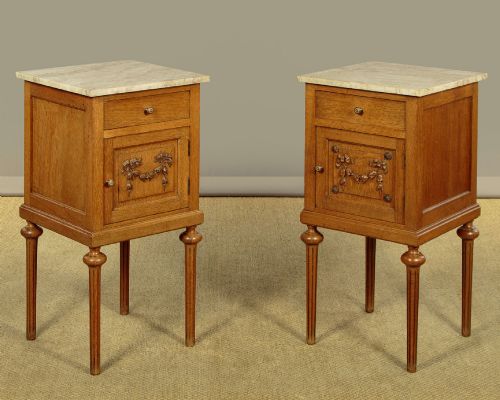
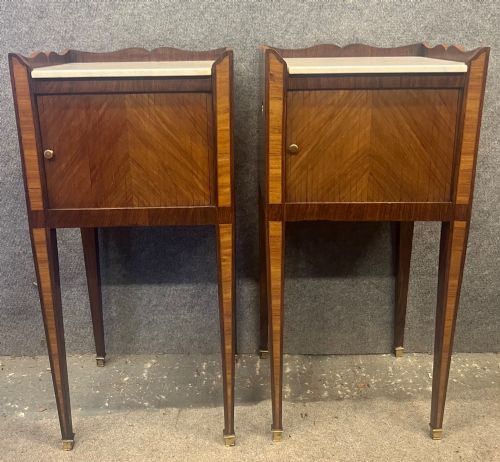
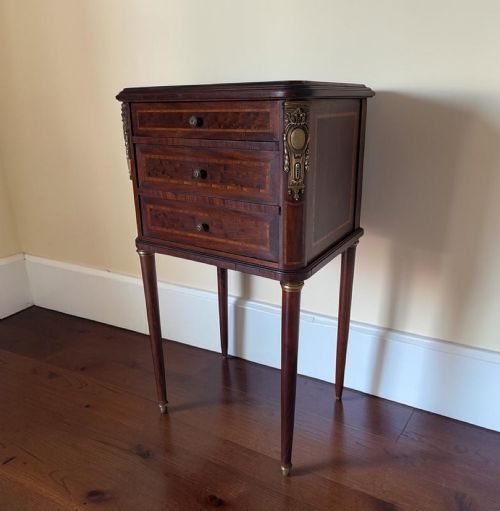
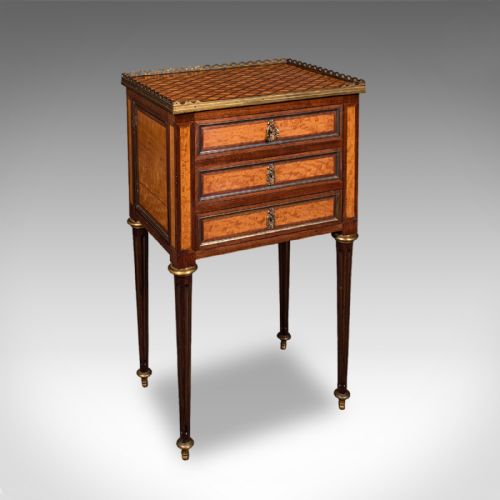
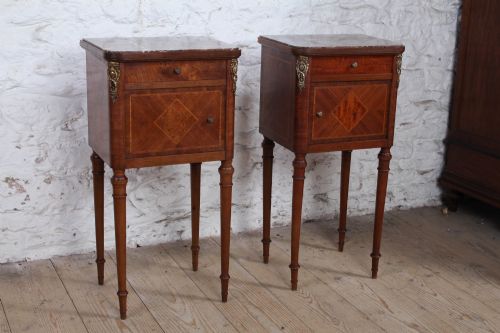
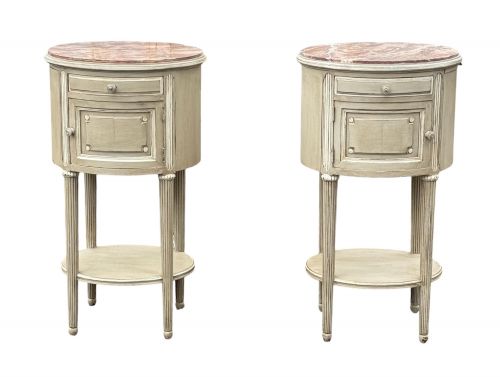
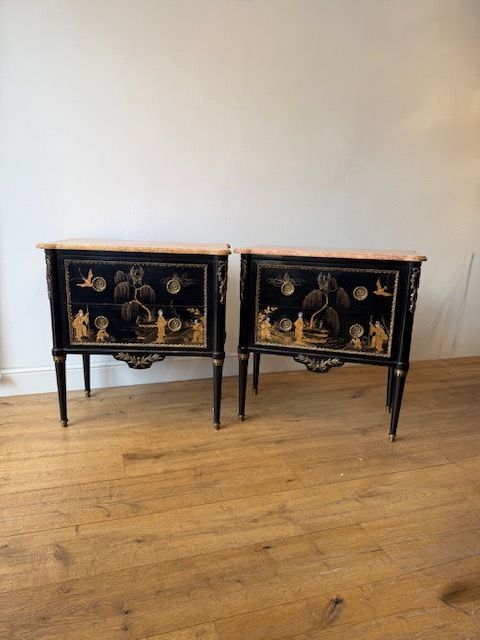
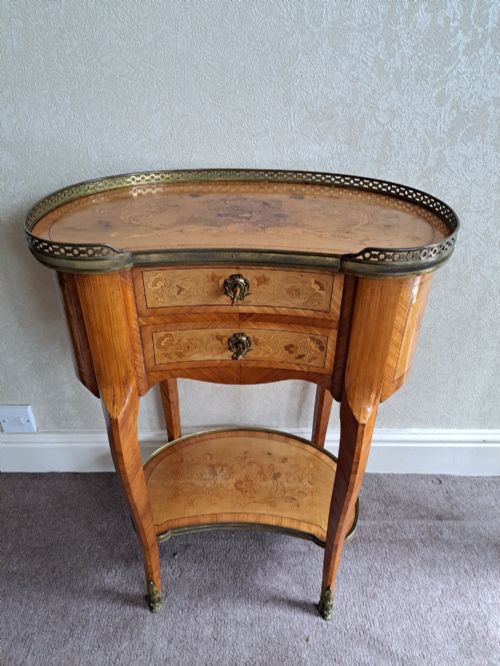
The selection here includes matched pairs alongside single items, spanning forms from marble-topped chests to marquetry lamp tables and open bedside tables. Buyers encounter diverse regional interpretations, from formal revival pieces to painted provincial furniture.
Makers and workshops construct these small tables as functional storage units with drawers, cupboards, and surfaces suited for domestic chambers. The forms reflect historical French design motifs adapted for Victorian and Edwardian interiors.
How they were made
Cabinetmakers build carcases using solid timbers such as mahogany, walnut, and oak, often applying decorative veneers of kingwood, satinwood, rosewood, burr, fruitwood, and tulipwood. Surface decoration frequently incorporates intricate marquetry and parquetry patterns arranged in geometric or floral designs.
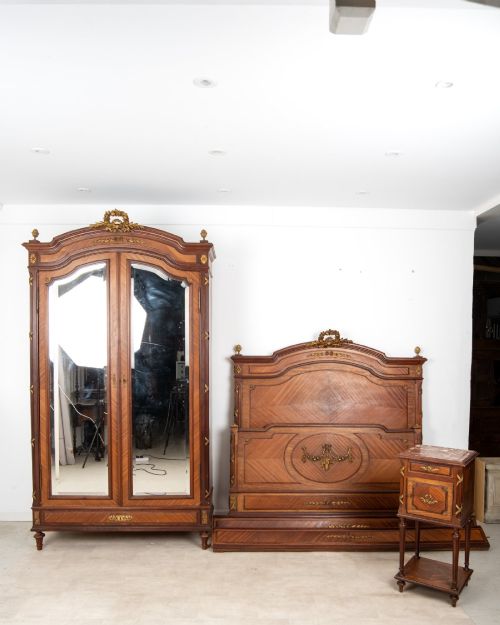
Many examples incorporate inset marble tops and mounted cast brass, ormolu, and gilt metal details around drawer edges, aprons, and legs. Workshops also produce painted and lacquered finishes, including chinoiserie designs on select bedside chests.
Louis XVI Nightstand Retail Price Guide 2026
Typical asking prices for louis xvi nightstand among the pieces listed under this phrase on Sellingantiques today, from the lower quarter to the upper quarter. They describe what is for sale here now, not the wider market.
Listings feature woods including mahogany, walnut, kingwood, satinwood, rosewood, and oak, alongside marble and brass.
What varies in quality
The standard of timber selection and the precision of veneer work dictate the visual depth of the cabinet, particularly where multiple exotic woods meet in marquetry panels. Heavy figuring in walnut or careful grain matching in satinwood and kingwood signal superior material choice.
The integration of mounts and stone elements separates standard production from finer pieces. Cast bronze ormolu mounts that fit flush against the wood contours and substantial, well-polished marble slabs indicate attentive workshop execution.
François Linke
The Louis XVI Nightstand Glossary
- Ormolu
- Gilded bronze mounts applied to furniture. This decorative technique adds metallic highlight to corners, handles, and aprons.
- Marquetry
- Fitted wood veneers forming pictorial or geometric patterns. Artisans cut thin slices of contrasting timbers to create these detailed surface designs.
- Parquetry
- Geometric wood veneer patterns resembling mosaic work. This technique uses small pieces of timber to construct repeating diagonal or checkerboard arrangements.
- Commode
- A low standing chest of drawers or cupboard. In bedroom settings, these function as substantial bedside cabinets or small storage chests.
- Pot cupboard
- A small enclosed bedside cabinet originally designed to house a chamber pot. These pieces usually feature a door opening to a shelved interior.
Louis XVI Nightstand: Frequently Asked Questions
What is a louis xvi nightstand?
A louis xvi nightstand is a small bedside cabinet or table inspired by eighteenth-century French classical design. These pieces provide surface space and enclosed storage beside a bed.
Most examples found today date from the nineteenth and early twentieth centuries, reflecting revival periods that favoured symmetrical lines and restrained ornamentation.
How do I use a nightstand in a modern bedroom?
These compact cabinets fit easily beside standard bed heights, offering practical surface space for lamps and personal items. Enclosed cupboards and drawers keep bedside essentials concealed.
Pairs allow for symmetrical placement on either side of a bed, while single tables serve effectively as lamp stands in corners or smaller guest rooms.
How can I tell the period of a bedside cabinet?
Dating relies on timber preparation, construction joints inside drawers, and the style of hardware mounts. Nineteenth-century pieces often display hand-cut dovetailing and dense hardwood carcases.
Revival furniture from the Victorian and Edwardian eras adopts eighteenth-century French motifs but utilises nineteenth-century joinery methods and secondary woods.
Are these tables usually found in pairs?
Many bedside cabinets appear as matched pairs because bedrooms traditionally utilised symmetrical furniture arrangements. Single tables also occur frequently in the inventory.
Pairs often feature handed construction, meaning the door hinges or drawer configurations mirror each other for balanced placement.