

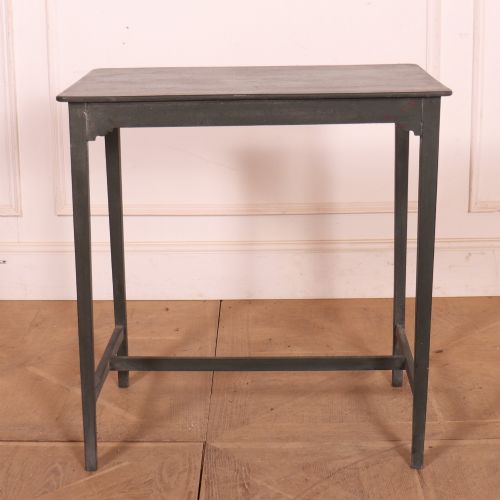


Vintage Tall Nightstand
A vintage tall nightstand solves the bedside storage problem with vertical reach, bringing compact utility and period character to the bedroom.
Vintage Tall Nightstand
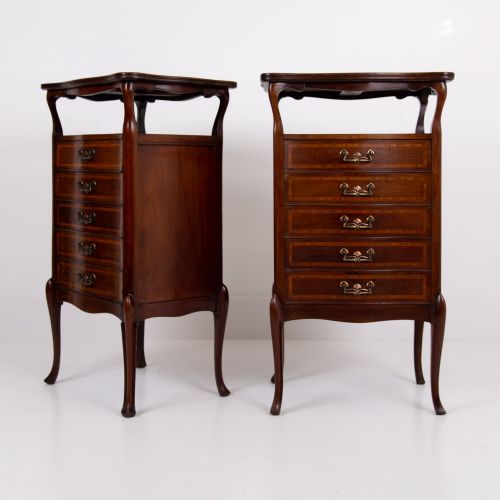
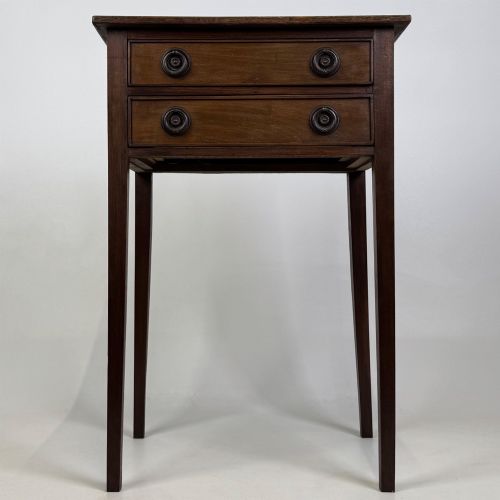
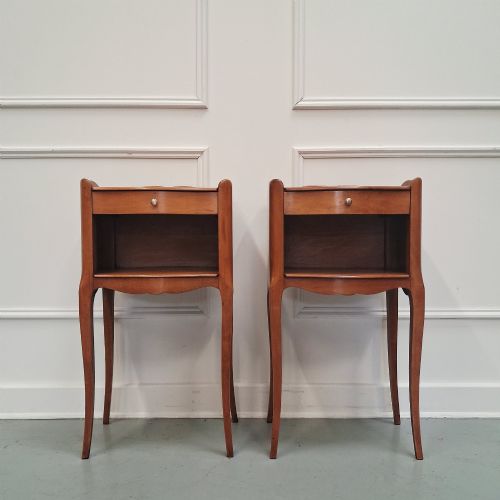
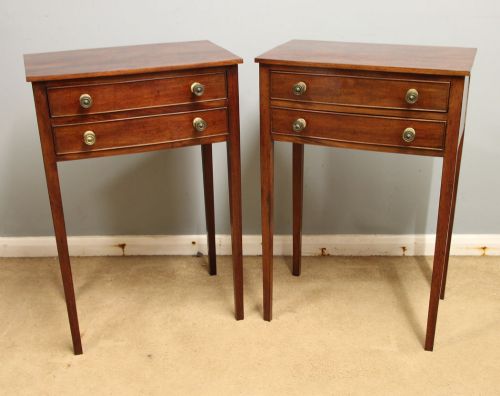
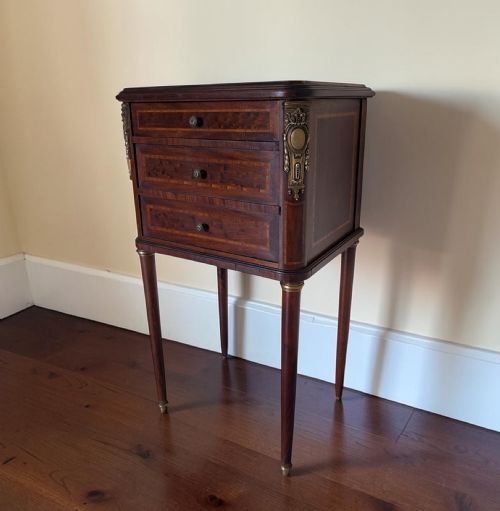
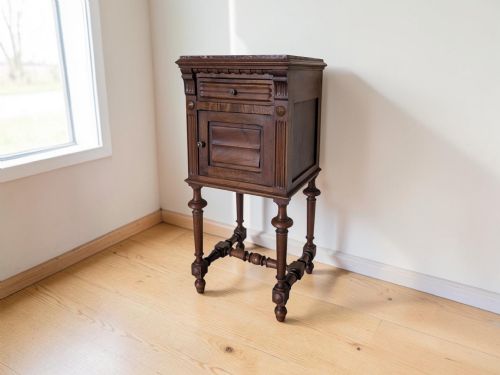
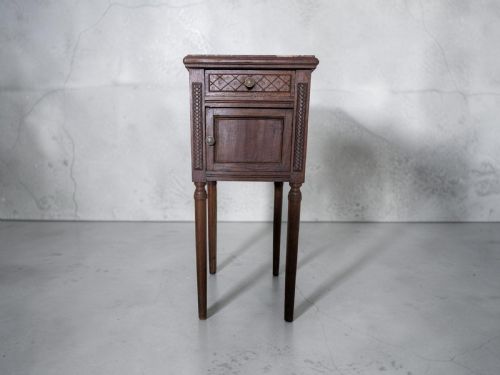
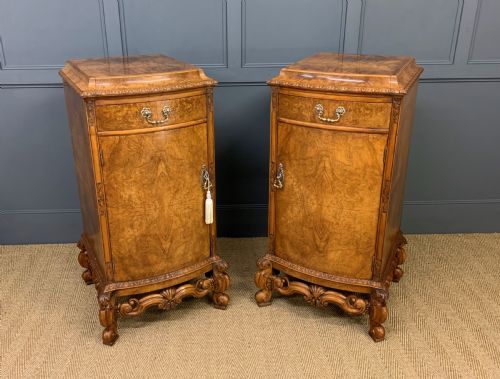
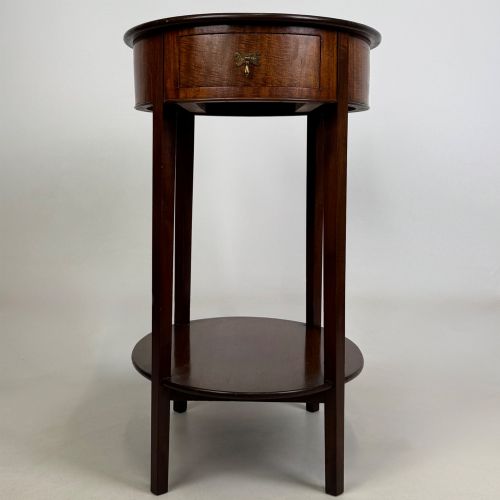
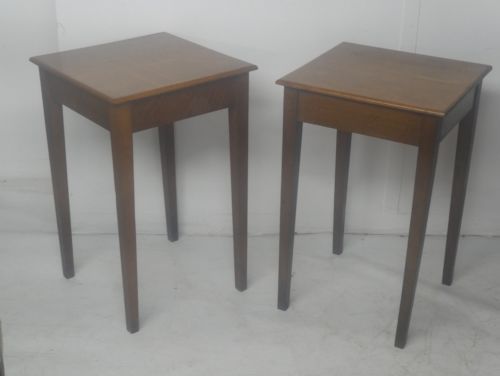
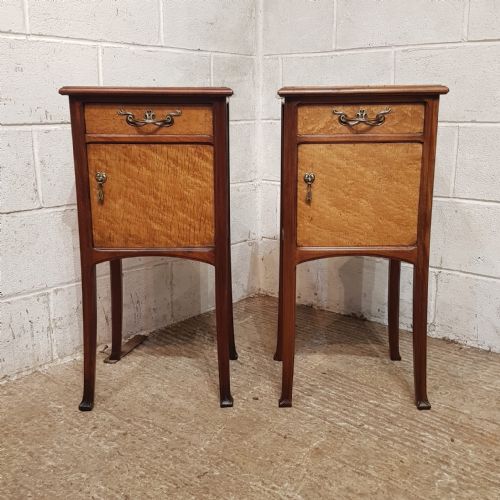
A vintage tall nightstand brings compact vertical storage to the bedside through forms such as bedside cabinets, pedestal cupboards, and narrow bedside chests of drawers. These pieces date from periods ranging from the Victorian era and Edwardian times through to the 1930s, offering elevated surfaces alongside enclosed cupboards or stacked drawers.
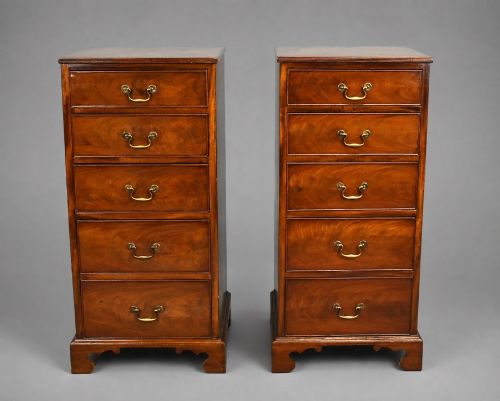
The selection on this page centres heavily on matching pairs and individual pieces originating from English, French, and Scottish workshops. Forms span from simple mahogany pot cupboards to elaborate French provincial designs and geometric Art Deco models.
Buyers seeking a vintage tall nightstand encounter diverse stylistic interpretations, including French Louis XV influences, Georgian styling, and parquetry veneers. These taller formats provide generous storage footprints without demanding excessive floor space in smaller rooms.
How they were made
Cabinet makers utilised dense hardwoods such as mahogany, walnut, oak, rosewood, and yew wood for the primary carcases and frames. These timbers were frequently enhanced with intricate decorative techniques including floral marquetry, parquetry veneer work, and tambour fronts.
Surface detailing often incorporates contrasting materials like marble tops, brass mounts, and inlaid wooden banding. Construction methods rely on traditional joinery to support tall, narrow proportions while housing multiple internal drawers or enclosed cupboard spaces.
Current listings feature pieces constructed from mahogany, walnut, oak, rosewood, and yew wood, incorporating marble and brass details.
What varies in quality
Quality in these pieces depends heavily on the precision of the timber matching and the execution of surface decoration like marquetry and parquetry. Superior examples display seamless grain continuity across drawer fronts and cabinet doors, alongside crisply rendered brass hardware and well-fitted joints.
Proportion and structural integrity dictate the distinction between standard utility items and finer cabinetwork. Taller forms require careful balancing to ensure stability, making the weight and density of the chosen wood, whether solid mahogany or figured walnut, critical to the overall execution.
The Vintage Tall Nightstand Glossary
- Pot cupboard
- A compact bedside cabinet originally designed to house a chamber pot behind a single door. These pieces often feature an enclosed interior shelf and tall proportions.
- Parquetry
- A geometric mosaic of wood pieces used for decorative veneering on tabletops and cabinet fronts. It creates patterned surfaces using contrasting timbers.
- Tambour front
- A flexible shutter door constructed from narrow vertical strips of wood glued to a canvas backing. This mechanism slides smoothly around a curved cabinet corner.
- Pedestal cupboard
- A narrow, freestanding storage unit that rises vertically with a cupboard door enclosing internal shelving. These pieces maximise storage within a minimal floor footprint.
Vintage Tall Nightstand: Frequently Asked Questions
What defines a tall nightstand?
A tall nightstand typically offers increased vertical height compared to standard low bedside tables, incorporating multiple drawers or a deeper cabinet space.
This elevated design provides greater storage capacity while maintaining a narrow footprint suited to tight bedside layouts.
How were these cabinets used?
Historically, these tall units served beside the bed to store nightwear, chamber pots, or personal items out of sight.
The top surface held lamps, books, or water jugs, while the enclosed lower section kept the bedside area tidy.
Are matching pairs common?
Many listings feature matching pairs of bedside cabinets and chests, particularly from the Edwardian and Art Deco eras.
Symmetrical pairs allow for balanced bedroom layouts when placed on either side of a bed.
What woods to expect?
Construction relies heavily on traditional cabinet timbers including mahogany, walnut, oak, and occasionally exotic veneers like kingwood.
These hardwoods were chosen for their durability and attractive grain patterns, often polished to a deep lustre.