
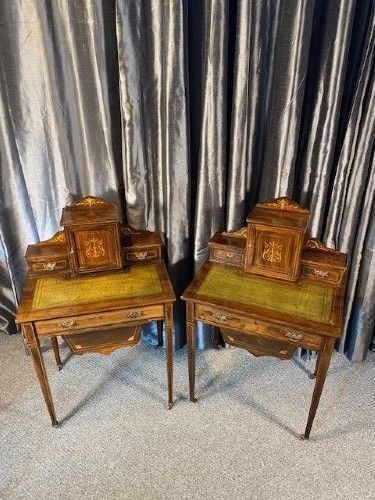
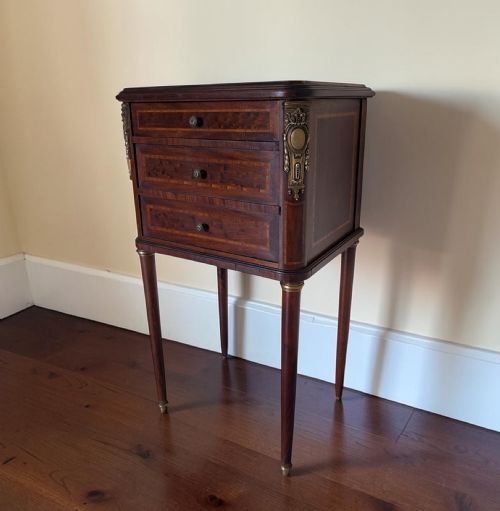
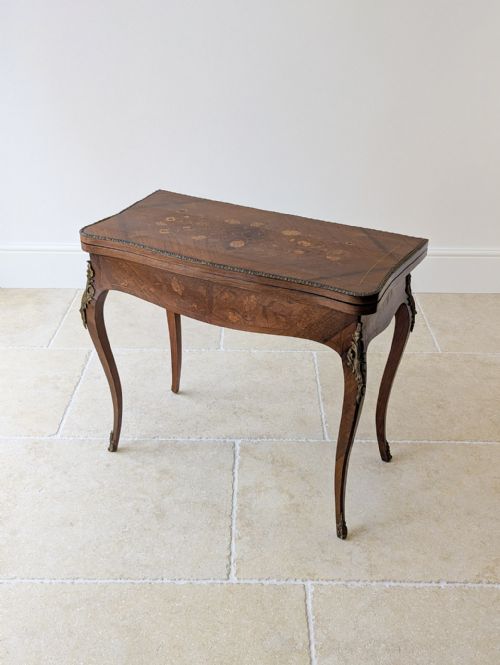
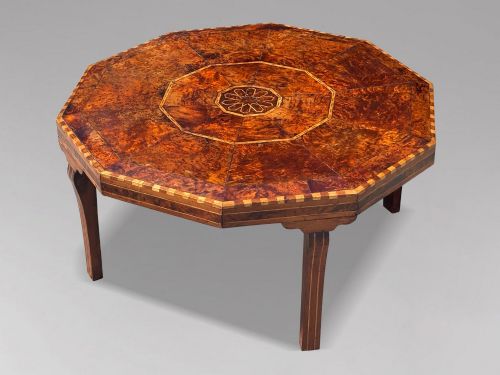
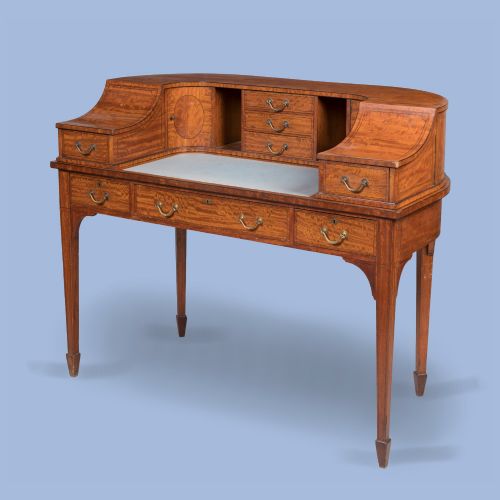


Edwardian Style Marquetry Table
An Edwardian style marquetry table brings refined inlaid detail and classic timber forms into a room, offering both practical surface space and decorative presence.
Edwardian Style Marquetry Table
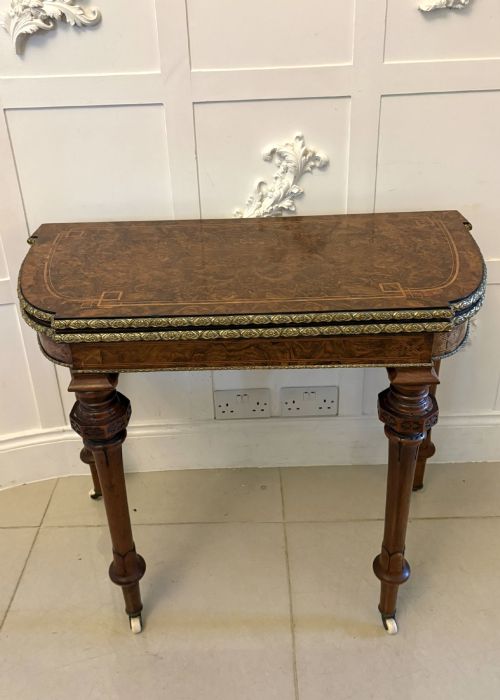
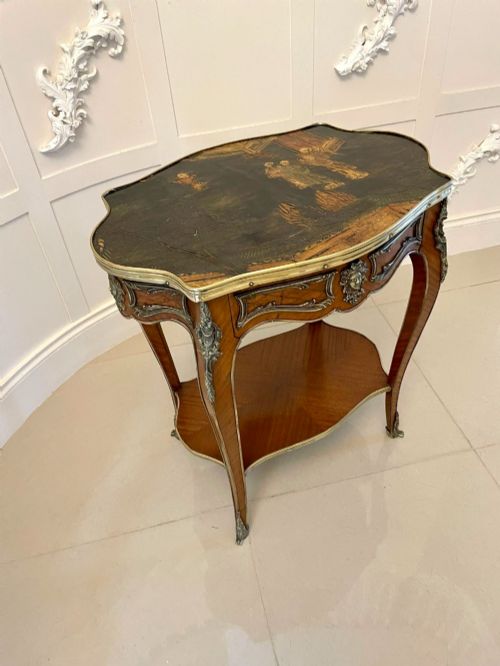
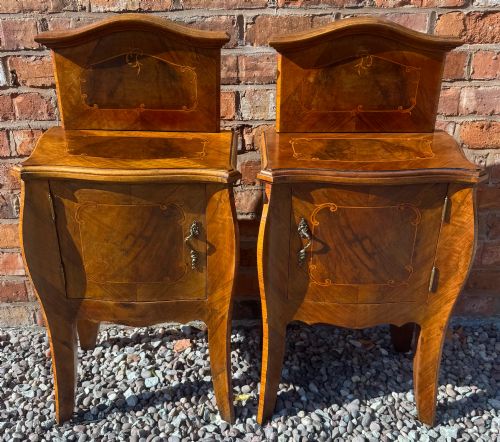
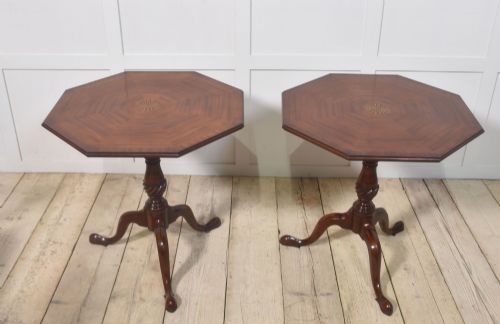
When you search for an edwardian style marquetry table, you encounter occasional tables, centre tables, and side tables that reflect revival aesthetics spanning from the nineteenth century into the twentieth. These pieces draw heavily on earlier eighteenth century vocabulary, particularly Sheraton and French Louis designs adapted by makers working in Edwardian times and the decades immediately preceding.
The forms vary from simple occasional tripod designs and quartetto nests to sophisticated serpentine shapes and oval centre pieces. Walnut, mahogany, and satinwood provide the structural and surface foundations for the elaborate decorative work seen across these examples.
Materials and Technique
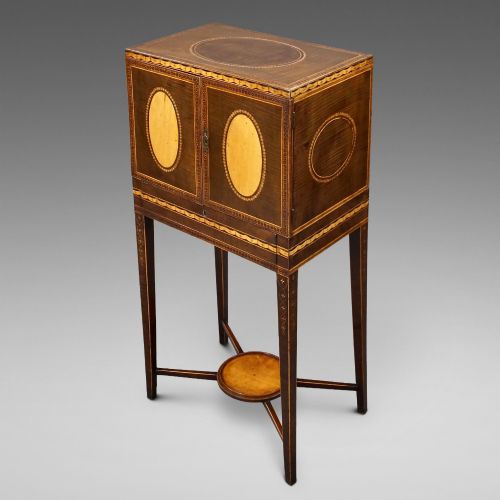
Makers utilised dense timbers such as mahogany, walnut, kingwood, and rosewood as the primary chassis for these pieces. Contrast was achieved through the application of lighter woods like satinwood, boxwood, and harewood, cut into delicate veneers for the top surfaces.
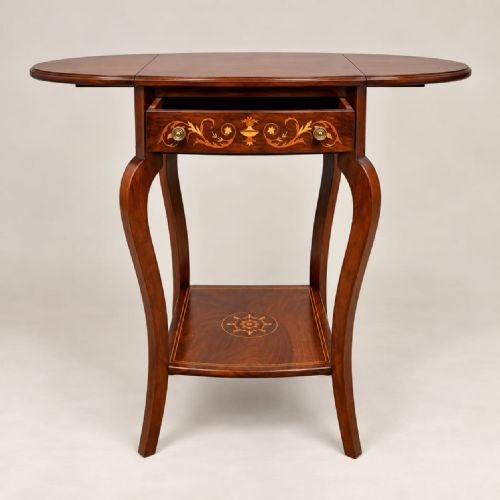
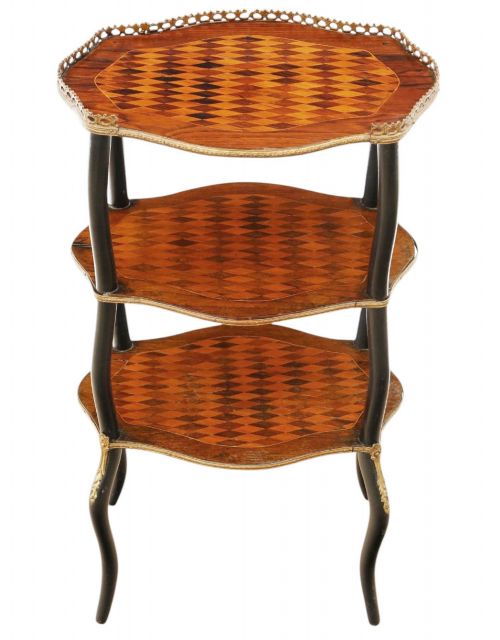
Marquetry and parquetry techniques required precise hand-cutting of diverse wood species to form floral motifs, urns, or geometric patterns. These thin wood elements were then fitted together meticulously and glued to the carcase before finishing.
Listings feature pieces spanning the Victorian, Edwardian, and 1930 periods, utilising satinwood, mahogany, rosewood, and walnut.
Defining Quality
The distinction between standard examples and the finest work lies in the crispness and complexity of the marquetry cutting and the choice of timbers. Superior pieces display intricate multi-wood pictorial inlays with tight joints and minimal filler, whilst simpler items rely on more repetitive geometric stringing.
Construction methods also separate the grades, visible in the stability of the joints, the selection of solid secondary woods, and the overall harmony of the proportions. Finer tables balance decorative surface ambition with rigorous structural joinery.
Gill & Reigate·François Linke
The Edwardian Style Marquetry Table Glossary
- Marquetry
- A decorative technique where small pieces of veneer are assembled to form pictorial or ornamental patterns on a timber surface. It differs from inlay by covering the entire background rather than being set into recesses.
- Satinwood
- A lustrous, hard timber native to Ceylon and the West Indies, prized for its golden yellow colour and reflective sheen. It was widely utilised in Sheraton Revival pieces for contrasting panels and borders.
- Ormolu
- Gilt bronze mounts applied to furniture for decorative accent and edge protection. The technique involves treating bronze with an amalgam of gold to achieve a rich metallic lustre.
- Parquetry
- A geometric mosaic of wood pieces used for floors and furniture surfaces. It creates repeating patterns like cubes or squares rather than the organic picture designs of marquetry.
- Quartetto
- A set of four graduating occasional tables designed to slide one beneath another. This form became particularly popular during the Edwardian period in satinwood.
Edwardian Style Marquetry Table: Frequently Asked Questions
What is an edwardian style marquetry table?
These pieces are decorative small tables produced during the late nineteenth and early twentieth centuries, drawing inspiration from earlier eighteenth century Sheraton and French designs. They use contrasting wood veneers to create intricate floral or geometric patterns across the top surface.
Buyers select them to add warmth, historic character, and surface utility to drawing rooms, bedrooms, or hallways without overwhelming the surrounding interior scheme.
How do I tell Edwardian from Victorian tables?
Edwardian tables often favour lighter timbers like satinwood and display a more delicate, slender proportion influenced by Sheraton Revival taste. Victorian pieces tend to lean towards darker walnut or rosewood with heavier proportions and bolder cast bronze or ormolu mounts.
Examining the secondary woods underneath and the style of the leg turning helps clarify whether a piece belongs to the late nineteenth century or the subsequent Edwardian era.
Where should I place an occasional table?
An occasional table suits positions beside seating, in small reception areas, or acting as a display surface for lamps and decorative objects. Their movable nature allows them to serve functional roles while showcasing the inlaid top.
Keep these tables away from direct heat sources and strong sunlight to protect the delicate wood veneers and natural polishing from fading or drying out over time.
How do I care for marquetry surfaces?
Maintain the timber by dusting gently with a dry, soft cloth and applying a traditional beeswax polish sparingly when the wood appears dry. Avoid commercial silicone sprays, which can penetrate hairline cracks in old veneer and soften the underlying adhesive.
Maintaining a stable room temperature prevents the wood and its foundation from expanding or contracting, which minimises the risk of veneer lifting along the delicate edges.