

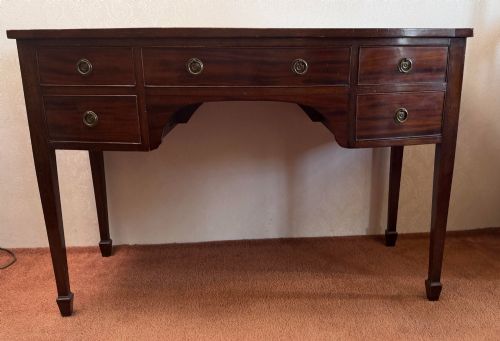
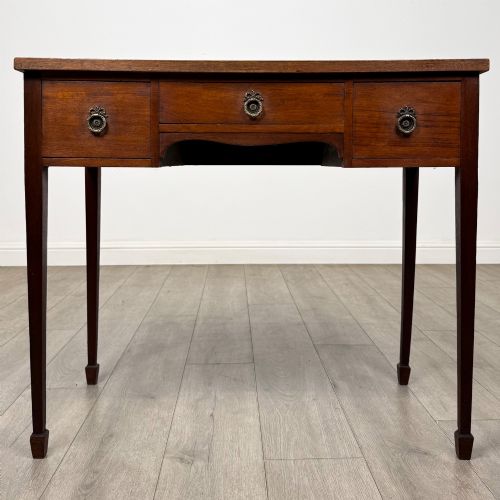
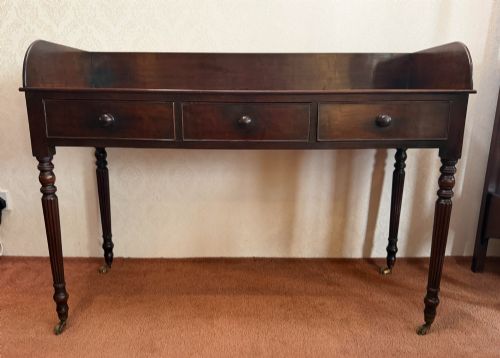
Georgian Writing Table Drawer
A georgian writing table drawer brings together period timber and practical compartmentalised storage for daily correspondence.
Georgian Writing Table Drawer
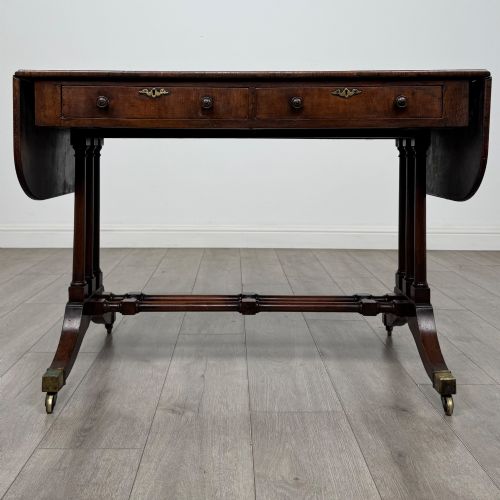
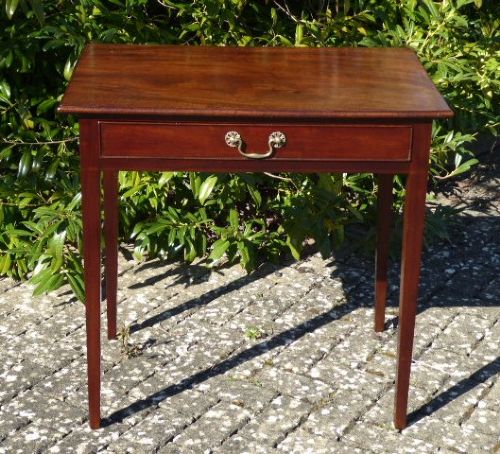
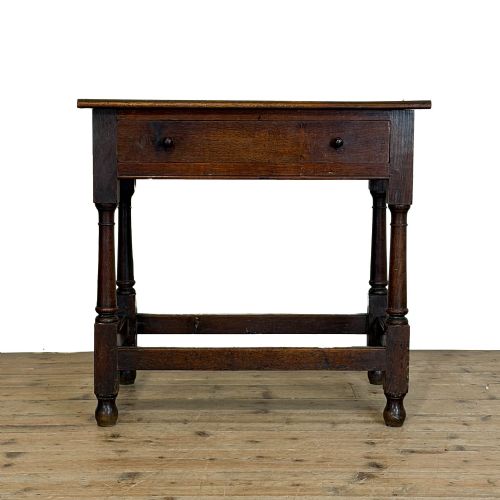
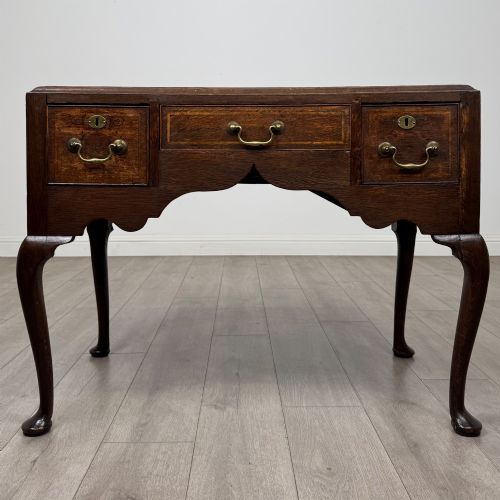
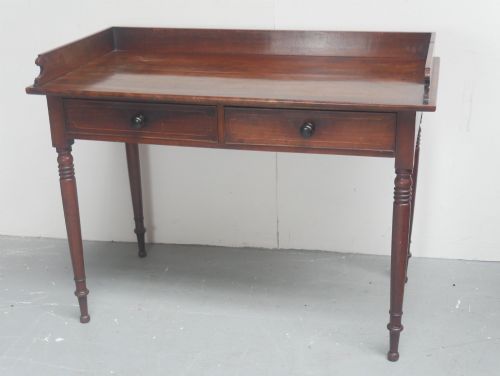
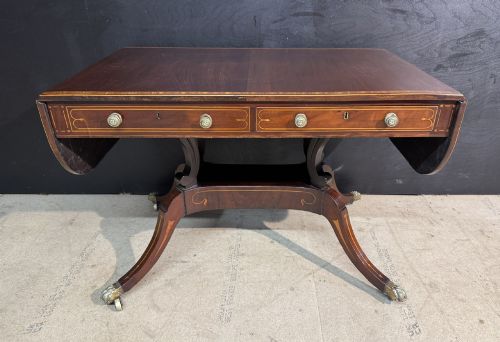
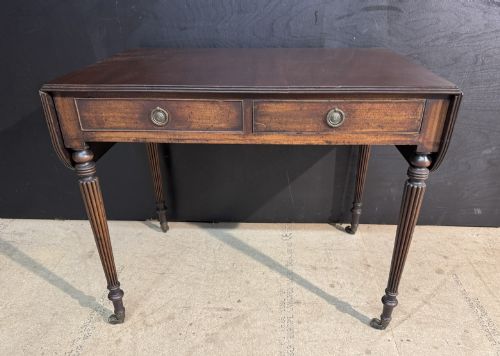
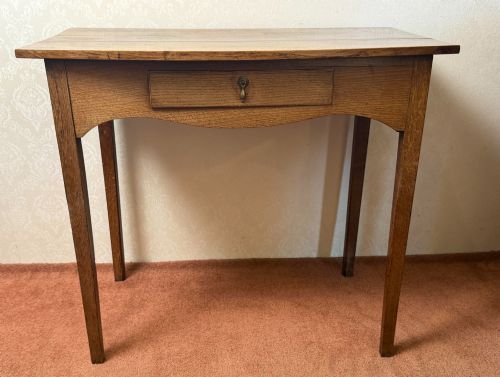
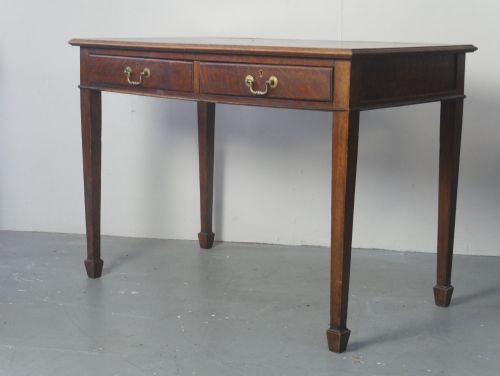
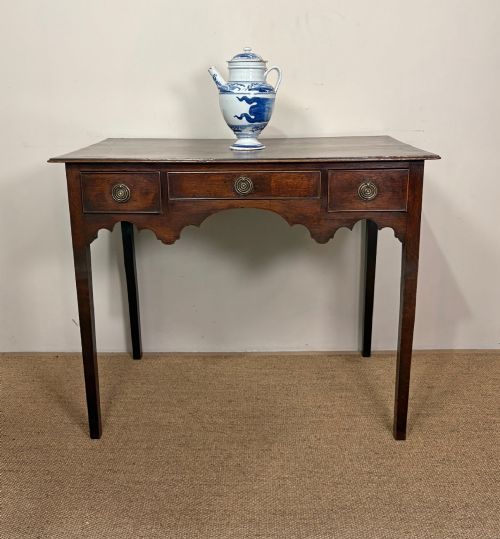
A georgian writing table drawer appears across several related forms in the evidence, including side tables, lowboys, pedestal desks, and sofa tables.
The buyer seeking a georgian writing table drawer will most frequently encounter mahogany and oak pieces from the eighteenth and nineteenth centuries.
These items originate from periods spanning the Georgian era through the Regency and into later revival styles of the early twentieth century.
Materials and Construction
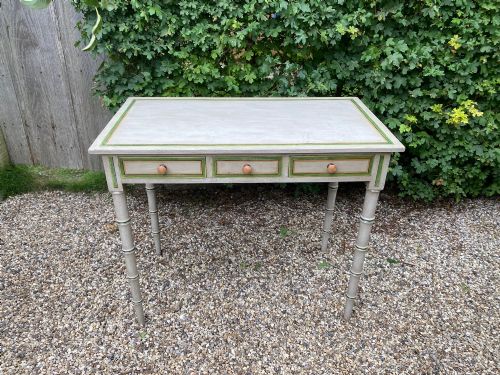
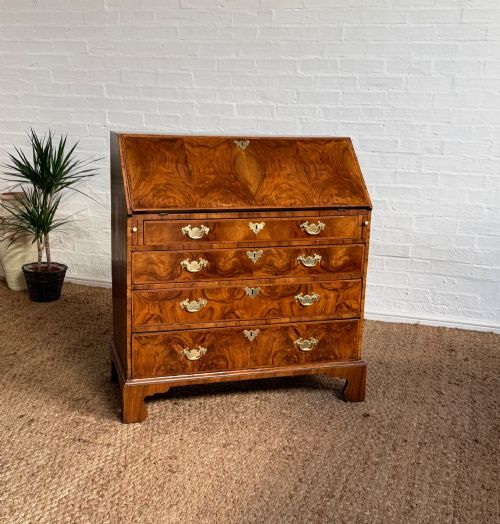
Makers utilised solid timbers such as mahogany, oak, and walnut, frequently enhancing surfaces with burr walnut veneers, decorative wood inlay, or painted faux bamboo finishes.
Writing surfaces were routinely lined with leather to provide a suitable texture for penwork, while internal drawer compartments relied on traditional joinery and brass hardware.
Some tables double as sewing stations, proving our ancestors had to multitask while dodging ink spills.
Distinctions in Standard
Quality separates through the selection of figured timber grains, such as flame mahogany or burr walnut, against plain structural woods.
Refinement shows in the crispness of the wood inlay, the retention of original brass handles, and the precise dovetailing of the drawer construction.
The Georgian Writing Table Drawer Glossary
- Lowboy
- A small table with one or more drawers, commonly used as a dressing or writing table during the eighteenth century. These pieces often stand on slender cabriole or straight legs.
- Sofa table
- A type of table designed to stand in front of a sofa, typically featuring drop leaves and two drawers. They emerged prominently during the Regency period.
- Pedestal desk
- A heavy desk comprising two box-like pedestals with stacked drawers supporting a central writing top. They frequently incorporate leather inserts.
- Faux bamboo
- A decorative technique where wood is carved or painted to resemble natural bamboo stalks. This style appears on nineteenth century occasional and writing tables.
Georgian Writing Table Drawer: Frequently Asked Questions
How do I date a georgian writing table drawer?
Dating relies on observing timber choices, construction methods like dovetailing, and stylistic indicators such as leg shapes and brass hardware.
Earlier pieces from the eighteenth century typically utilise solid oak or mahogany with hand-cut joints, while later nineteenth-century examples introduce different veneer treatments.
What were lowboys used for originally?
Lowboys served versatile functions in period homes as dressing tables, side tables, or compact writing desks with convenient drawer storage.
Their modest proportions allowed them to fit easily into smaller chambers and hallways for storing documents or personal items.
Are leather writing surfaces original?
Many writing tables and desks retain or have been refitted with leather inserts to replicate the traditional writing texture.
Original leather surfaces show patination through use, while replacements are chosen to match the period aesthetic of the timber.
How do I care for antique mahogany surfaces?
Maintenance involves keeping timber away from direct heat sources and sudden humidity changes to prevent warping.
Applying occasional natural wax helps preserve the sheen and nourishment of the wood without sealing the grain permanently.