
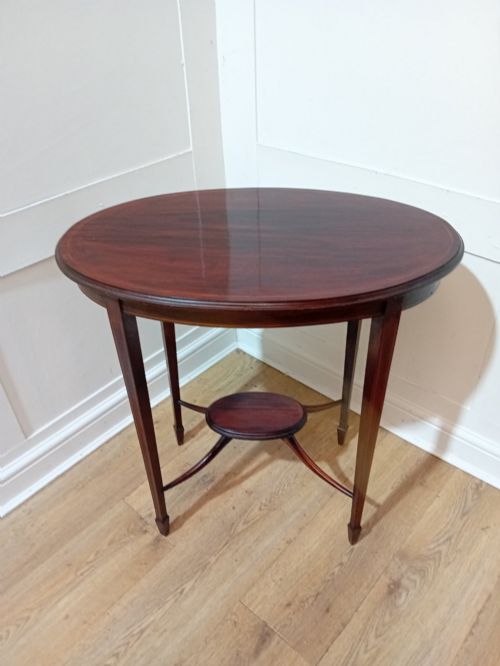

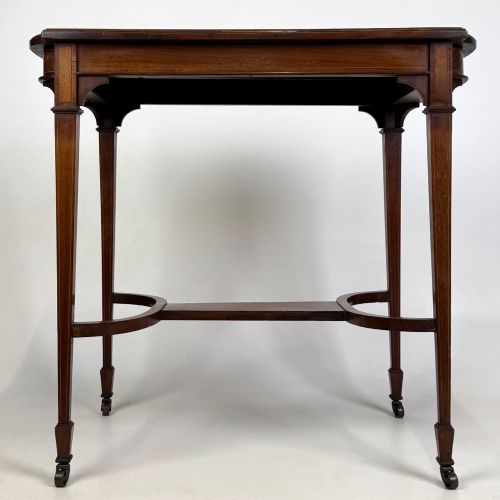
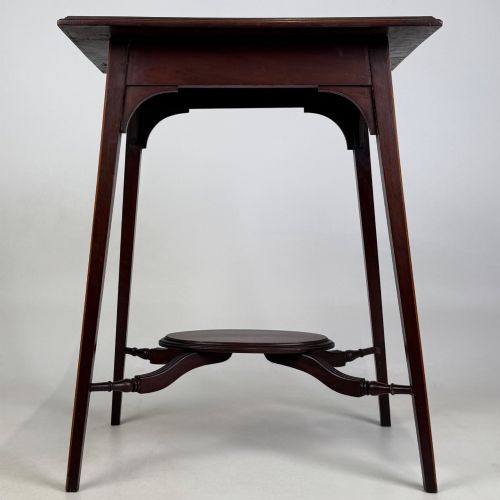
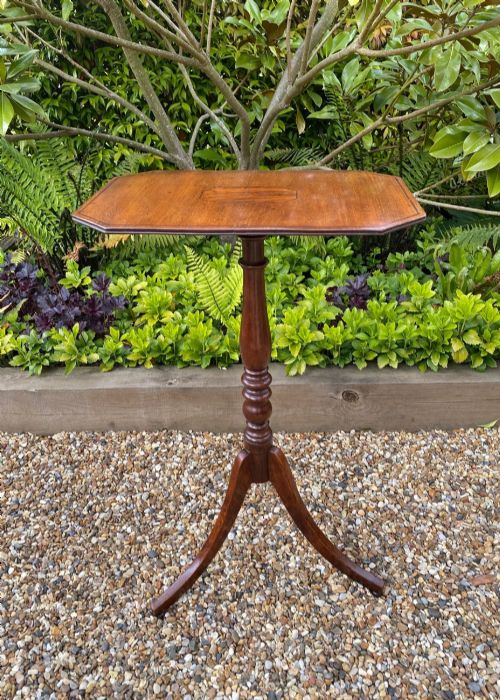

Inlaid Mahogany Accent Table
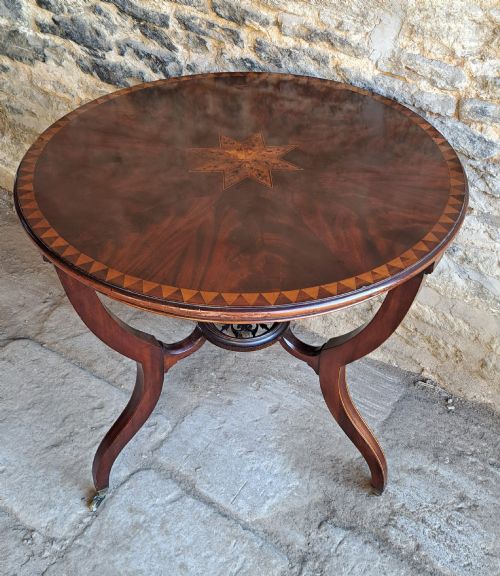
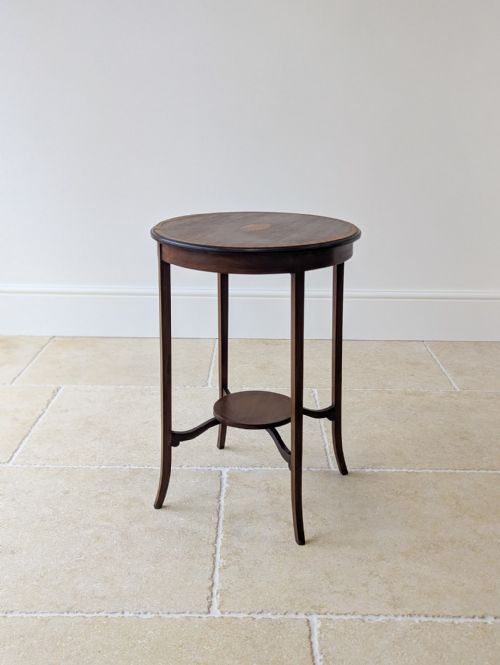
An inlaid mahogany accent table brings refined timber and crisp contrast into a room, spanning Edwardian and Georgian forms.
Inlaid Mahogany Accent Table
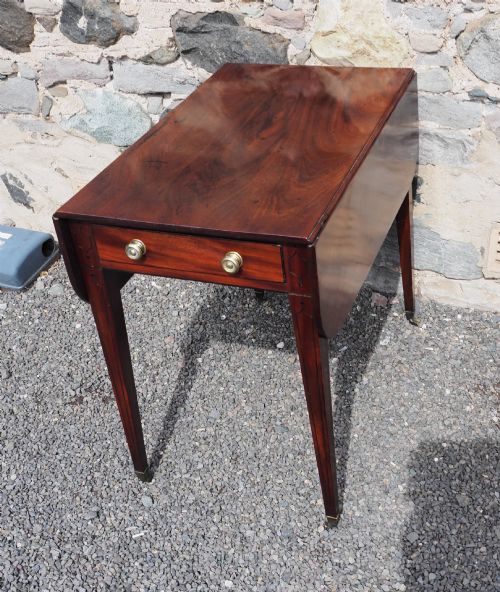
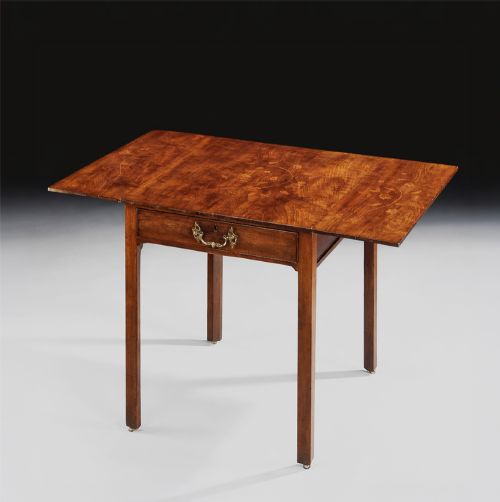
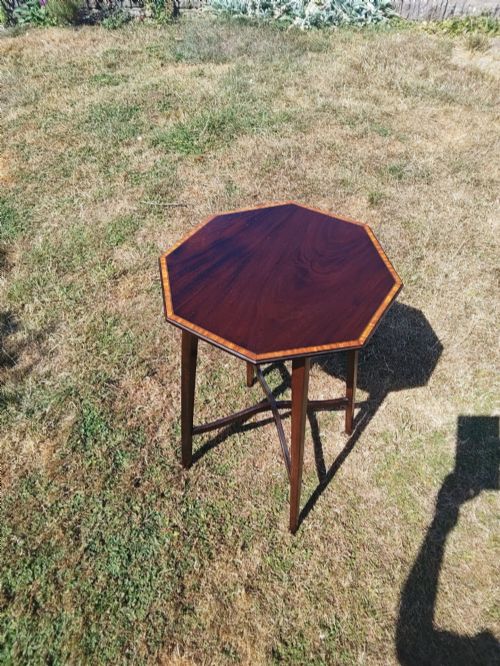
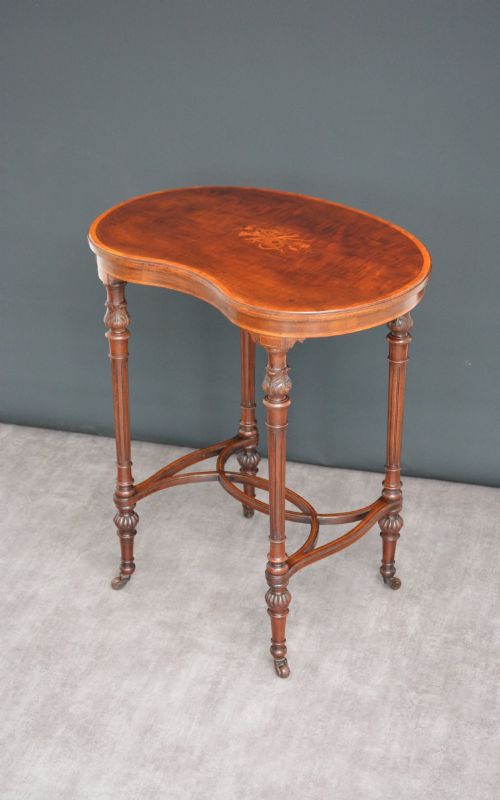
An inlaid mahogany accent table encompasses occasional tables, side tables, nests of tables, wine tables, and Pembroke tables found across Victorian, Edwardian, and Georgian periods. The most frequent pieces on this page belong to the Edwardian era and the Sheraton Revival style, alongside earlier George III examples.
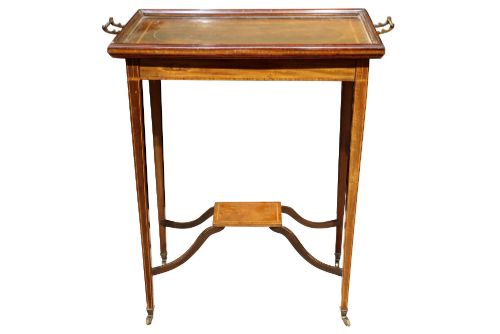
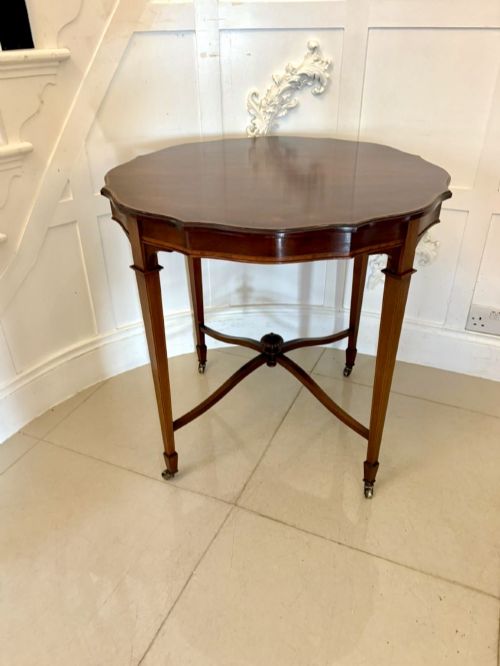
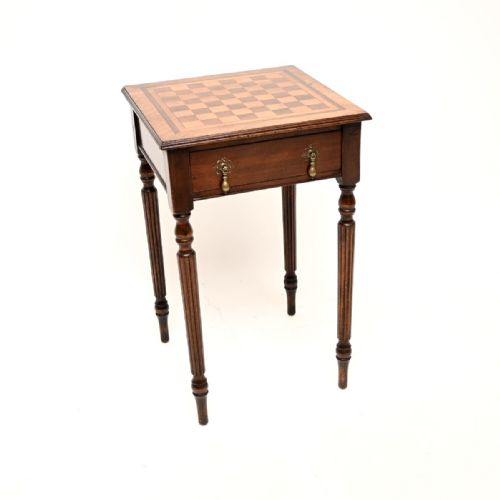
Makers produced these versatile pieces as lamp tables, chess tables, and tray top occasional pieces designed for flexible placement in domestic interiors. Oval, circular, octagonal, and kidney-shaped tops appear alongside nests of quartetto tables.
Materials and Construction
Craftsmen built these tables primarily using solid mahogany and mahogany veneers, often incorporating contrasting timbers such as satinwood, boxwood, and walnut for decorative detail. Wood inlay and marquetry techniques created delicate borders, urn motifs, and geometric patterns directly into the table tops.
Structural elements frequently utilised secondary hardwoods, while specialised forms like Pembroke tables employed folding leaf mechanisms and brass hardware. Certain items featured fitted interiors and raised tray edges formed from shaped timber.
Inlaid Mahogany Accent Table Retail Price Guide 2026
Typical asking prices for inlaid mahogany accent table among the pieces listed under this phrase on Sellingantiques today, from the lower quarter to the upper quarter. They describe what is for sale here now, not the wider market.
Formats range from single wine and lamp tables to nests of four tables and folding Pembroke designs.
Quality and Execution
The standard of an inlaid mahogany accent table depends on the precision of the cabinetwork and the fineness of the contrasting stringing or marquetry. Crisp joinery in nests of tables and well-figured mahogany timber distinguish finer examples from standard production.
Exhibition quality pieces demonstrate superior timber selection, intricate satinwood and boxwood details, and balanced proportions. Earlier George III and Sheraton Revival items often exhibit greater refinement in their hand-cut inlay work.
The Inlaid Mahogany Accent Table Glossary
- Pembroke table
- A small drop-leaf table with hinged flaps on either side, introduced during the 18th century. These tables frequently include a single drawer and slender legs.
- Marquetry
- The art of forming decorative patterns using thin veneers of various woods applied to a structural surface. This technique creates pictorial or geometric designs on table tops.
- Stringing
- Thin lines of contrasting timber inlaid into channels cut into the main surface of the furniture. It outlines panels and edges to give linear definition.
- Quartetto nest
- A set of four graduating tables designed to slide neatly beneath one another. They gained popularity during the Sheraton Revival period.
- Sheraton Revival
- A late 19th and early 20th century style inspired by the 18th-century designs of Thomas Sheraton. It utilises light timbers, satinwood, and delicate inlay.
Inlaid Mahogany Accent Table: Frequently Asked Questions
What is a Pembroke table?
A Pembroke table is a compact occasional table featuring two hinged drop leaves that lift to extend the surface area. They typically stand on four legs and often incorporate a small drawer beneath the top.
Cabinetmakers designed these versatile pieces to move easily around a drawing room or parlour for writing, sewing, or serving tea.
How do I date an inlaid mahogany accent table?
Dating relies on observing structural characteristics, timber choice, and the style of the inlay work. Edwardian pieces often display lighter satinwood banding and Sheraton Revival motifs, whereas 18th-century George III examples show heavier structural framing and simpler cockbeading.
Examining the underside, drawer linings, and secondary woods helps confirm whether a piece originates from the Georgian period or its later revival.
Where should I place an accent table?
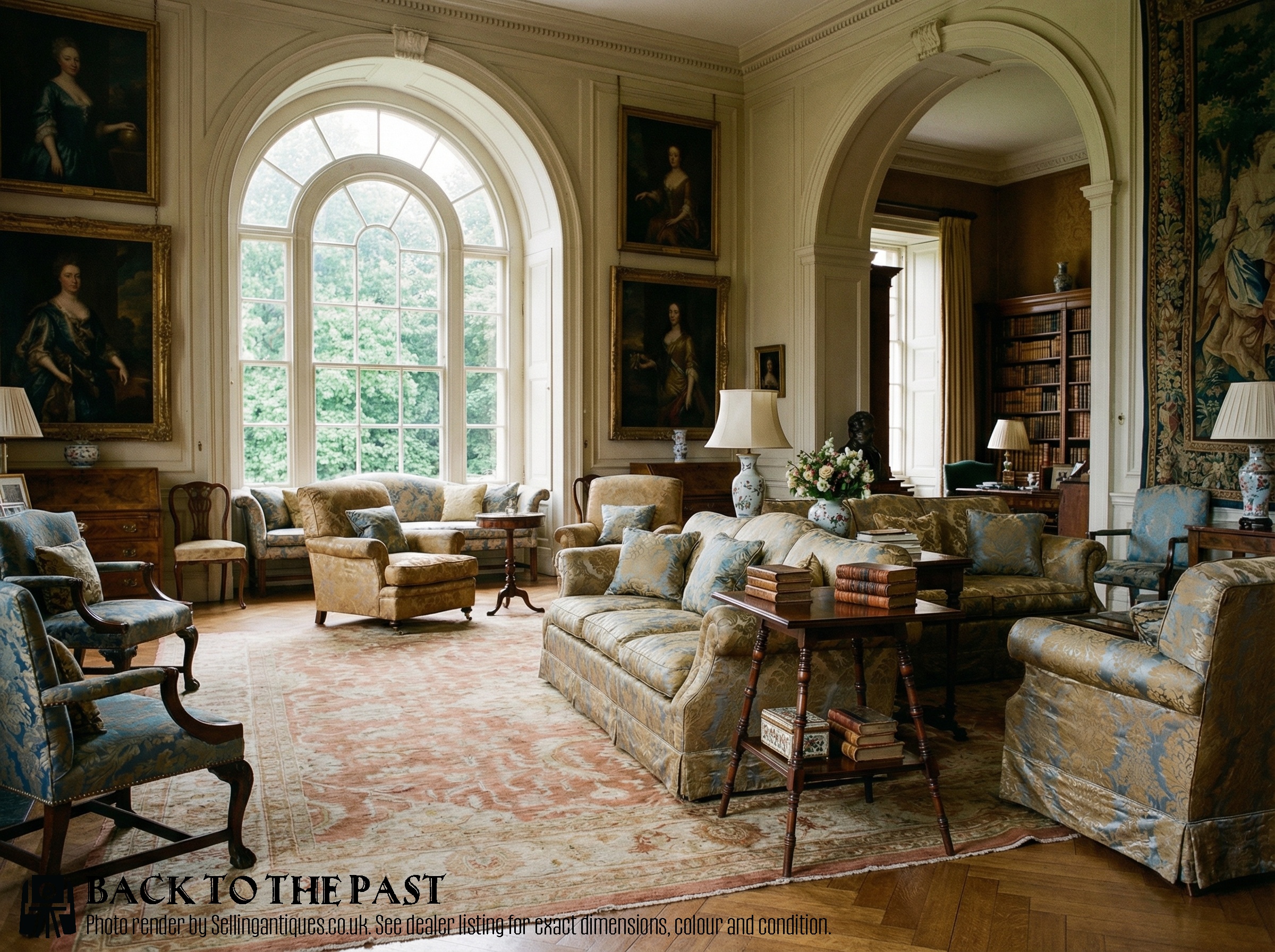
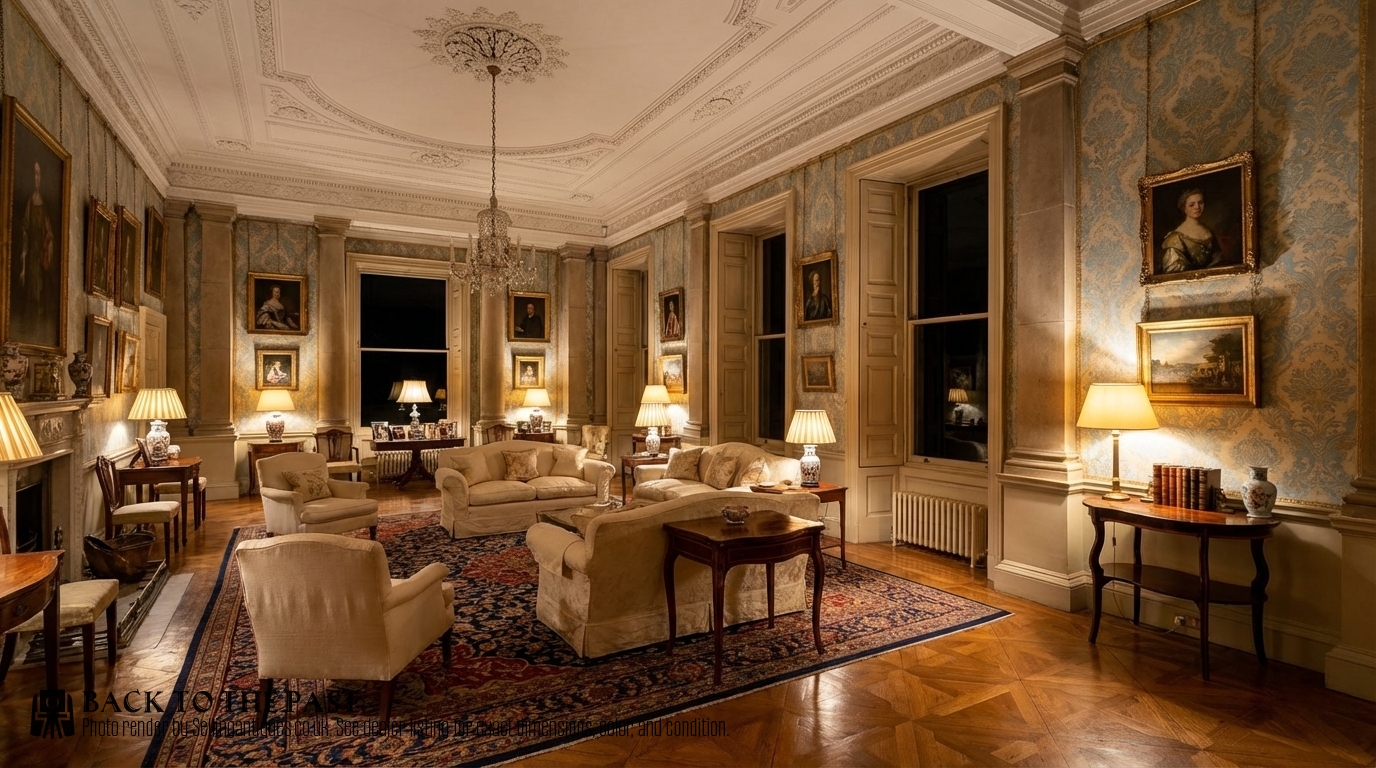
These tables suit placement beside sofas, armchairs, or against hallway walls where surface space is required without heavy visual bulk. Lamp tables and wine tables fit neatly into corners or beside reading chairs.
Nests of tables work well stacked together until extra surface space is needed for drinks or books during gatherings.
What is the difference between marquetry and inlay?
Inlay involves cutting recesses directly into a solid wood surface to insert pieces of contrasting timber or brass. Marquetry assembles an entire decorative picture or pattern from veneers on a paper backing before gluing the complete sheet to the carcase.
Both techniques appear frequently on Edwardian and Georgian tables to enhance the visual depth of the mahogany timber.