
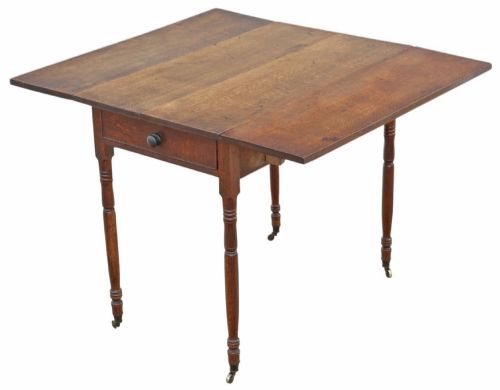
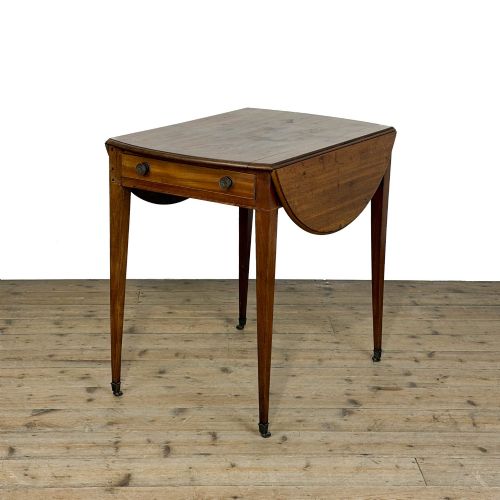
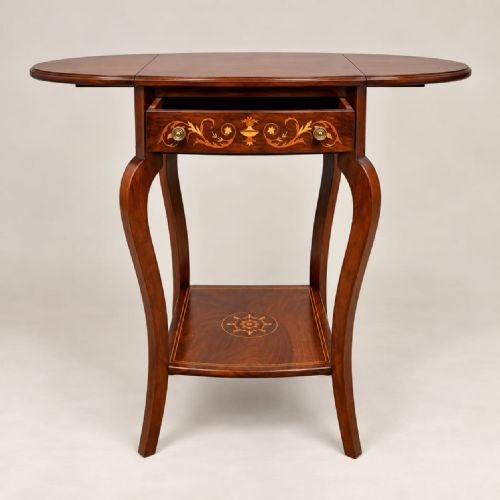

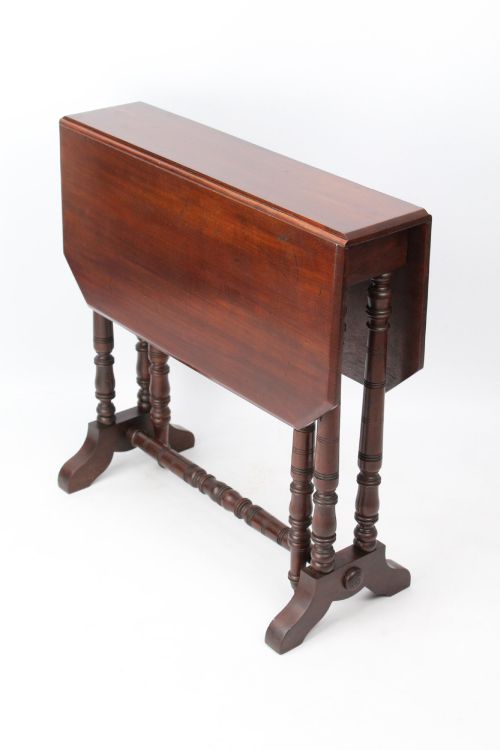


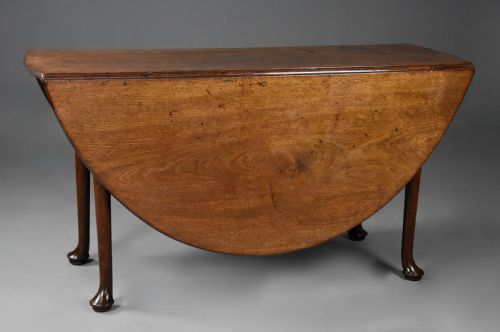
Brown Wooden Drop Leaf Table
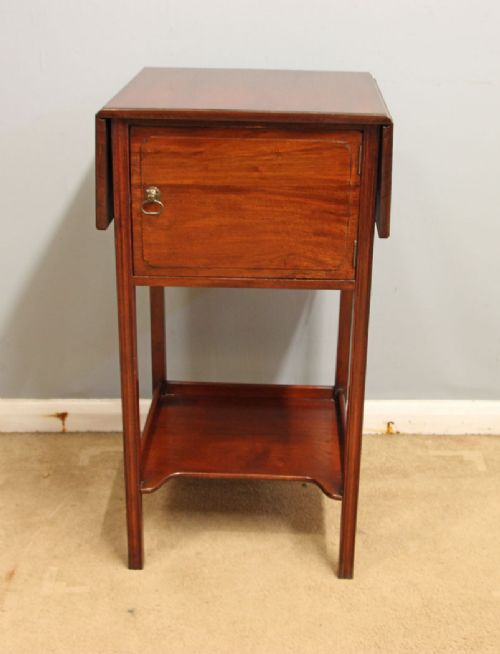
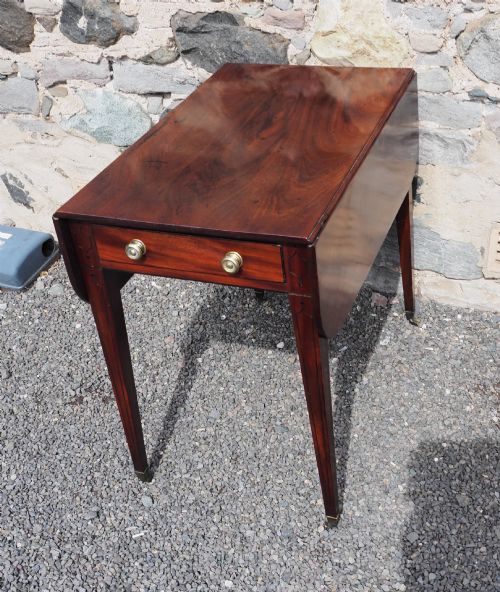
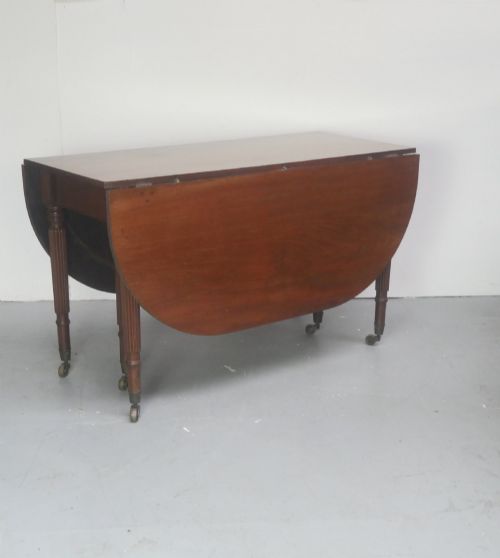
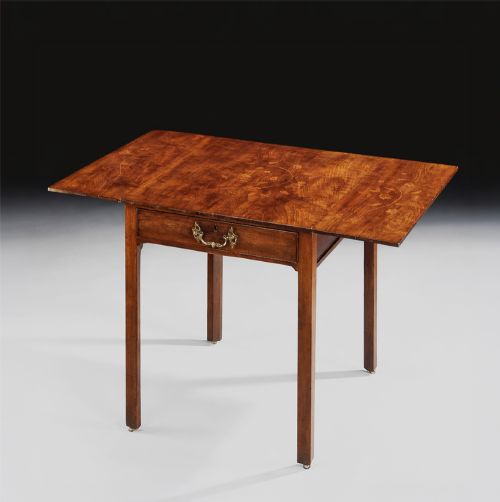
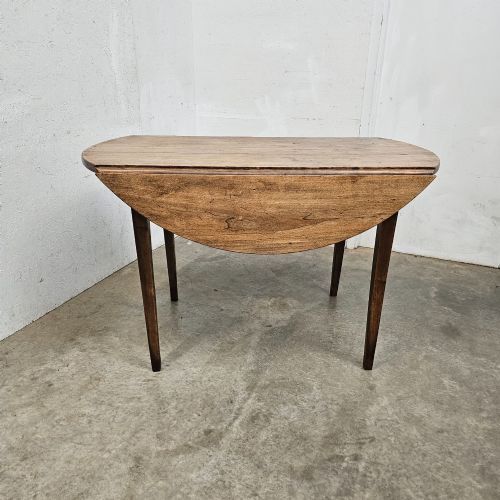
A brown wooden drop leaf table offers folding flaps that extend usable surface area instantly, making it a practical choice for compact spaces.
Brown Wooden Drop Leaf Table
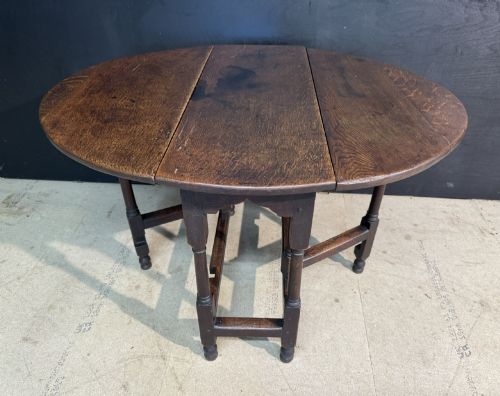
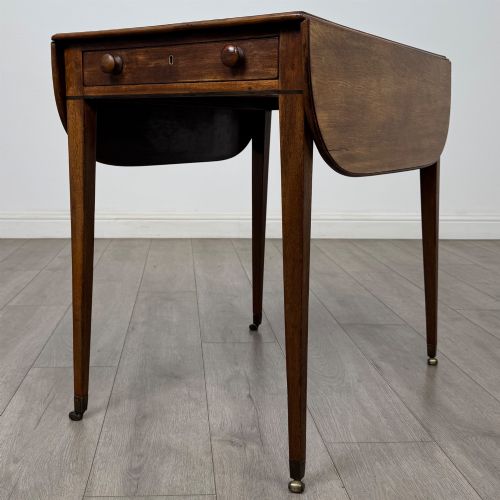
A brown wooden drop leaf table brings centuries of flexible dining and serving furniture into daily use, spanning forms from compact Pembroke and lamp tables to substantial gateleg dining tables. These pieces utilise folding flaps supported by hinged or swing legs, allowing the footprint to shrink or expand according to the room.
The selections encountered here range across 18th-century walnut and oak gateleg designs to 19th-century mahogany Pembroke and Victorian rosewood occasional tables. Buyers frequently meet mahogany Pembroke tables and oak gateleg dining tables, reflecting the durable timber choices favoured by past cabinet makers.
Materials and construction
Makers relied principally on dense timbers such as mahogany, oak, and walnut, often applying finer veneers like satinwood, harewood, and burr walnut to visible surfaces. Structural integrity depended on solid secondary timbers for framing, joined with traditional joinery methods that accommodated the movement of folding leaves.
Hardware played a functional role in operation, incorporating brass hinges, castors, and swing brackets to support the drop flaps securely. Surface finishes developed through the application of oils and polishes, enhancing the natural grain patterns of the wood over decades of use.
Brown Wooden Drop Leaf Table Retail Price Guide 2026
Typical asking prices for brown wooden drop leaf table among the pieces listed under this phrase on Sellingantiques today, from the lower quarter to the upper quarter. They describe what is for sale here now, not the wider market.
Listings feature woods including mahogany, oak, walnut, rosewood, satinwood, boxwood, and harewood across multiple centuries.
Judging construction and finish
Quality rests upon the selection of timber figures, such as flame mahogany or figured walnut, and the crispness of inlaid details like boxwood stringing and marquetry. Superior examples display thoughtful grain matching across the drop flaps and the main top.
The precision of the hinge mechanism and the stability of the swing legs dictate how smoothly the table transitions between configurations. Original brass fittings and an even, warm patina indicate better preservation and superior original craftsmanship.
The Brown Wooden Drop Leaf Table Glossary
- Drop leaf
- A table with a fixed centre section and hinged flaps on either side that fold down. This design allows the furniture to save space when not in use.
- Pembroke table
- A small rectangular table with two hinged flaps and typically one or two drawers. It gained popularity during the 18th century for occasional writing or breakfast use.
- Gateleg table
- A table featuring legs that swing outward on a pivot gate to support the drop leaves when raised. This sturdy construction dates back centuries.
- Sofa table
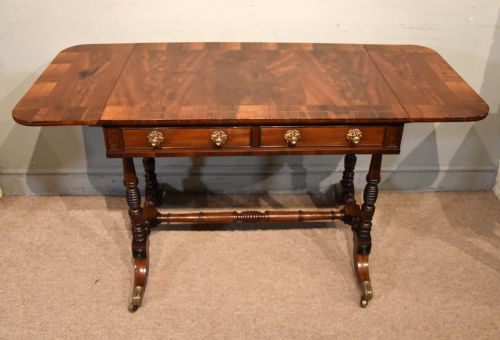
- A long, narrow table designed originally to stand in front of a sofa, typically fitted with drop leaves and small drawers. They often feature trestle-style or pillar bases.
- Patina
- The surface sheen and colour acquired by wood and metal over long periods of handling and exposure. Collectors value this indicator of age and genuine use.
Brown Wooden Drop Leaf Table: Frequently Asked Questions
How do I use a drop leaf table in a small room?
Keep one or both flaps folded down against the base to minimise the footprint when floor space is tight.
Raise the leaves and swing out the supporting legs whenever extra surface area is needed for dining or working.
How do I care for an antique wooden table surface?
Apply a quality beeswax or appropriate furniture polish periodically to nourish the wood and maintain the protective barrier.
Avoid placing hot items or liquids directly onto the polished timber to prevent water rings and heat marks.
How can I tell the period of a wooden table?
Examine the timber species, secondary woods used in drawer construction, and stylistic clues such as inlay patterns or leg shapes.
Look closely at the hardware, hinge types, and the overall patina to corroborate the estimated period of manufacture.