


Traditional Gate Leg Table
A traditional gate leg table offers sturdy drop leaves and folding supports, bringing centuries of practical British woodwork into everyday dining and living spaces.
Traditional Gate Leg Table
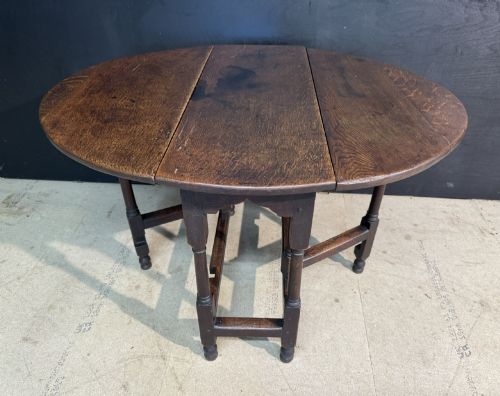
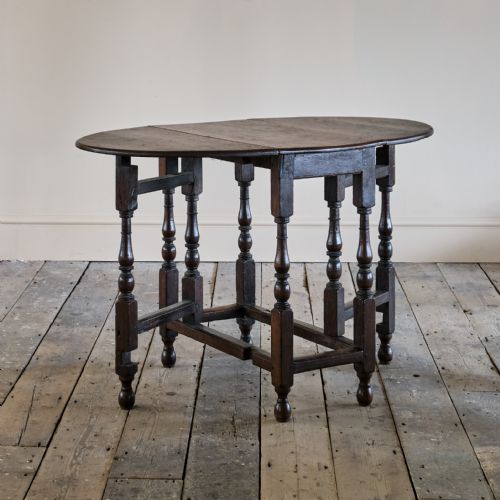
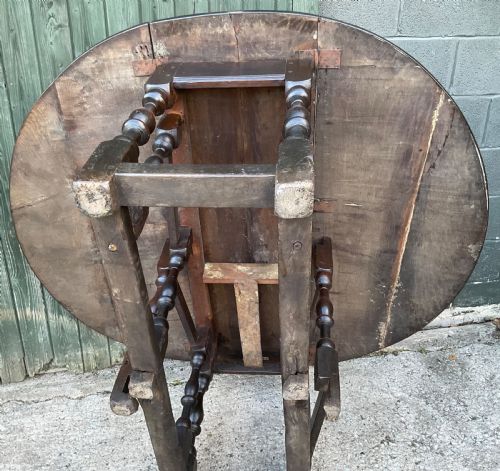
A traditional gate leg table consists of a fixed central frame with hinged drop leaves supported by swinging legs that pivot outward like gates. These tables appear across multiple periods, including the seventeenth century, eighteenth century, nineteenth century, Edwardian era, and the nineteen-thirties.
The pieces listed here span various forms such as dining tables, coffee tables, side tables, and occasional tables. Oak and mahogany serve as the primary timbers, alongside walnut and solid oak.
Buyers frequently encounter seventeenth-century oak examples alongside Victorian and Edwardian iterations in mahogany and walnut. The selection ranges from compact occasional versions to large dining tables intended for regular seating.
What varies in quality
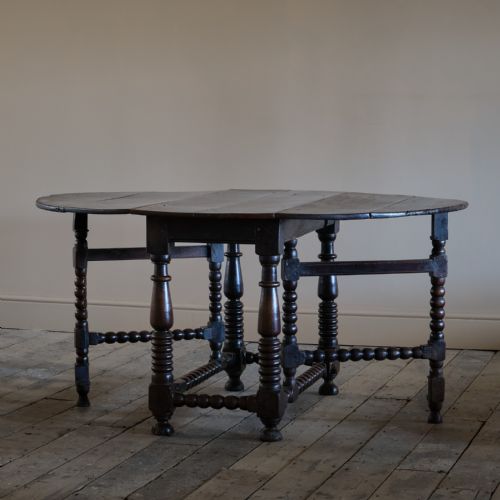
The distinction between standard and superior pieces rests upon the selection of timber and the execution of the turnery. Well-proportioned framing and crisp detailing on bobbin or barley twist legs indicate higher craftsmanship.
The integrity of the pivot mechanism and the stability of the drop leaves dictate daily utility. Solid timber construction and careful jointing ensure longevity across centuries of use.
Traditional Gate Leg Table Retail Price Guide 2026
Typical asking prices for traditional gate leg table among the pieces listed under this phrase on Sellingantiques today, from the lower quarter to the upper quarter. They describe what is for sale here now, not the wider market.
Listings feature periods from the seventeenth century through to the nineteen-thirties, spanning oak, mahogany, walnut, brass, and iron.
The Traditional Gate Leg Table Glossary
- Gate leg
- A table design featuring hinged leaves supported by pivoting legs that swing out to hold the surface. This construction allows the table to fold down compactly when not in use.
- Drop leaf
- A hinged section of a tabletop that can be raised and supported or lowered to save space. These leaves form the expandable sides of the table.
- Bobbin turned
- A style of wood turning characterised by a series of rounded, spool-like shapes carved along the length of a leg or stretcher. It appears frequently on seventeenth-century and Victorian pieces.
- Barley twist
- A spiral carving resembling a twisted rope, worked into furniture legs and supports. This decorative technique is common in Edwardian and early twentieth-century examples.
- Pembroke table
- A small table with two hinged flaps on opposite sides and usually a drawer. It shares drop-leaf mechanics with gate leg designs.
Traditional Gate Leg Table: Frequently Asked Questions
How do I use a gate leg table daily?
Keep both leaves dropped against the central frame for a compact console or side table in a hallway or small room. Raise one or both leaves and swing out the supporting gate legs when you need a dining surface or workspace.
Ensure the folding legs lock securely into position beneath the leaves before placing heavy items on the top. Avoid positioning the table in direct sunlight or near heat sources to protect the timber grain.
How do I tell seventeenth-century oak from later revivals?
Examine the timber colour, surface patination, and construction marks for signs of age. Seventeenth-century originals display hand-cut joinery and authentic wear patterns built up over centuries.
Later Jacobean revival pieces from the nineteenth and twentieth centuries often show more uniform machine-tooling and different finishing techniques. Compare the joint construction and hardware styles with known period examples.
What is the difference between oak and mahogany versions?
Oak tables typically originate from earlier periods like the seventeenth and eighteenth centuries, displaying a pronounced grain and heavy construction. Mahogany versions frequently date from the Victorian, Edwardian, and early twentieth-century eras, offering a smoother reddish-brown surface.
Consider your existing interior style when choosing between the robust character of oak and the refined warmth of mahogany. Both timbers provide durable surfaces suited to regular domestic use.
Where should I place an occasional gate leg table?
Position small occasional and coffee table variants beside sofas or chairs to provide a convenient surface for books and lamps. Their folding leaves allow you to adjust the footprint depending on the room layout.
Place side tables against living room or bedroom walls with the leaves dropped to minimise space usage. Pull the table outward and raise the leaves whenever you require extra surface area.