


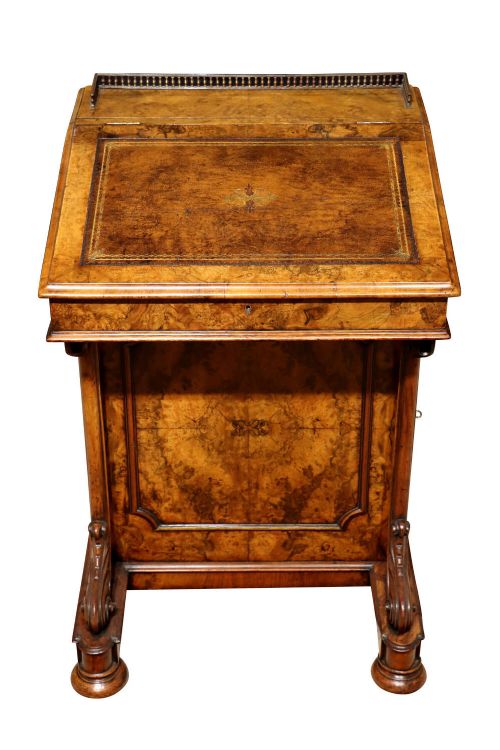
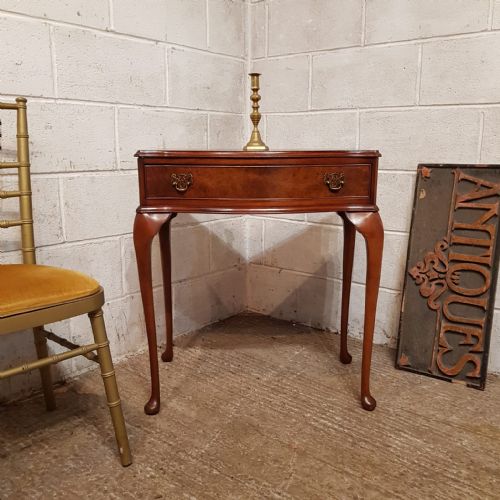


Small Walnut Writing Table
A small walnut writing table brings compact elegance to a study, offering rich burr grain and a dedicated surface for correspondence.
Small Walnut Writing Table
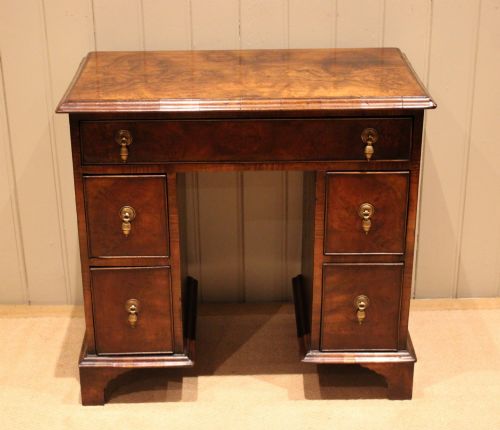
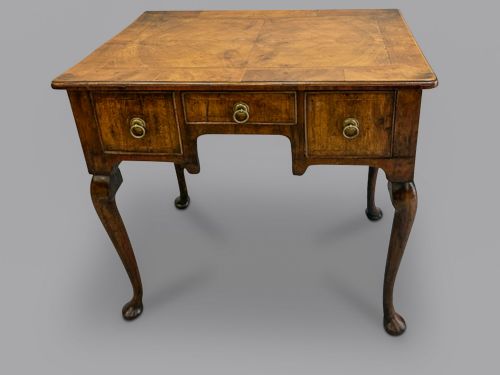
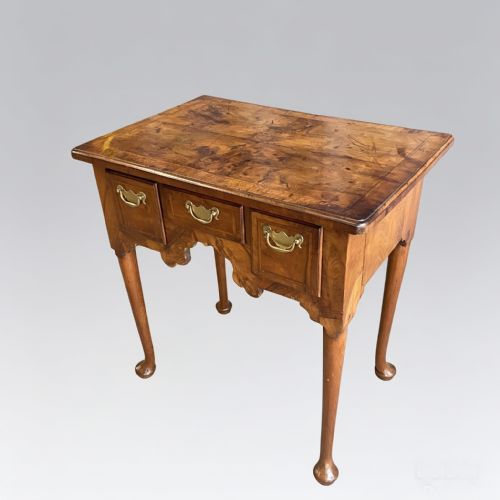
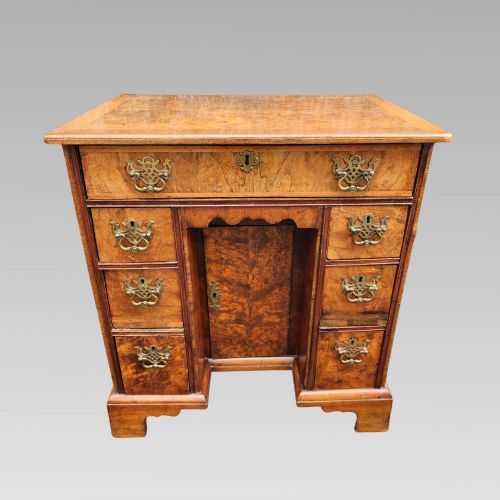
A small walnut writing table encompasses various compact writing formats, including kneehole desks, lowboys, Davenport desks, and bureau de dame forms. These pieces date from the early eighteenth century through the Victorian and Edwardian eras, reflecting changing domestic habits.
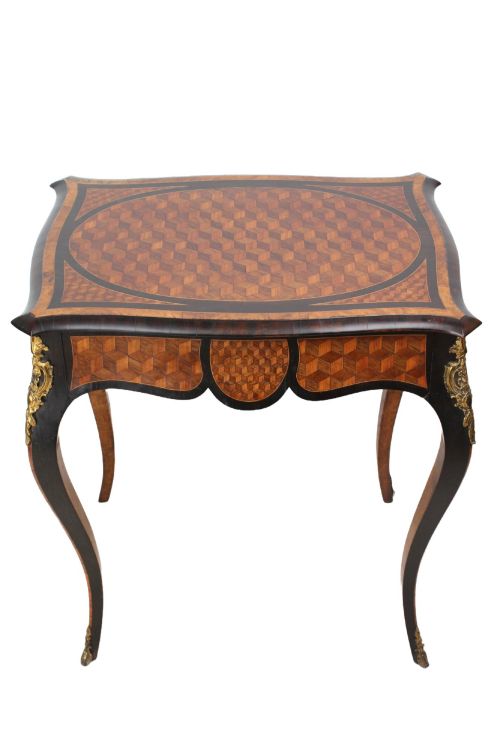
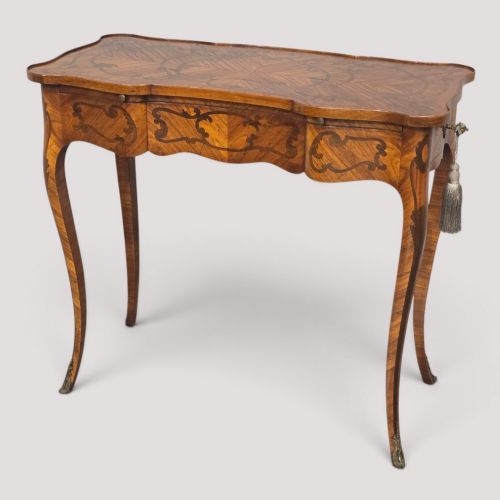
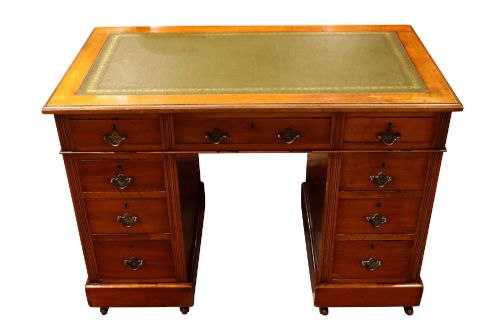
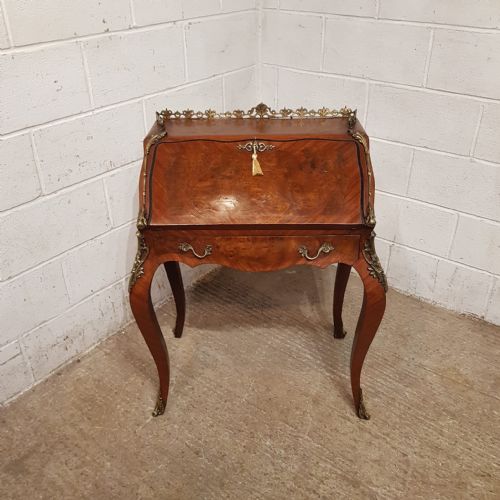
Victorian and Edwardian iterations dominate current offerings, often showing French Louis XV revival influences or traditional English pedestal designs. Buyers frequently encounter neat bureau de jour models alongside simpler side tables adapted for writing.
Earlier Georgian examples, such as walnut lowboys and kneehole desks, appear with restrained drawer configurations and figured timbers. These earlier forms set the standard for proportion that later revival makers subsequently imitated.
Materials and Technique
Cabinetmakers utilised solid walnut and decorative burr walnut veneers applied over secondary woods like oak, creating rich geometric or quartered patterns on the tops. Marquetry inlay and parquetry further enhanced the visual depth of Victorian and French revival pieces.
Brass ormolu mounts, leather writing inserts, and fitted satinwood interiors frequently accompany these tables, adding functional contrast to the dark timber. Construction methods rely on traditional dovetail joints for drawers and sturdy framing for freestanding desks.
Several small desks conceal secret compartments within their superstructures, originally designed for private correspondence and hidden family ledgers.
Judging Quality
The sophistication of the timber selection dictates the visual standing of a piece, with symmetrical burr figures commanding greater appreciation than plain grain. Crispness in marquetry cutting and the integration of brass mounts reveal the maker's original investment of time.
Proportion and structural integrity define the distinction between standard production and superior craftsmanship. Original leather inserts, working locks with keys, and uncompromised secondary timbers elevate an example within its period.
JAS Shoolbred
The Small Walnut Writing Table Glossary
- Burr Walnut
- A veneer taken from the knotted growth of a walnut tree, yielding swirling, highly decorative patterns. Cabinetmakers prize this timber for creating striking table tops and drawer fronts.
- Lowboy
- A small oak or walnut table with one or more rows of drawers, commonly used as a dressing table or writing surface during the eighteenth century. It typically stands on slender cabriole or straight legs.
- Bureau de Dame
- A small ladies writing desk, often featuring a sloping lid or a superstructure with pigeonholes and small drawers. These French-influenced forms suit intimate correspondence.
- Davenport
- A compact pedestal desk featuring a sloping, leather-lined writing surface that lifts to reveal a set of drawers. Side drawers often open to one side while dummy drawers balance the other.
- Kneehole Desk
- A formal desk featuring a central recess for the sitter's legs, flanked by pedestals of small drawers. Early examples in walnut date to the Queen Anne and Georgian periods.
- Ormolu
- Gilded bronze mounts applied to furniture for decorative accent, particularly prominent on nineteenth-century French revival pieces. This technique provides bright metallic contrast against dark wood veneers.
Small Walnut Writing Table: Frequently Asked Questions
What is a walnut Davenport?
A Davenport is a compact writing desk with a sloping top and side drawers, designed for ladies during the nineteenth century. Its small footprint makes it practical for modern corners.
Most examples include internal stationery compartments and a hinged writing surface that reveals a fitted interior.
How do I date a walnut desk?
Dating relies on construction methods, hardware styles, and the character of the walnut veneer. Georgian pieces show simple dovetailing and native timbers, while Victorian items often incorporate exotic veneers and machine-cut elements.
Secondary woods inside drawers also help determine age, as oak gave way to pine in later nineteenth-century manufacturing.
What is a lowboy used for?
A lowboy served as a small side table for dressing or correspondence in eighteenth-century homes. Its modest scale allowed placement in bedrooms and parlours.
Today, collectors use them as writing surfaces or console tables in narrow hallways.
Are these tables suitable for daily laptop use?
Many compact writing desks provide adequate surface area for modern laptops while maintaining period character. Drawer dimensions require checking to ensure comfortable knee clearance.
Leather writing surfaces benefit from protective blotters when used for contemporary writing tasks.