
Edwardian Sterling Silver Tableware
Edwardian sterling silver tableware brings domestic dining table service from the early twentieth century into modern use through functional vessels and decorative holders.
Edwardian Sterling Silver Tableware
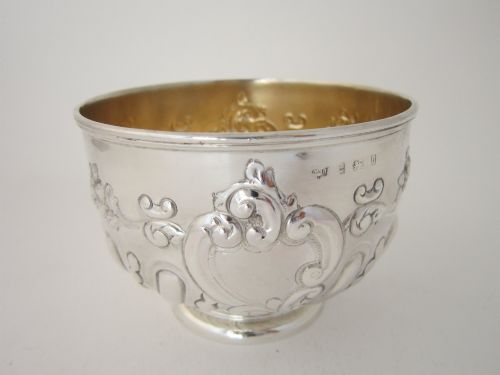
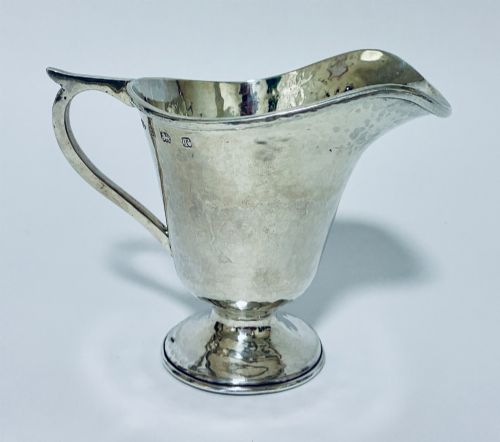
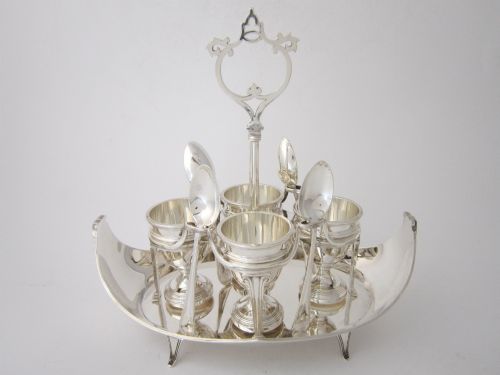
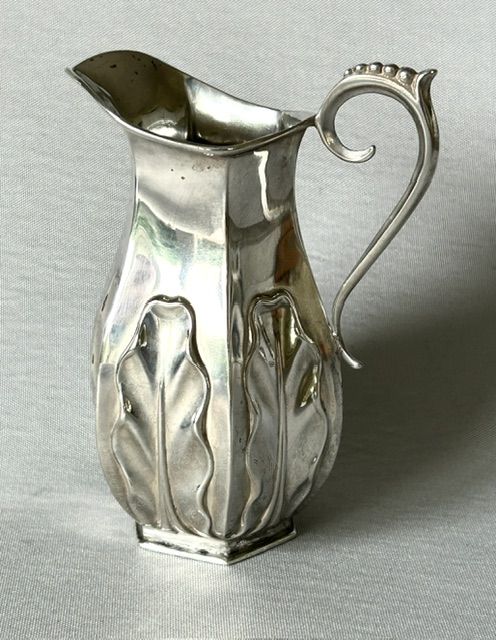
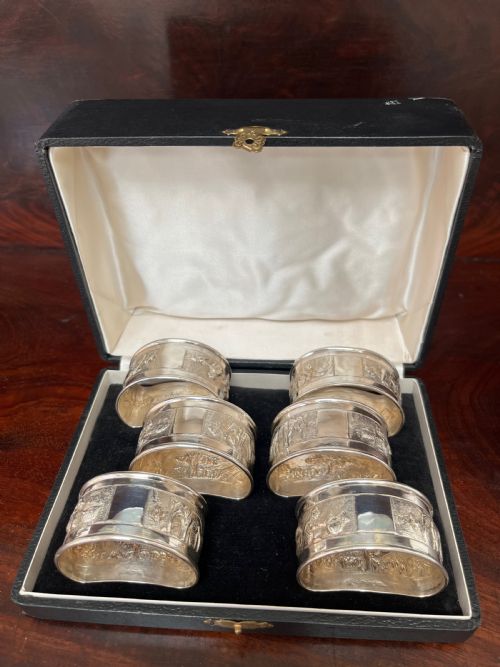
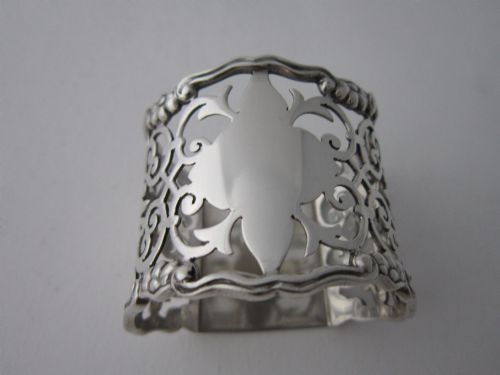
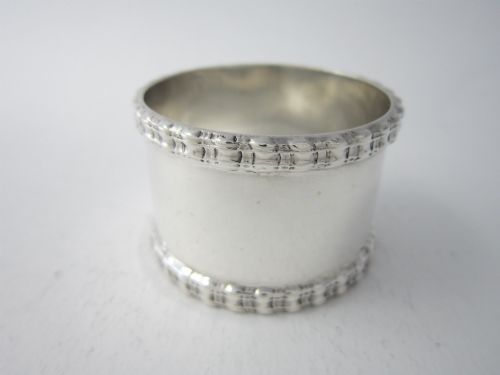
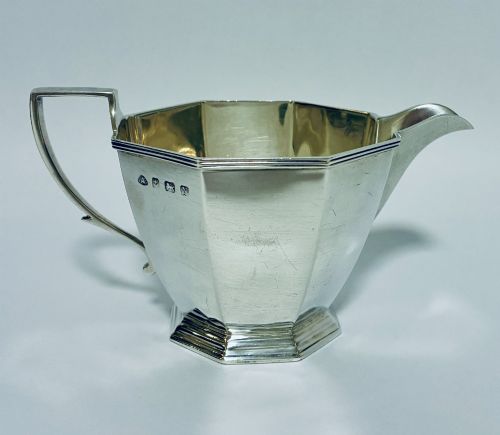
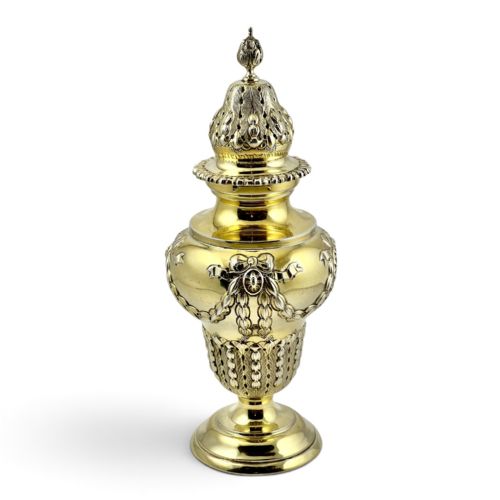
When searching for Edwardian sterling silver tableware, buyers encounter a range of dining accessories designed for formal dining tables of the period. The selection includes napkin rings, menu holders, toast racks, cream jugs, bowls, salt cellars, butter dishes, sugar casters, and condiment tubs.
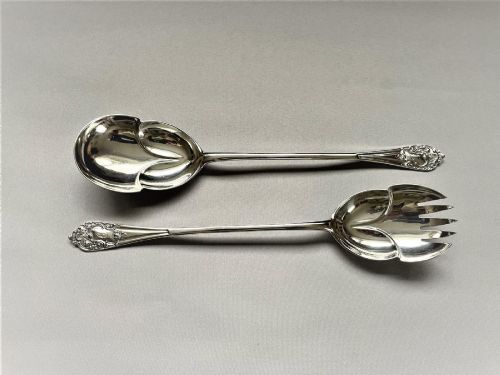
The objects stem predominantly from the Edwardian era, alongside pieces spanning Victorian, George V, and Art Deco periods. Makers utilised styles such as Art Nouveau, Arts and Crafts, and Georgian Revival to shape functional items for the dining room.
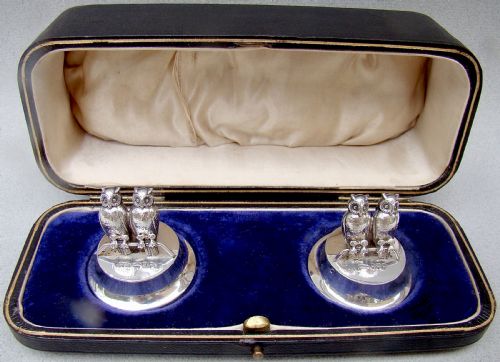
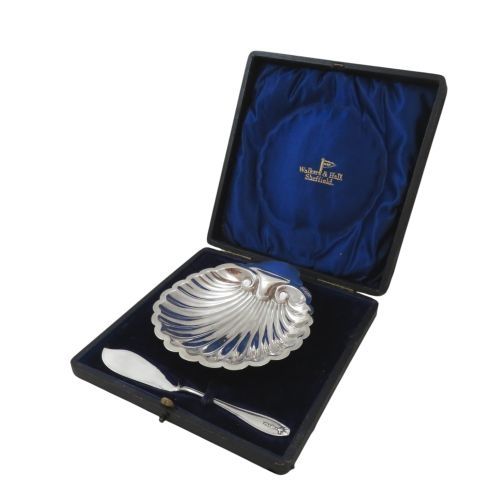
Most items are solid sterling silver, frequently accompanied by fitted presentation cases lined in silk or velvet. Glass liners in cobalt or clear tones appear within salt cellars and butter dishes, while composite items combine silver mountings with glass bodies.
Materials and technique
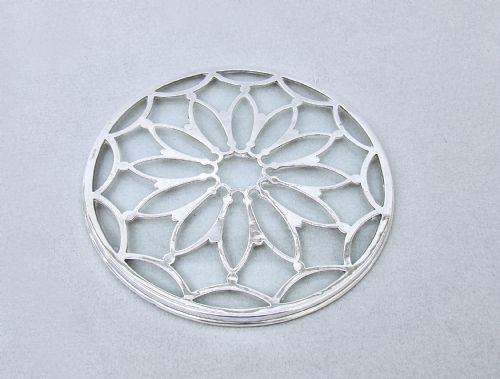
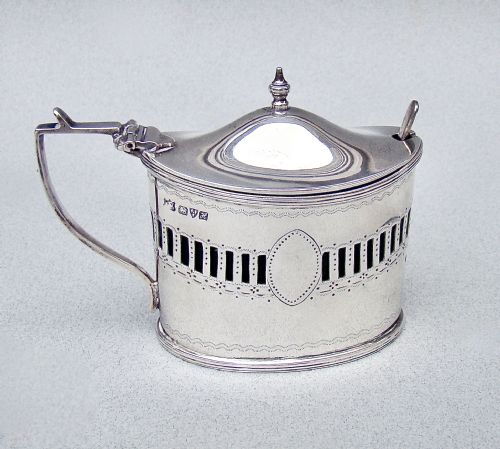
Silversmiths shaped sterling silver through methods including piercing, wirework, casting, and repoussé decoration. Pierced mustard pots and sugar baskets required precise metal-sawing to create openwork patterns, often backed by coloured glass liners.
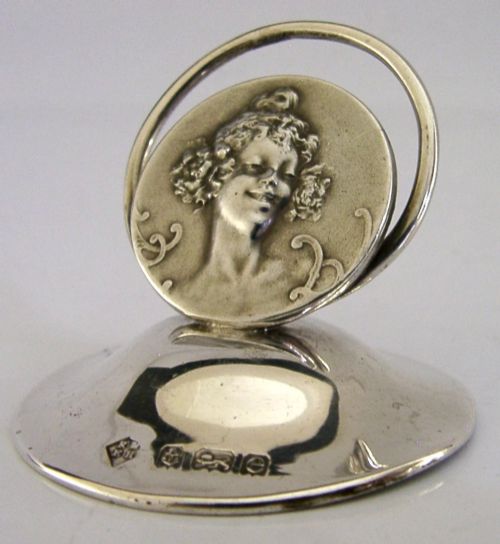
Cast figural elements, such as owls, monkeys, and maidens, gave menu holders and place markers sculptural detail. Glass bodies and teapot stands received silver rims and mounts, fixed securely to glass through collars and secure mounts.
Silver menu holders take the form of a monkey playing drums and owls perched ready for dinner.
What varies in quality
Quality rests upon the weight of the silver and the crispness of the maker's chasing and casting. Substantial gauges of metal resist bending, whereas thinner silver gives under everyday pressure.
Design complexity separates standard utility items from refined examples. Matched cased sets with original silk-lined boxes and intact cobalt glass inserts preserve greater integrity than dispersed individual items.
Harrods Ltd·Alfred Marston·Levi & Salaman·Grey & Co·Sampson Mordan·Mappin and Webb·C.T. Burrows & Sons·The Goldsmiths & Silversmiths
The Edwardian Sterling Silver Tableware Glossary
- Sterling silver
- A silver alloy containing 92.5 percent pure silver and 7.5 percent other metals, typically copper, chosen for durability in tableware. This standard forms the baseline material for the pieces listed.
- Menu holder
- A small desk-like stand or clip designed to display menu cards or place cards on a dining table. These often take figural forms such as animals or figures.
- Toast rack
- A metal frame with vertical dividers used to hold slices of toast upright at the breakfast table. They range from small domestic pieces to six-slice service items.
- Cobalt glass
- A deep blue glass used for liners within salt cellars and condiment dishes. The vibrant colour contrasts with pierced silver frames.
Edwardian Sterling Silver Tableware: Frequently Asked Questions
What items are included in Edwardian sterling silver tableware?
The category encompasses dining accessories like napkin rings, menu holders, toast racks, cream jugs, salt cellars, sugar baskets, and condiment tubs.
Many of these objects come in original fitted presentation cases lined with silk or velvet.
How were glass and silver combined in these pieces?
Makers mounted silver rims onto glass teapot stands and fitted cobalt or clear glass liners inside open silver salt cellars and butter dishes.
This pairing protected delicate glass while introducing contrasting textures to the table setting.
How can I identify the period of a piece?
Pieces are dated through hallmarks stamped directly into the silver, which record the assay office, date letter, and maker's mark.
Stylistic cues like Art Nouveau curves or Arts and Crafts simplicity also point to specific decades.
Were these items meant for daily use?
Dining accessories such as napkin rings and toast racks served functional roles in formal household dining routines.
Many survived in presentation boxes because owners stored them carefully between special occasions.