



Birmingham Silver Napkin Ring
These pieces of birmingham silver napkin ring are functional silver tableware items that bring historical character to the dining table.
Identifying the Forms
A birmingham silver napkin ring is a small circular or geometric band used at the dining table to identify individual table linen at meals. The examples on this page span from the Victorian period through the Edwardian era and the George V years into the mid-twentieth century.
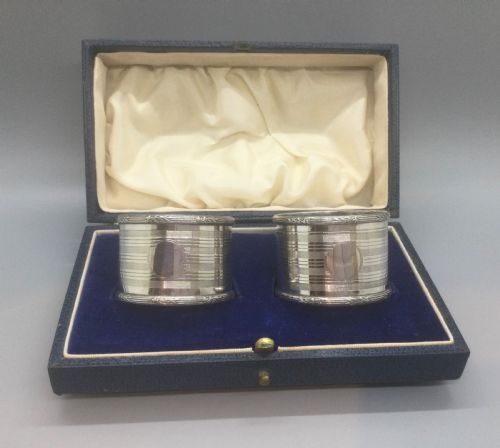
Buyers will encounter single pieces, matched pairs, and fitted presentation cased sets containing four or six rings. The forms range from plain polished bands to pierced designs, scroll edges, and geometric Art Deco shapes.
Materials and Construction
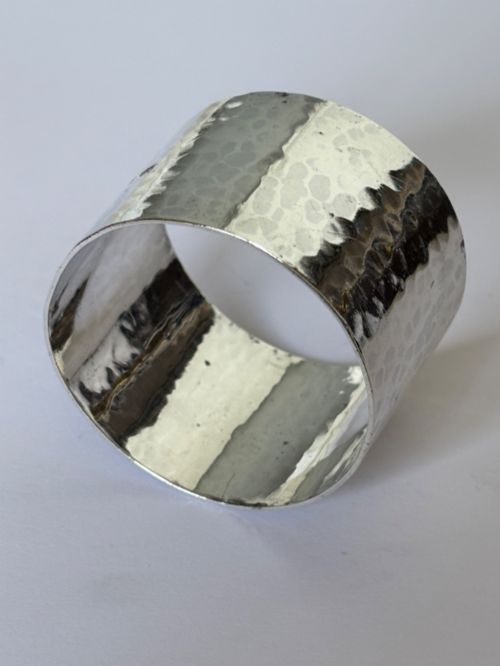
Every piece recorded here is fashioned from solid sterling silver, stamped with Birmingham assay office hallmarks that verify the metal standard and year of creation. Metal techniques include hand hammering, piercing, engraving, and the application of guilloche enamel or inset stones such as amethyst paste and citrine.
Many workshops utilised specialised tooling to shape sheet silver into cylinders or rectangular bands, often finishing the rims with applied wire scroll edges or geometric borders.
The documented pieces span several decades, starting from Victorian examples in the late nineteenth century through Edwardian and Art Deco designs up to the mid-twentieth century.
Distinguishing Quality
The distinction between standard table accessories and exceptional items rests in the weight of the metal and the ambition of the design. Heavy gauge solid silver provides a substantial feel in the hand, while lighter rings lack that physical presence.
Artistic execution divides mass-produced utility wares from pieces featuring hand-hammered surfaces, complex pierced tracery, or specialist decorative additions like inset gemstones and coloured enamel work.
Ernest W Haywood·Albert Edward Jones·Arthur and John Zimmerman·Henry Williamson·Robert Pringle·Henry Clifford Davis·Reynolds and Westwood·Henry Griffiths and Sons·William Thorneywork·Horton and Allday·A Scott·Robert Chandler·F H Adam and Co·Martin Hall·A H Bullock·Marples and Co·Selfridge and Co·William Henry Sparrow·William Oliver·Broadway and Co·Hilliard and Thomason·Joseph Cook and Son·Thomas Thomason and Co·George Unite
The Birmingham Silver Napkin Ring Glossary
- Hallmark
- Official stamps applied to precious metals indicating the assay office, metal purity, and date letter. Birmingham items carry the anchor symbol.
- Sterling silver
- A silver alloy containing 92.5 percent pure silver and 7.5 percent other metals, usually copper, ensuring durability for daily use.
- Guilloche enamel
- Decorative mechanical engraving beneath a translucent layer of coloured enamel. This technique appears on select Art Deco examples.
- Pierced
- Metalwork decorated by cutting or piercing patterns through the silver sheet. Edwardian makers frequently utilised this method for floral and scroll motifs.
Frequently Asked Questions
How were these napkin rings used originally?
In formal dining households, each family member or guest received a designated ring to keep their cloth clean throughout a week of meals.
They frequently appeared as christening gifts or wedding presents, often sold within lined presentation cases alongside matching items like egg cups.
How do I care for silver napkin rings?
Routine maintenance involves gentle cleaning with a soft cloth and specialised silver polish to remove natural tarnishing without abrading the metal surface.
Storing them in dry conditions or anti-tarnish pouches helps preserve the polished finish and keeps engraved or enameled details intact.
How can I tell different periods apart?
Stylistic clues combined with official hallmarks establish the date of manufacture. Victorian pieces often display ornate engraving or heavy scrollwork, while Edwardian examples favour pierced floral patterns.
Later items from the 1920s and 1930s transition into clean geometric lines and the distinct aesthetic of the Art Deco movement.