
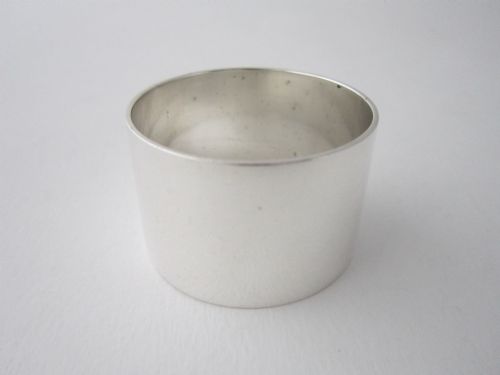
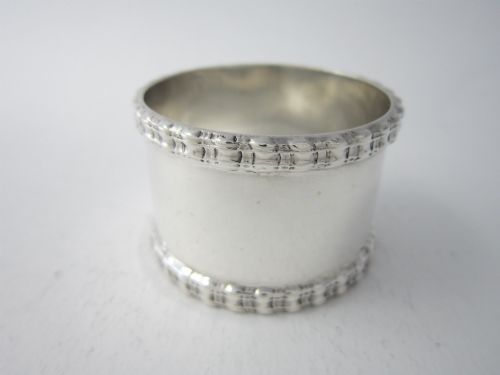
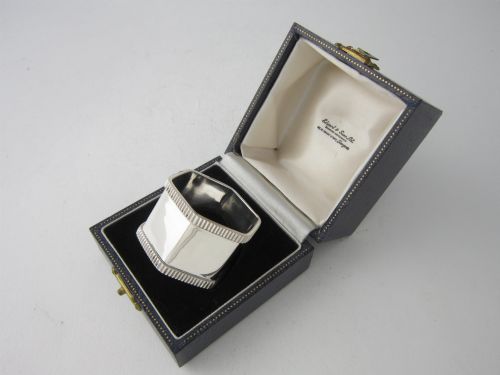
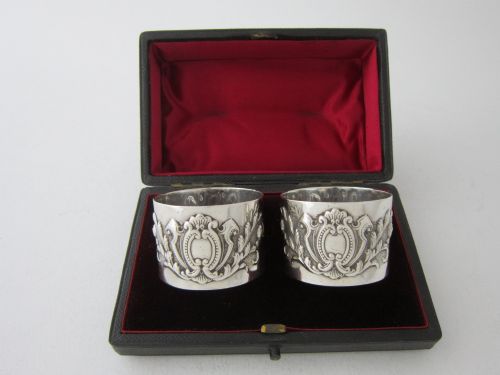
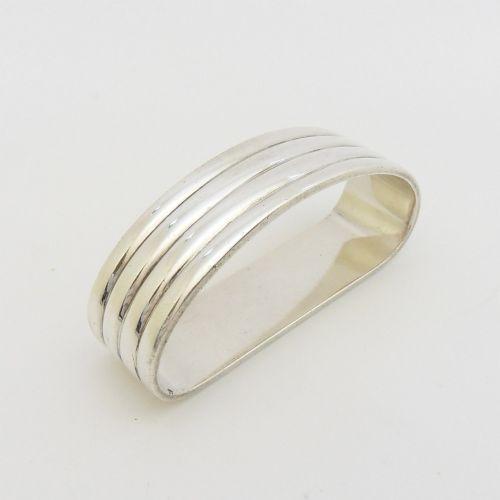
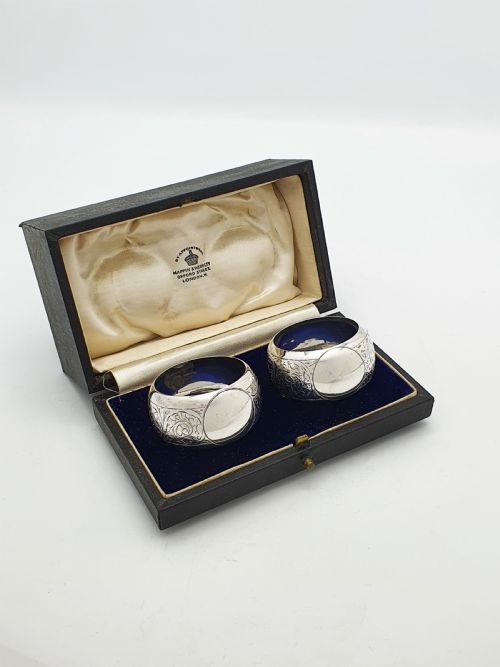
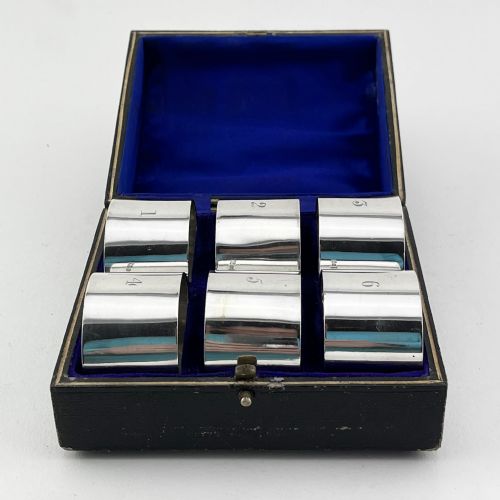

Solid Silver Serviette Ring
A solid silver serviette ring brings genuine weight to a table setting, offering lasting metalwork built to survive daily family meals.
What these solid silver serviette rings are
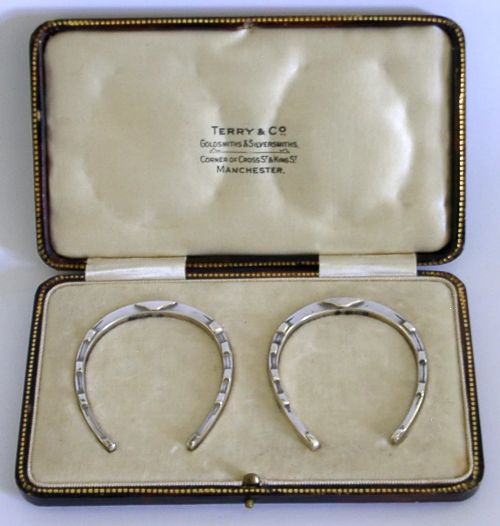
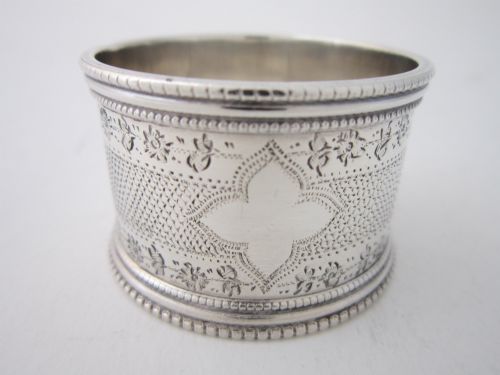
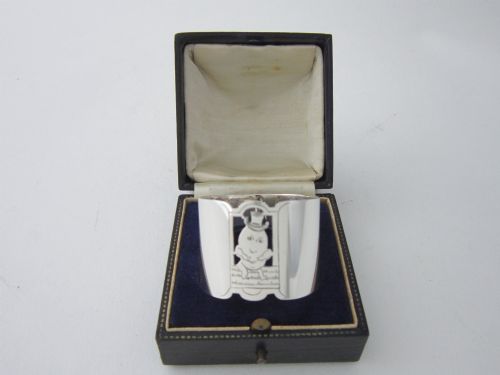
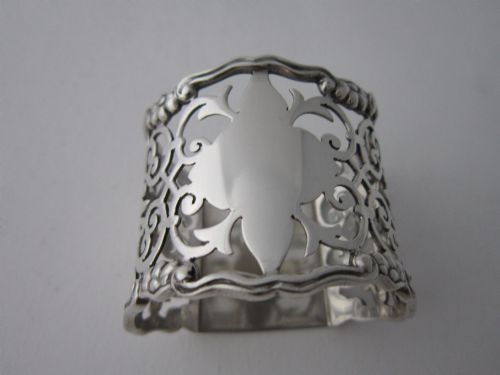
A solid silver serviette ring provides a durable and formal method for identifying table napkins during meals. These items appear across several distinct twentieth-century design movements, spanning the early decades up to the mid-century period.
The pieces listed on this page include examples from British workshops alongside continental European production. Makers from this selection range from established department stores to individual silversmiths working in Birmingham and beyond.
How they were made
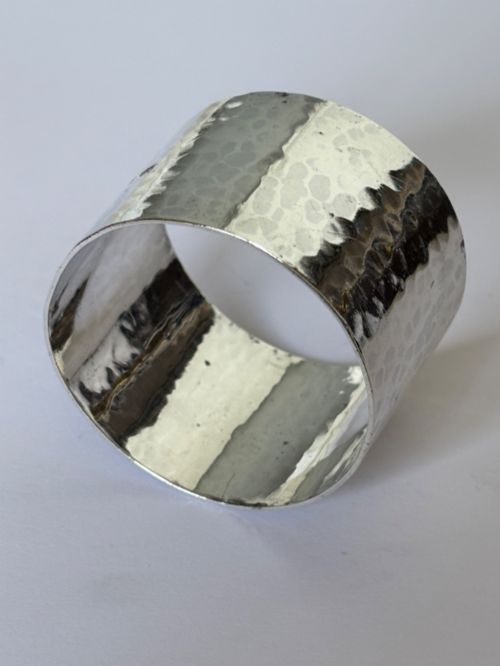
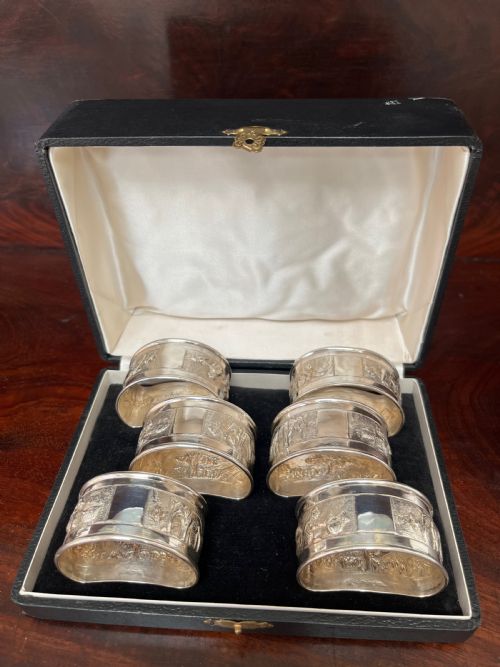
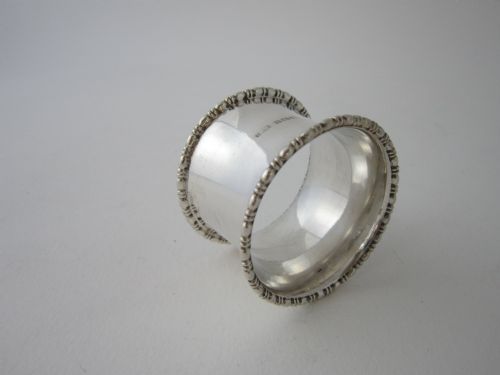
Silversmiths formed these napkin rings using sterling silver or continental standard 800 silver, shaping the metal into cylindrical bands. Certain pieces incorporate applied decorative elements or coloured enamel panels to enhance the exterior surface.
Makers struck hallmarks directly into the metal body to certify the silver standard and year of production. Workshops in Birmingham and continental Europe utilised traditional stamping and engraving techniques to finish each object.
Listings feature sterling silver and 800 silver materials across several decades, including the 1920s and 1930s.
What varies in quality
Quality rests upon the weight of the metal and the crispness of the engraved decoration or applied motifs. Thicker gauge silver maintains its structural integrity better over decades of use and polishing.
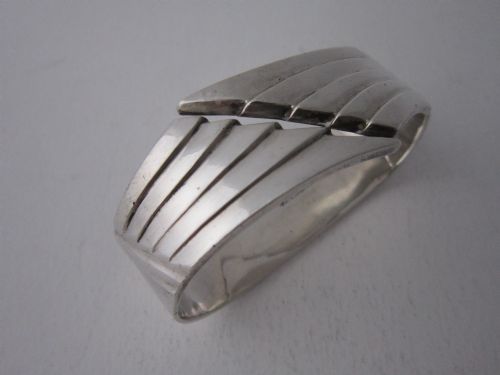
Design ambition separates standard factory output from pieces bearing named maker marks or specific stylistic movements such as Art Deco. Enamelled detailing and unusual structural forms elevate certain examples above plain cylindrical bands.
R. E. Stone·Henry Williamson·Robert Pringle
The Solid Silver Serviette Ring Glossary
- Sterling silver
- A silver alloy containing 92.5 percent pure silver by mass, with the remainder consisting of other metals for durability. British pieces typically carry the lion passant mark to indicate this standard.
- 800 silver
- A continental silver alloy containing 80 percent pure silver. This standard appears frequently on items manufactured outside Britain.
- Hallmark
- An official mark stamped into precious metals to indicate the purity of the material, the maker, and the year of assay. These stamps allow collectors to trace the exact origin of a piece.
- Art Deco
- A design style prevalent during the 1920s and 1930s characterised by geometric shapes, streamlined forms, and modern motifs. Napkin rings from this period often feature sharp angles and stepped patterns.
- Enamel
- A decorative glassy substance fused to the surface of metal through firing. Continental makers sometimes applied colourful enamel layers to create pictorial scenes or geometric patterns.
Frequently Asked Questions
How do I know if my ring is solid silver?
Solid silver pieces carry official hallmarks stamped directly into the metal surface. These tiny marks indicate the purity standard, such as sterling or 800 grade.
Plated items display wear revealing base metals underneath, whereas solid silver maintains consistent metal colour throughout.
When were most of these silver rings made?
The examples on this page originate from the early to mid-twentieth century, specifically spanning the 1900s through to the 1940s. This era includes distinct periods like the George V reign and the Art Deco movement.
Assay office date letters stamped on the metal provide the exact year of manufacture.
How should I clean silver napkin rings?
Cleaning requires a soft microfibre cloth and specialised silver polish to remove natural tarnishing without scratching the metal surface. Avoid harsh abrasive cleaners that wear away engraved details.
Enamelled pieces require extra care to protect the coloured glass sections from harsh chemical exposure.