


Antique Silver Place Stands
Antique silver place stands bring a touch of formal dinner organisation to the table, holding menu cards or names with charming miniature sculpture.
Antique Silver Place Stands
These antique silver place stands encompass menu holders, place card holders, and tableware accessories designed to organise seating and dining options. Buyers encountering this selection will find a strong representation of Edwardian pieces alongside Victorian, George V, George VI, and mid-century examples.
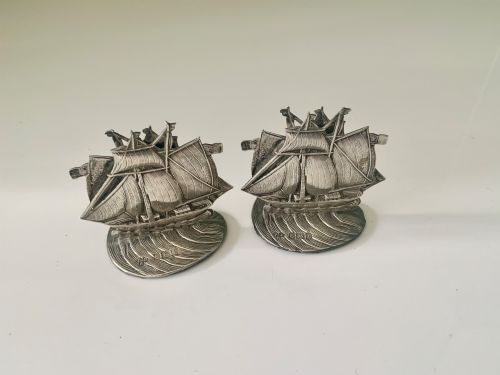
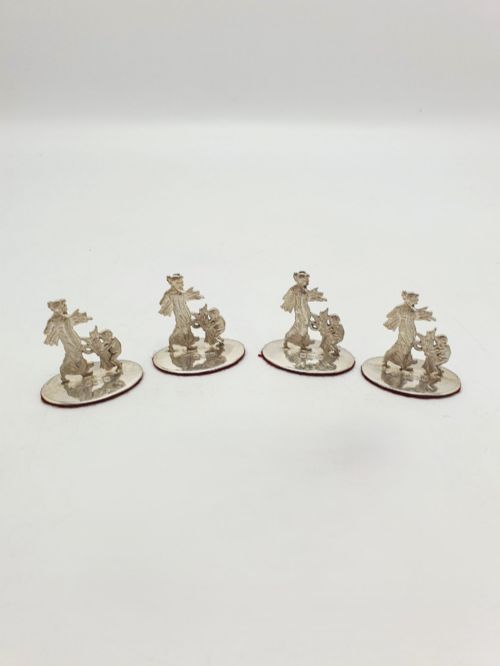
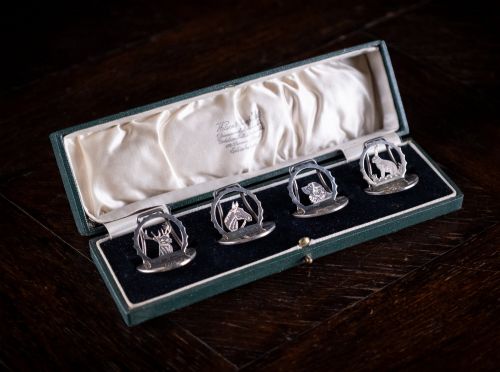
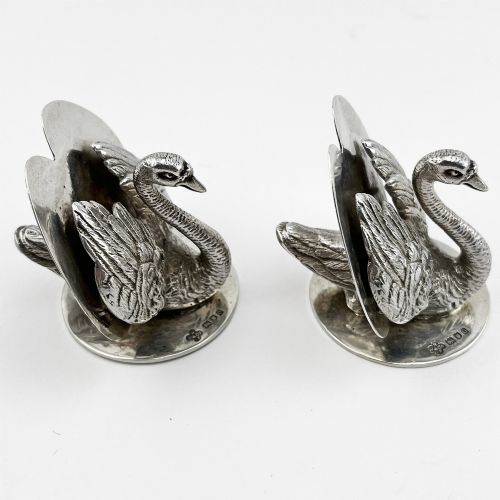
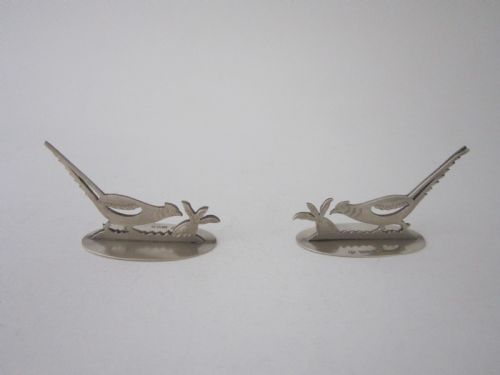
The forms span individual markers and matched sets, frequently modelled as animals, birds, figures, or stylised motifs. Originating largely from British workshops, these small items served a practical dining purpose while doubling as decorative conversation pieces.
Materials and construction
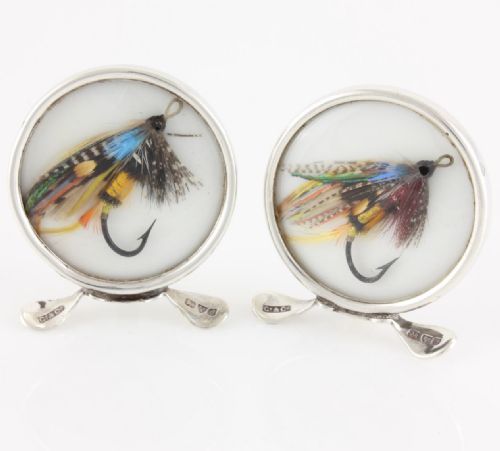
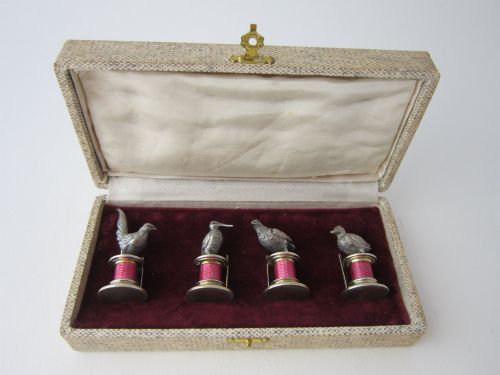
Makers constructed these pieces primarily from sterling silver or silver plate, frequently incorporating detailed casting and hand-finishing techniques. Selected examples integrate enamel work, glass, or textiles such as velvet, silk, and leather within fitted presentation boxes.
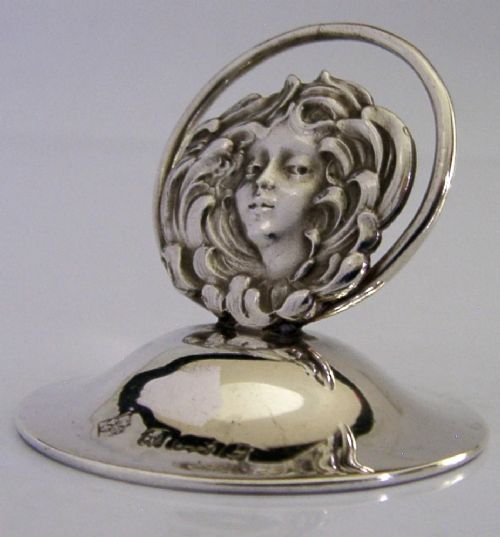
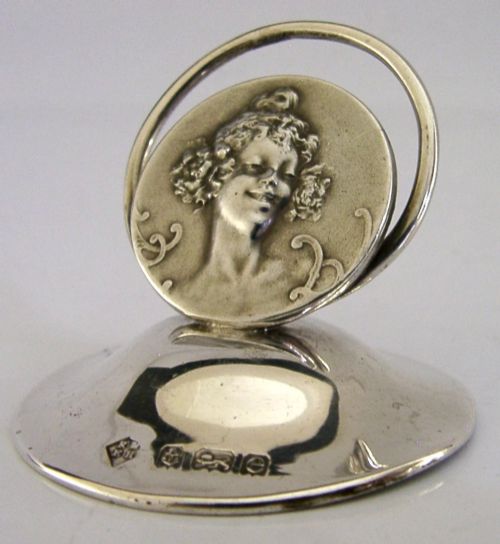
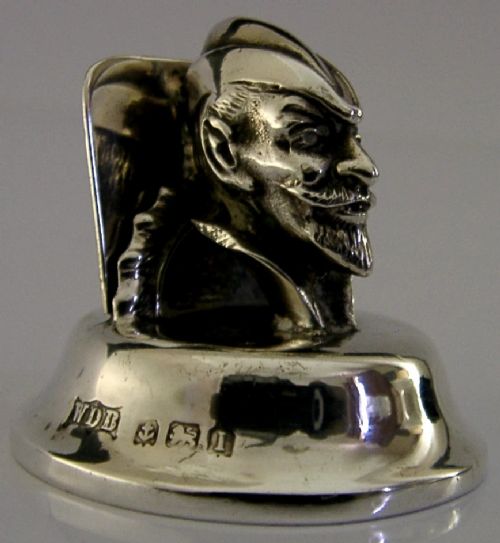
Figural models required skilled silversmithing to capture complex subjects like animals, military figures, and literary characters in miniature. Hallmarks stamped into the metal record the assay office, year, and maker, providing clear documentation of origin.
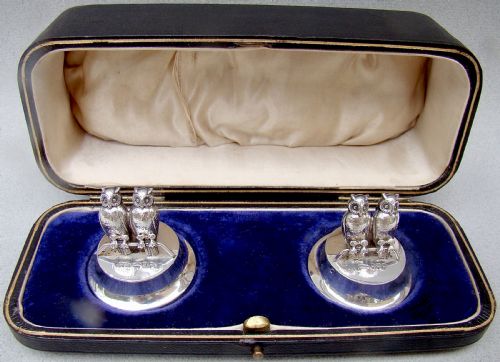
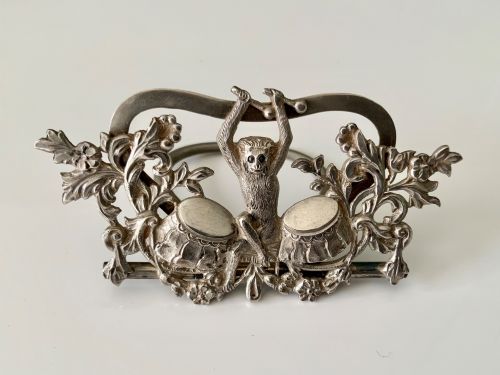
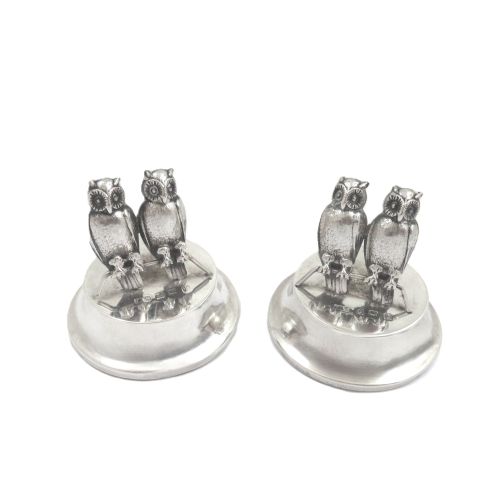
Dining guests could consult menus held by miniature owls, boxing hares, or even a monkey playing drums.
Assessing craftsmanship and design
Quality rests upon the crispness of the casting and the level of hand-chased detail visible in figural subjects such as owls, foxes, or human characters. Pieces produced by established makers or recorded retailers display superior definition and balanced weight.
The presence of matching sets, original fitted boxes, or intact enamel work elevates the standing of an item. Simpler utilitarian designs contrast with complex sculptural forms that required advanced silversmithing skill.
Levi & Salaman·A. Wilcox·Grey & Co.·Sampson Mordan·Asprey·Liberty
The Antique Silver Place Stands Glossary
- Sterling silver
- An alloy consisting of 92.5 percent silver by mass, with the remainder composed of copper or other metals. This standard grade appears across the majority of these pieces.
- Menu holder
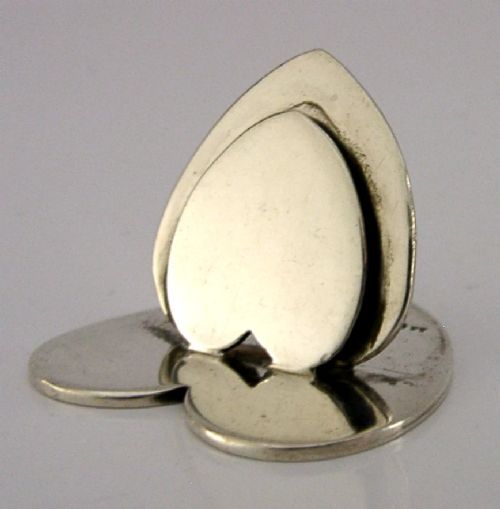
- A small desk-like or clip accessory designed to display the evening bill of fare upright on a dining table. They frequently double as place name markers.
- Place card holder
- A miniature stand intended to grip a small card bearing a guest's name. They are often found in matched sets for larger dinner parties.
- Assay office
- A statutory body in the United Kingdom that tested the purity of precious metals and applied official hallmarks. Towns such as Birmingham, Chester, and London operated these offices.
- Figural
- A style of decorative object modelled in the likeness of a human, animal, or character. These designs form a prominent portion of early twentieth-century table accessories.
Antique Silver Place Stands: Frequently Asked Questions
What is the difference between a menu holder and a place card holder?
Menu holders generally feature a slightly larger clip or backplate designed to support a folded card detailing the courses of a meal. Place card holders are typically smaller, intended solely to anchor a guest's name tag at an individual seat.
Despite their distinct original purposes, many examples served interchangeably for both menus and names during formal dining occasions.
How do I know which period my silver stands come from?
Dating relies heavily upon the hallmarks stamped directly onto the silver, which include specific date letters corresponding to assay office records. Stylistic clues such as flowing Art Nouveau curves or geometric Art Deco lines also point to specific decades.
Edwardian and George V pieces dominate this category, reflecting the peak era for elaborate table decorations.
Were these pieces sold as individual items or sets?
Makers produced these accessories both as single pieces and in matched pairs, fours, or larger sets intended for grand dining tables. Larger gatherings required coordinated sets of twelve or twenty-four to maintain a uniform appearance.
Complete boxed sets from the early twentieth century remain particularly sought after by collectors today.
How were these stands used during historical dinners?
Hosts placed them at intervals along the dining table so guests could easily read the evening menu or locate their assigned seats. They formed part of an elaborate tablescape that included matching cutlery, candlesticks, and centrepieces.
In modern homes, they function well for displaying small photographs, recipe cards, or place names at dinner parties.