



Silver Place Card Stands
Silver place card stands bring miniature sculpture and refined dining organisation together on the table.

What silver place card stands are
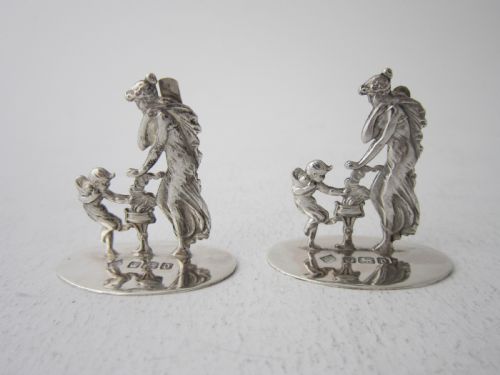
Silver place card stands and menu holders appear across Edwardian, George V, and 1930 periods, functioning as small desk or table accessories. These pieces typically take the form of pairs or sets of four, designed to hold name cards or menus during formal meals.
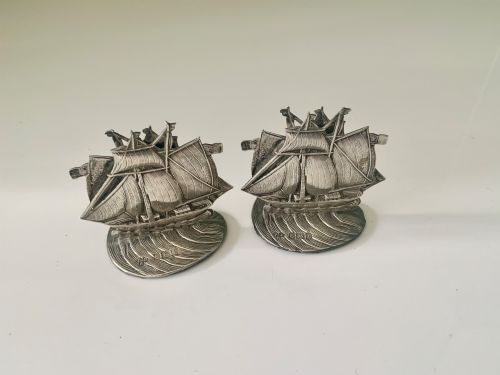
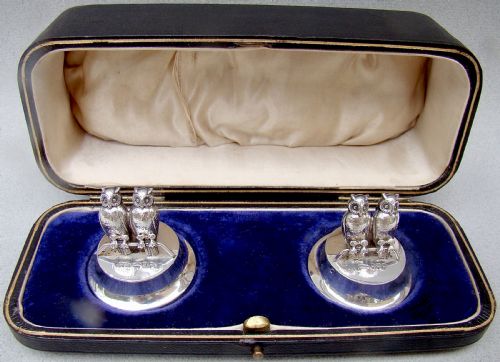
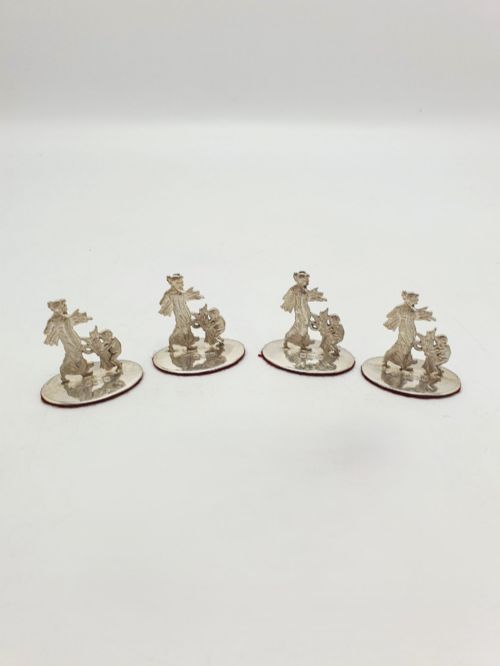
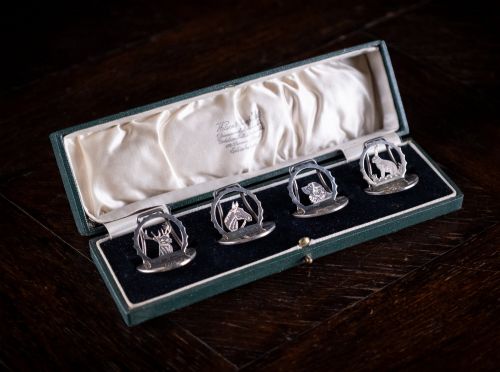
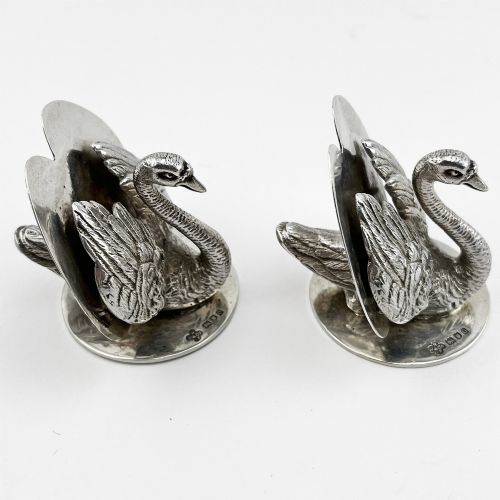
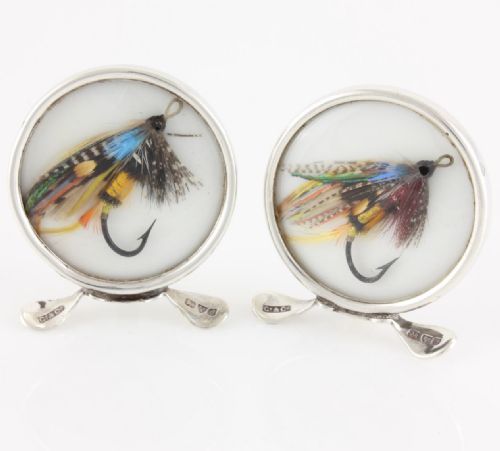
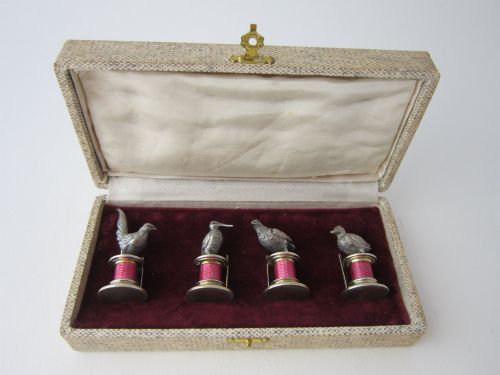
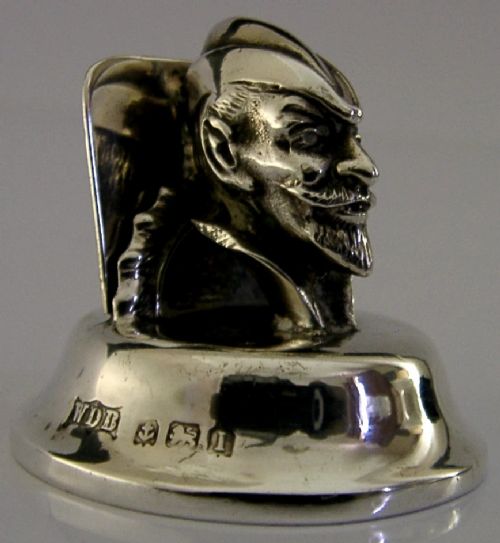
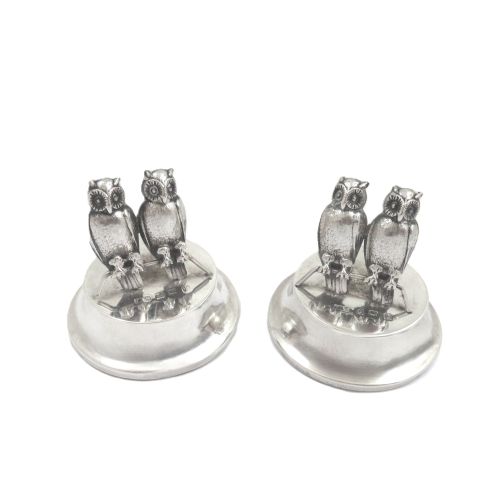
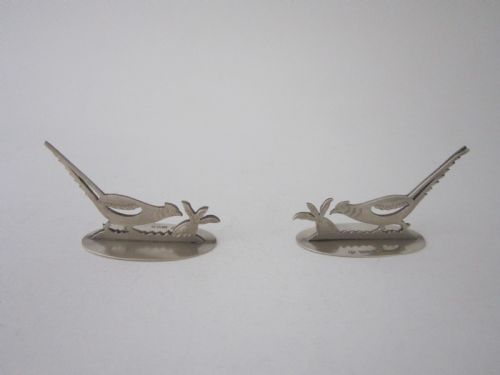
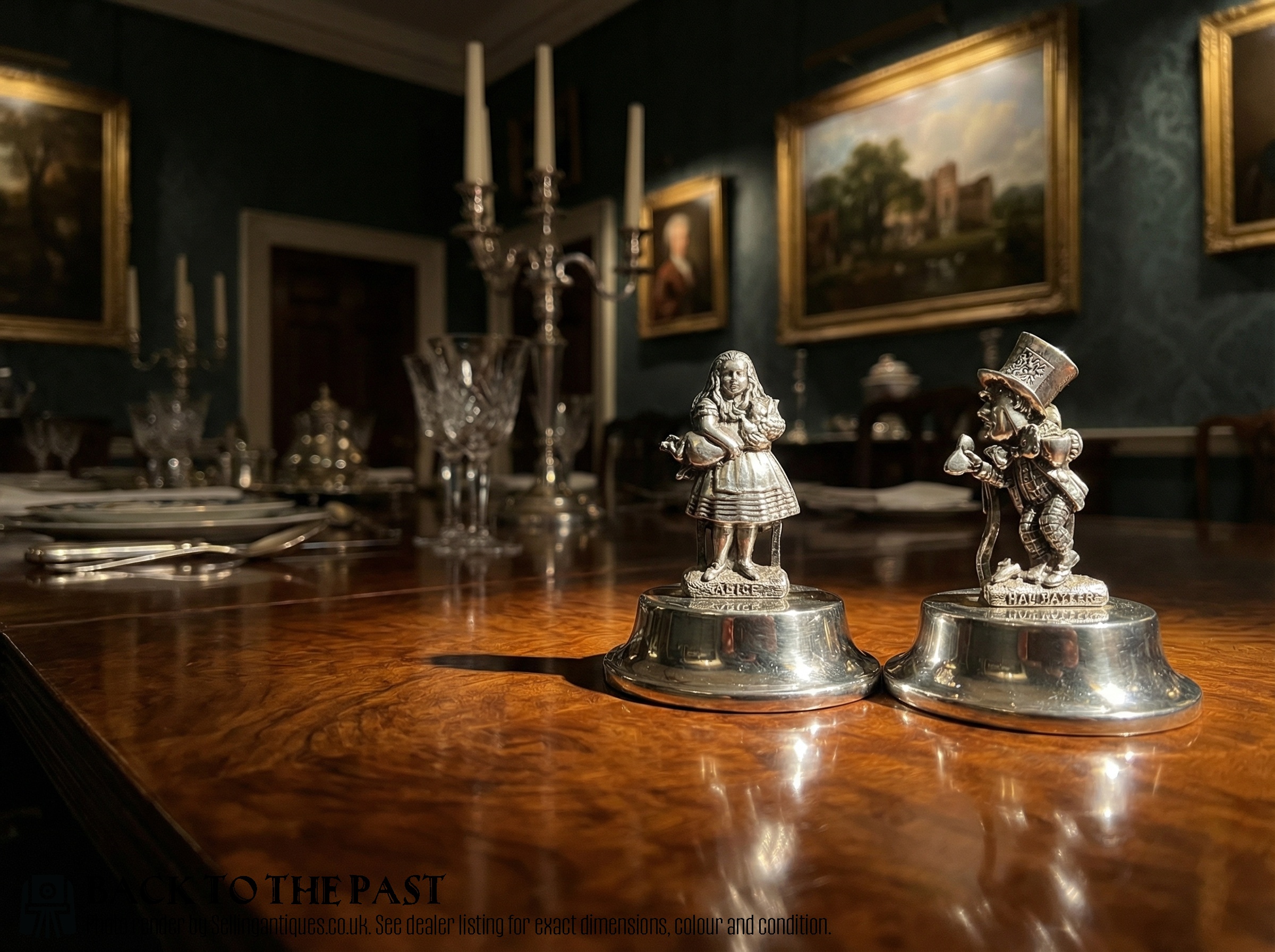
The selections on this page span several distinct motifs, including British military insignia, birds such as grouse and owls, and novelty themes like Alice in Wonderland and swans. Materials predominantly feature sterling silver, sometimes paired with glass elements.
Originating largely from British makers in centres like London, Chester, and Birmingham, these items reflect the elaborate table arrangements of the early twentieth century. Buyers encounter both utilitarian card holders and highly decorative figural designs.
How they were made
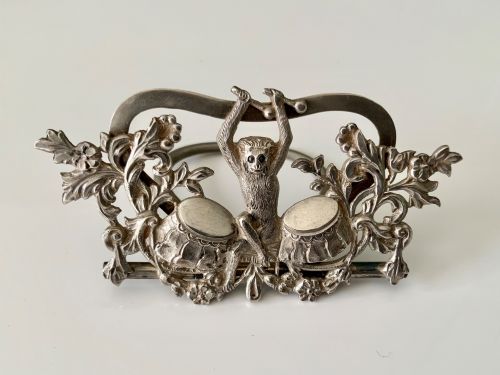
These items utilise sterling silver and standard silver, shaped through casting, chasing, and detailed hand-finishing. Figural subjects like birds, military badges, and literary characters demonstrate sculptural modelling applied to functional objects.
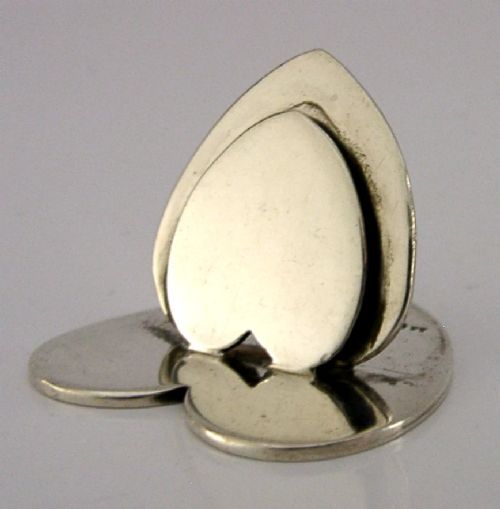
Makers integrated slotted clips or weighted bases to secure paper menus and cards without damaging the delicate metalwork. Glass components occasionally appear alongside the silver structure to support or display the printed cards.
Retail Price Guide 2026
Typical UK retail prices for silver place card stands, calculated from the Sellingantiques database of over a million retail prices indexed since 2003. This retail price guide relies exclusively on Sellingantiques data; no external sources or auction records are used, so the figures do not describe the wider market.
Listings feature sterling silver and glass materials across Edwardian, George V, and 1930 periods.
What varies in quality
Completeness also distinguishes the range, as matched sets of four or pairs command greater interest than solitary examples. Maker attribution, through clear hallmarks from notable firms like Asprey or Sampson Mordan, adds documented provenance to the silver.
Asprey·Sampson Mordan
The Silver Place Card Stands Glossary
- Sterling silver
- A silver alloy containing 92.5 percent pure silver by mass and 7.5 percent other metals, usually copper. This standard composition provides the durability required for intricate tablewares.
- Hallmark
- An official stamp applied by an assay office to indicate the purity of the metal, the maker, and the year of production. British items often display city marks such as London, Chester, or Birmingham.
- Menu holder
- A small stand designed to support a printed menu upright on a dining table. They frequently match the design of adjacent place card holders.
- Novelty
- An antique or collectible item made in a whimsical, unusual, or humorous shape. In silver tablewares, these often depict animals, literary scenes, or military badges.
Frequently Asked Questions
What are silver place card stands?
Silver place card stands are small decorative items designed to hold guest name cards or menus on a dining table.
They appear in various figural and architectural styles, predominantly dating from the Edwardian and George V periods.
How were menu and card holders used?
Hosts placed them at individual seats or along the dining table to indicate seating arrangements and display the evening's menu.
They served both a practical organising purpose and a decorative function during formal meals.
How do I date an Edwardian silver holder?
Dating relies upon the hallmarks stamped into the silver, which indicate the assay office and specific year of manufacture.
Style also offers guidance, with Edwardian and George V pieces showing characteristic early twentieth-century design motifs.
Are these pieces sold as sets?
Surviving examples frequently appear as pairs or sets of four, reflecting how they were originally produced for dining tables.
Complete sets matching in theme and hallmark are particularly sought after by collectors.