
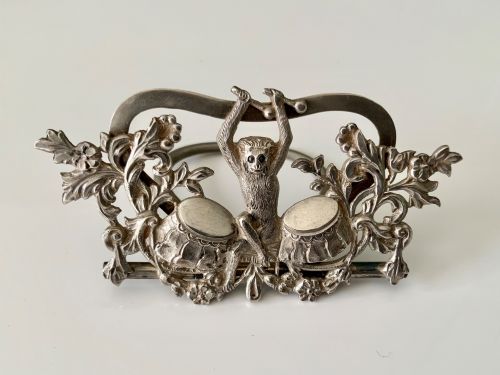


Victorian Silver Menu Holders
Victorian silver menu holders are tactile table silver pieces that collectors prize for their miniature sculptural detail and decorative charm.
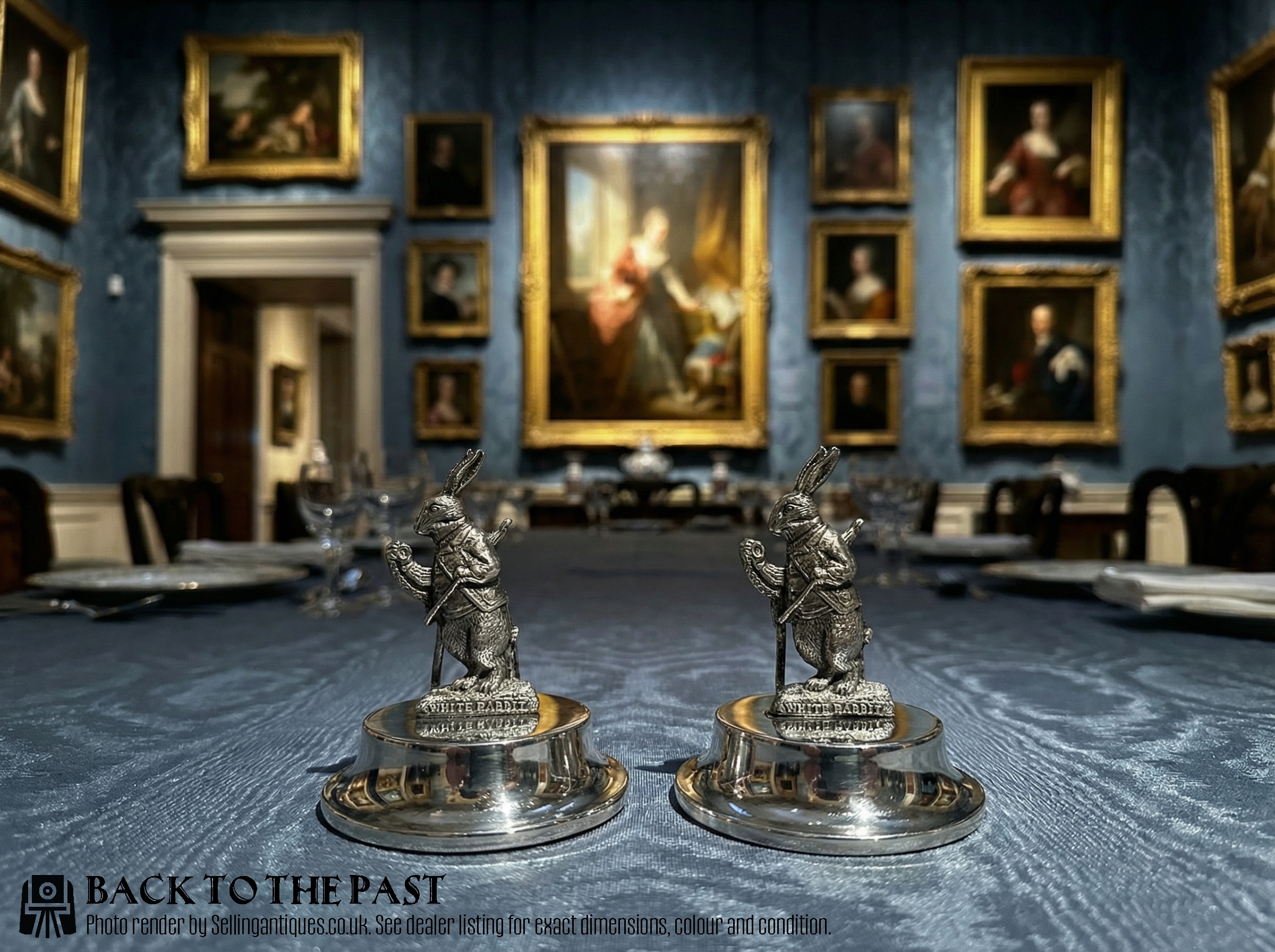
Victorian Silver Menu Holders
These victorian silver menu holders comprise small upright stands designed to hold dinner party cards on the dining table. The listings show forms ranging from plain hinged card clips to elaborate novelty designs.
Buyers meet both single pieces and matched pairs, often originating from English assay offices during the nineteenth and early twentieth centuries. The selection spans standard card holders alongside regional variations and novelty animal subjects.
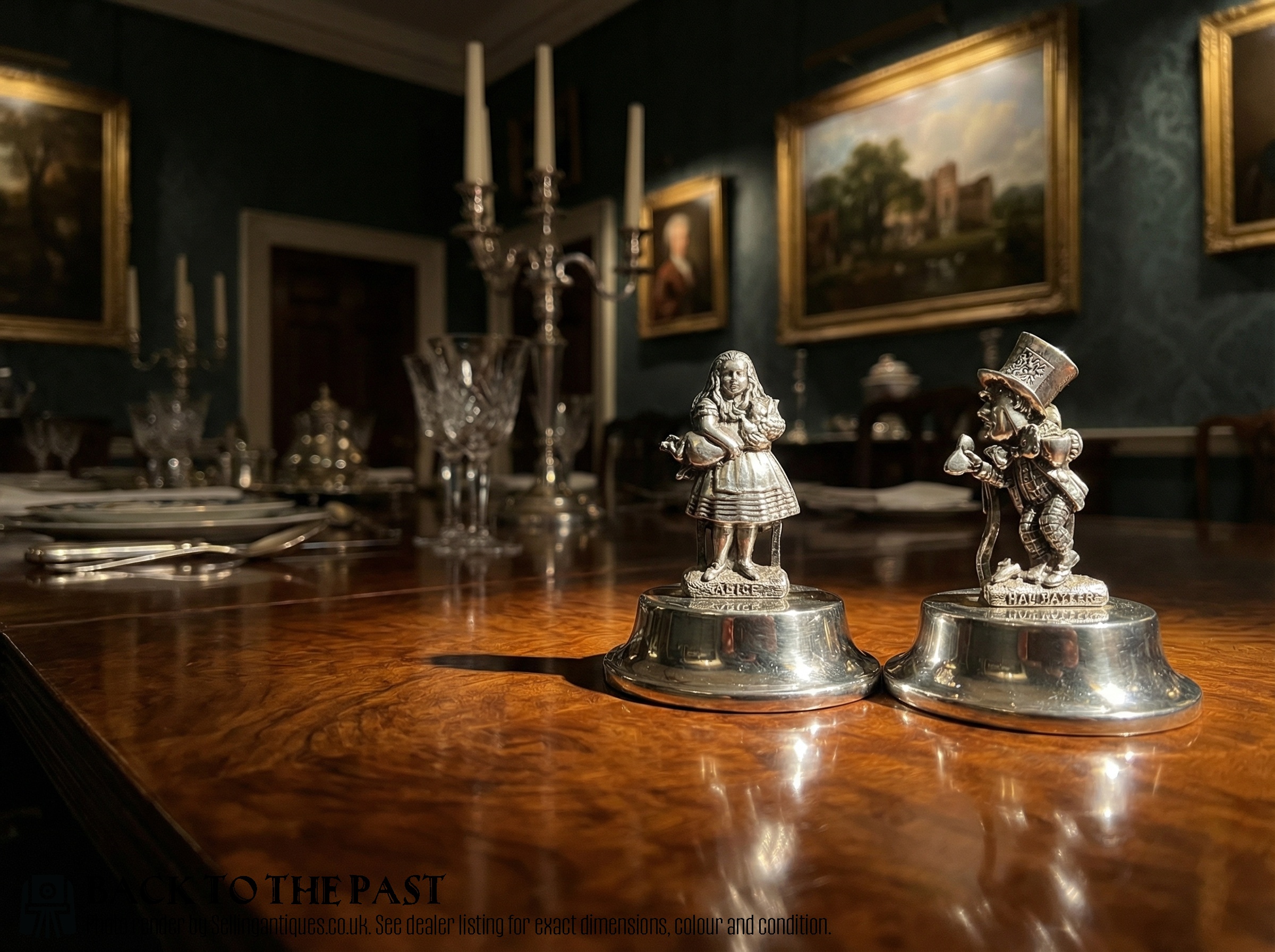
Materials and construction
The pieces are constructed predominantly from sterling silver, utilising standard silversmithing techniques of casting, stamping, and engraving. Many incorporate weighted bases to support the upright display of card menus.
Makers occasionally combined the silver with contrasting materials such as enamel, leatherette, velvet, glass, and agate. These secondary elements provide colour and textural contrast to the metallic framework.
The inventory records sterling silver, enamel, leather, glass, and agate across pieces spanning the nineteenth and early twentieth centuries.
Assessing craftsmanship and design
Quality separates standard functional card clips from sculptural novelty pieces by notable workshops. The crispness of the casting in animal and figure subjects dictates the visual appeal.
The clarity of hallmarks and the structural integrity of the hinges determine the desirability of individual examples. Original fitted boxes and matched pairs command greater interest among collectors.
Sampson Mordan
The Victorian Silver Menu Holders Glossary
- Sterling silver
- A standard alloy containing ninety-two point five percent silver by mass. This material forms the primary body of almost all examples.
- Assay office
- An official body that tests the purity of precious metals and stamps them with hallmarks. Marks identify the town of testing and the year of manufacture.
- Novelty silver
- Small decorative items shaped as animals, figures, or objects rather than traditional geometric forms. These pieces often depict owls, monkeys, or sentry boxes.
- Agate
- A decorative quartz variety used in Scottish Revival pieces. This stone provides natural patterning inset into the silver frame.
Victorian Silver Menu Holders: Frequently Asked Questions
How were menu holders used?
Hosts placed them beside each setting or along the dining table to inform guests of the courses served.
The upright slots held small cards bearing the handwritten or printed menu for the evening.
Are they usually found in pairs?
Many examples survive as matched pairs or small sets intended to balance the arrangement of a large dining table.
Single pieces also appear frequently in the available selections.
How do I identify the period?
Assay office hallmarks stamped on the silver provide the exact year and city of testing for each piece.
Stylistic elements like Scottish agate work or Edwardian novelty motifs also help indicate the date of manufacture.