
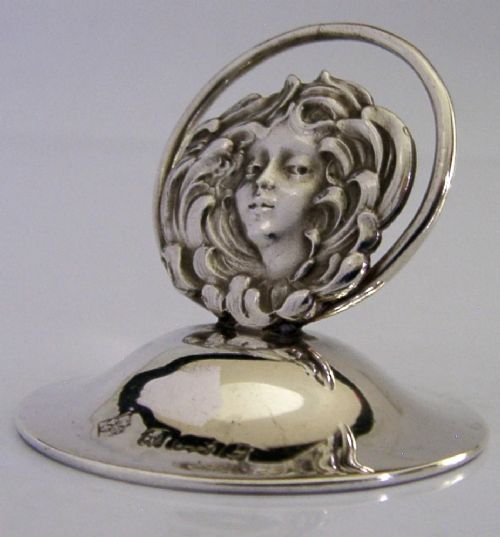
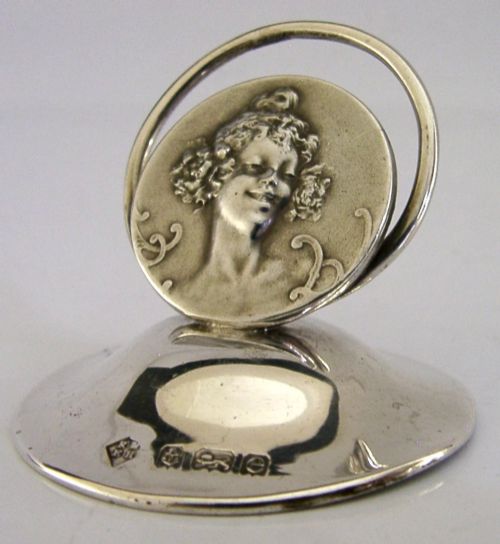
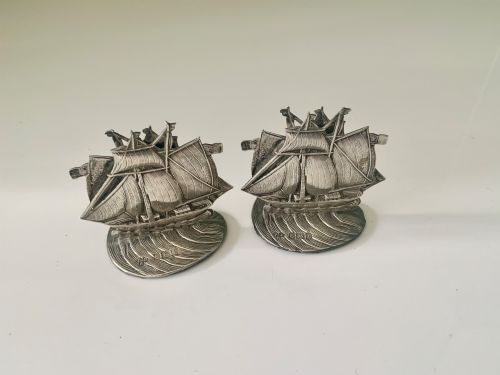
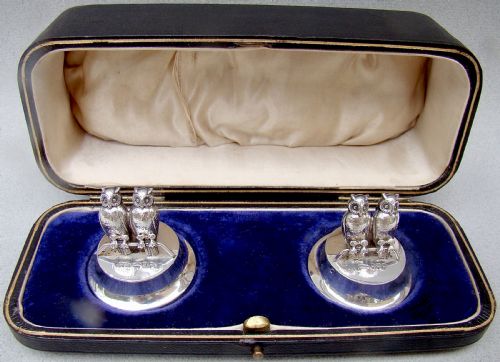

Silver Table Card Holders
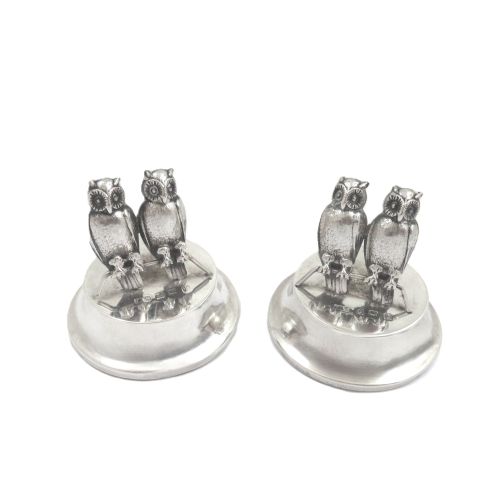
Silver table card holders bring distinct charm to dining settings through miniature figural designs crafted for menus and place names.
Silver Table Card Holders
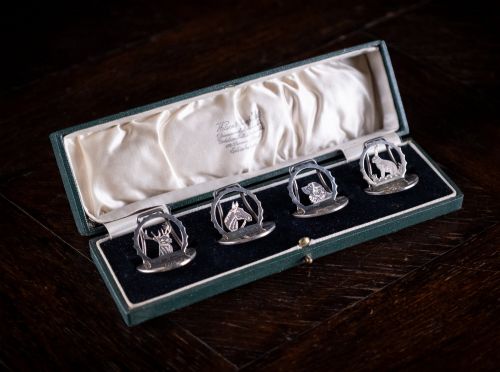
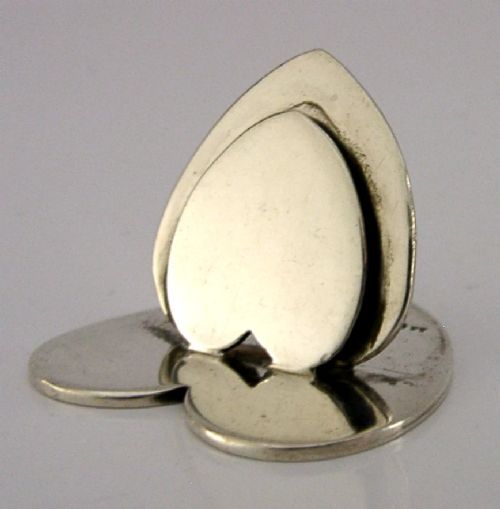
Silver table card holders encompass menu holders, place card holders, and playing card boxes designed for tabletop display. These pieces appear primarily in Edwardian, George V, and George VI periods, taking the form of singular items, pairs, or matched sets.
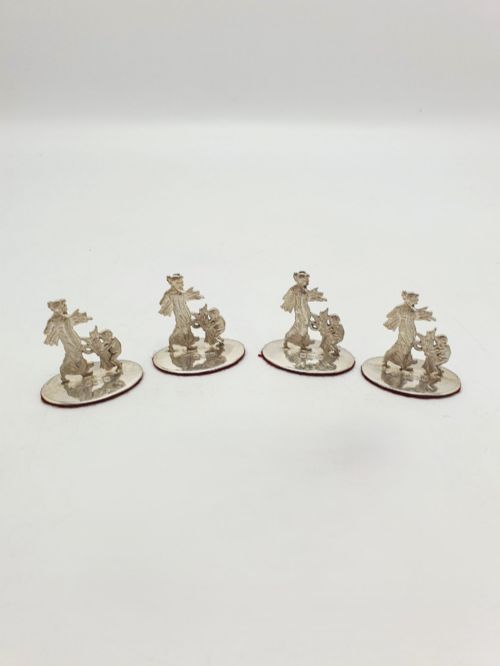
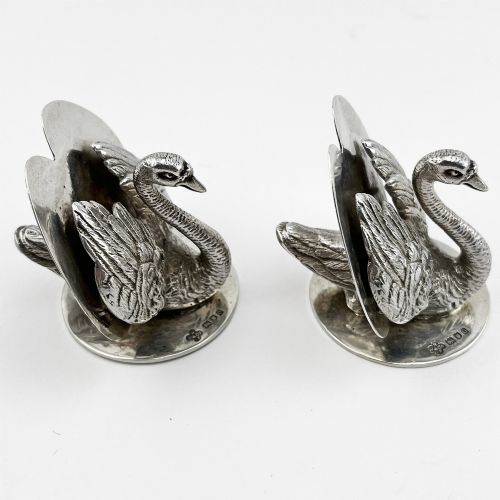
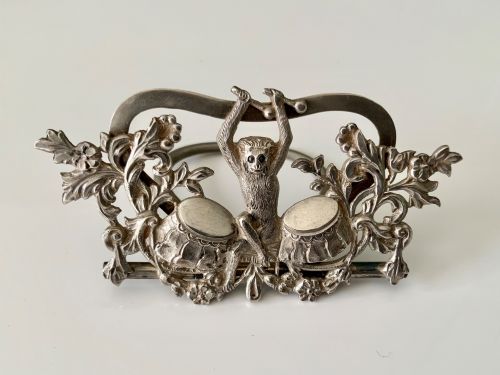
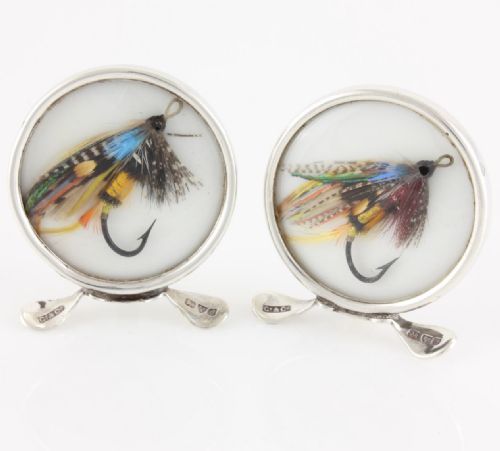
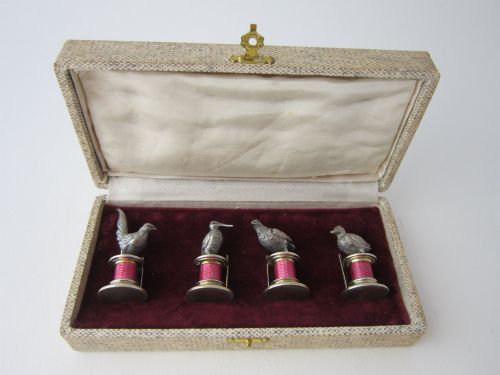
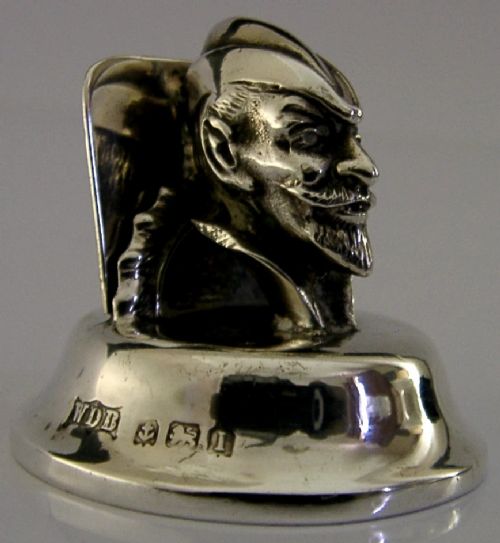
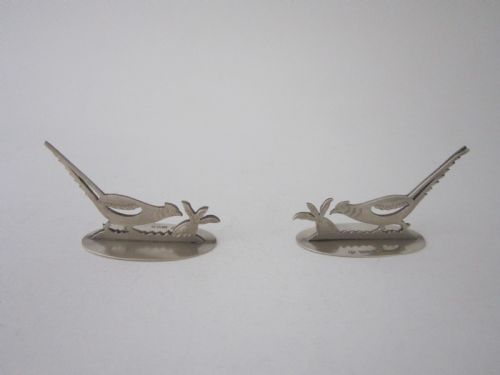
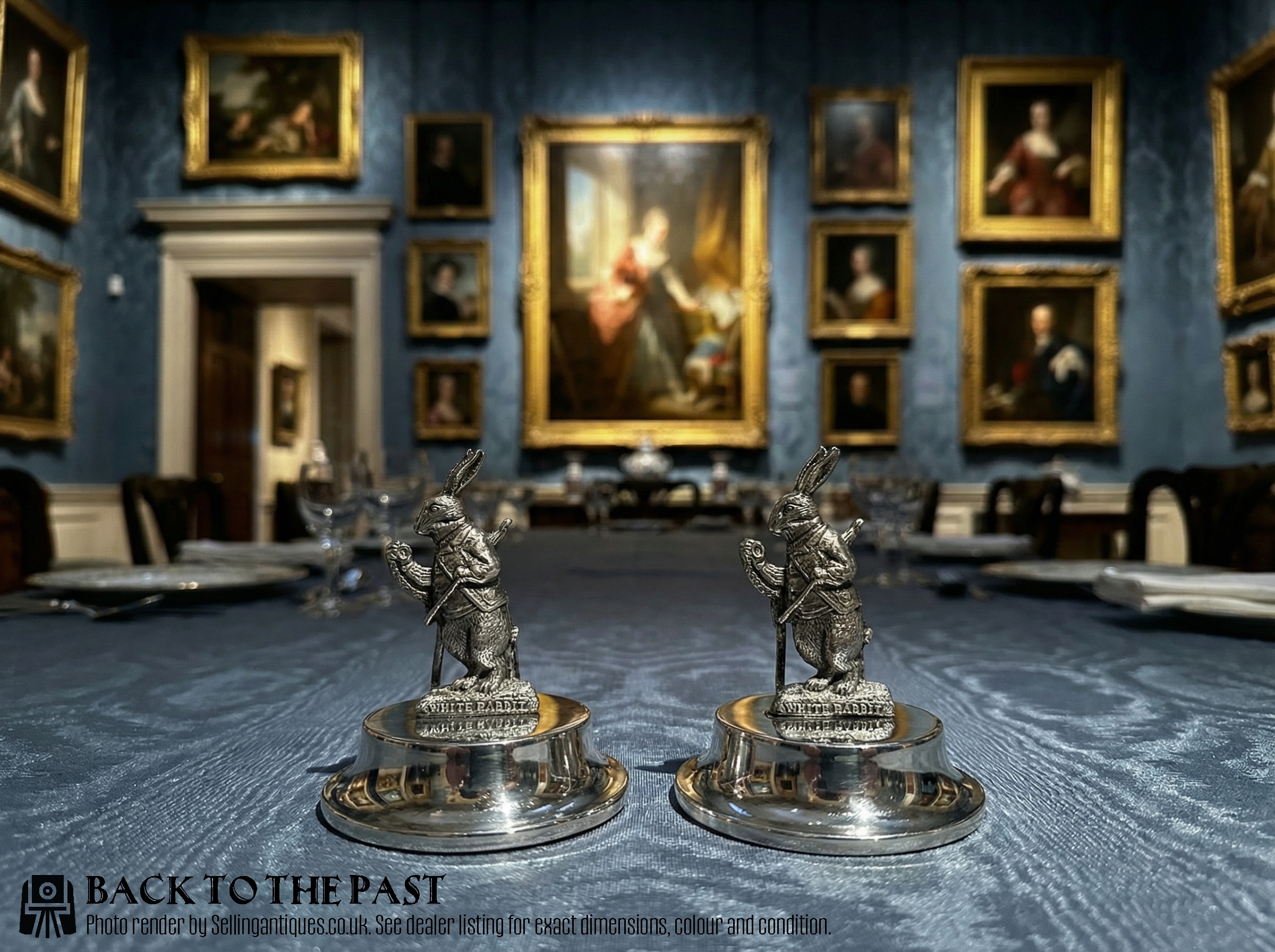
Makers shaped these accessories into figural and thematic subjects including animals, birds, military motifs, and literary characters like Alice in Wonderland. The selection on this page leans heavily toward Edwardian sterling silver menu holders and place card markers.
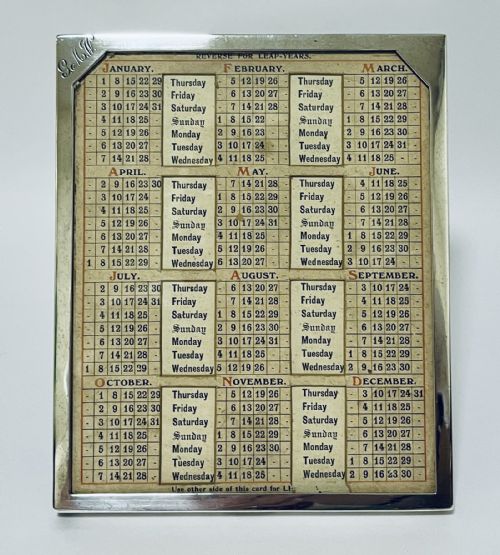
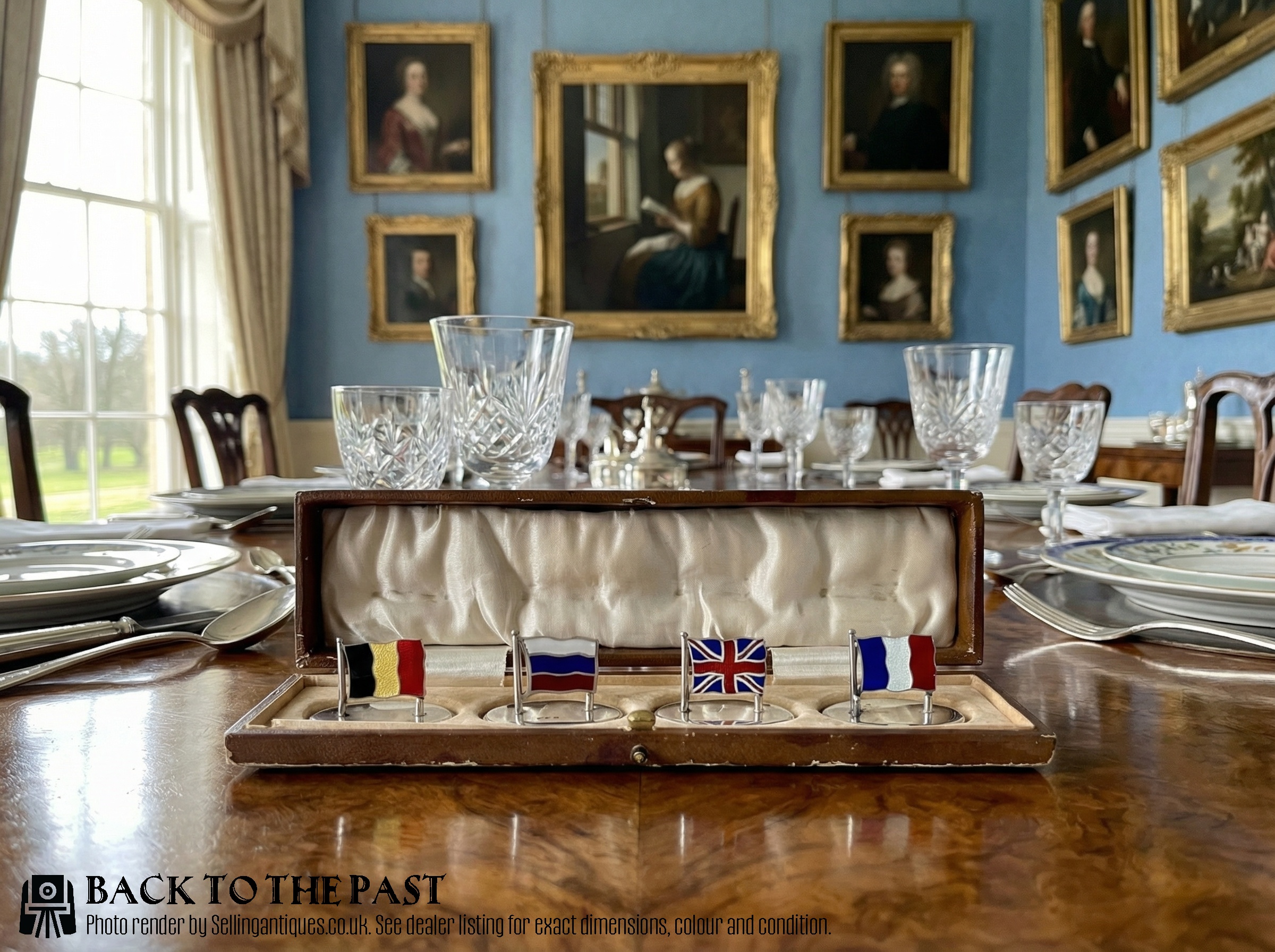
Tableware accessories extend beyond simple clips into desk items, perpetual calendars, and boxed sets intended for formal dining arrangements. Pieces range from straightforward geometric shapes to elaborate sculptural animals and enamel flags.
How they were made
Silversmiths utilised sterling silver and silver plate, shaping metals through casting, stamping, and hand-finishing techniques. Many examples incorporate coloured enamel work to highlight flags, birds, or decorative details on the metal surface.
Internal structures of boxes and certain bases utilise supplementary materials like velvet, leather, silk, and glass to protect playing cards and provide weighted support. Maker workshops applied hallmarks stamping city assay marks, dates, and maker initials directly onto the silver frames.
Listings feature sterling silver and silver plate materials, incorporating velvet, enamel, and glass across Edwardian, Victorian, and mid-century periods.
What varies in quality
Completeness of sets and matching hallmarks across multi-piece collections heavily influence the standing of the work. Maker attribution to notable firms such as Sampson Mordan, Levi & Salaman, or Asprey adds distinct pedigree to the manufacturing standard.
Levi & Salaman·A. Wilcox·Grey & Co·Sampson Mordan·Asprey·Christofle
The Silver Table Card Holders Glossary
- Sterling silver
- A silver alloy containing 92.5 percent pure silver by mass and 7.5 percent other metals, usually copper. This standard alloy provides durability while maintaining a bright metallic lustre.
- Menu holder
- A small upright display stand designed to hold printed dinner menus on a dining table. These pieces often match place card holders in larger table settings.
- Place card holder
- A miniature tabletop accessory used to support name cards indicating guest seating arrangements. They mirror the decorative themes of contemporary menu holders.
- Assay mark
- A stamp or series of stamps applied to precious metals indicating the purity, the assay office of origin, and the year of manufacture. British silver incorporates standard marks like the lion passant and city symbols.
- Figural
- Art or objects modelled in the likeness of human, animal, or character forms rather than abstract shapes. These sculptural pieces represent distinct subjects like owls, foxes, or figures from literature.
Silver Table Card Holders: Frequently Asked Questions
What are silver table card holders?
Silver table card holders are small decorative accessories designed to display menus and place names on dining tables during formal meals.
They function as both practical markers for seating and ornamental items that match the silver service of the period.
How were menu holders used?
Hosts placed menu holders down the length of long dining tables so guests could easily read the courses planned for the meal.
Place card holders sat beside each setting to indicate the exact seating arrangement assigned by the host.
How do I date silver card holders?
Dating relies heavily on the hallmarks stamped directly onto the silver, which reveal the assay office and the exact year letter.
Stylistic cues such as Edwardian naturalism or Art Deco geometry also help place the object within a specific decade.
How do I clean antique silver?
Cleaning requires a soft microfiber cloth and specialised silver polish formulated to remove tarnish without stripping the underlying metal.
Harsh abrasive dips should be avoided, especially on pieces featuring delicate enamel work or velvet linings.