



Antique Silver Table Markers
Antique silver table markers are charming desktop and dining accessories that bring character and period craftsmanship to any table setting.
Antique Silver Table Markers
When you search for antique silver table markers, you encounter a specialised category of small dining accessories designed to hold menu cards and place cards. These pieces serve a practical purpose while adding decorative flair to formal dinners and gatherings.
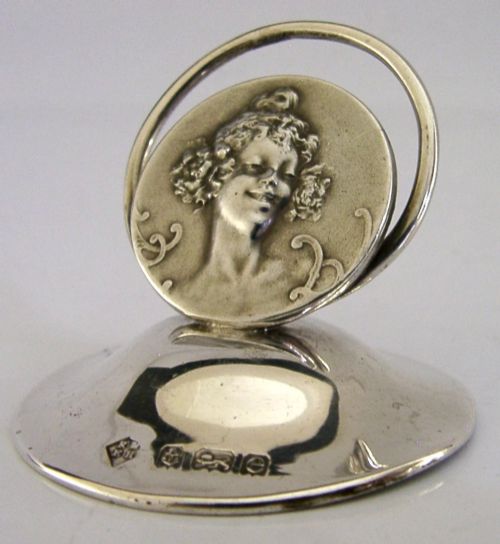
The pieces appearing on this page span several decades, featuring Edwardian, Victorian, Art Nouveau, Art Deco, and George VI periods. You will frequently find them in forms such as menu holders, place card holders, and combined menu and place card holders.
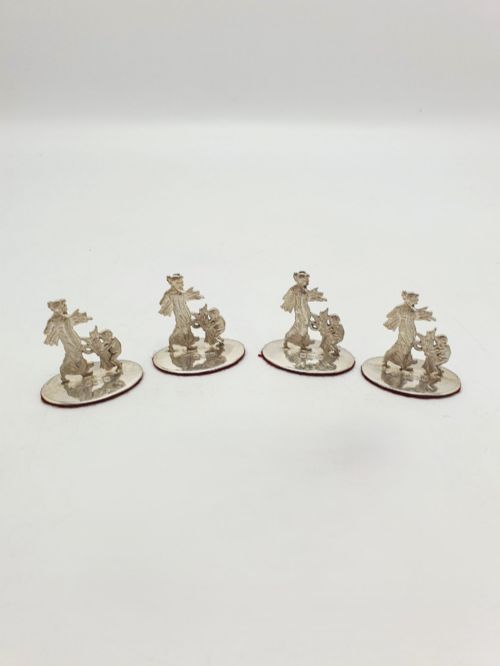
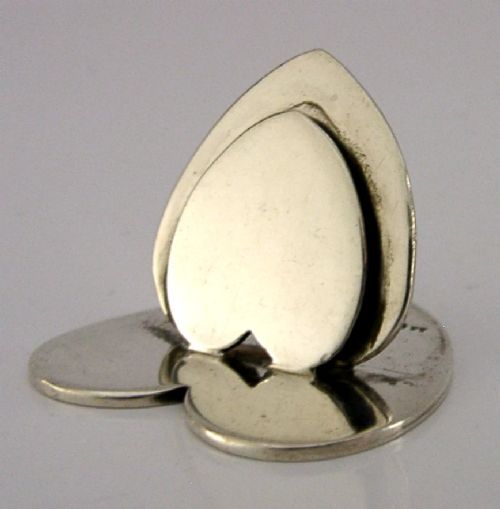
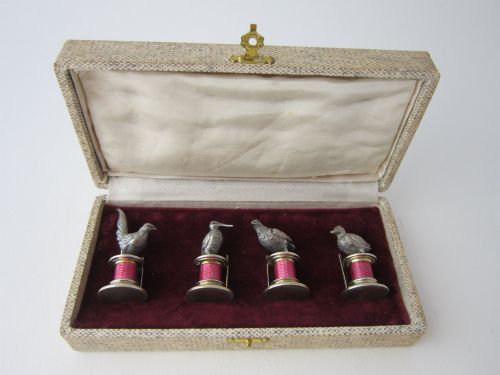
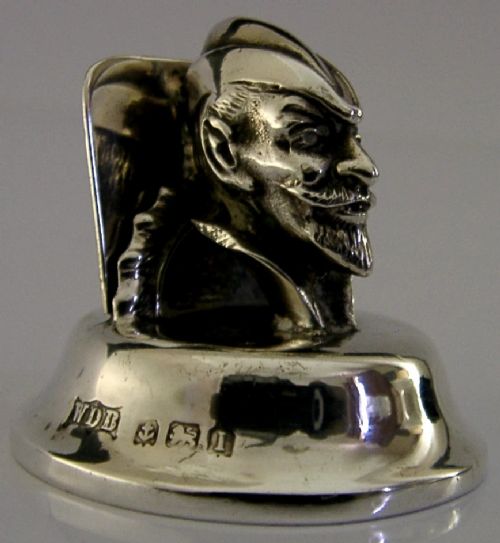
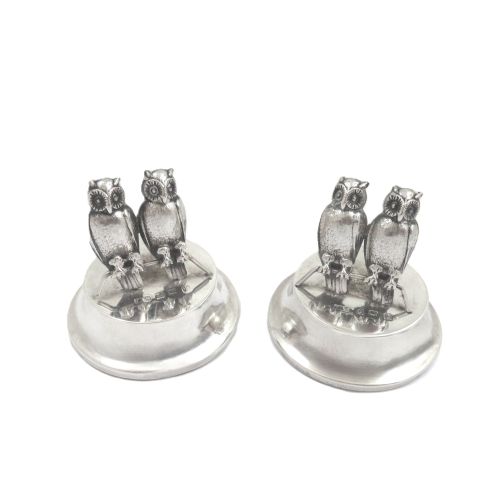
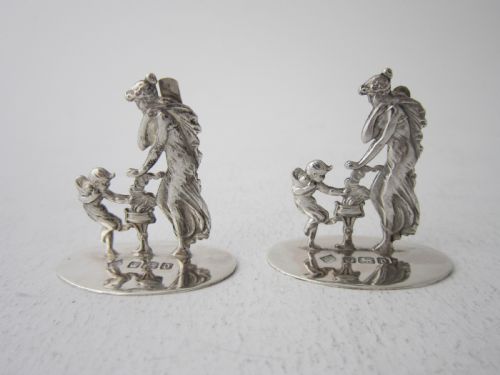
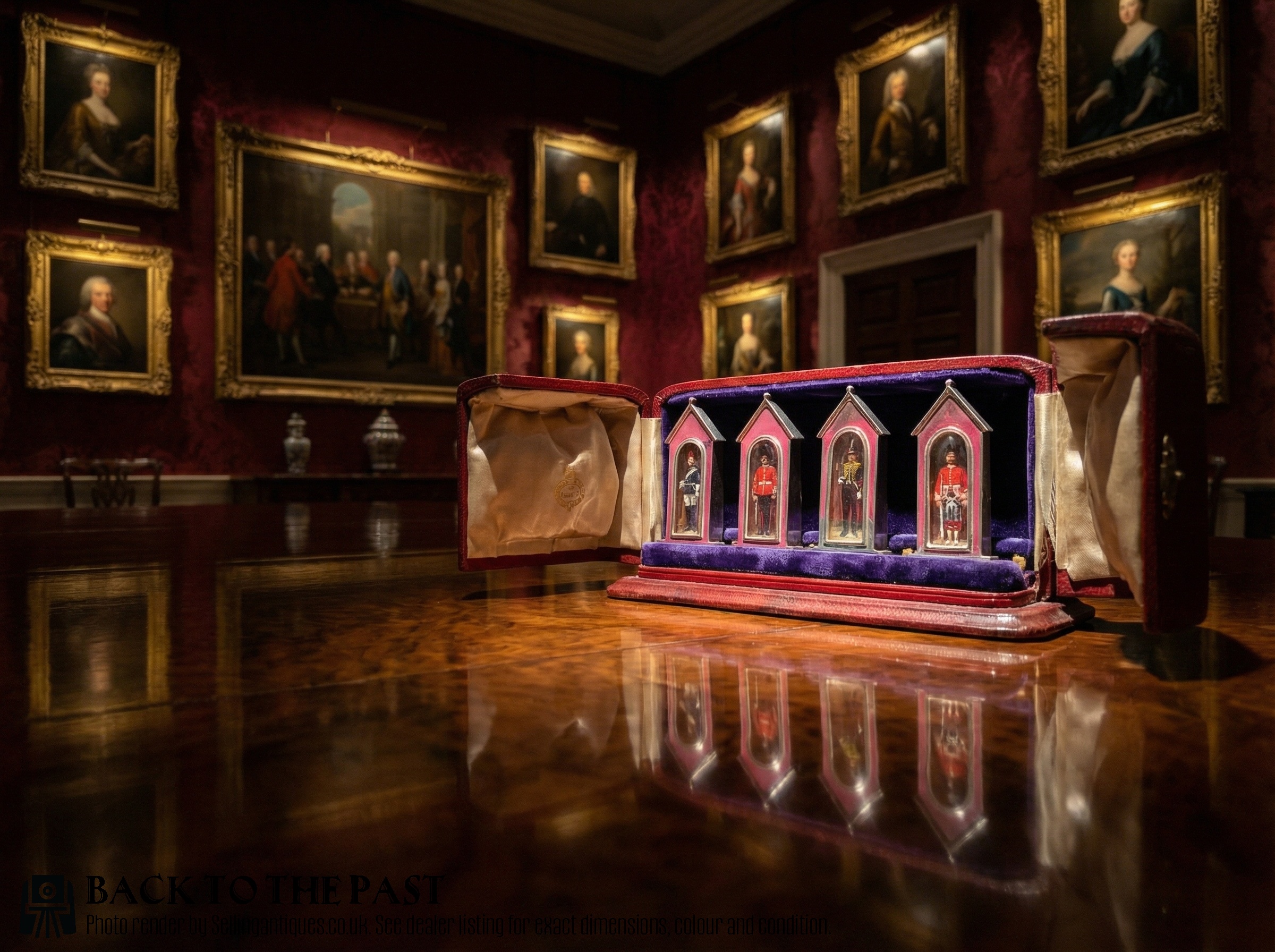
Makers produced these items in various imaginative subjects, including figural designs like owls, foxes, grouse, horses heads, sentry boxes, maidens, and Robin Hood figures, alongside love hearts and Scottish influenced designs.
How they were made
Silversmiths utilised sterling silver and silver plate to form the structural bodies of these markers, often casting figural subjects in solid metal. Detail was added through chasing, engraving, and modelling to create lifelike animals and human figures.
Certain examples incorporate additional decorative elements such as enamel and guilloche enamel for colour, alongside velvet and silk components used internally or as backing details.
What varies in quality
Quality in antique silver table markers rests primarily on the crispness of the casting and the artistry of the modelled subject, whether depicting an animal or a figural scene. Pieces with finely rendered details in feathers, fur, and facial expressions stand apart from simpler designs.
The presence of specialised decorative techniques, such as applied enamel work or complex multi-part construction, elevates the craftsmanship. Maker attribution and matched sets also influence the standing of a piece within the range.
Sampson Mordan·Liberty
The Antique Silver Table Markers Glossary
- Menu holder
- A small desk or table accessory designed to prop up a printed menu card upright during a meal. They often match smaller companion pieces intended for individual names.
- Place card holder
- A miniature stand that secures a guest name card next to a place setting. They frequently share stylistic themes with contemporaneous menu holders.
- Guilloche enamel
- A decorative technique where intricate geometric patterns are engraved beneath translucent enamel. It provides depth and vibrant colour to silver surfaces.
- Sterling silver
- An alloy consisting of silver and other metals, usually copper, proportioned to ensure durability while maintaining a bright metallic lustre. Most antique table markers utilise this standard.
- Figural
- Designed in the likeness of a human, animal, or recognizable object rather than relying on abstract or purely geometric ornament.
Antique Silver Table Markers: Frequently Asked Questions
What is the difference between a menu holder and a place card holder?
Menu holders are typically taller or wider items built to support a central menu card for the table or small groups to read. Place card holders are scaled down to support individual name cards for seated guests.
Despite their different sizes, makers often produced them as matching sets employing identical motifs, such as pairs of owls or horses heads.
How do I date an antique silver table marker?
Dating relies heavily on hallmarks stamped into the silver, which indicate the assay office, date letter, and sterling standard. Stylistic clues also help place an item, such as flowing organic lines for Art Nouveau pieces or geometric motifs for Art Deco.
Most items on this page cluster around the Edwardian era and the early decades of the twentieth century.
What materials are used besides silver?
While sterling silver and silver plate form the primary structure, makers occasionally incorporated vibrant materials for contrast. Enamel and guilloche enamel add flashes of colour to subjects like flowers or decorative borders.
In some historical instances, silk or velvet components were integrated into the presentation or backing of the card grips.
Can I still use these on a modern dining table?
These pieces adapt easily to contemporary dining tables, holding place cards for dinner parties or small menus for special celebrations. Their small scale allows them to sit discretely among modern tableware without dominating the space.
Many collectors also display them on shelves or desks when not in active use.