

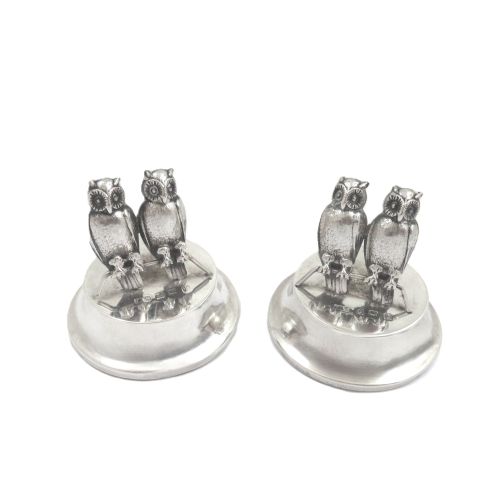
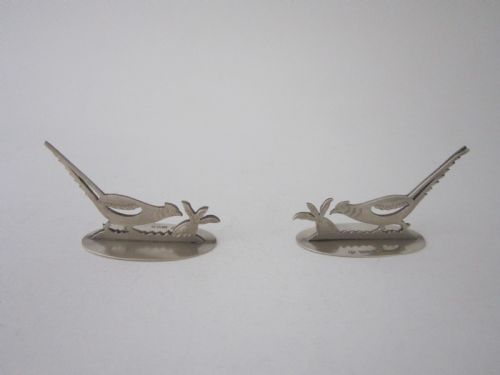

Silver Menu Card Stands
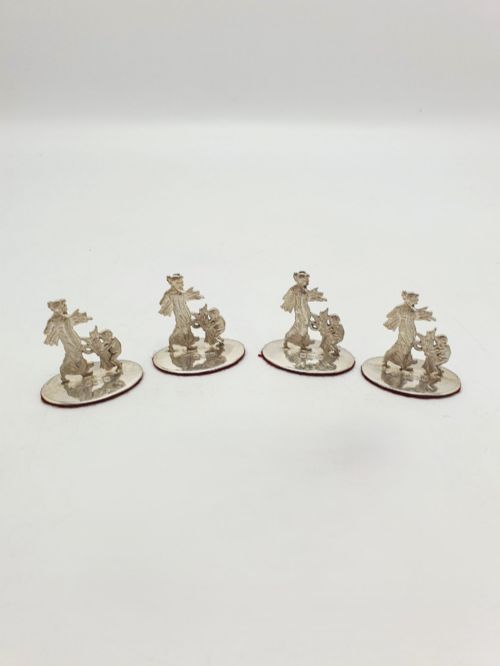
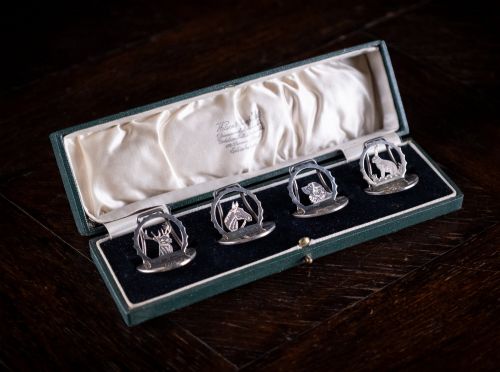
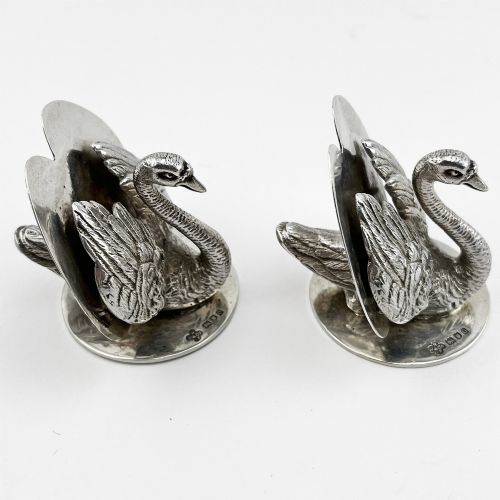
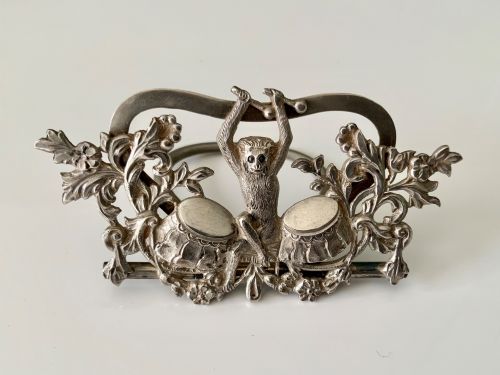
Silver menu card stands sit on the dining table to hold cards upright, and collectors seek them for their miniature sculpture and silverwork.
How silver menu card stands were made
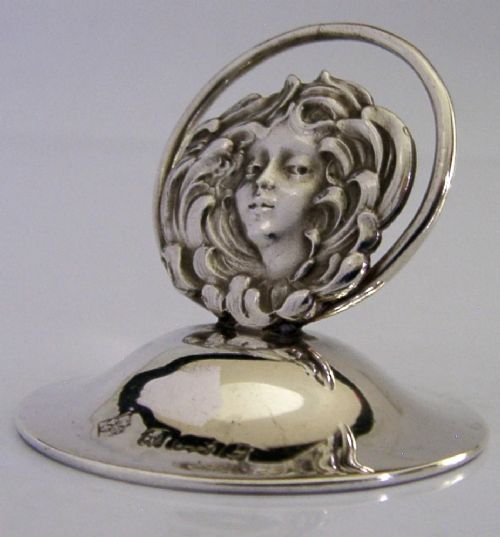
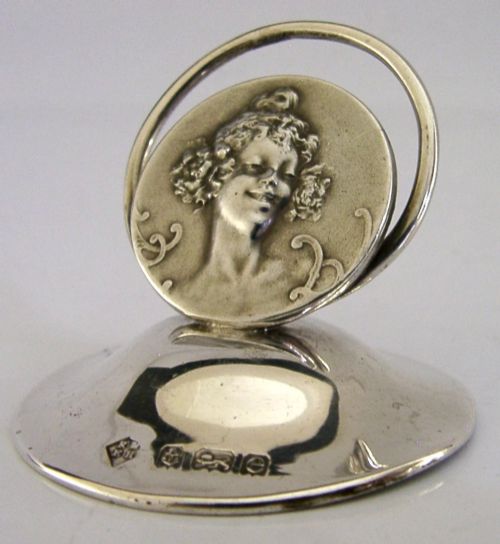
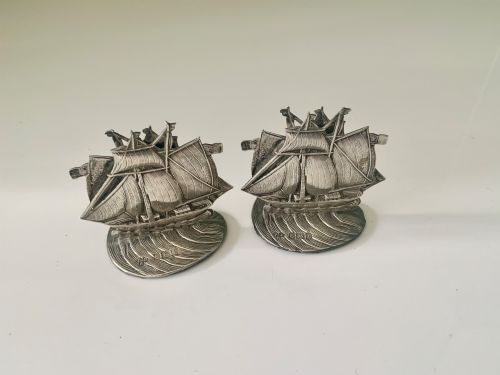
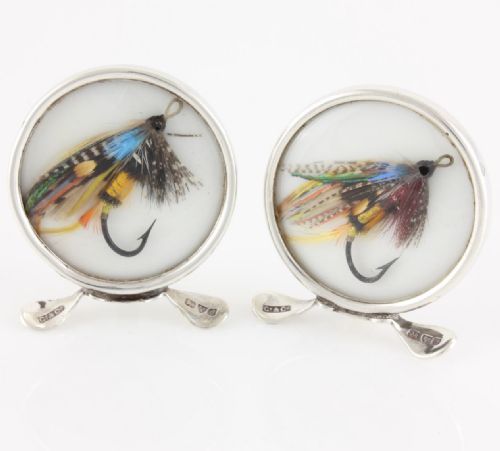
Silversmiths utilised casting, stamping, and hand-chasing techniques to form the detailed figures, animals, and architectural motifs seen on these pieces. Sterling silver or silver plate provided the primary metal structure, which was frequently worked into hinged or weighted bases to ensure stability when holding cards.
Enamel work was applied to metallic surfaces to add coloured detail, particularly on military and flag designs, requiring careful kiln firing. Supporting elements incorporated materials like velvet, silk, leather, and glass, secured into frames or bases to complement the silver components.
What varies in quality in silver menu card stands
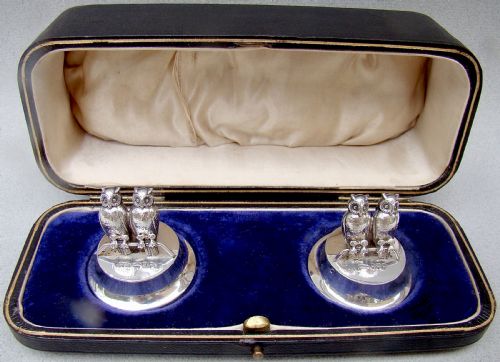
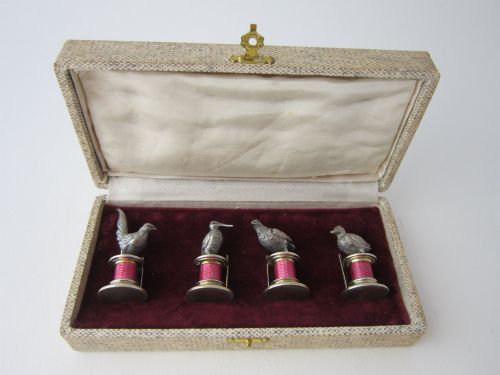
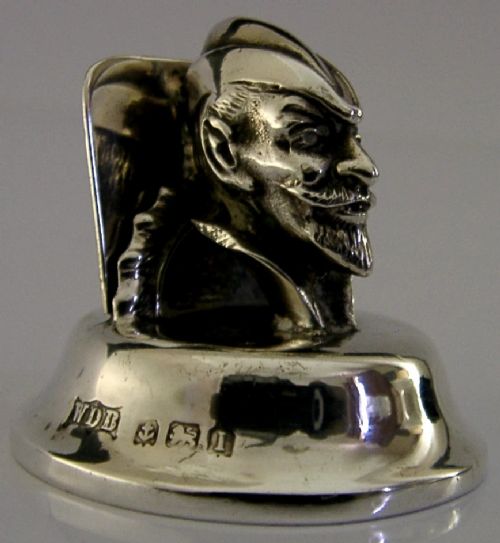
The crispness of detail in figural castings marks the division between standard production and superior craftsmanship, especially in animal and character subjects. Well-defined feathers, fur texture, and facial expressions indicate higher skill from the silversmith.
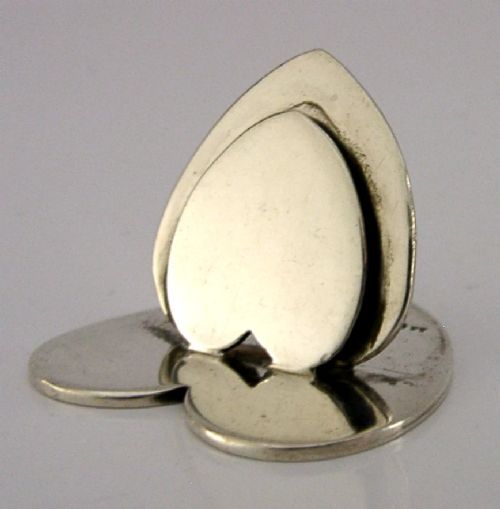
The integrity of the weighted base and the tension of the holding clips determine mechanical reliability. Pieces that balance securely without tipping while holding a card demonstrate better manufacturing standard.
Listings feature Edwardian, George V, and George VI periods, alongside materials such as sterling silver, silver plate, enamel, velvet, leather, and glass.
Levi & Salaman·A. Wilcox·Grey & Co.·Sampson Mordan·Asprey·Liberty
The Silver Menu Card Stands Glossary
- Sterling silver
- An alloy containing 92.5 percent silver and 7.5 percent other metals, typically copper, used for the majority of these pieces.
- Place card holder
- A miniature stand utilised at formal dinners to display the name of the guest seated at that position.
- Enamel
- A glassy substance fused to metal through firing, providing coloured decoration on specific motifs.
- Silver plate
- A base metal coated with a thin layer of silver, found on certain sets in the selection.
- Figural
- Formed in the likeness of a human, animal, or character rather than relying on abstract geometric shapes.
Silver Menu Card Stands: Frequently Asked Questions
How were silver menu card stands used at the table?
Hosts placed these stands along dining tables to inform guests of the courses to be served or to indicate specific seating arrangements. They held paper cards upright so diners could read them easily during multi-course meals.
Over time, the practice of using formal printed menus declined, leading collectors to repurpose these small stands for holding photographs, business cards, or place markers at modern gatherings.
How do I tell Edwardian pieces from later styles?
Edwardian silver menu card stands often feature flowing Art Nouveau lines, romantic motifs like maidens, or naturalistic birds and animals made around the first decade of the twentieth century. Hallmarks stamped on the metal provide exact assay office marks and date letters for verification.
Later pieces moving into the 1920s and 1930s tend to adopt geometric Art Deco styling or military themes, reflecting the changing aesthetic preferences of those decades.
Can I use these stands for modern place cards?
Modern place cards fit securely into the spring clips, slots, or weighted ledges of these antique stands without damaging the silver. Their original slot widths accommodate standard card thicknesses comfortably.
Care should be taken when adjusting any hinged components to avoid stressing the antique metal or enamel surfaces during card insertion.
Why do some sets have more than four pieces?
Larger dinner parties required numerous menu cards and place markers distributed across extended tables or multiple separate tables. Makers produced sets numbering six, twelve, or twenty-four to maintain a uniform appearance across large dining settings.
Finding matched sets of four or more remains unusual because individual pieces were easily separated or lost over generations of use.