

Sterling Silver Place Holders
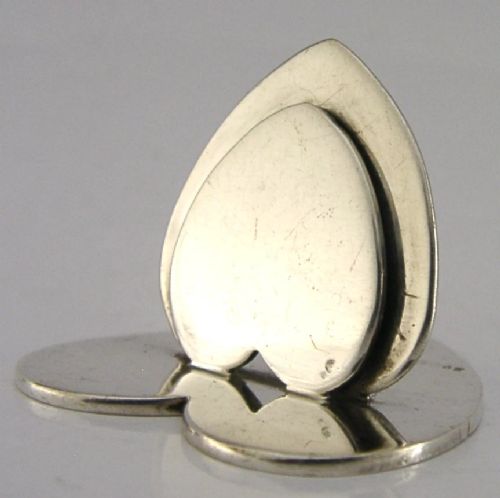
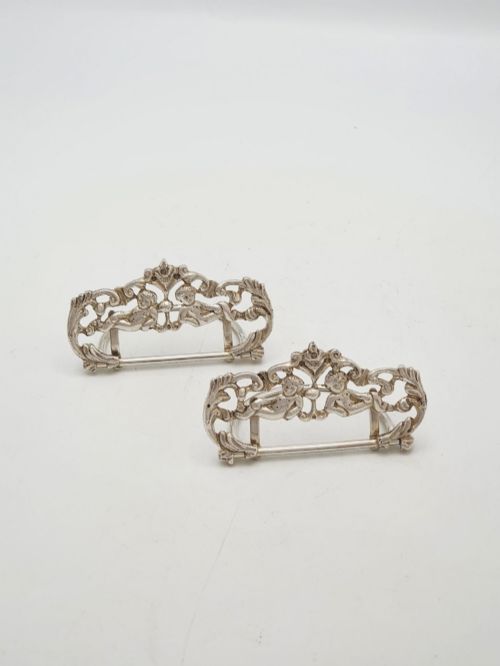
Sterling silver place holders are charming table accessories designed to display menu cards and names, bringing elegance to dining.
Sterling Silver Place Holders
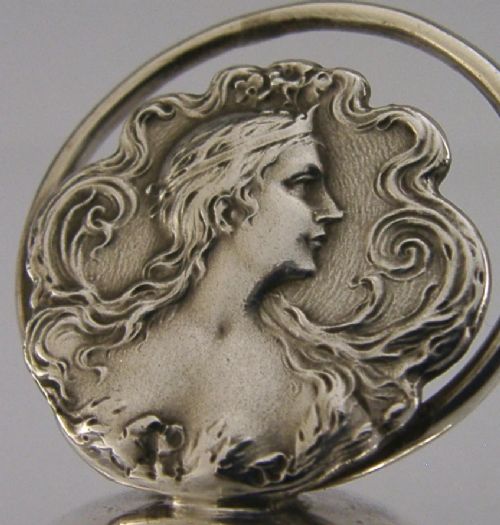
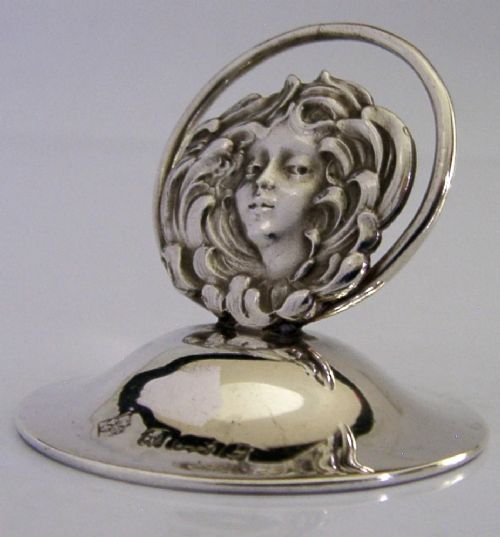
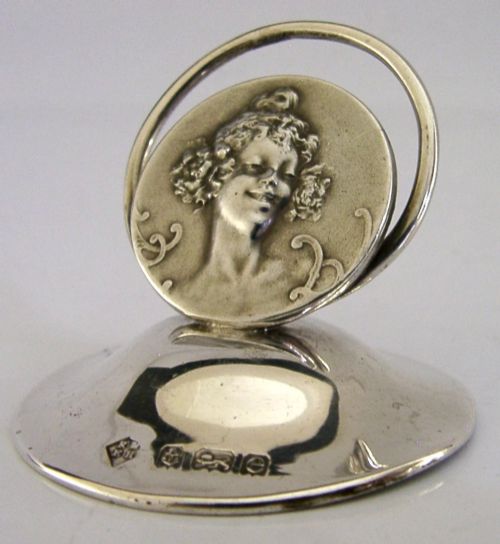
Sterling silver place holders encompass menu card holders, place card holders, and tableware accessories that organise formal dining tables. These items appear frequently in Edwardian styles alongside later George V, George VI, and Art Deco examples.
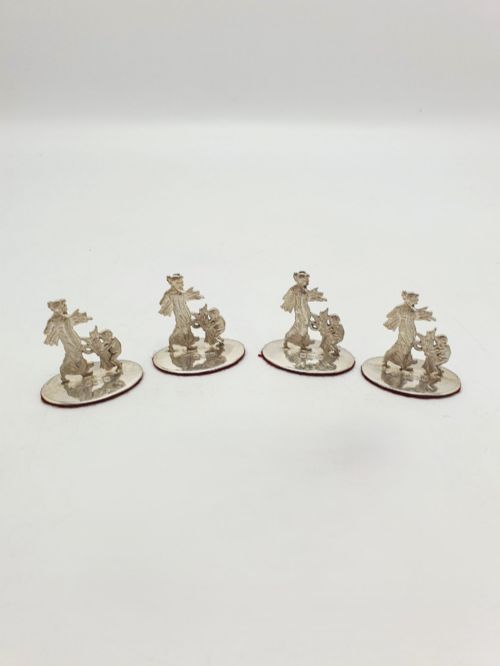
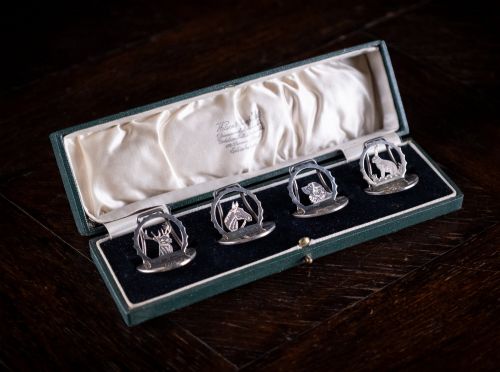
The pieces on this page emerge primarily from the Edwardian period, supplemented by 1920 and 1930 designs. Makers produced them in matched sets of four, pairs, or larger groups of twelve.
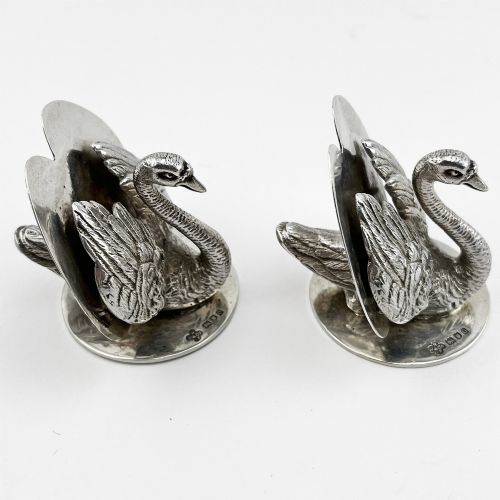
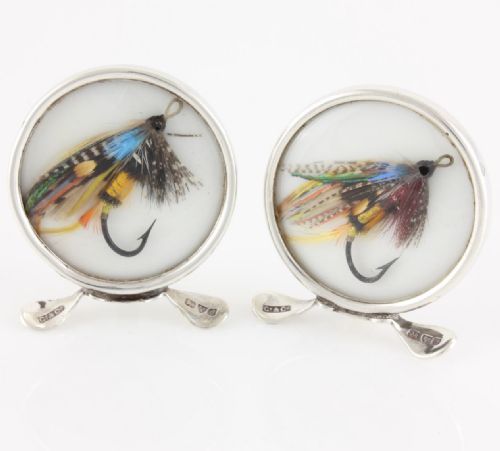
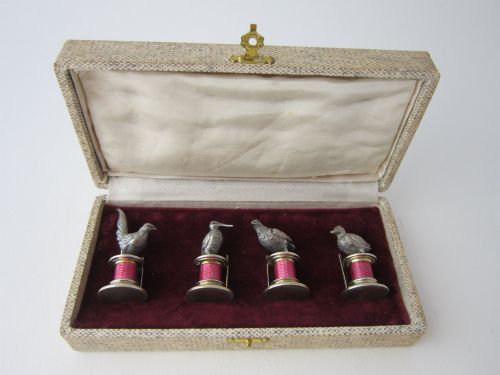
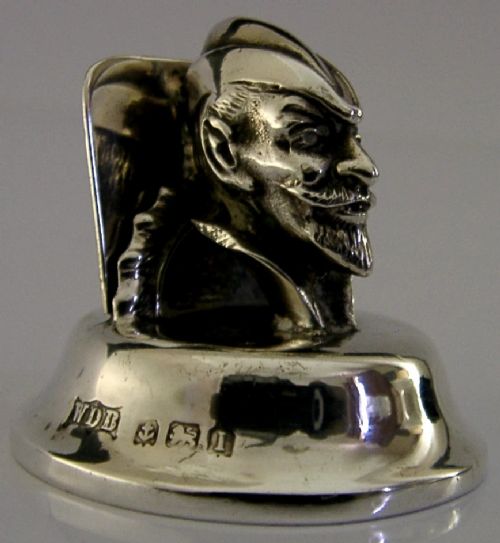
Figural forms dominate the selection, depicting animals, birds, and literary subjects such as Alice in Wonderland and Robin Hood. Collectors also encounter military themes and nautical designs.
How they were made
Silversmiths utilised sterling silver alongside glass, leather, velvet, silk, and feathers for fitted cases. Guilloche enamel frequently adds colour to surface details on selected items.
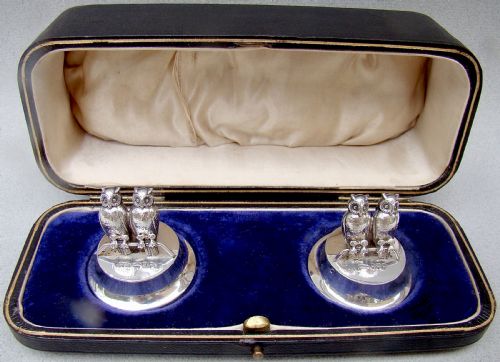
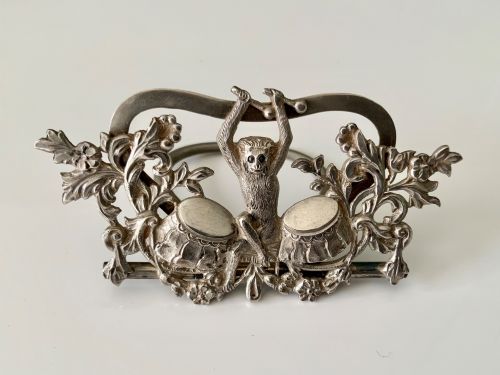
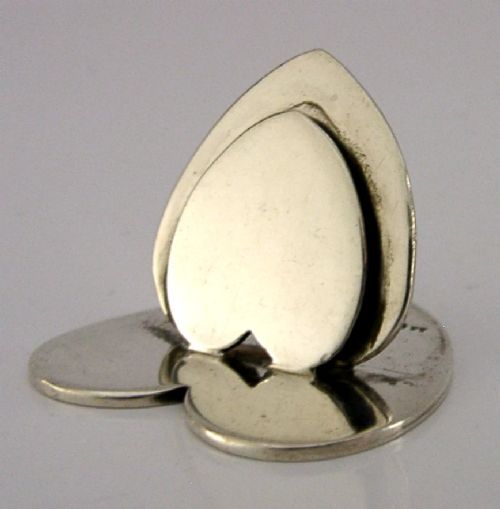
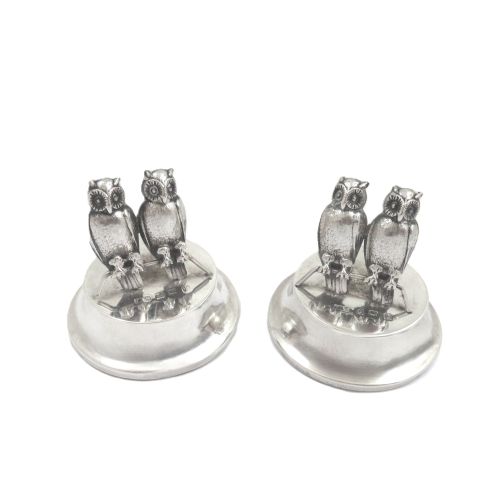
Techniques combined casting for figural subjects like owls, monkeys, and foxes with hand-finishing and engraving. Makers incorporated integrated photo clips and slots to secure paper cards.
The inventory records table accessories shaped as owls, foxes, swans, monkeys, and characters from Alice in Wonderland.
What varies in quality
Quality differentiates mass production from specialised workshops through the crispness of casting in figural subjects such as birds and animals. Details on feathers, fur, and facial expressions remain sharper on superior examples.
The presence of original fitted velvet or silk-lined presentation boxes influences the desirability of sets. Maker marks from established firms and clear assay office hallmarks ensure verifiable provenance.
Levi & Salaman·A. Wilcox·Grey & Co.·Sampson Mordan·Asprey·Liberty
The Sterling Silver Place Holders Glossary
- Sterling silver
- A silver alloy containing 92.5 percent pure silver and 7.5 percent other metals, usually copper. This standard composition provides durability for functional table items.
- Hallmark
- An official stamp applied by an assay office indicating metal purity, the maker, and the year of manufacture. British pieces display these marks directly on the silver surface.
- Guilloche enamel
- A decorative technique where enamel is applied over engine-turned metalwork. This process creates geometric patterns visible beneath a translucent coloured layer.
- Figural
- A style of object moulded in the shape of a human, animal, or character. These sculptural designs form the primary aesthetic for Edwardian table accessories.
Sterling Silver Place Holders: Frequently Asked Questions
How were menu holders used?
Hosts placed menu holders along dining tables to inform guests of the courses being served throughout the meal. Place card holders served a similar purpose by designating specific seating arrangements.
Many examples feature slots, clips, or weighted bases designed to hold heavy card stock securely. They functioned as conversation pieces as well as practical table settings.
How do I date sterling silver place holders?
Dating these items relies primarily on the assay office hallmarks stamped directly onto the silver. These marks reveal the specific year letter code and the city where the piece was tested.
Stylistic indicators such as Art Nouveau curves or Art Deco geometries also help determine the period. Edwardian pieces often display naturalistic animal motifs typical of the early twentieth century.
How should I clean silver place holders?
Cleaning sterling silver requires a soft microfibre cloth and a gentle silver polish formulated to remove tarnish without scratching. Enamelled or fitted components must be kept dry to prevent damage.
Regular handling helps maintain a natural shine on high-relief figural details. Proper storage in lined boxes prevents excessive tarnishing between uses.