


Silver Table Place Holders
Silver table place holders organise dinner parties with miniature figural sculptures cast in sterling silver or silver plate.
Silver Table Place Holders
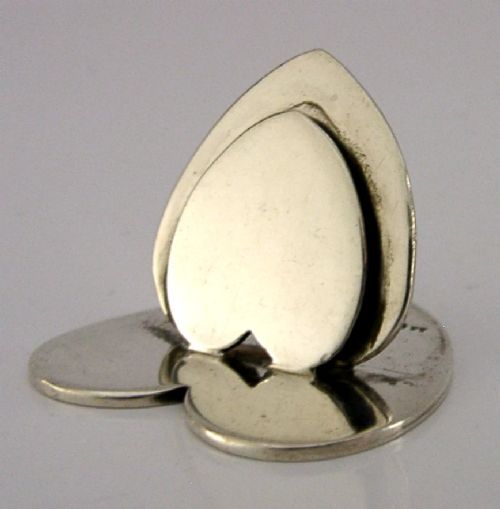
Silver table place holders appear primarily as menu holders and place card holders, functioning as functional tableware accessories for dining tables. These items emerge frequently from the Edwardian period, alongside examples from the 1900s, 1910s, 1920s, 1930s, and 1950s.
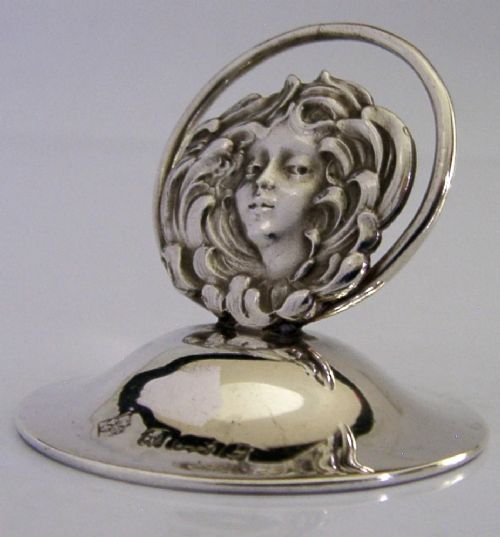
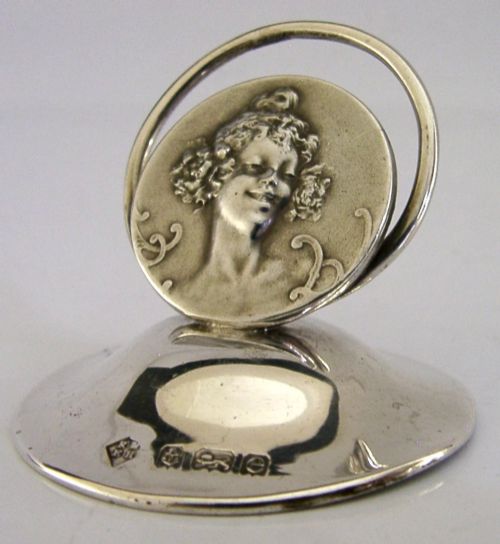
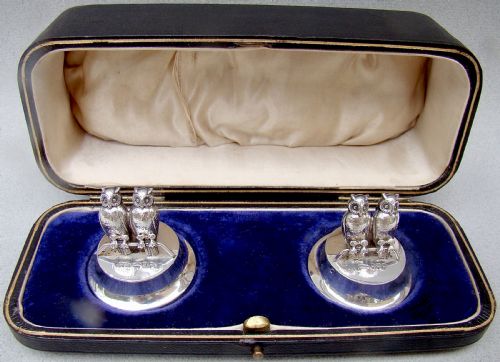
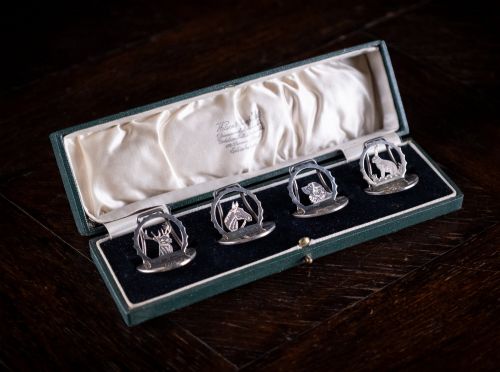
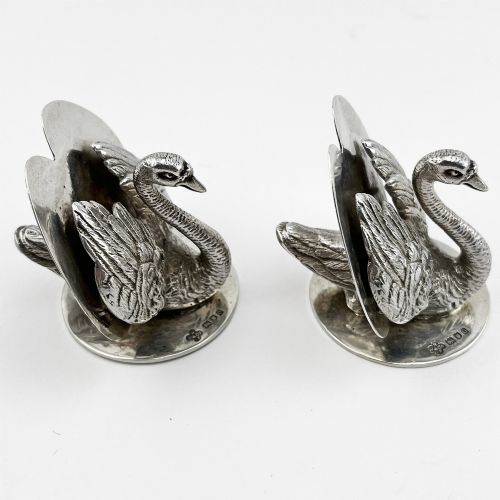
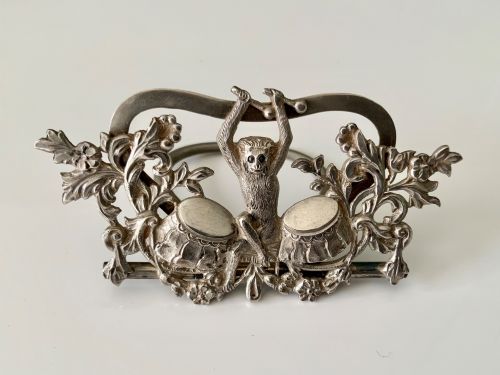
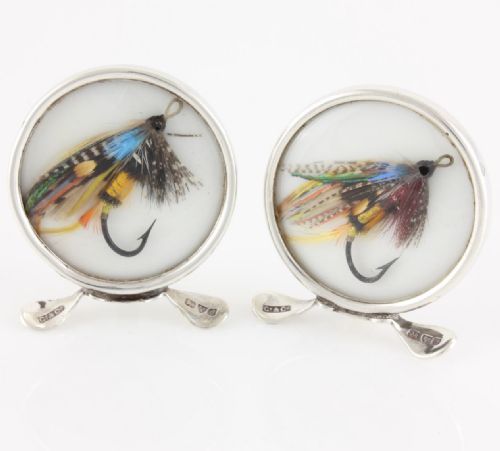
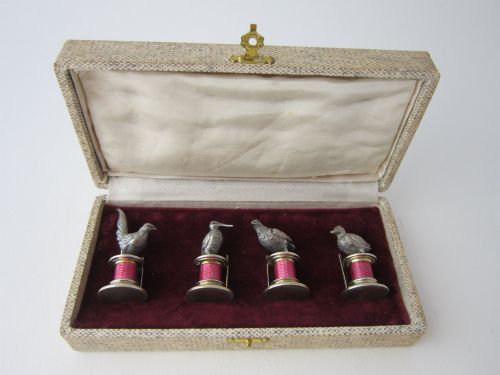
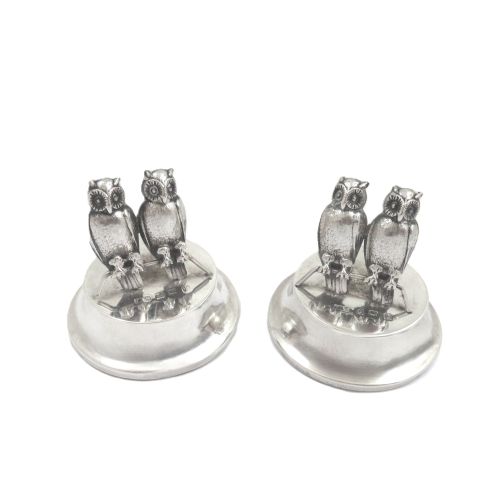
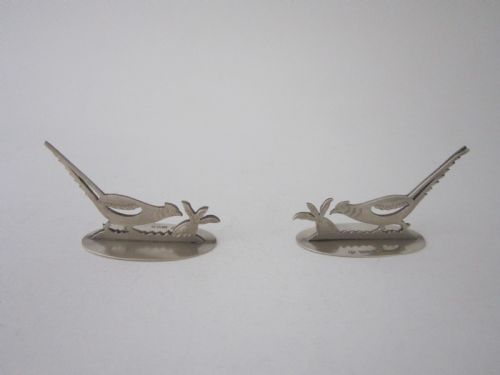
The objects take diverse forms ranging from simple clips to detailed figural representations. Animal subjects dominate, including owls, foxes, swans, grouse, horses heads, and monkeys playing drums.
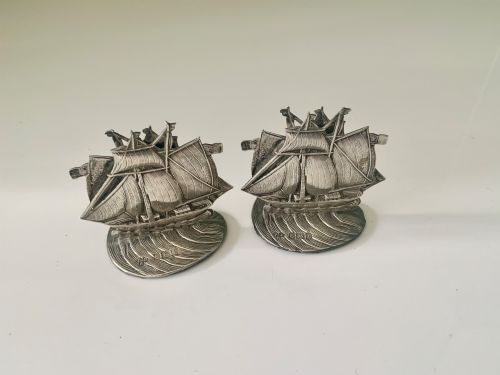
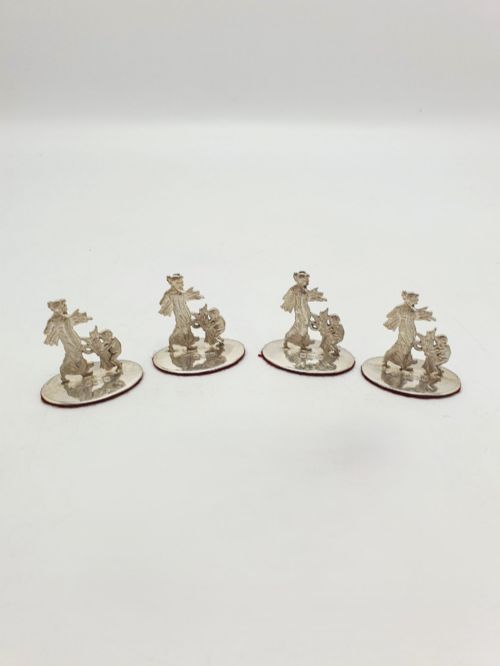
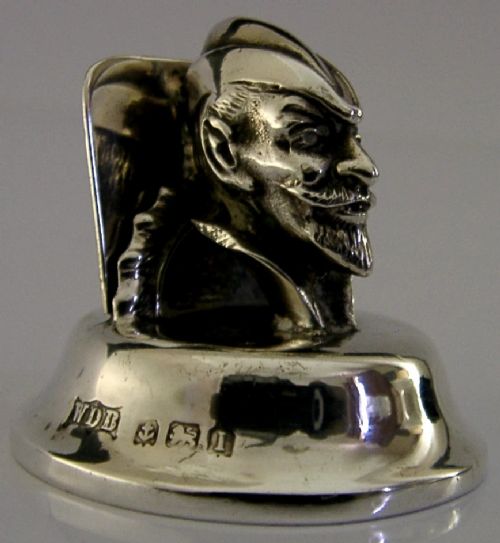
Makers also produced narrative and thematic designs, such as Alice in Wonderland characters, Robin Hood, sentry boxes, galleons, and military flag motifs. Buyers encounter both single pieces and matched sets, sometimes housed in fitted boxes.
Materials and construction methods
Makers utilised sterling silver and silver plate as the primary metals for casting and shaping these table accessories. Many pieces incorporate supplementary materials like enamel for added colour on flags or decorative panels, alongside velvet, silk, leather, and glass found in associated presentation cases.
Craftsmen employed detailed casting and chasing techniques to render intricate figural subjects with distinct textures like feathers, fur, and clothing folds. Clips and weighted bases were engineered to support stiff cards without tipping.
Listings feature silver table place holders spanning the Edwardian era, the 1910s, 1930s, and 1950s, created in sterling silver, silver plate, and enamel.
Assessing quality in silver place holders
Quality rests on the crispness of the casting and the naturalism of the figural work, where superior examples exhibit sharp feather and facial detail rather than soft outlines. Maker attribution also influences distinction, with pieces bearing marks from notable silversmiths demonstrating higher execution standards.
The complexity of the subject matter and the survival of matching sets elevate the standard of an assemblage. Intricate hand-applied enamel work and complex multi-part constructions distinguish finer items from standard production pieces.
Levi and Salaman·A Wilcox·Grey and Co·Sampson Mordan·Asprey·Liberty
The Silver Table Place Holders Glossary
- Menu holder
- A weighted stand designed to display a printed dinner menu upright on a dining table. They frequently double as place card holders.
- Sterling silver
- An alloy containing 92.5 percent silver by weight, used extensively by silversmiths for tableware accessories. It carries hallmarks to denote the standard and origin.
- Silver plate
- A base metal coated with a thin layer of silver. This method offered a durable alternative to solid silver for larger sets.
- Figural
- A design style shaped to represent a recognisable human, animal, or object rather than abstract ornamentation. These pieces depict subjects like owls, characters, and military insignia.
- Enamel
- A glassy substance fused to metal through firing to add colour and decoration. It appears on flag motifs and decorative highlights.
Silver Table Place Holders: Frequently Asked Questions
What were silver table place holders used for?
Hosts used these small stands to display printed menus or guest names at formal dinner parties. They ensured diners could view the evening's courses or locate their assigned seats easily.
Beyond practical utility, they served as decorative table ornaments that reflected the host's interests or the theme of the meal.
How do I care for antique silver holders?
Regular dusting with a soft cloth prevents dust accumulation in the crevices of figural castings. When cleaning is necessary, use a gentle silver polish formulated for antiques and avoid harsh abrasive pads that wear down fine details.
Store pieces in dry conditions away from direct sunlight, particularly those containing enamel, silk, or velvet components.
How can I tell the period of a piece?
Hallmarks stamped into the metal provide the most reliable dating evidence, indicating the assay office, maker, and year of manufacture. Design styles also offer clear clues, such as the flowing organic lines of Art Nouveau from the Edwardian era or the geometric motifs of the 1930s.
Comparing the subject matter and construction methods helps corroborate the period suggested by the assay marks.
Are they sold as single pieces or sets?
Both options appear frequently on the market, ranging from individual novelty pieces to matched sets of four, six, or more. Individual items often feature unusual characters or specific animals.
Larger sets were typically commissioned for grander dining tables and are often found complete with their original fitted presentation boxes.