

Edwardian Standing Cupboard
An edwardian standing cupboard brings upright utility and refined timber grain to a room, offering display or storage in a compact footprint.
Edwardian Standing Cupboard
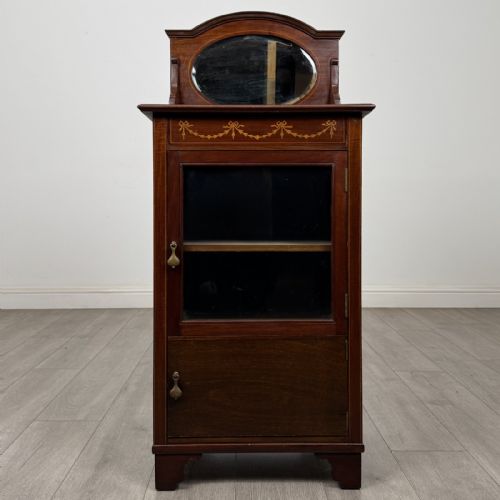
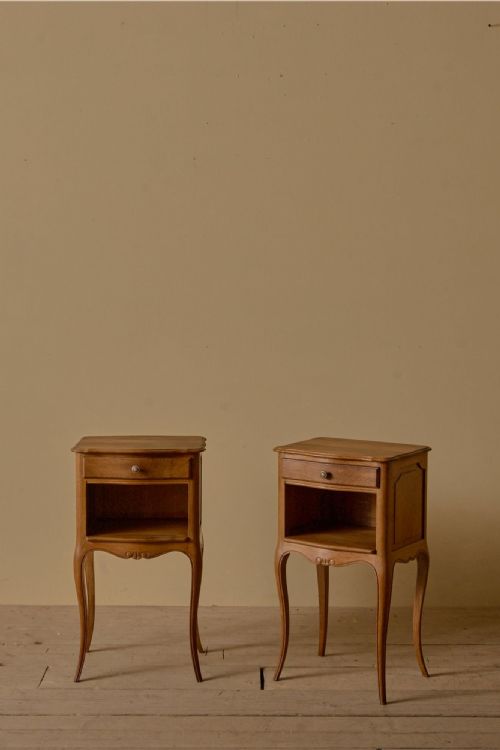
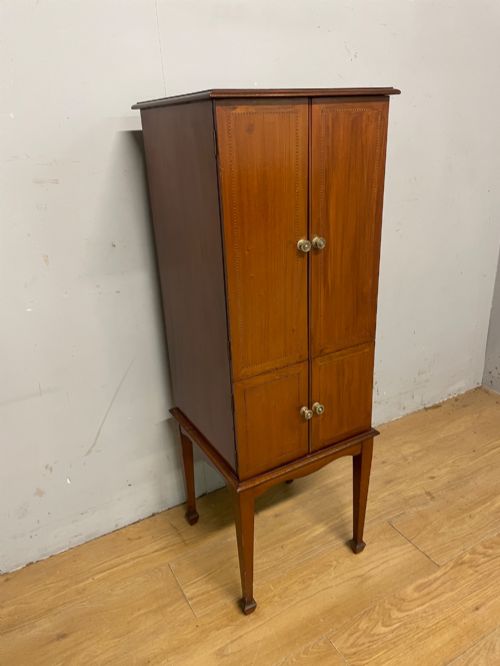
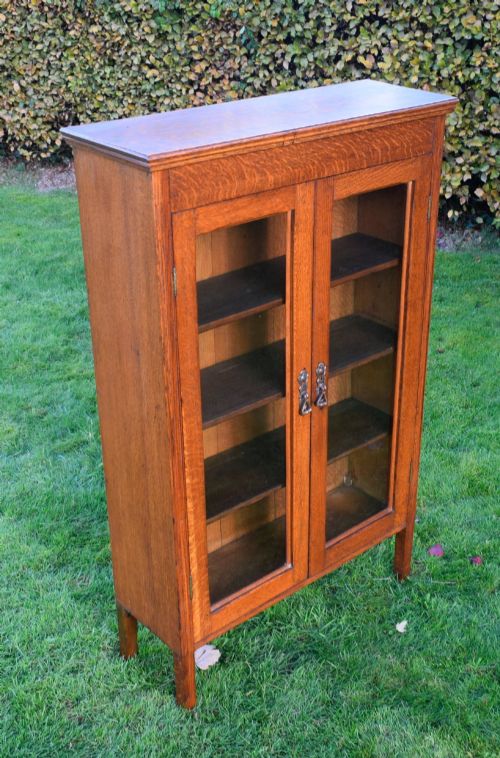
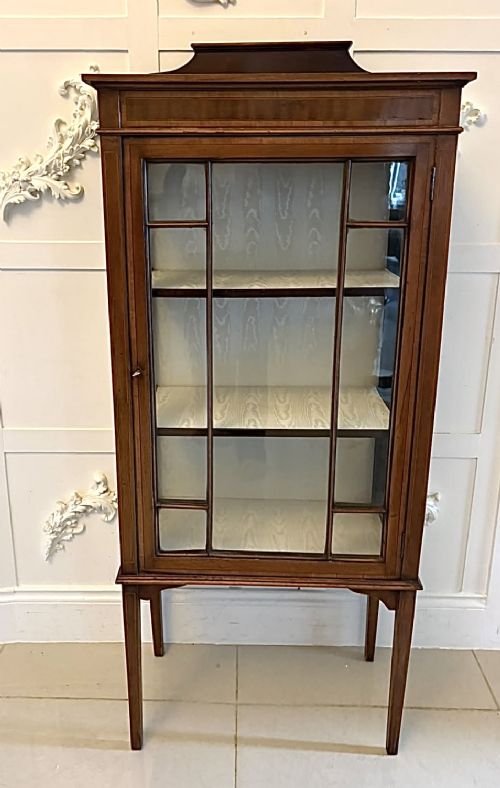
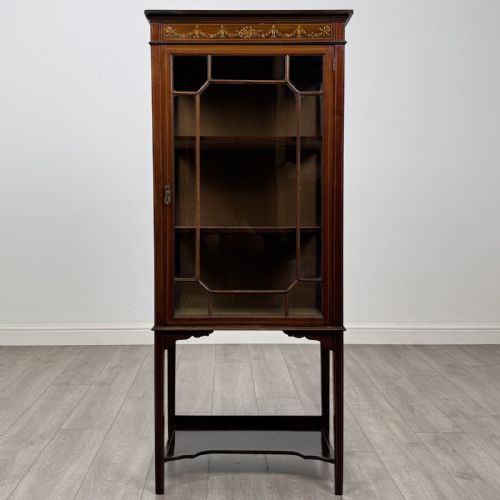
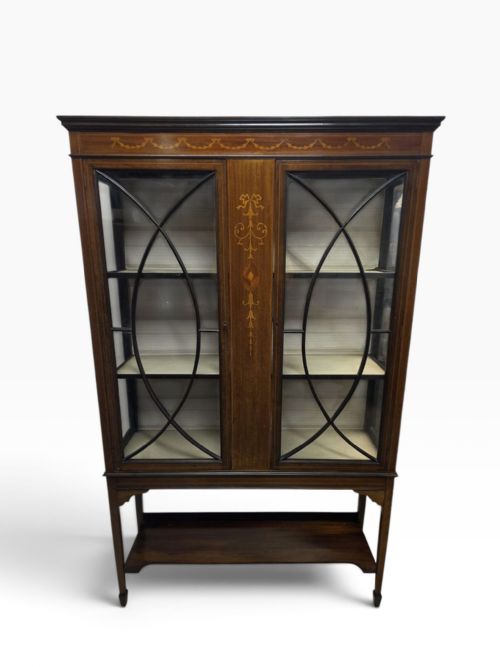
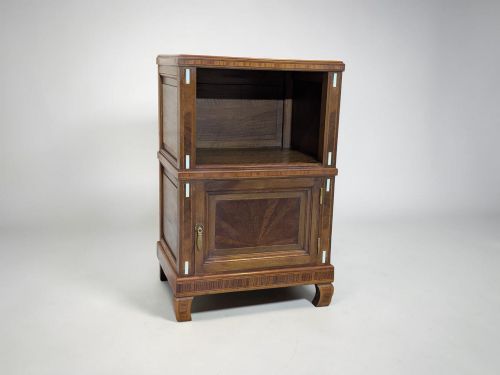
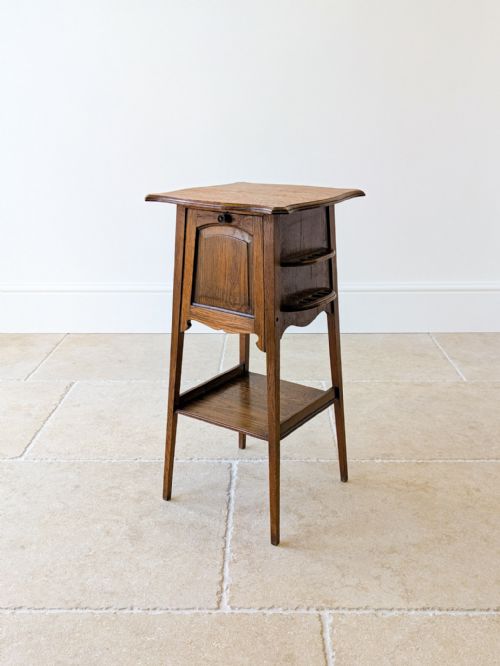
An edwardian standing cupboard encompasses tall vertical furniture pieces designed to hold books, china, music, or general household items within upright timber frames. You will frequently encounter glazed display cabinets, music cabinets, and bedside variants on this page, originating predominantly from the Edwardian period alongside late Victorian and early twentieth-century examples.
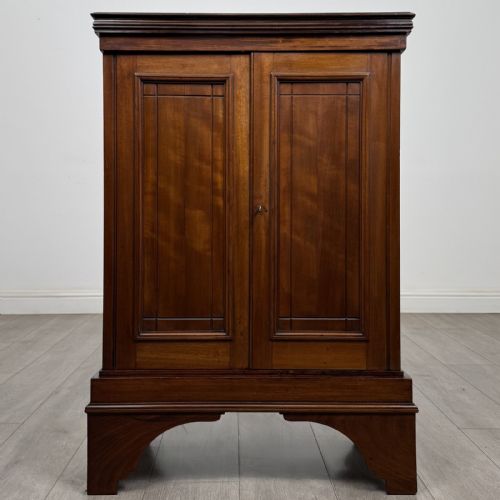
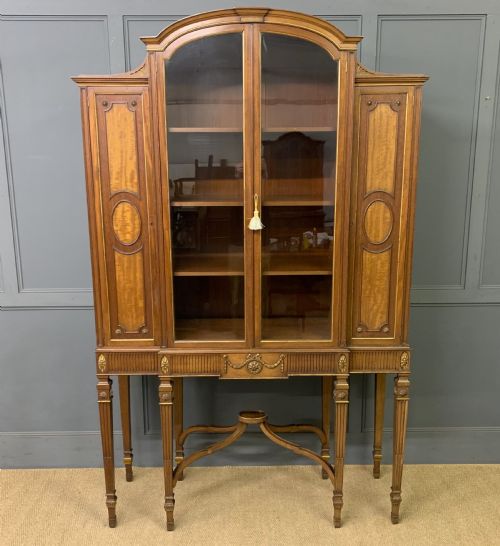
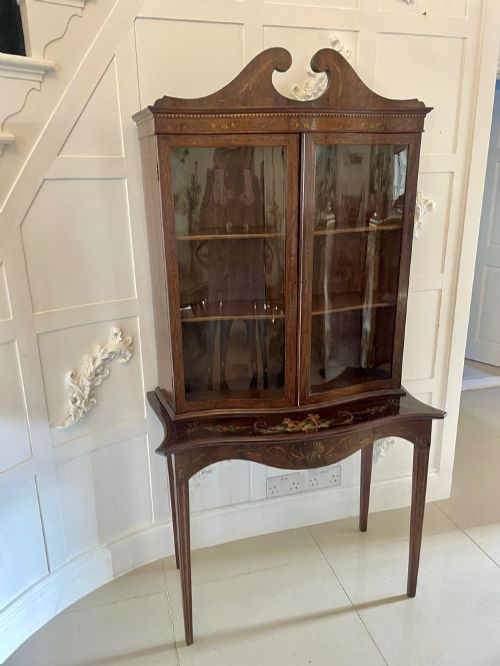
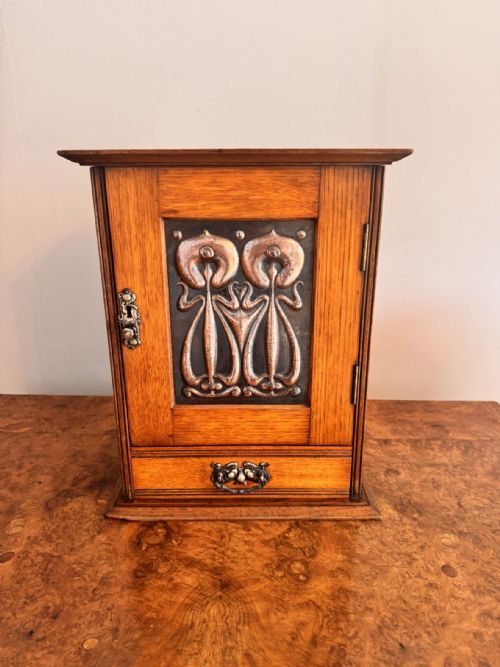
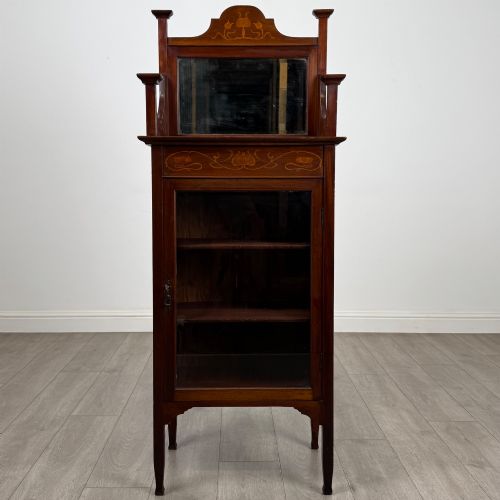
The forms range from slim four-door mahogany configurations and bow-ended display cabinets to oak bookcases and record cabinets, reflecting the domestic storage needs of the era. Makers applied stylistic influences spanning Sheraton Revival, Arts and Crafts, and Art Nouveau to these vertical formats, creating pieces fitted with raised galleries, mirrored backs, or glass panels.
How they were made
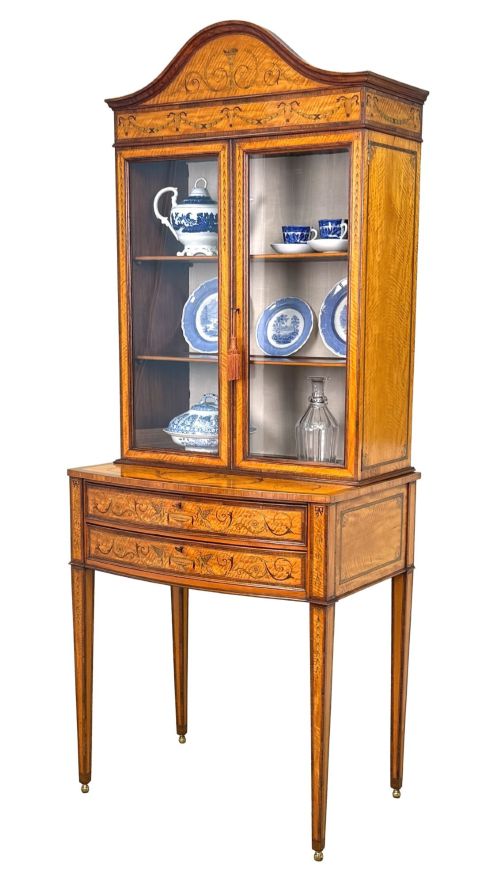
Cabinet makers constructed these standing pieces primarily using solid timbers and veneers of mahogany, oak, walnut, and satinwood, often incorporating contrasting banding and intricate inlay work. Brass hardware, such as hinges, handles, and lock escutchets, functionalised the doors and drawers while adding metallic contrast to the timber surfaces.
Glass panels were integrated into door frames to create display fronts for china and books, whilst specialised interior fittings like slides, shelves, and record dividers accommodated specific household functions. Surface finishing relied on polishing the wood to reveal the natural grain patterns and rich tones characteristic of the period.
Edwardian Standing Cupboard Retail Price Guide 2026
Typical asking prices for edwardian standing cupboard among the pieces listed under this phrase on Sellingantiques today, from the lower quarter to the upper quarter. They describe what is for sale here now, not the wider market.
Listings feature oak, mahogany, walnut, and satinwood, spanning the Victorian, Edwardian, and early twentieth-century periods.
What varies in quality
The refinement of the timber selection and the precision of the inlay work distinguish finer standing cupboards from standard utility pieces. Marquetry details, satinwood banding, and hand-carved elements like claw and ball or spade feet indicate greater workshop investment during production.
Structural integrity depends on the joinery used in the carcass and the original condition of glazed doors, mirrors, and internal fittings such as sliding trays or music shelves. Attribution to known firms or documented makers adds a layer of distinction to the construction quality.
Edwards & Roberts·Waring and Gillow·JS Henry·Shoolbred & Co.
The Edwardian Standing Cupboard Glossary
- Satinwood banding
- A narrow strip of light-coloured exotic timber inlaid around the borders of cabinet doors or drawer fronts to create a contrasting decorative frame.
- Astral glazed
- A glass door divided into multiple small panes by slender wooden glazing bars, commonly seen on display cabinets.
- Spade foot
- A square-section furniture foot that tapers slightly towards the bottom, resembling the blade of a spade, frequently found on Edwardian mahogany pieces.
- Raised gallery
- A low decorative railing or rim fitted to the top surface of a cabinet or table to prevent items from sliding off.
- Canterbury
- A low standing rack originally designed for holding sheet music or books, featuring vertical partitions.
Edwardian Standing Cupboard: Frequently Asked Questions
What is an edwardian standing cupboard used for?
These tall vertical furniture pieces served various domestic storage needs, from displaying fine china and books to housing sheet music or bedside essentials.
Today, they function well in living rooms, hallways, or bedrooms where floor space is limited but vertical storage capacity is required.
How do I identify an Edwardian cabinet?
Edwardian cabinets typically exhibit lighter timbers and more delicate proportions than their heavier Victorian predecessors, often featuring mahogany or oak with subtle inlay work.
Look for stylistic cues such as Sheraton Revival motifs, satinwood banding, and tapered spade feet that characterise furniture made around the turn of the twentieth century.
Can I use a music cabinet for modern storage?
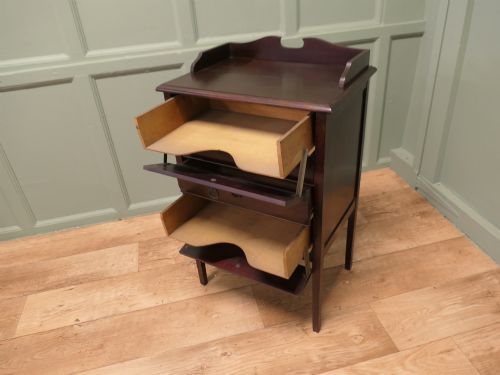
Music cabinets originally designed with internal slides or vertical partitions adapt easily to contemporary uses, such as holding vinyl records, paperwork, or stationery.
Their compact footprints and compartmentalised interiors make them practical additions to modern studies or living spaces.
Are glazed display cabinets fragile?
While the original glass panes require careful handling during placement and moving, the structural frames of these standing cupboards are built from sturdy hardwoods like mahogany and oak.
Placing them on level flooring ensures the doors align correctly and the glazed panels remain under appropriate tension.