

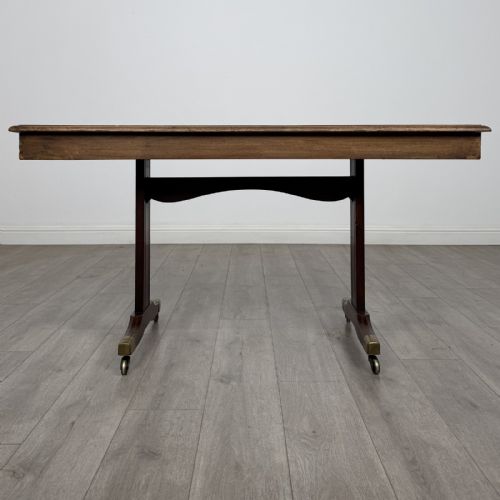
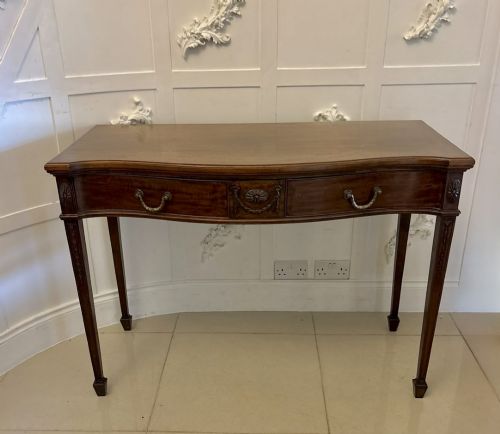
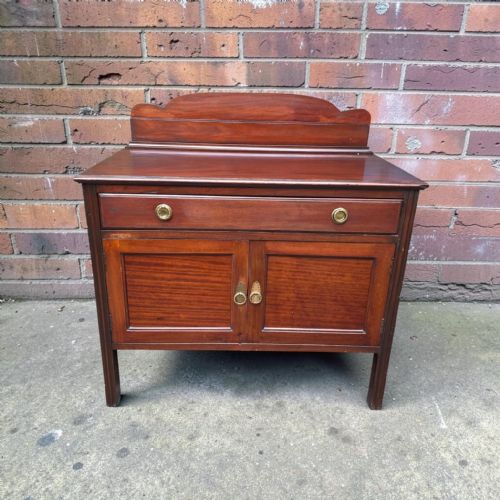
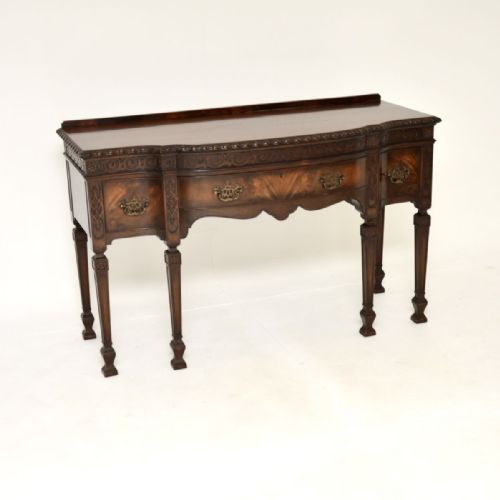
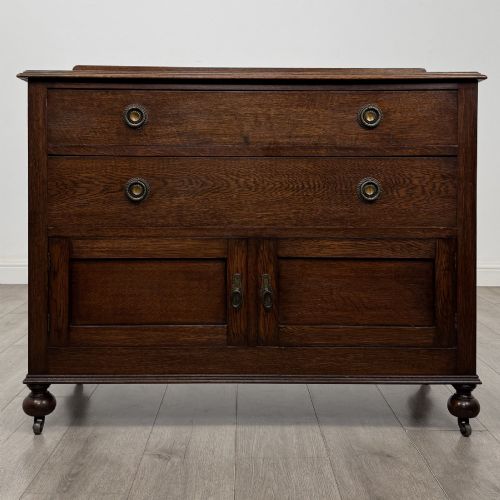
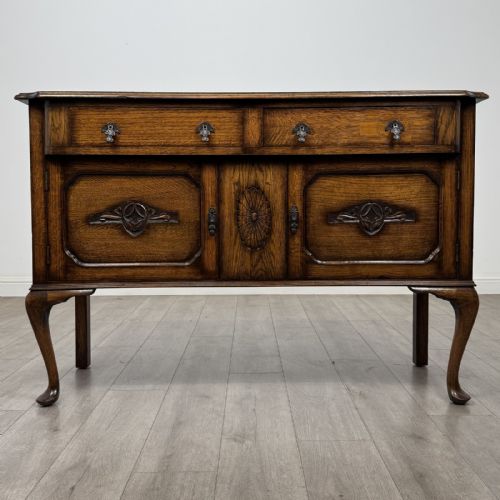
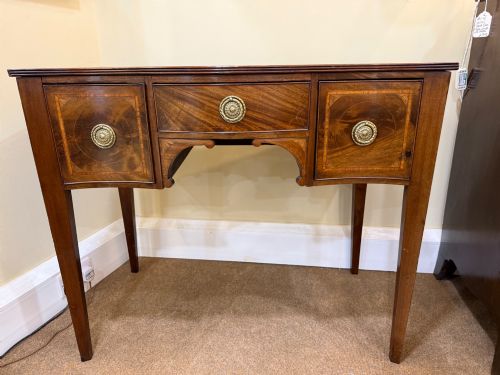
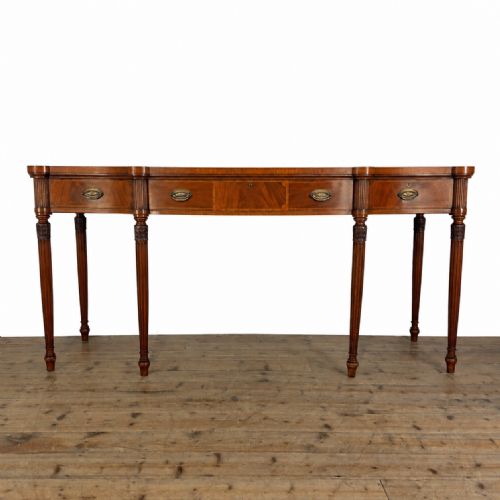
Edwardian Sideboard Server
An Edwardian sideboard server brings polished mahogany, oak and satinwood into the dining room for formal service and storage.
Edwardian Sideboard Server
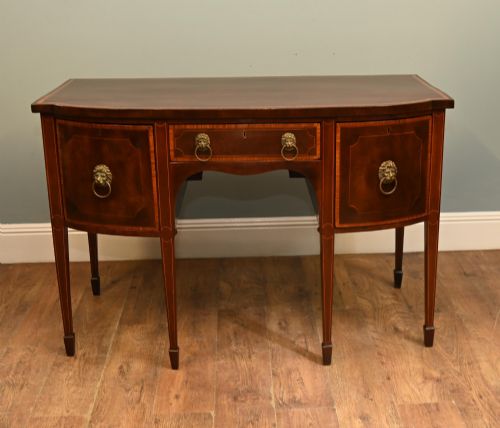
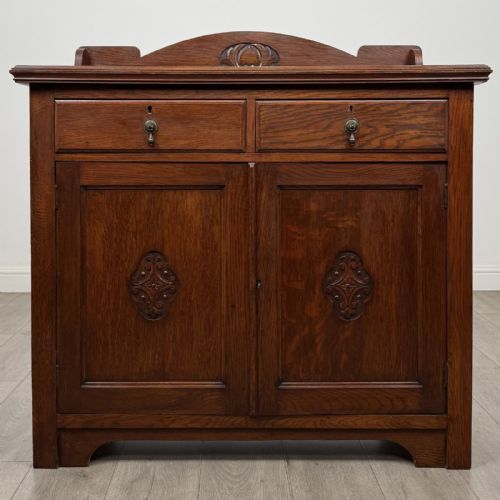
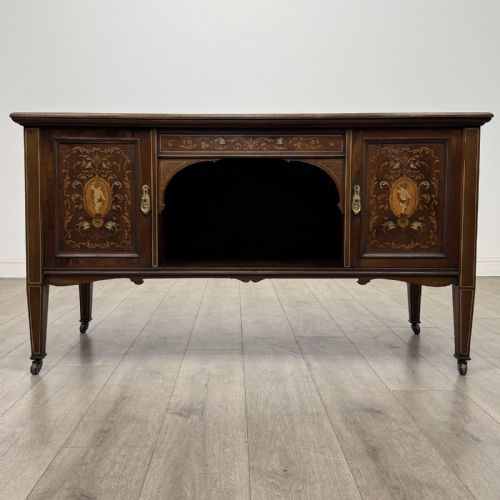
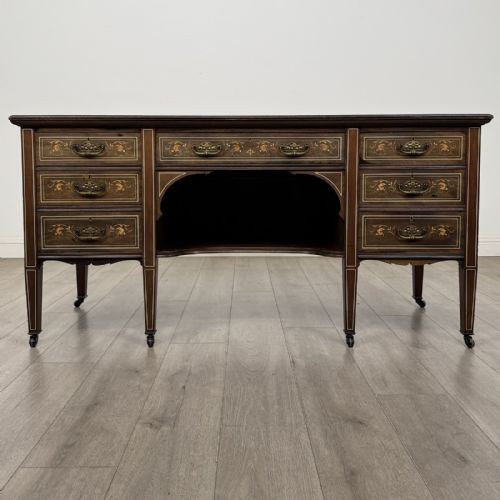
When searching for an edwardian sideboard server, a buyer encounters formal dining furniture designed to hold serving dishes, cutlery and glassware. These pieces emerge predominantly from the Edwardian era, alongside related nineteenth century and early twentieth century examples.
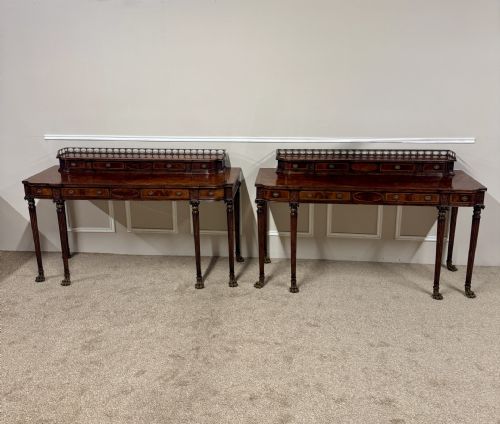
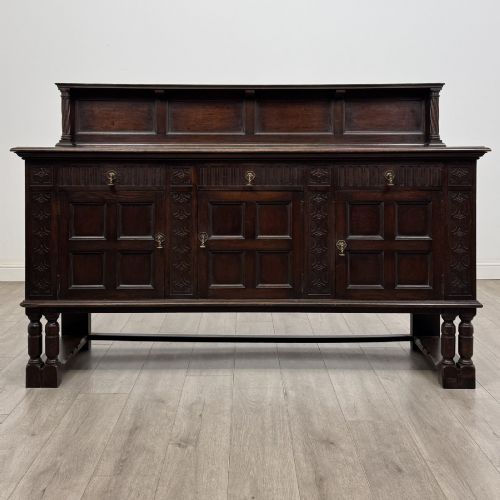
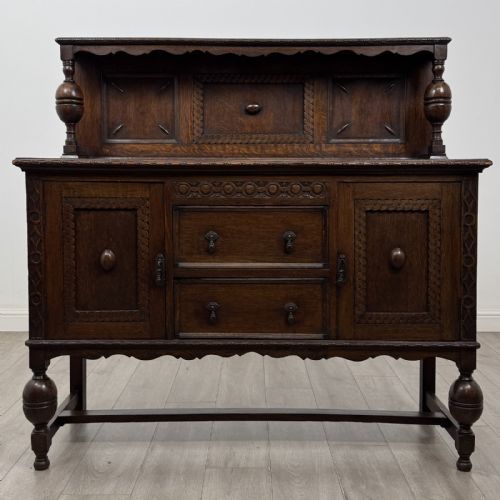
The most common forms on this page include mahogany breakfront sideboards, oak cupboards, serving tables and satinwood bow-front servers. Makers of the period often drew on Sheraton, Adam, and Arts and Crafts design vocabularies to shape these dining room pieces.
Materials and Construction
Makers utilised dense timbers such as mahogany, oak, burr walnut and satinwood, frequently enriched with contrasting inlay, marquetry, and crossbanding. Brass handles, glass doors and iron fittings complete the structural hardware.
Joinery methods relied on solid timber framing, shaped fronts, and turned or carved supports including barley twist legs, claw and ball feet, and bracket bases.
Edwardian Sideboard Server Retail Price Guide 2026
Typical asking prices for edwardian sideboard server among the pieces listed under this phrase on Sellingantiques today, from the lower quarter to the upper quarter. They describe what is for sale here now, not the wider market.
Listings feature mahogany, oak, satinwood, burr walnut, brass and glass across Edwardian, Victorian and Arts and Crafts styles.
Defining Quality
The distinction between standard items and the top of the range rests on timber selection and decorative ambition. Finer pieces display carefully chosen flame mahogany, burr walnut or satinwood veneers matched across serpentine and breakfront profiles.
Hand-carving, intricate marquetry inlay, and substantial brass mounts separate master workshop production from simpler utility pieces. Superior construction ensures that drawers operate smoothly and heavy timber doors hang true over decades of service.
Shapland and Petter·Hewetsons London·Ambrose Heal for Heal and Son
The Edwardian Sideboard Server Glossary
- Serpentine
- A front profile curving outward in the centre and inward at the sides, demanding precise cabinetmaking. This contour appears frequently on finer mahogany and satinwood servers.
- Crossbanding
- A strip of veneer applied perpendicularly to the grain of the main surface to create a framed border. It defines the edges of tabletops and drawer fronts on better Edwardian pieces.
- Dumbwaiter
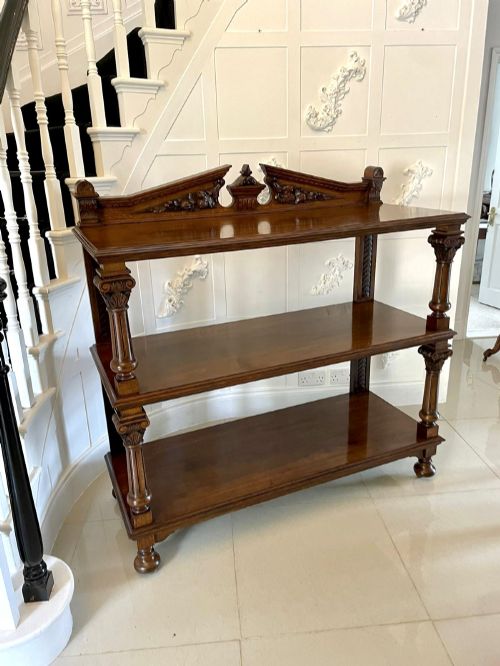
- A multi-tiered serving piece utilised in dining rooms for holding dishes without servants present. These take the form of stacked shelves or heavy carved oak stands.
- Breakfront
- A cabinet construction where the central section projects forward from the flanking wings. This architectural layout creates depth and presence in larger dining rooms.
- Marquetry
- The art of forming decorative patterns using fitted pieces of different coloured veneers. It ornaments the doors and drawers of high-status cabinets.
Edwardian Sideboard Server: Frequently Asked Questions
What is an edwardian sideboard server used for?
These pieces provide surface space for serving food and drinks during dining events. They also store cutlery, linen and glassware within enclosed cupboards and drawers.
In period homes, they sat against the dining room wall to assist hosts before fitted kitchen cabinetry became standard.
How do I identify an Edwardian piece?
Look for lighter timbers, refined satinwood inlay, and revival styles such as Sheraton or Arts and Crafts. Construction details often combine traditional hand joinery with early machine-sawn components.
Maker labels or stamps inside drawers can also confirm the period of manufacture.
Where should I place a server?
A server suits a dining room, hallway or living space where its surface and storage prove useful. Ensure adequate clearance for doors and drawers to open fully.
Keep these wooden pieces away from direct heat sources and strong sunlight to protect the polish.
How do I care for mahogany and oak?
Dust regularly with a soft dry cloth and apply occasional high-quality beeswax to nourish the timber. Avoid silicone sprays and excess moisture.
Promptly wipe up any spills on the top surface to prevent water marks on the polished finish.