

Edwardian Satinwood Side Table
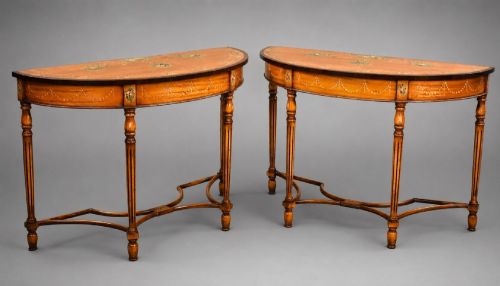
When searching for an edwardian satinwood side table, one encounters light timber surfaces shaped by Sheraton Revival tastes and early twentieth-century cabinetmaking.
Edwardian Satinwood Side Table
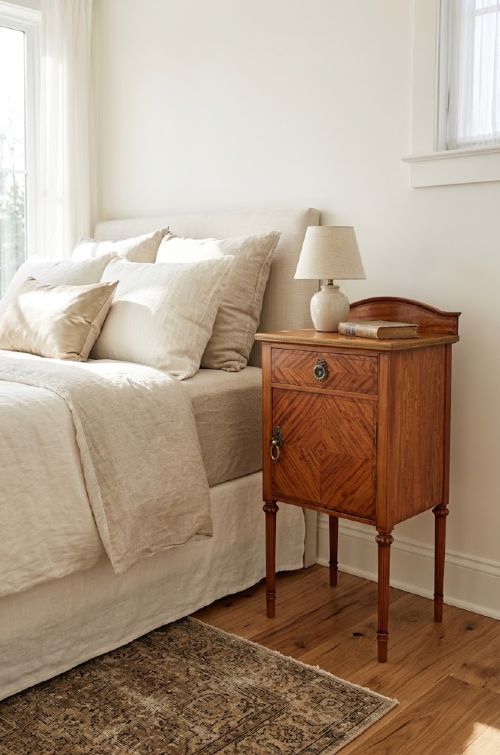
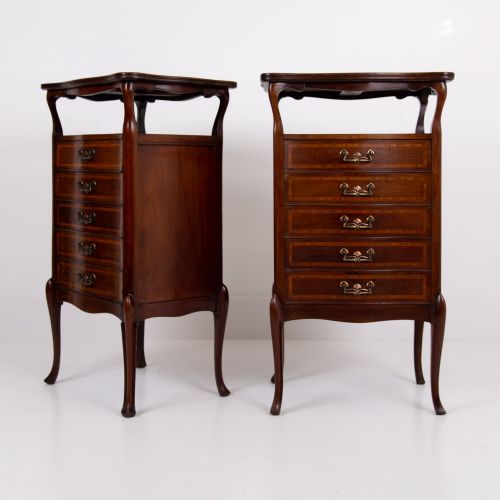
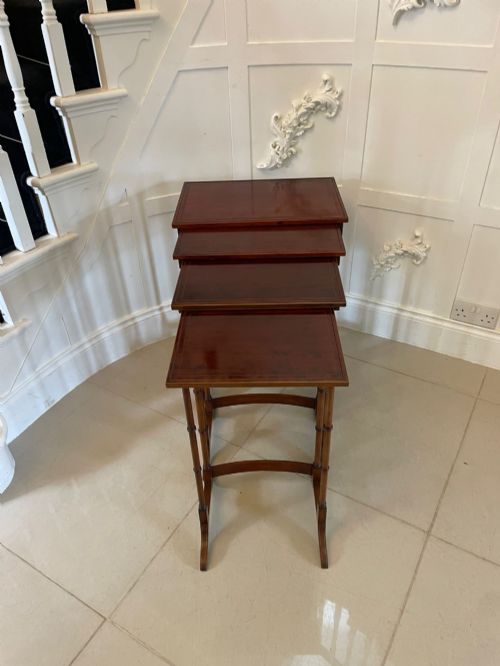
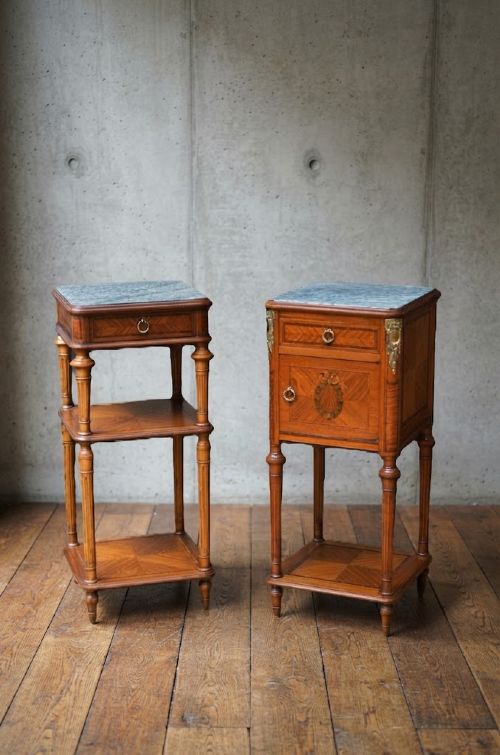
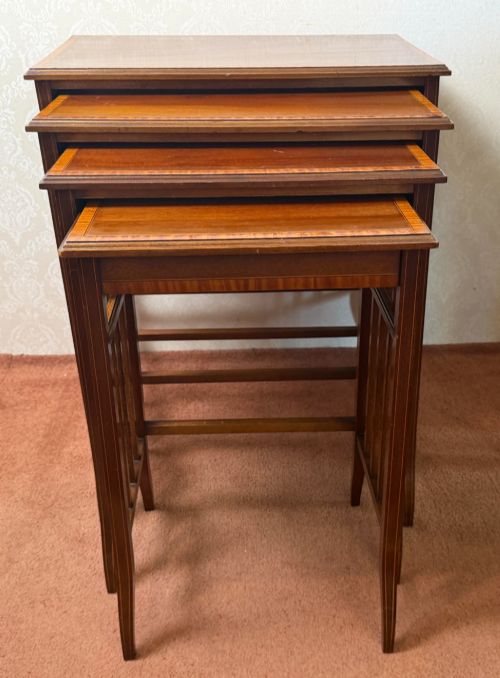
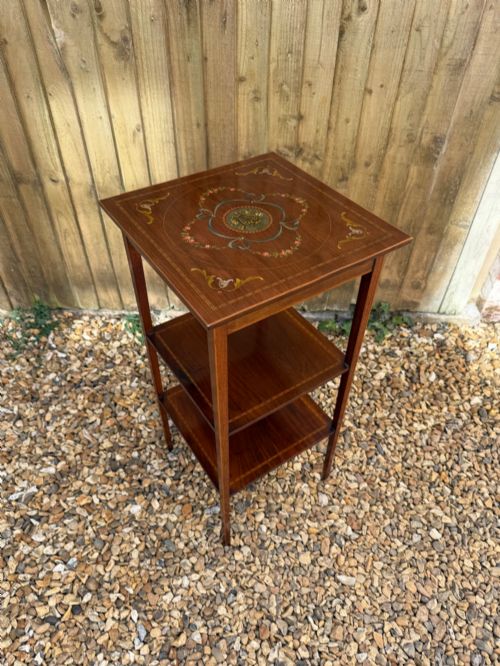
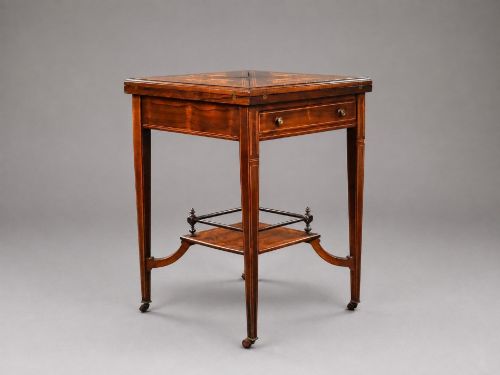
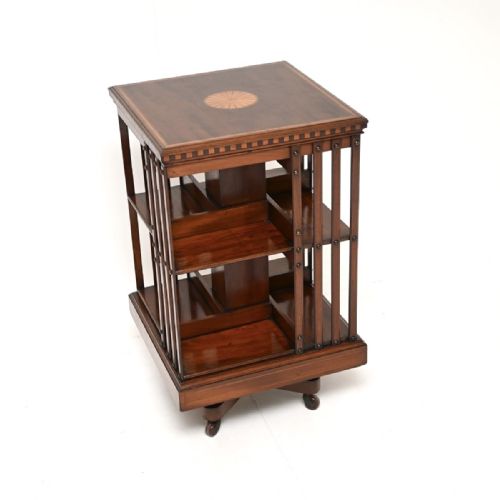
An edwardian satinwood side table typically manifests as a light, refined piece of furniture designed for drawing rooms and halls, often appearing alongside related forms such as occasional tables, nests of tables, and bedside cabinets.
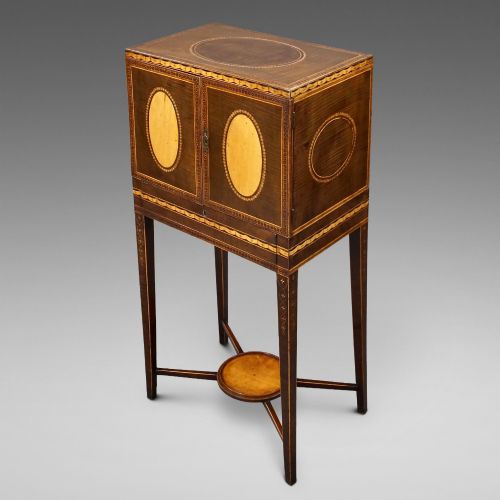
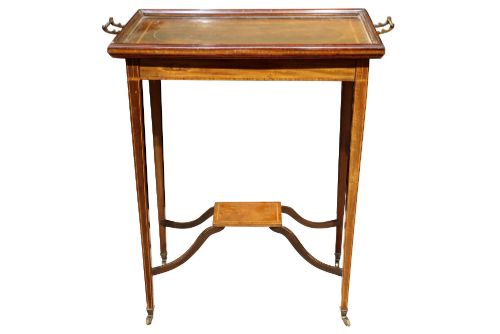
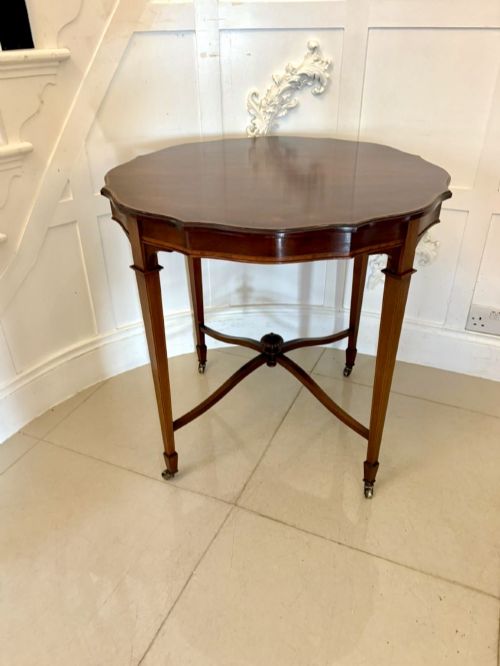
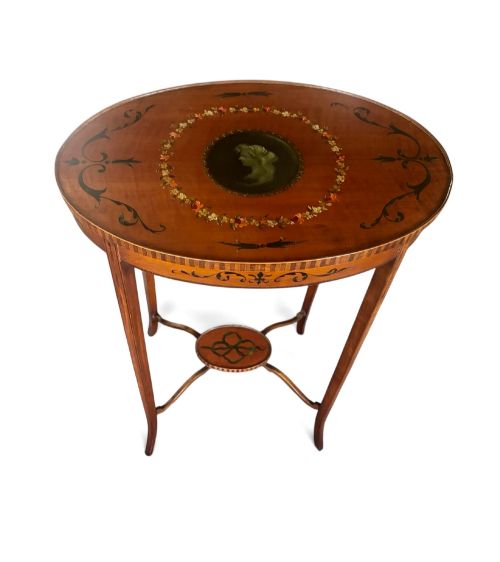
Makers of the Edwardian period and the broader Sheraton Revival movement drew heavily on eighteenth-century precedents, producing rectangular, oval, and demi-lune shapes supported on slender tapered legs.
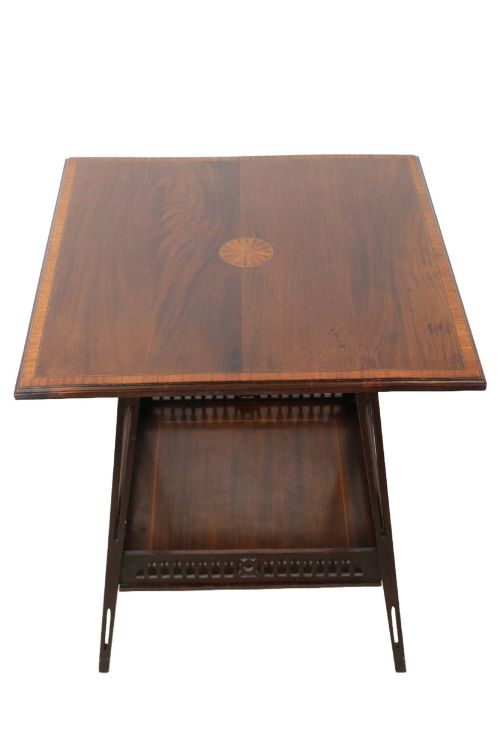
Surviving examples frequently exhibit decorative surface work, including painted floral motifs, contrasting crossbanding, and intricate marquetry inlays that highlight the blonde grain of the primary timber.
Materials and construction
Cabinetmakers utilised satinwood as a primary veneer or solid timber, prized for its natural golden sheen and smooth texture, often pairing it with a mahogany carcass or secondary woods.
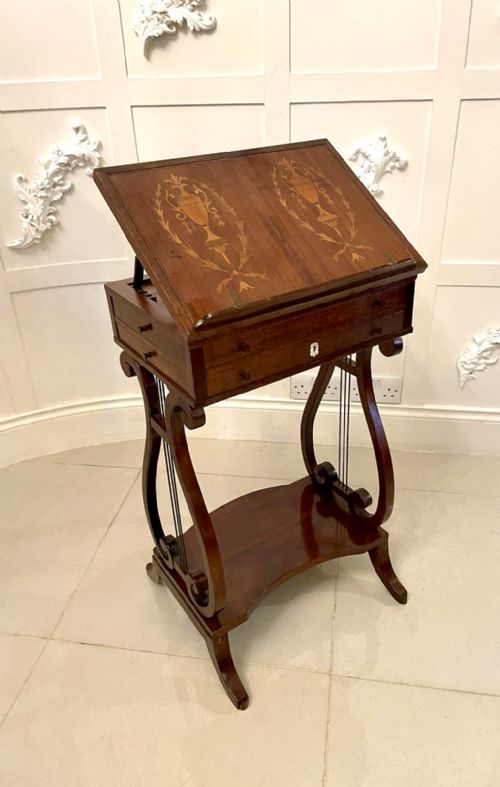
Surface enrichment relied on contrasting stringing and banding executed in dark rosewood, ebony, and boxwood, alongside hand-painted floral garlands and classical urns.
Joinery techniques combined traditional mortise and tenon frames with delicate edge veneers, protecting the timber while allowing complex curved fronts like the bowfront and demi-lune to take shape.
Edwardian Satinwood Side Table Retail Price Guide 2026
Typical asking prices for edwardian satinwood side table among the pieces listed under this phrase on Sellingantiques today, from the lower quarter to the upper quarter. They describe what is for sale here now, not the wider market.
Listings feature satinwood alongside mahogany, rosewood, and walnut across periods spanning the late nineteenth century through the Edwardian era.
Evaluating the standard of manufacture
The degree of refinement in the painted decoration and inlay work largely determines the standing of a piece, with crisp, hand-executed floral panels sitting above generic stencilled motifs.
Timber selection dictates visual impact, where densely figured satinwood and finely matched crossbanding create depth that plain, flat boards lack.
Structural integrity in slender legs and delicate drop-leaves reflects the original joiner's skill, separating robust utility from superficial decorative effort.
Trevor Page & Co·Howard & Sons
The Edwardian Satinwood Side Table Glossary
- Satinwood
- A lustrous, light yellow-gold hardwood native to tropical regions, used extensively for veneers and fine cabinetwork during the eighteenth and early twentieth centuries.
- Sheraton Revival
- A late nineteenth and early twentieth-century design movement that reinterpreted the neoclassical furniture forms popularised by Thomas Sheraton.
- Crossbanding
- A decorative border of veneer laid so that the grain runs perpendicularly to the main surface, frequently used to frame tabletops.
- Marquetry
- The art of forming decorative patterns by fitting together small pieces of veneer, different coloured woods, and shell into a prepared surface.
- Demi-lune
- A half-moon shape commonly seen in console tables and side tables designed to stand flush against a wall.
- Etagere
- A movable set of open shelves used for displaying small decorative objects and books.
Edwardian Satinwood Side Table: Frequently Asked Questions
What is an edwardian satinwood side table used for?
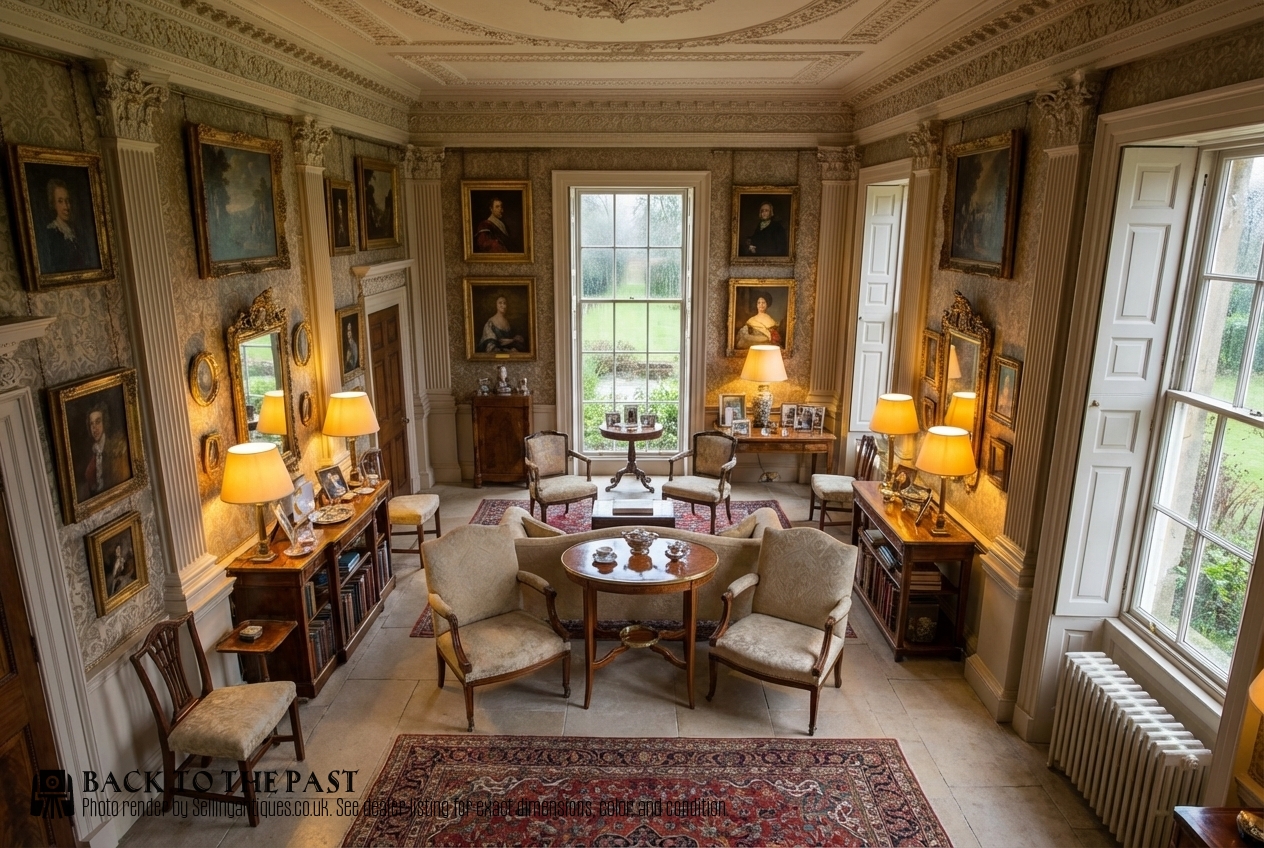
These pieces functioned historically as light surfaces for holding lamps, small clocks, and calling card trays in reception rooms and hallways. Their compact proportions allowed them to sit easily against walls or beside seating without crowding the floor plan.
Today, owners utilise them in similar ways throughout domestic interiors as lamp tables, bedside stands, or decorative focal points in sitting rooms. Their pale timber surfaces brighten darker corners and blend readily with various room schemes.
How do I distinguish Edwardian pieces from 18th century originals?
Edwardian interpretations of earlier styles typically emerge within the Sheraton Revival movement around 1900, revealing machine-sawn veneer thicknesses and modern secondary woods upon closer inspection. Eighteenth-century pieces display hand-cut joinery methods and older structural wear consistent with Georgian workshop practices.
Examining the underside, drawer linings, and block construction usually clarifies the manufacturing era. Revival pieces embrace the lighter, slightly more uniform aesthetic of the early twentieth century while honouring older decorative motifs.
Are painted decorations original to these tables?
Many tables from the Edwardian period feature hand-painted floral decoration, ribbons, or neoclassical urns applied directly onto the satinwood surface. These artistic embellishments formed a standard part of the Sheraton Revival repertoire and were executed by skilled workshops before finishing.
Assessing the integration of the paintwork with the underlying grain helps confirm originality. Authentic period decoration shows appropriate micro-crazing and wear that match the age of the surrounding timber.
How should I care for satinwood surfaces?
Satinwood benefits from minimal intervention, requiring only gentle dusting with a soft, dry cloth to prevent accumulation. Direct sunlight can alter the golden tone of the timber over time, so positioning tables away from intense window light preserves their colour.
Occasional application of traditional beeswax helps nourish the wood and maintain its subtle lustre without building up heavy chemical layers. Avoiding moisture and excessive heat protects the delicate veneered edges and inlay work.