

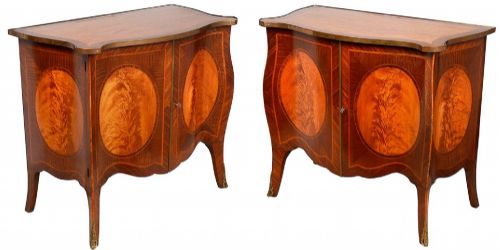


Edwardian Satinwood Commode
An Edwardian satinwood commode brings light timber and neoclassical design together, offering a refined focal point for a bedroom or parlour.
Edwardian Satinwood Commode
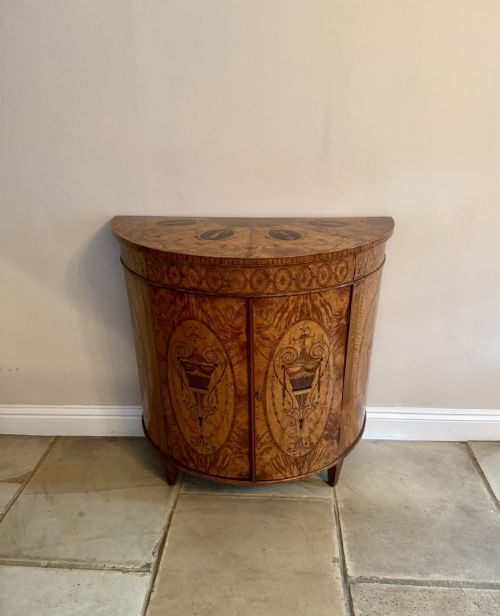
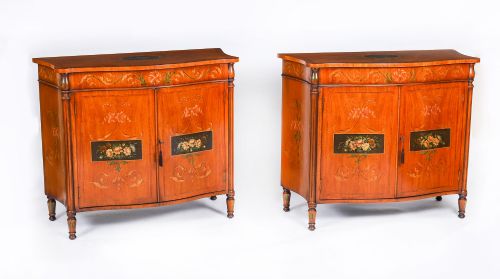
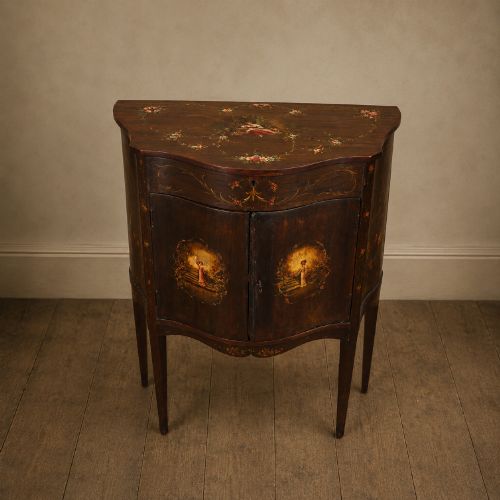
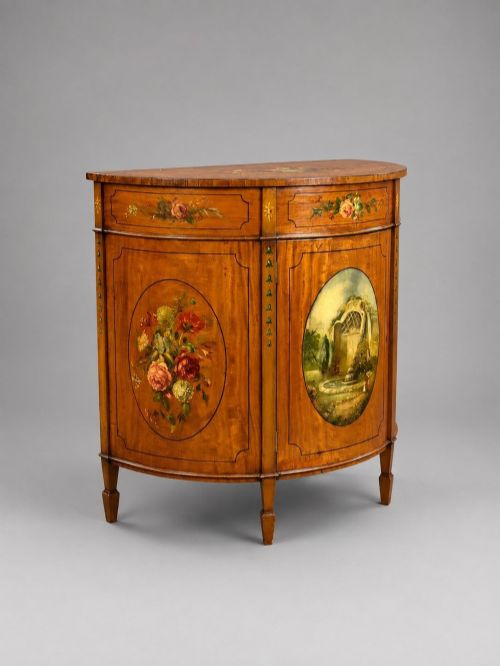
An Edwardian satinwood commode stands as a testament to the revival of eighteenth-century elegance, frequently taking the form of a serpentine or demi-lune cabinet. These pieces combine practical storage with decorative presence, often featuring curved drawer fronts or side cupboards designed for formal reception rooms.
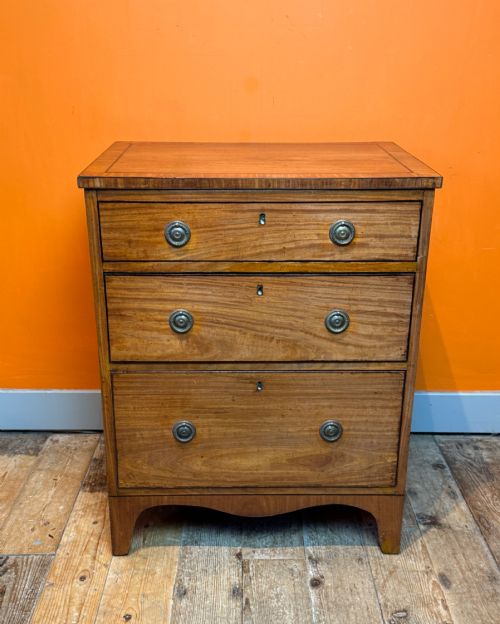
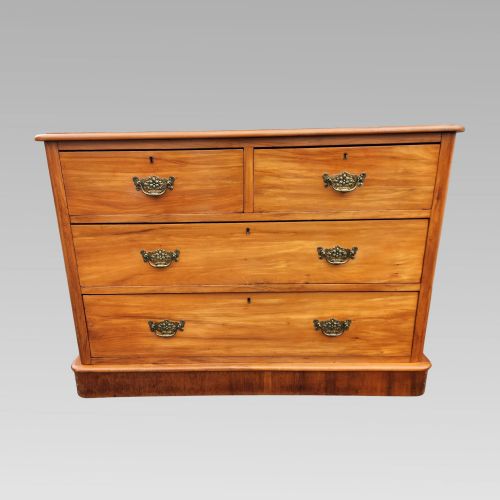
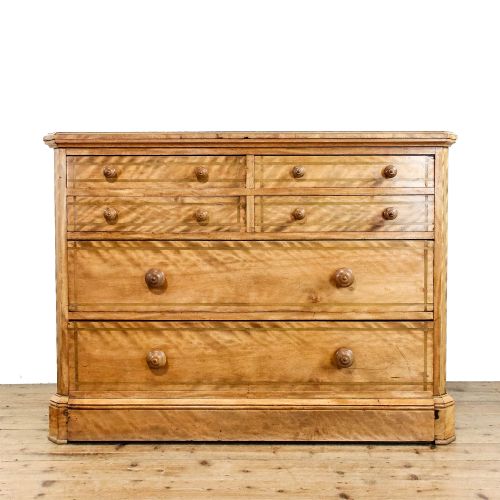
While true Edwardian pieces dominate the selection, buyers will also encounter items from the nineteenth century alongside Sheraton Revival interpretations. Forms range from compact chests of drawers to bowed side cabinets, reflecting the versatile tastes of the period.
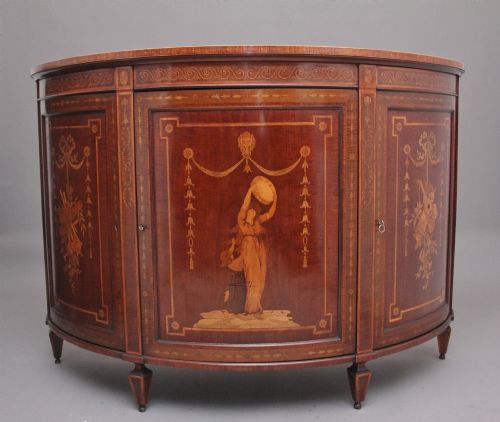
The materials and silhouettes echo neoclassical principles, with satinwood providing a pale, luminous ground for intricate marquetry and painted details. These commodes serve as both functional furniture and decorative statements, bridging Georgian inspiration with Edwardian craftsmanship.
How they were made
Cabinet makers utilised satinwood veneers laid over a secondary timber carcass, such as mahogany or pine, to create smooth, light-reflecting surfaces. This technique allowed workshops to construct complex curved shapes, including bow fronts and demi-lune silhouettes, without warping.
Decoration relied on contrasting woods like boxwood and rosewood for marquetry inlay, alongside hand-painted classical panels. Brass hardware, including original handles and escutcheons, finished the construction.
Structural integrity depended on precise joinery within the carcases, supporting the delicate veneers and applied mouldings across serpentine and straight-fronted forms alike.
Edwardian Satinwood Commode Retail Price Guide 2026
Typical asking prices for edwardian satinwood commode among the pieces listed under this phrase on Sellingantiques today, from the lower quarter to the upper quarter. They describe what is for sale here now, not the wider market.
Some commodes hide secret compartments behind painted classical panels, giving quiet storage for handwritten notes.
What varies in quality
The distinction between standard production and exceptional execution lies in the ambition of the design and the precision of the marquetry. Superior examples exhibit finely detailed hand-painted panels and intricate contrasting wood inlays that align seamlessly across drawers and doors.
The choice of primary timber creates another tier of distinction, with figured satinwood and delicate crossbanding elevating a piece above simpler mahogany or satin walnut alternatives. Maker attribution also plays a role, as documented workshops command attention for their superior joinery and finishing.
James Hicks·Edwards and Roberts·Heals
The Edwardian Satinwood Commode Glossary
- Satinwood
- A dense, lustrous timber with a golden sheen, highly prized for fine cabinet making during the eighteenth and early twentieth centuries. It provides the signature pale ground for inlaid and painted decoration.
- Marquetry
- The art of applying decorative veneer pieces in various woods to form geometric or pictorial patterns. It creates surface contrast on cabinet fronts and tops.
- Sheraton Revival
- A late nineteenth and early twentieth-century design movement inspired by the neoclassical furniture of George Thomas Sheraton. Pieces typically feature delicate proportions, satinwood, and classical motifs.
- Serpentine
- A furniture front characterised by a gentle convex centre flanked by concave curves. This undulating line requires advanced woodworking skill to execute.
Edwardian Satinwood Commode: Frequently Asked Questions
Where should I place an Edwardian satinwood commode?
These cabinets suit drawing rooms, hallways, or bedrooms where their light timber and curved silhouettes can be fully appreciated. Their compact depths allow them to fit comfortably against walls without dominating smaller spaces.
Keep them away from direct sunlight and heat sources to protect the delicate satinwood veneer and prevent the timber from drying out over time.
How do I distinguish Sheraton Revival from original pieces?
Sheraton Revival commodes, typically dating from the late nineteenth or early twentieth century, utilise machine-sawn veneers and secondary timbers typical of the Victorian and Edwardian eras. Their construction methods and interior drawer linings reflect industrial-era cabinet making rather than eighteenth-century workshop practices.
Examining the backboards, secondary woods, and hardware fixings will generally reveal the later manufacturing period despite the classical neoclassical styling.
How do I care for satinwood surfaces?
Dust regularly with a soft, dry cloth and apply a quality beeswax sparingly to nourish the timber. Avoid modern silicone sprays or excessive moisture, which can damage the polished finish.
Maintaining a stable room temperature and humidity level ensures the wood and delicate marquetry remain stable.
What is the difference between a commode and a side cabinet?
In this period, the term commode often refers to a decorative drawer-based cabinet or low chest, sometimes featuring flanking doors in a demi-lune shape. Side cabinets may offer shelf storage behind doors rather than primary drawer compartments.
Both forms served similar decorative and functional roles in formal reception spaces.