
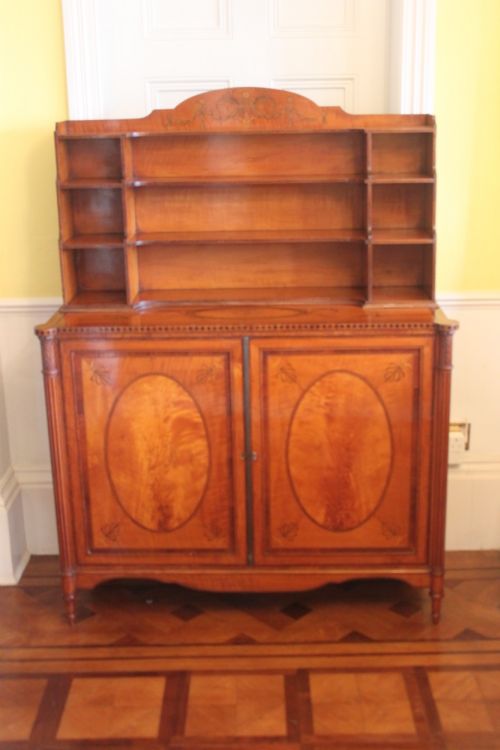
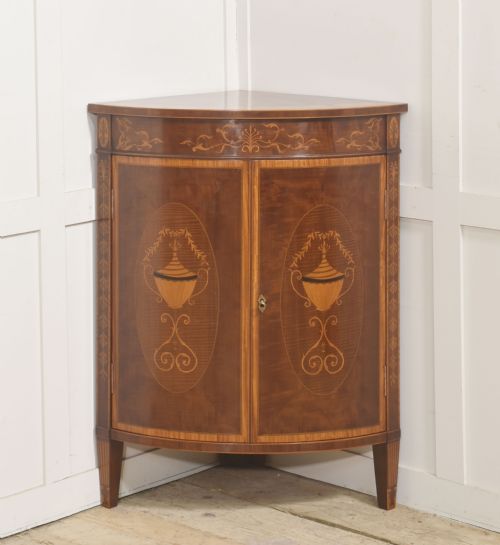


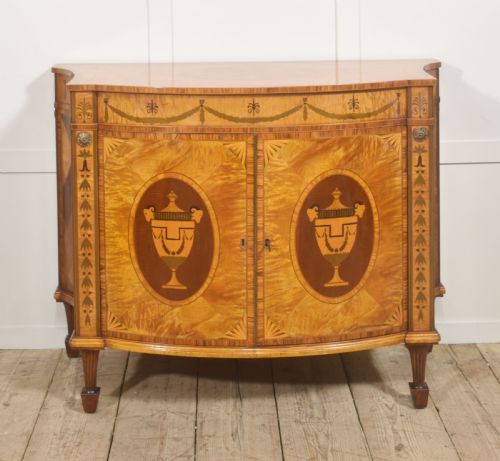


Neoclassical Satinwood Cabinet
A neoclassical satinwood cabinet brings pale timber and classical ornament together, offering refined storage for books, porcelain or papers.
Neoclassical Satinwood Cabinet
A neoclassical satinwood cabinet is an elegant storage piece defined by pale, figured timber and classical motifs. Buyers look for these items to introduce light, refined furniture into traditional and modern interiors alike.
The pieces on this page span the eighteenth century through to the early twentieth century, encompassing Georgian originals alongside later Sheraton Revival, Adam Revival and French neoclassical interpretations.
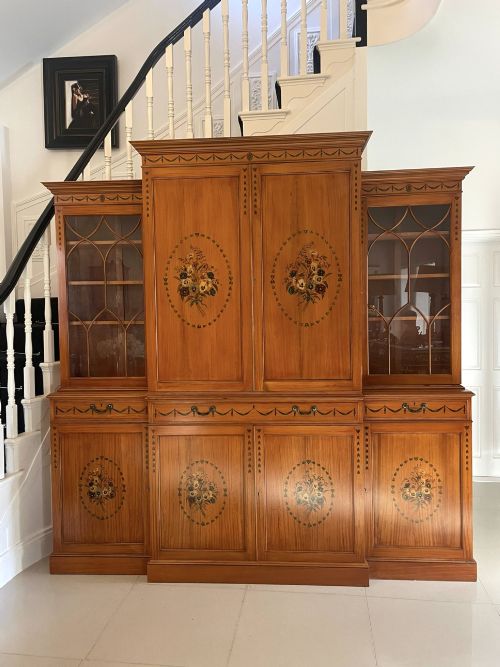
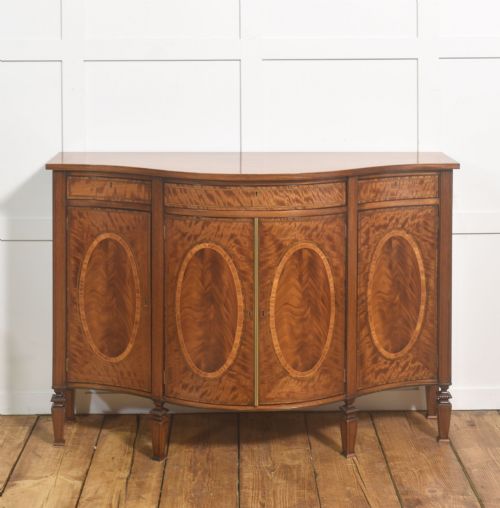
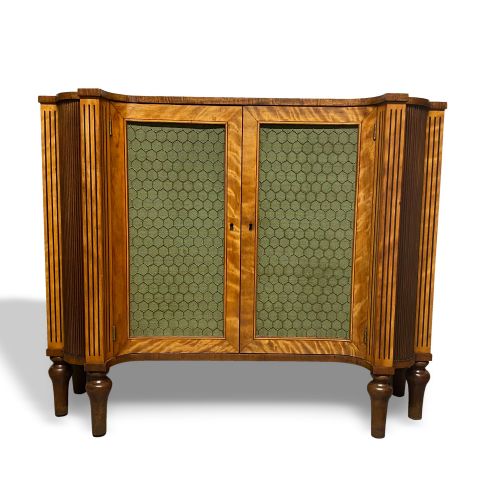
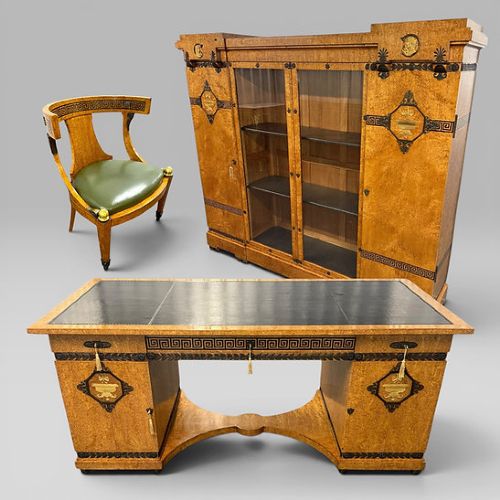
Forms vary significantly, ranging from side cabinets, commodes and demi-lune shapes to grand breakfront bookcases, display cabinets with glazed doors, and cabinets on stands.
How they were made
Cabinet makers relied on satinwood veneers laid over sturdy secondary timbers like mahogany, enhanced by contrasting inlay in boxwood, harewood and rosewood. Surface decoration frequently combined marquetry panels with painted details.
Mounts in ormolu and handles in cast brass provide structural accents to the timber frames. Glazing bars in geometric patterns or astragal shapes structure the doors of display cabinets and bookcases.
Some cylinders open to reveal miniature drawers, offering secret compartments designed for letters and ink.
What varies in quality
Quality rests upon the selection of timber veneers and the precision of the marquetry work. Highly figured satinwood combined with finely executed hand-painted decoration separates standard production from exceptional pieces.
The refinement of the internal construction, the integrity of the original brass or ormolu mounts, and the preservation of the polished surface dictate the standing of a cabinet.
Mercier Frères·James Hicks·Jewell of Holborn·Maple and Co·Waring and Gillow·Edwards and Roberts·Edmond Poteau
The Neoclassical Satinwood Cabinet Glossary
- Satinwood
- A tropical timber known for its lustrous, golden-yellow sheen and natural chatoyancy. It forms the primary visible surface veneer on these cabinets.
- Marquetry
- The art of applying decorative veneer pieces to a structure to form pictorial or geometric designs. Craftsmen use contrasting timbers to create depth.
- Demi-Lune
- A half-moon shape characteristic of commodes and side cabinets designed to sit flush against a wall. This profile became popular during the neoclassical revival.
- Astragal
- A moulded bar dividing panes of glass within a cabinet door. These delicate wooden strips create light, geometric patterns across bookcases and display cabinets.
- Ormolu
- Gilded bronze used for decorative mounts and feet. It provides a bright metallic contrast against dark inlay and pale satinwood.
Neoclassical Satinwood Cabinet: Frequently Asked Questions
Where should I place a satinwood cabinet?
These cabinets suit drawing rooms, dining spaces or hallways where their pale timber reflects natural light. They function well as display surfaces for decorative objects or practical storage units.
Keep them away from direct sunlight and heat sources to prevent the satinwood veneer from fading or drying out over time.
How do I clean satinwood furniture?
Dust the surfaces regularly with a soft, dry cloth to prevent dirt build-up. Avoid using modern silicone sprays or abrasive cleaning products.
Apply a traditional beeswax polish sparingly once or twice a year to maintain the natural lustre of the timber.
What is the difference between Georgian and revival cabinets?
Georgian cabinets date from the eighteenth century and represent the original period of neoclassical design. They were constructed for specific high-status domestic interiors.
Revival pieces date from the nineteenth and early twentieth centuries, drawing direct inspiration from Georgian and French neoclassical precedents.
Are painted decorations original to these pieces?
Many cabinets feature delicate hand-painted swags, urns and classical figures that belong to the original design scheme, particularly on Sheraton Revival and Adam Revival items.
Close inspection reveals whether the pigment integrates naturally with the grain and ageing of the underlying satinwood.