

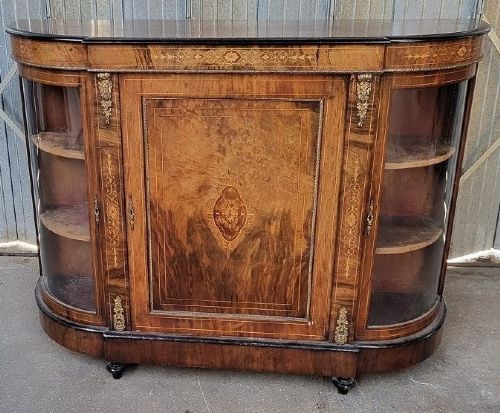
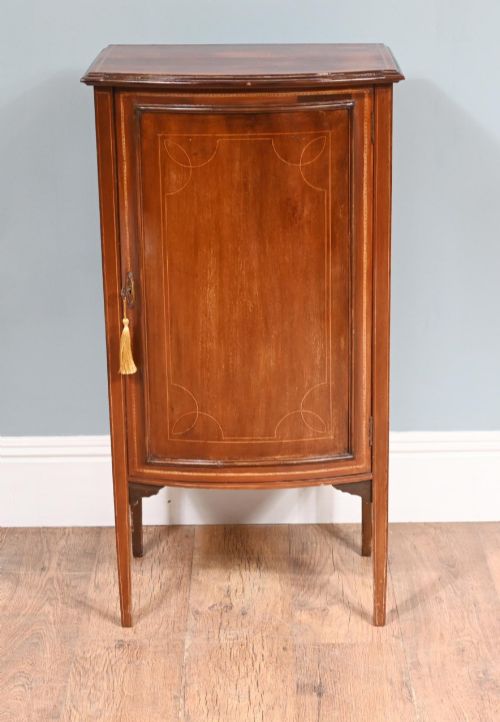
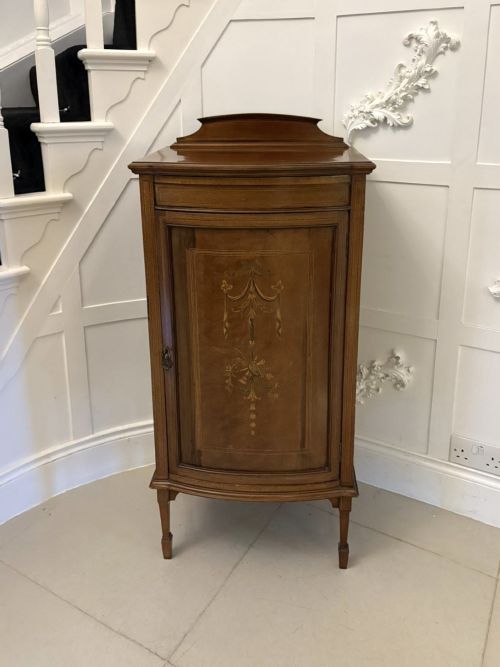
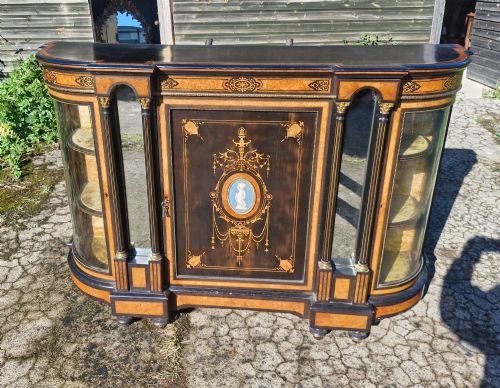
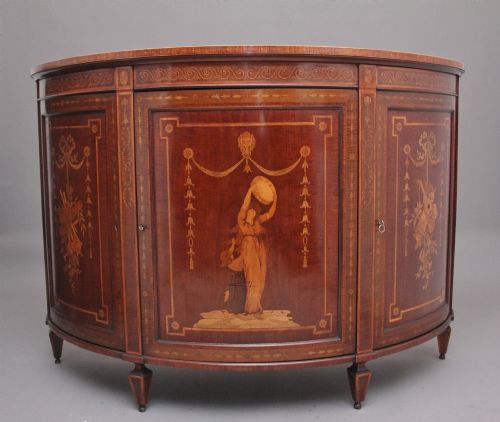
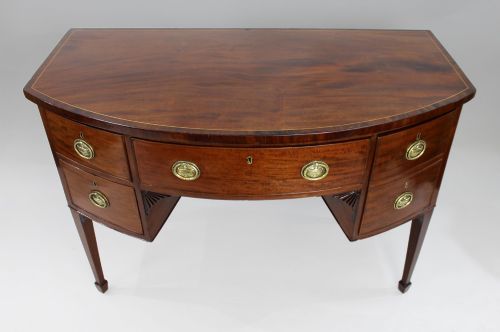
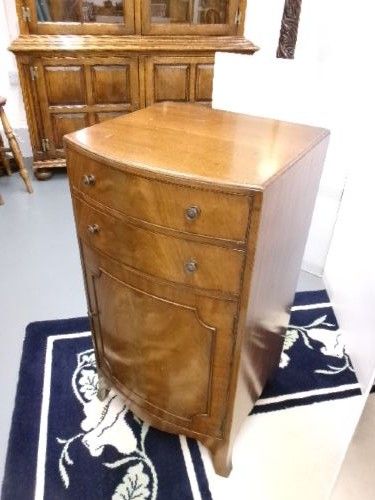
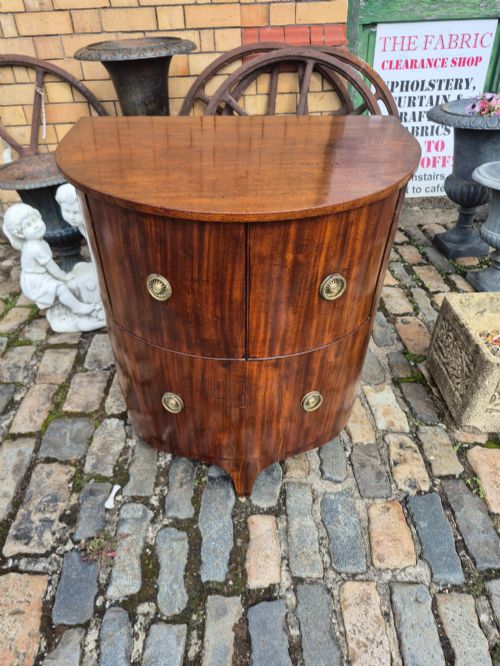


Antique Bowfront Side Cabinet
An antique bowfront side cabinet brings curved elegance and discreet storage to a room, offering a practical surface for display alongside concealed interior space.
Antique Bowfront Side Cabinet
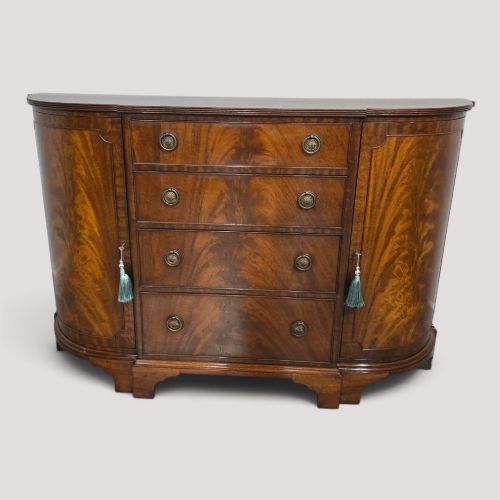
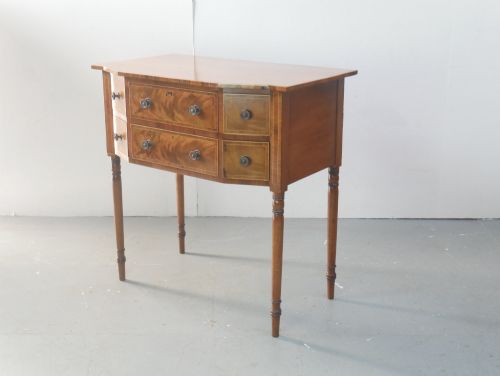
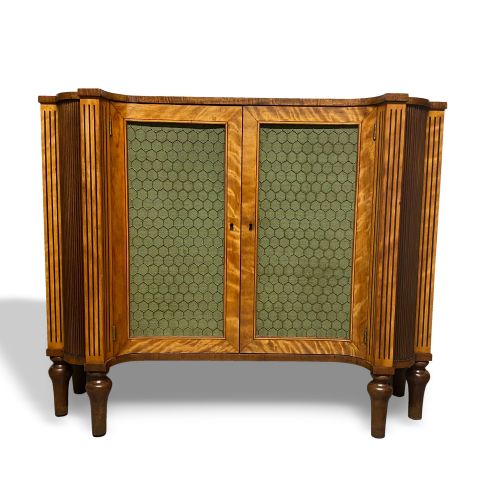
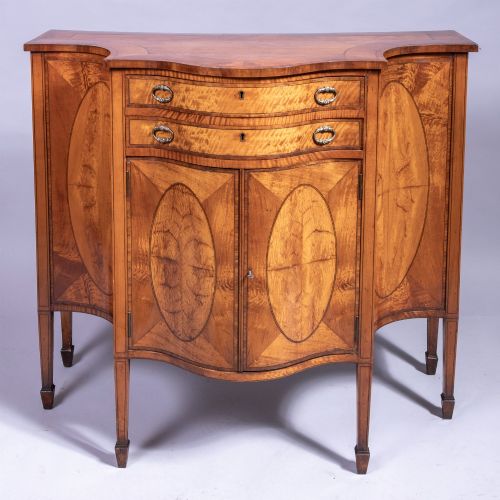
An antique bowfront side cabinet provides a curved convex facade that softens room lines while housing practical shelving or drawers behind doors. These pieces serve secondary roles in reception rooms, bedrooms, and halls, functioning as sideboards, bedside lockers, or commodes.
The versions most commonly found here span the Georgian era through to the Edwardian period and the early twentieth century. These later revivals sit alongside pieces from the eighteenth and nineteenth centuries, often rendered in mahogany, satinwood, or burr walnut.
Makers shaped these cabinets as compact bedside cupboards, half-round console pieces, and larger display units with glazed upper sections or inlaid doors. The form adapts well to different scales, ranging from small bedside units to wider dining room sideboards.
Materials and construction methods
Cabinet makers built the carcase using solid pine or oak for stability, applying fine timbers such as mahogany, satinwood, and burr walnut as veneers to the curved fronts. Crossbanding and marquetry details were frequently added to borders and panels to create geometric and floral patterns across the curved surface.
Curved drawer fronts and bowed doors required specialised joinery, including steam bending or multi-layered construction to hold the arched shape without warping over time. Brass hardware, ormolu mounts, and painted decorations completed the exterior finish of these fitted units.
Antique Bowfront Side Cabinet Retail Price Guide 2026
Typical asking prices for bowfront side cabinet among the pieces listed under this phrase on Sellingantiques today, from the lower quarter to the upper quarter. They describe what is for sale here now, not the wider market.
Cabinet forms on this page include bedside cupboards, credenzas, and glazed display units with bowfront profiles.
Distinctions in craftsmanship and finish
Quality rests in the precision of the curved veneer work and the symmetry of the wood grain matched across the bowed doors. Superior examples display seamless joins where the timber meets the frame, alongside crisp hand-cut marquetry and detailed crossbanding rather than printed or stenciled substitutes.
The choice of secondary timbers inside the drawers and the integrity of the original brass handles or locks separate standard workshop output from exhibition-grade pieces. Interiors finished with polished drawer linings and sound door hinges indicate careful initial construction.
The Antique Bowfront Side Cabinet Glossary
- Bowfront
- A convex curved cabinet or drawer front that projects outward in a smooth arch. This shape defines the primary profile of these pieces.
- Crossbanding
- A narrow strip of veneer laid around the border of a panel with the grain running perpendicular to the centre. This technique frames the primary timber.
- Marquetry
- Decorative patterns formed from different coloured wood veneers inlaid into a solid background. Craftsmen utilised floral and geometric motifs.
- Ormolu
- Gilded bronze mounts applied as decorative ornaments to furniture corners, feet, and aprons. These details appear on high-status nineteenth-century pieces.
- Commode
- A low cabinet or chest with doors and drawers, standing on legs. The term often describes French or revival pieces with serpentine or bowed fronts.
Antique Bowfront Side Cabinet: Frequently Asked Questions
Where should I place a bowfront cabinet?
These cabinets suit hallways, living rooms, and bedrooms where a curved front prevents sharp corners from jutting into walkways. Their compact depth allows them to sit comfortably against walls without dominating the floor space.
They function effectively as bedside units, display surfaces for lamps, or serving points in dining areas while concealing storage behind fitted doors.
How do I care for antique veneer?
Keep wooden cabinets away from direct sunlight and heat sources to prevent the underlying veneers from drying out, lifting, or cracking. Maintain a stable room temperature to protect the polished surfaces.
Apply a traditional wax polish occasionally and buff with a soft cloth to nourish the timber. Avoid using silicone sprays or abrasive household cleaners.
What is the difference between a sideboard and a commode?
Sideboards generally offer a wider surface for serving food and longer storage configurations intended for dining rooms. They appear in larger scales during the Georgian and Edwardian periods.
Commodes originate from French furniture styles and typically feature a shorter, more decorative profile with doors or drawers. They serve as accent pieces in reception rooms and bedrooms.
How do I identify a revival piece?
Sheraton Revival and Queen Anne Revival furniture dates from the late nineteenth and early twentieth centuries, copying earlier eighteenth-century designs. Look at the interior construction methods and secondary woods to confirm the date.
Machine-sawn components, standardised screws, and modern adhesives point to later revival periods. Georgian originals display hand-planed timbers and older construction techniques inside the carcase.