


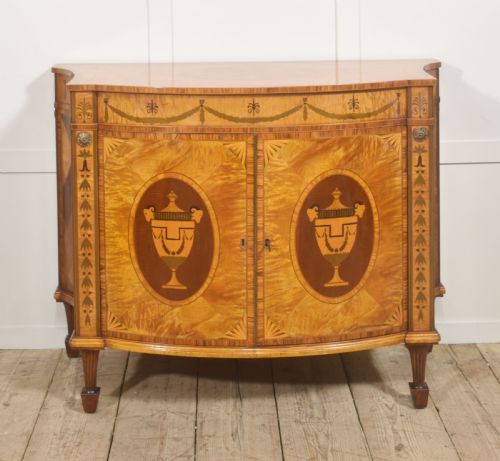


Neoclassical Satinwood Credenza
A neoclassical satinwood credenza brings refined symmetry and pale, glowing timbers into a room, offering both surface display and discreet storage.
Neoclassical Satinwood Credenza
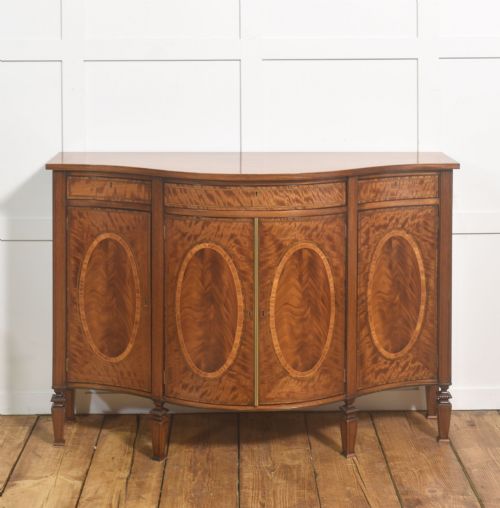
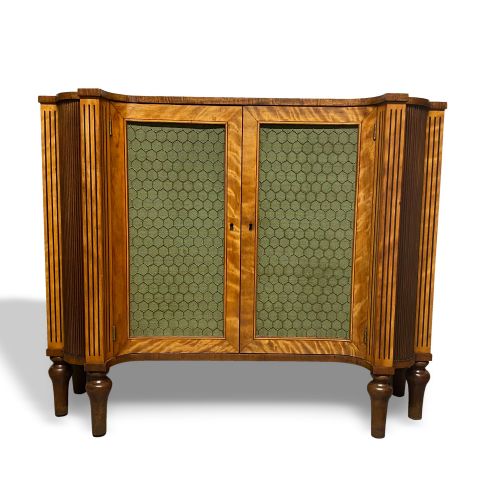
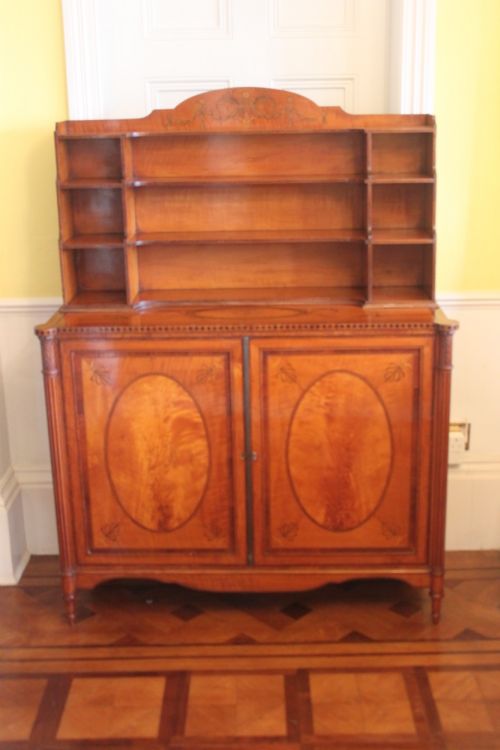
When you search for a neoclassical satinwood credenza, you are looking at sophisticated storage furniture that draws heavily on classical antiquity and late eighteenth century design principles. The pieces on this page span several centuries and revivals, including Georgian originals alongside later Sheraton Revival and Adam Revival interpretations.
The primary forms you will encounter are side cabinets, commodes, and sideboards, often featuring bow-fronts or demi-lune shapes. These items range from eighteenth century origins through to nineteenth century and twentieth century revivals, reflecting enduring tastes for light, elegant cabinetry.
Makers and workshops represented in these designs include historical cabinet-makers and later firms such as James Hicks, Maple and Co., Kaufman, and Edmond Poteau. Whether executed as an authentic period piece or a later revival, each object serves as a focal point for formal dining rooms and drawing rooms.
Materials and construction
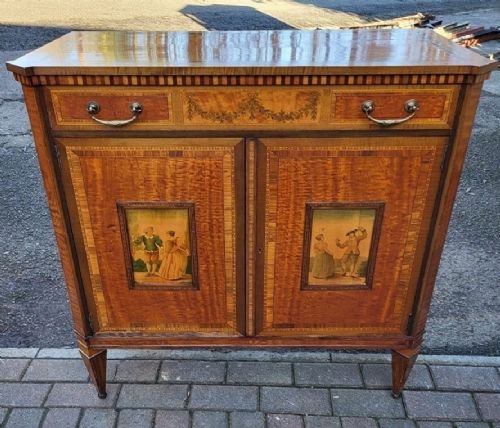
Construction relies upon a foundation of sturdy timber, predominantly mahogany, overlaid with figured satinwood veneers that provide a shimmering, golden ground. Cabinet-makers incorporated contrasting timbers such as boxwood and rosewood for intricate stringing, banding, and marquetry details.
Surfaces frequently showcase delicate hand-painting, gilt-brass mounts, and inset marble tops that elevate the decorative scheme. Joinery techniques from the eighteenth and nineteenth centuries ensure stable carcases, while curved bow-front and serpentine forms require considerable skill in steam-bending and veneer laying.
Listings feature satinwood combined with mahogany, boxwood, and rosewood across Georgian originals and later revival styles.
Assessing quality
Quality rests upon the crispness of the marquetry inlay and the delicacy of any hand-painted motifs, where tighter botanical or classical motifs indicate superior workshop output. The choice of satinwood veneers also dictates visual impact, with deeply figured timber commanding greater presence than plain stock.
Construction details distinguish finer examples, such as the use of solid secondary timbers in drawer linings and the precision of the brass hardware. Furthermore, the fluidity of curved forms - particularly on demi-lune and serpentine commodes - separates standard production from exceptional cabinet-making.
James Hicks·Maple and Co.·Edmond Poteau
The Neoclassical Satinwood Credenza Glossary
- Satinwood
- A lustrous, hard timber native to Ceylon and the West Indies, prized for its golden sheen and smooth texture when polished. It forms the primary visual surface for many neoclassical and revival cabinets.
- Demi-lune
- A half-moon shape used for the footprint and top of commodes and side cabinets designed to sit flush against a wall. This profile allows the furniture to project less into a room while retaining generous interior capacity.
- Marquetry
- The art of applying fitted pieces of veneer to a structure to form decorative patterns and pictorial designs. Craftsmen use contrasting woods like boxwood and rosewood to achieve sharp definition in floral or neoclassical motifs.
- Bow-front
- A convex, outward-curving front profile common to sideboards and side cabinets of the Georgian and revival periods. It softens the rigidity of rectangular case furniture and catches ambient light across the grain.
- Serpentine
- A shaped furniture front featuring a concave centre flanked by convex ends, resembling the curves of a snake. This complex contour demands advanced woodworking skill and careful veneer alignment.
Neoclassical Satinwood Credenza: Frequently Asked Questions
What is a neoclassical satinwood credenza?
It is a decorative storage cabinet or sideboard featuring pale satinwood veneers and classical ornamentation inspired by ancient Greek and Roman design.
These pieces typically function as sideboards, commodes, or display cabinets in formal reception rooms.
How do I date a satinwood cabinet?
Dating relies on examining construction methods, secondary timbers, and stylistic markers that point to the eighteenth century or later revival periods.
Signatures, paper labels, and brass hardware styles also help narrow down the specific decade of manufacture.
Where should I place this furniture?
These cabinets suit dining rooms, grand hallways, or drawing rooms where their reflective surfaces and inlaid details can be fully appreciated.
Because many feature shallow depths or demi-lune shapes, they fit comfortably against walls without dominating the floor space.
How do I care for satinwood surfaces?
Protect the timber by keeping it away from direct sunlight and maintaining stable room humidity to prevent veneer lifting.
Dust gently with a soft, dry cloth and avoid applying modern silicone polishes that can damage the historical finish.