


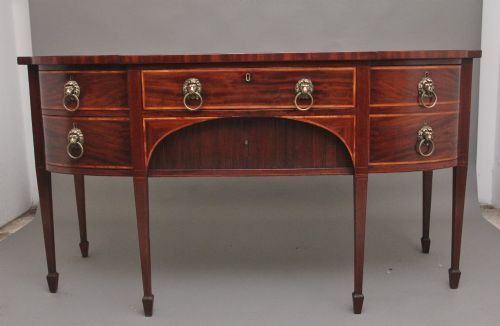


Regency Bowfront Cabinet
A regency bowfront cabinet brings curved elegance and rich timber tones into a room, offering practical storage disguised in classic proportions.
Regency Bowfront Cabinet
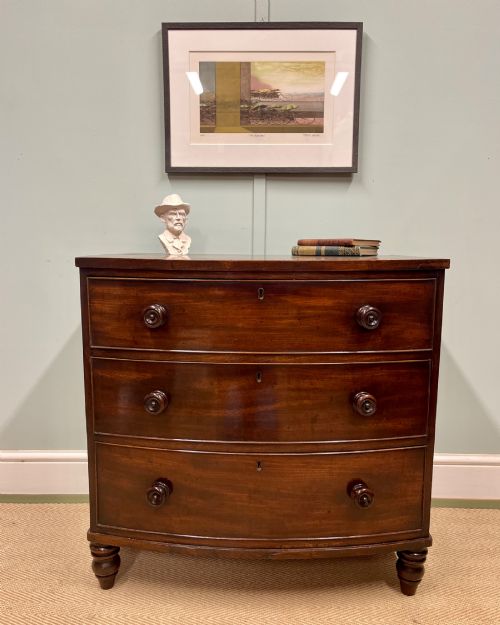
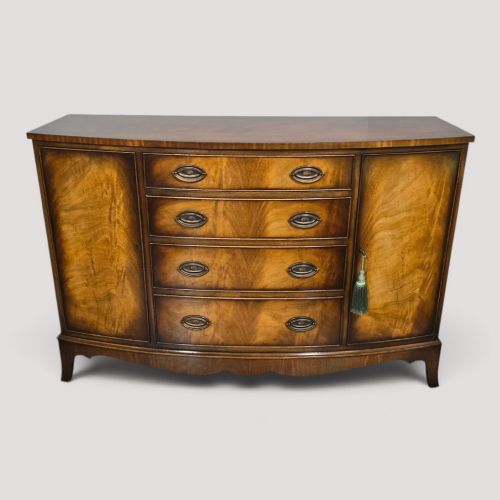
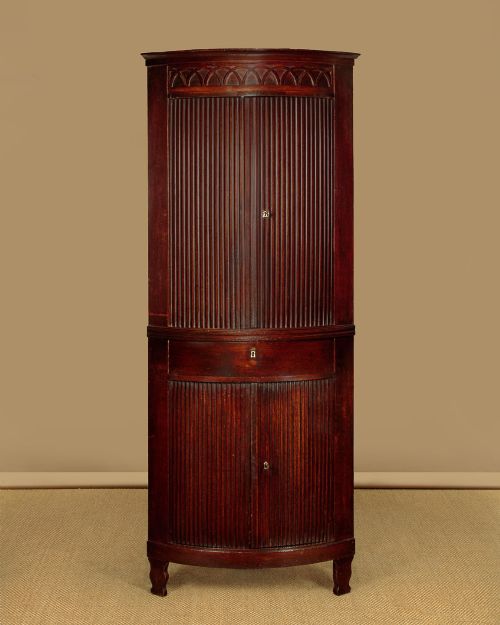
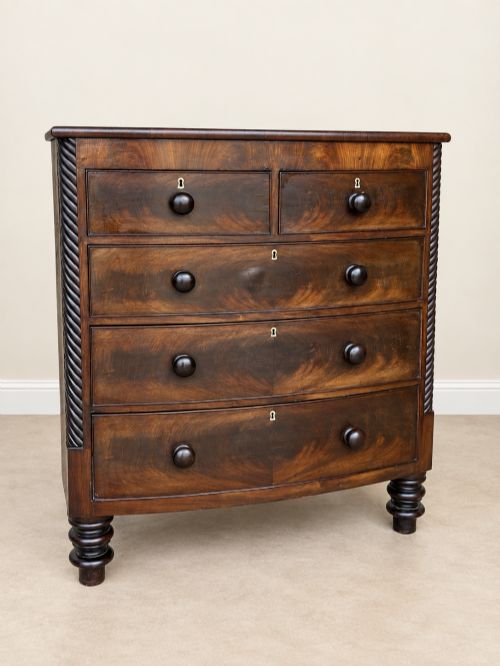
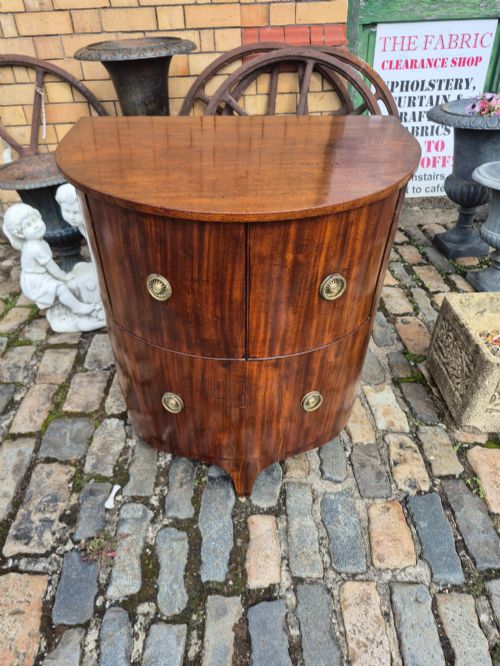
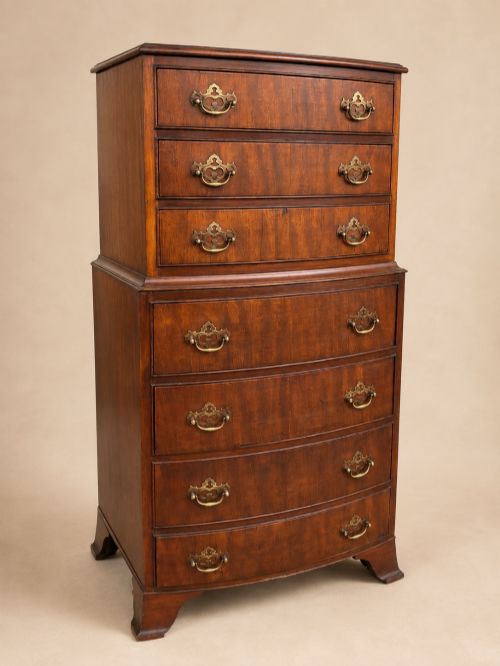
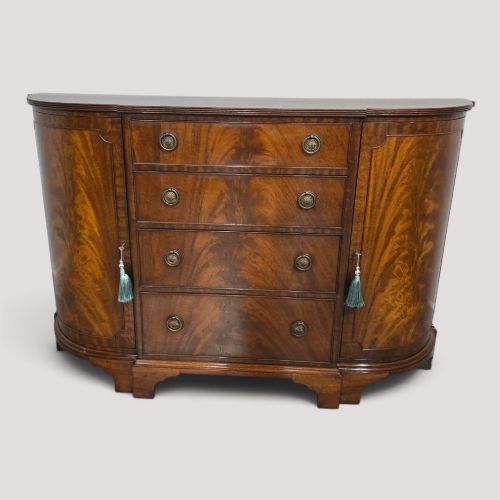
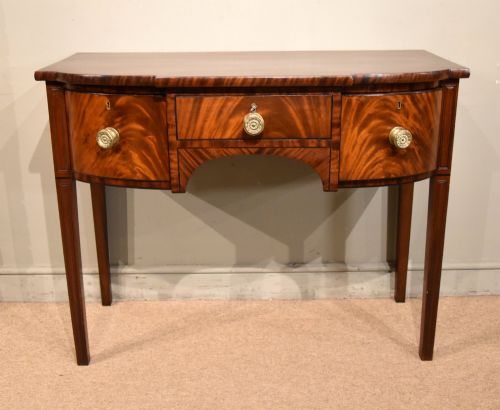
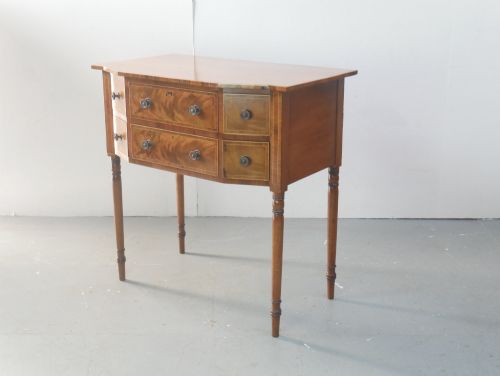
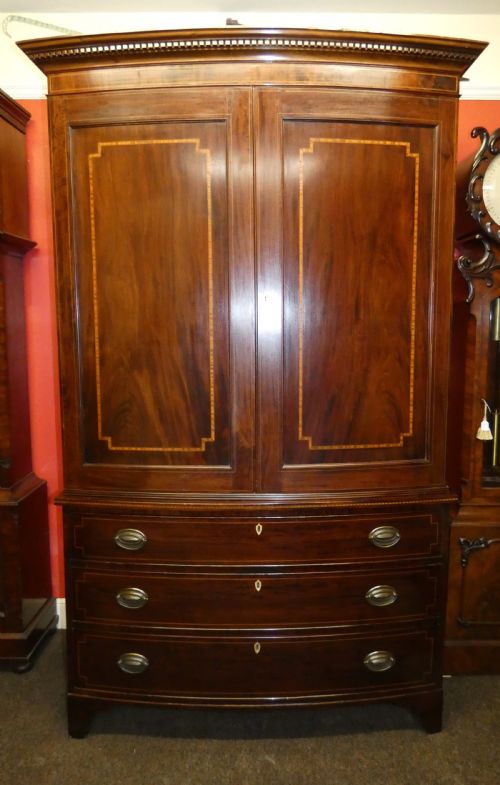
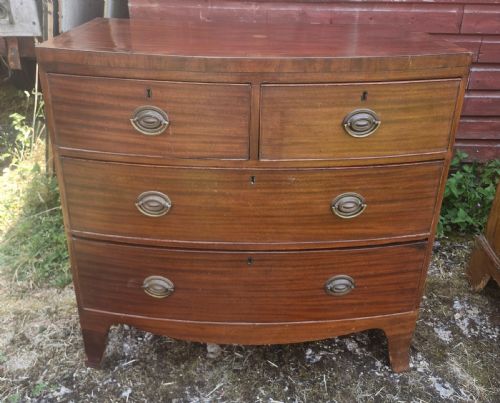
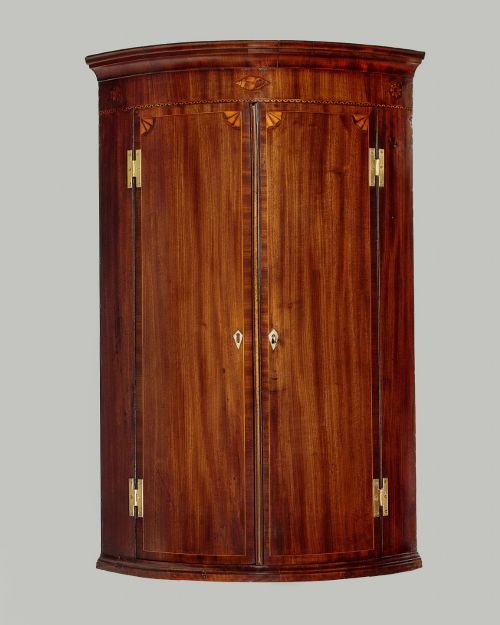
A regency bowfront cabinet spans several practical forms, including sideboards, chests of drawers, corner cupboards, and bedside nightstands. You will most frequently encounter mahogany sideboards and chests featuring the distinctive rounded front curve that defines this group.
The pieces emerge primarily from the Georgian and Regency periods, alongside later revival iterations from the nineteenth and twentieth centuries. Origins trace back to early nineteenth-century workshops as well as later interpretations built in the Regency style.
Materials and construction
Makers relied heavily on solid mahogany and flame mahogany veneer to construct these curved carcases, often selecting timber with rich grain patterns. Surfaces gained contrast and refinement through satinwood inlay, ebony details, and brass hardware.
Cabinetmakers mastered the technique of bending wood or cutting curved framing to achieve the signature bowfront profile. Drawer fronts and door panels frequently utilise book-matched flame veneers to create symmetrical visual patterns across the curved surface.
Regency Bowfront Cabinet Retail Price Guide 2026
Typical asking prices for regency bowfront cabinet among the pieces listed under this phrase on Sellingantiques today, from the lower quarter to the upper quarter. They describe what is for sale here now, not the wider market.
Some miniature bowfront chests were built as apprentice pieces to demonstrate a cabinetmaker's skill before earning full trade status.
Assessing the execution
Quality reveals itself in the selection of timber veneers and the precision of the inlay work. Finer examples display carefully chosen flame mahogany with seamless grain continuity around the curved radius.
Construction methods distinguish standard production from superior pieces, particularly in the handling of drawer linings, backboards, and secondary timbers. The crispness of edge banding and the integration of brass fittings dictate the overall refinement of the cabinet.
Gillows
The Regency Bowfront Cabinet Glossary
- Bowfront
- A convex, outwardly curved front profile typical of these cabinets and sideboards. This curved design softens room angles and maximises internal storage capacity.
- Flame mahogany
- A figure in mahogany timber resembling flickering flames, created by cutting across the branch junction. Cabinetmakers prized this veneer for high-status furniture fronts.
- Inlay
- The technique of embedding contrasting woods or materials into a solid timber surface to form decorative patterns. Satinwood and ebony frequently serve this purpose on these pieces.
- Tallboy
- A tall chest of drawers made in two stacked sections, providing substantial vertical storage. Examples in this format often incorporate the curved bowfront shape.
- Commode
- A low cabinet or chest of drawers designed for domestic storage. In this context, the term often describes bedside or compact side cabinets.
Regency Bowfront Cabinet: Frequently Asked Questions
Where should I place a bowfront cabinet?
These cabinets suit dining rooms, hallways, or living spaces where a curved profile softens linear architectural lines. Their compact side or bedside variations fit well into smaller alcoves.
Ensure adequate clearance around the curved front so the doors or drawers open fully without obstruction from nearby furniture.
How do I clean mahogany surfaces?
Dust the timber regularly with a soft, dry cloth to prevent particle build-up on the polished finish. Avoid silicone-based sprays that can damage historic veneer.
Apply a traditional beeswax polish occasionally to nourish the wood and maintain a natural, deep lustre across the flame mahogany grain.
Are these cabinets practical for modern storage?
The internal depths of sideboards and chests provide ample space for contemporary dining ware, linens, or general household items. Drawer divisions in smaller chests accommodate modern organisation needs.
Check internal shelf dimensions on corner cupboards and side cabinets to ensure your specific items will fit behind the curved doors.
How do I distinguish original Regency from revival pieces?
Original pieces from the early nineteenth century exhibit period construction methods, including hand-cut dovetails and native secondary woods. Look closely at the wear patterns and timber ageing.
Revival pieces from later decades often utilise standardised fixings and different interior timber species while replicating the classic Regency style.