

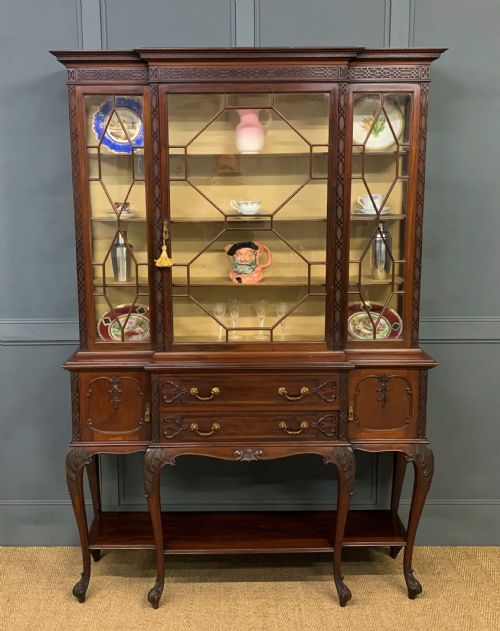
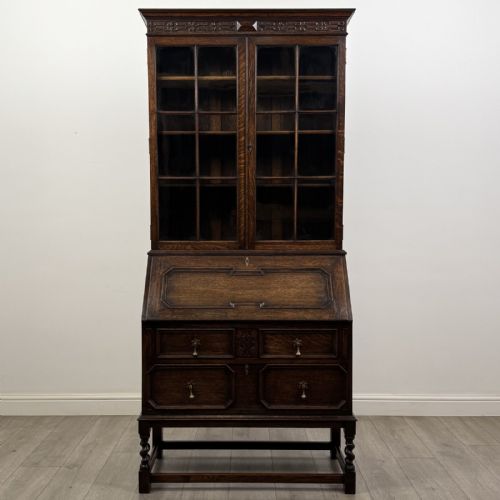
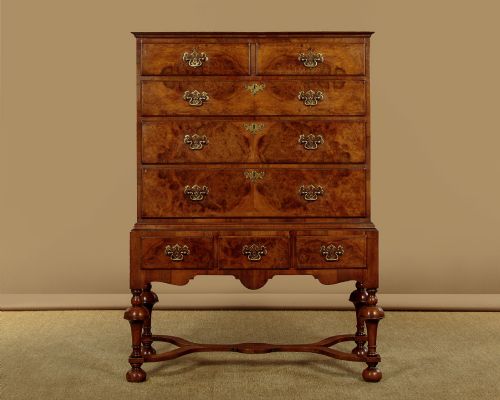
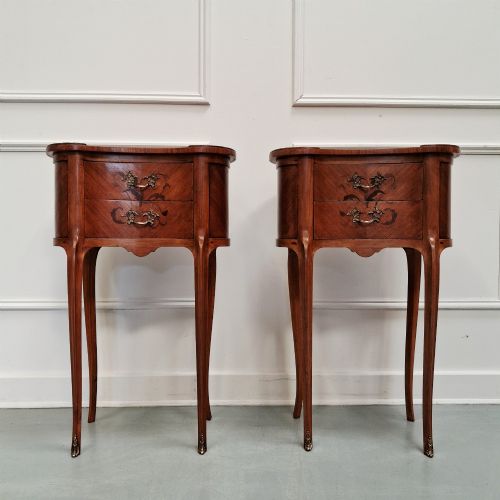
Antique Cabinet on Legs
An antique cabinet on legs brings elevated storage and period craftsmanship to a room, spanning styles from Georgian mahogany to Edwardian burr walnut.

Antique Cabinet on Legs
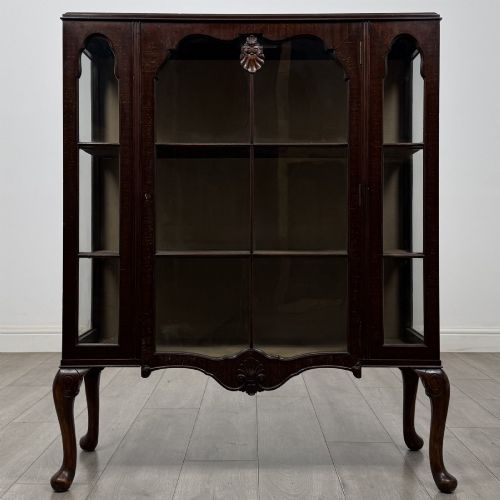
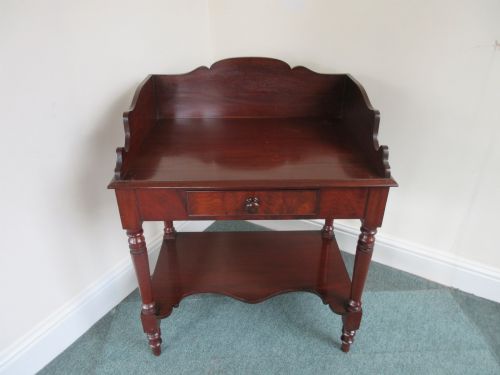
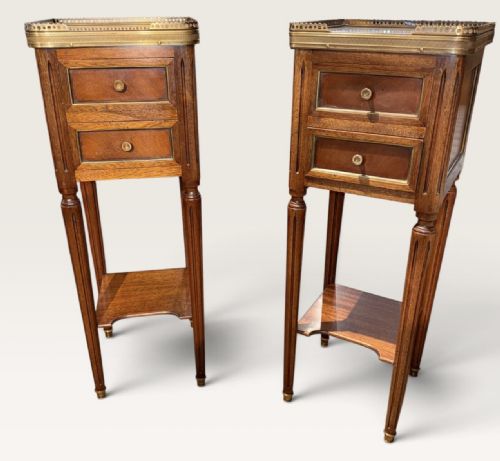
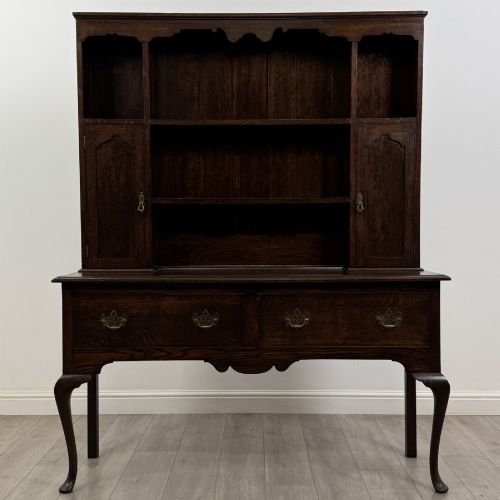
When searching for an antique cabinet on legs, buyers encounter elevated storage pieces that range from 18th century walnut chests on stands to Edwardian and 1930s side cabinets, sideboards, and bedside tables raised from the floor.
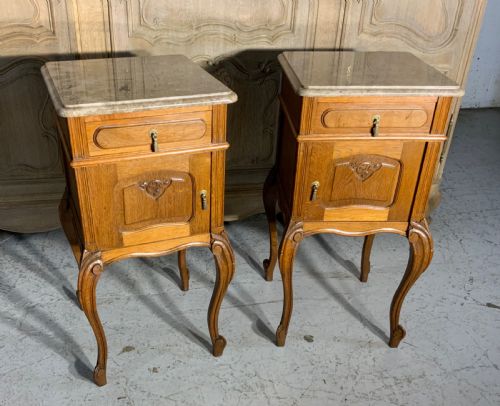
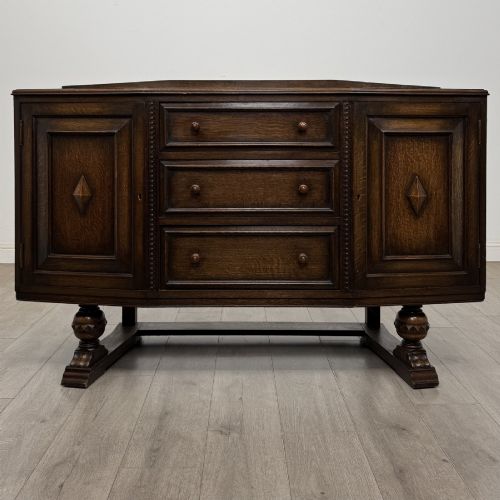
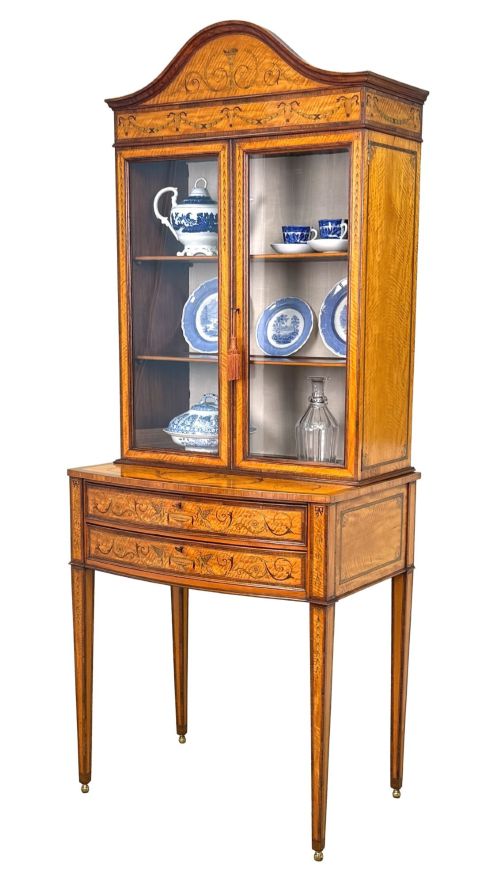
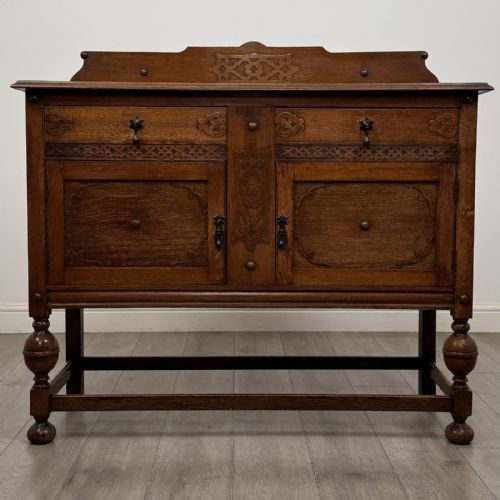
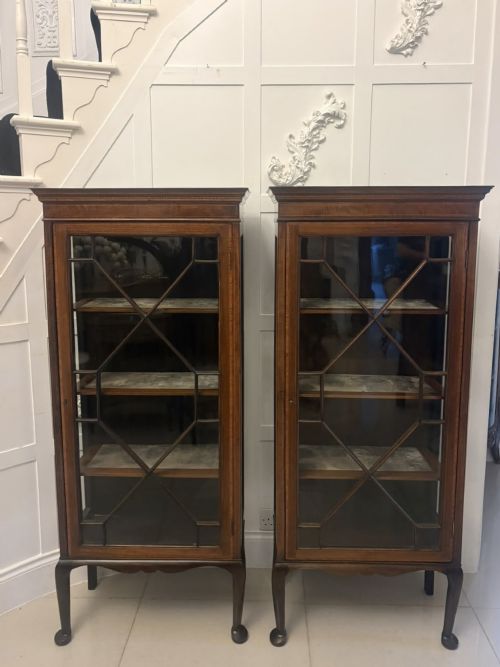
The pieces appearing most frequently on this page combine timber carcases with supporting elements like cabriole legs, turned supports, or Queen Anne legs, uniting display or storage space with an open profile beneath.
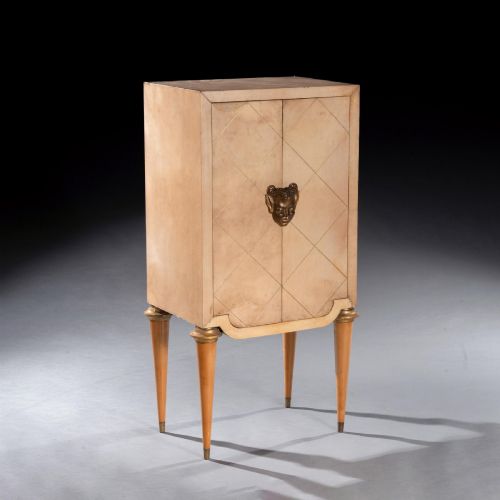
Originating across English, French, and Dutch workshops, these items serve functional roles as sideboards, display cabinets, and bedside cupboards while lifting heavy timber volumes visually off the floor.
Materials and construction methods
Cabinetmakers constructed these pieces primarily using solid timbers and veneers of mahogany, walnut, burr walnut, and oak, frequently applying intricate marquetry or figured grain patterns to primary surfaces.
Structural integrity relied on traditional joinery, while decorative appeal was enhanced through the integration of brass hardware, marble tops, glass panels, and ormolu mounts on French provincial and revival pieces.
Antique Cabinet on Legs Retail Price Guide 2026
Typical asking prices for cabinet on legs among the pieces listed under this phrase on Sellingantiques today, from the lower quarter to the upper quarter. They describe what is for sale here now, not the wider market.
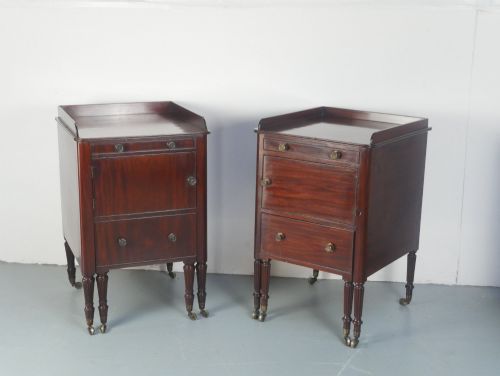
Several compact bedside models hide generous storage while standing proudly on spindly legs.
Distinctions in quality and execution
The upper tier of these pieces displays superior timber selection, such as richly figured burr walnut or dense mahogany, matched with precise veneer work and hand-carved details rather than stamped ornamentation.
Structural refinement separates simpler utilitarian items from finer examples, showing in the fluidity of cabriole leg curves, the integration of original brass mounts, and the seamless movement of drawers and glazed doors.
The Antique Cabinet on Legs Glossary
- Cabriole leg
- A furniture leg that curves out and then tapers inward, mimicking an animal's leg. This form appears frequently on 18th century and revival pieces.
- Burr walnut
- Wood taken from a walnut tree growth, yielding highly figured, swirling grain patterns. Cabinetmakers utilised veneers of this material for decorative surfaces.
- Marquetry
- The art of applying pieces of veneer to a structure to form decorative patterns and pictures. French and revival cabinets frequently employ this technique.
- Tallboy
- A tall chest of drawers standing on legs or a separate base. These pieces maximise vertical storage while maintaining floor clearance.
- Ormolu
- Gilded bronze mounts applied to furniture for decoration. This technique characterises finer French pieces from the 19th century onwards.
Antique Cabinet on Legs: Frequently Asked Questions
Where should I place a cabinet on legs?
These elevated cabinets suit living rooms, hallways, and bedrooms where an open profile beneath makes a room feel larger.
Their raised design prevents them from dominating smaller spaces while offering practical surface and interior storage.
How do I care for walnut and mahogany finishes?
Keep wooden cabinets away from direct sunlight and heat sources to prevent the veneers from drying out or cracking.
Regular dusting with a soft cloth and occasional application of appropriate wax maintains the lustre of the timber.
What is the difference between a cabinet and a sideboard?
Sideboards generally offer longer, lower profiles designed for dining room storage and serving, whereas cabinets often feature vertical proportions with doors or drawers.
Both forms appear raised on legs across various periods from the Georgian era onwards.