


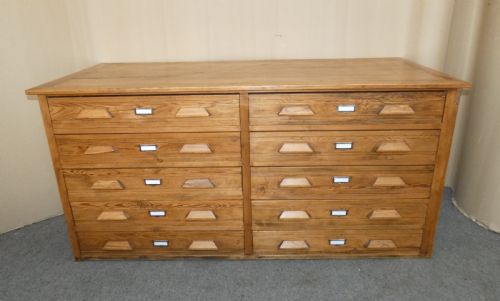


Antique Map Chest
An antique map chest is a substantial multi-drawer cabinet designed to store large sheets flat, and collectors choose them for practical storage and period presence.
Antique Map Chest
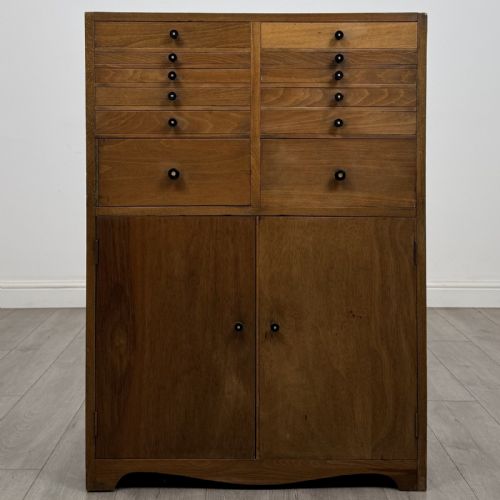
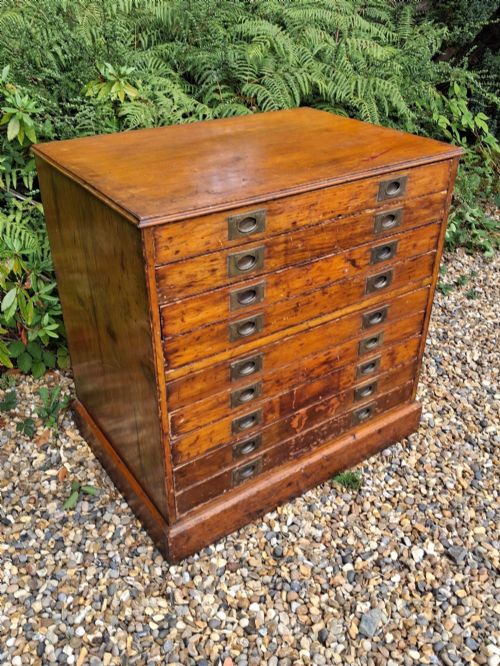
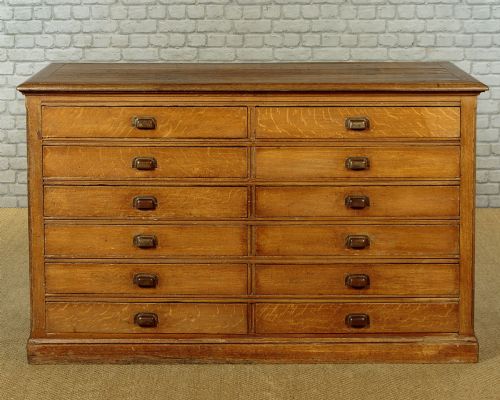
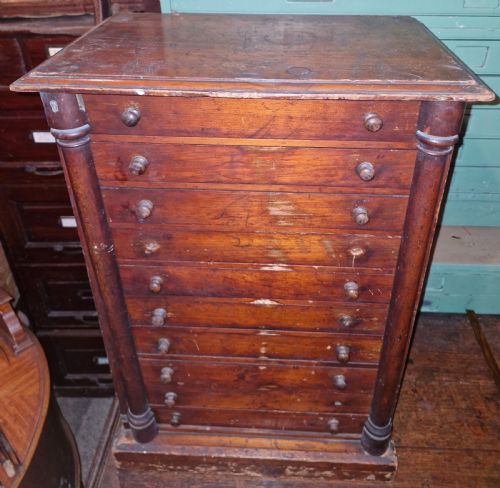
An antique map chest provides deep, shallow banks of drawers built to hold charts, plans, and folios without folding them. The forms on this page include plan chests, folio cabinets, and banks of drawers dating from the Georgian period through the Edwardian era and into the early twentieth century.
Most examples you will encounter are constructed from timber such as mahogany, pine, and oak, often designed for institutional, studio, or cartographic use. These pieces bridge domestic furniture and industrial utility, reflecting the functional requirements of drafting rooms and merchants.
Variations span simple pine artists chests to monumental forty-drawer collectors cabinets in burr walnut and mahogany. The scale ranges from floor-standing folio tables to modular banks intended to house large archives of specimens and documents.
Materials and construction
Cabinet makers built these pieces using solid hardwoods like mahogany and oak for high-status commissions, whilst utilitarian examples relied on deal, pine, and pitch pine. Drawer construction typically employed robust dovetail joints to withstand the heavy weight of stored paper and specimens.
Brass fittings, including flush drop handles and label holders, appear frequently to facilitate the management of large drawer banks without catching on adjacent surfaces. Secondary woods inside drawers often include deal or fruitwood, reflecting standard workshop practices of the nineteenth and early twentieth centuries.
Antique Map Chest Retail Price Guide 2026
Typical asking prices for map chest among the pieces listed under this phrase on Sellingantiques today, from the lower quarter to the upper quarter. They describe what is for sale here now, not the wider market.
Listings feature woods including mahogany, oak, pine, satinwood, and burr walnut across periods from the eighteenth century to the twentieth.
Evaluating craftsmanship and proportion
Quality rests in the timber selection, such as figured burr walnut, flame mahogany, or satinwood, paired with crisp secondary framing. Superior cabinets exhibit fine drawer runners that allow heavy banks to glide smoothly despite decades of use.
Design sophistication separates standard utility pieces from high-style commissions, such as Edwardian Chippendale interpretations or George III folio tables. The integrity of the original polish and the preservation of brass hardware further distinguish finer examples.
Brady of Edmonton·Standish·Maple & Co·Gillows·Mappin & Webb
The Antique Map Chest Glossary
- Plan chest
- A large cabinet with multiple shallow drawers specifically engineered to store architectural drawings and maps flat. These pieces often separate into modular sections for ease of transport.
- Folio cabinet
- A tall or table-height piece designed to house loose prints, artwork, and large bound books. They frequently feature deep shelving or specialised compartments alongside standard drawers.
- Specimen chest
- A cabinet containing numerous small, dust-tight drawers intended for natural history collections, coins, or geological samples. The internal divisions are tailored for delicate organisation.
- Deal
- A softwood timber, typically pine or fir, commonly employed for the carcass and internal drawer construction of utilitarian nineteenth-century furniture. It offers a pale grain that accepts paint or stain readily.
- Dovetail
- A traditional interlocking woodworking joint used to connect drawer sides to drawer fronts. Hand-cut dovetails indicate older, more meticulous cabinet-making methods.
Antique Map Chest: Frequently Asked Questions
What is an antique map chest used for?
These cabinets serve to store oversized documents, charts, prints, and drawings flat to prevent creasing or damage from rolling. Collectors also utilise them today for organising art supplies, textiles, and large collections.
The shallow proportions of the drawers ensure that contents remain visible and accessible without stacking items deeply on top of one another.
How do I distinguish a plan chest from a collectors cabinet?
Plan chests feature very wide, shallow drawers built specifically for large-format paper and architectural maps. Collectors cabinets typically house smaller, multi-drawer configurations designed for specimens, coins, or smaller documents.
Examining the internal dimensions and drawer layouts clarifies the original intended use of the piece.
What woods were commonly used?
Cabinet makers utilised dense hardwoods like mahogany, oak, and walnut for formal pieces destined for libraries, offices, and studies. Utilitarian workshops relied on pine, deal, and pitch pine for studio and institutional environments.
Secondary timbers such as fruitwood or cedar frequently appear inside the drawer linings and internal divisions.
How do I care for an antique map chest?
Maintain timber surfaces by applying a traditional beeswax polish sparingly to nourish the grain and protect the finish from drying out. Avoid placing the chest in direct sunlight or near heat sources to prevent the wood from warping.
Ensure that heavy drawers are pulled evenly from the centre rather than one side to preserve the historical runners.