



Painted Floral Credenza
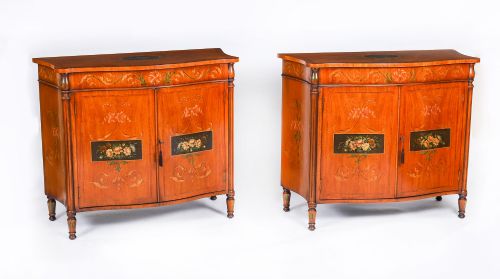
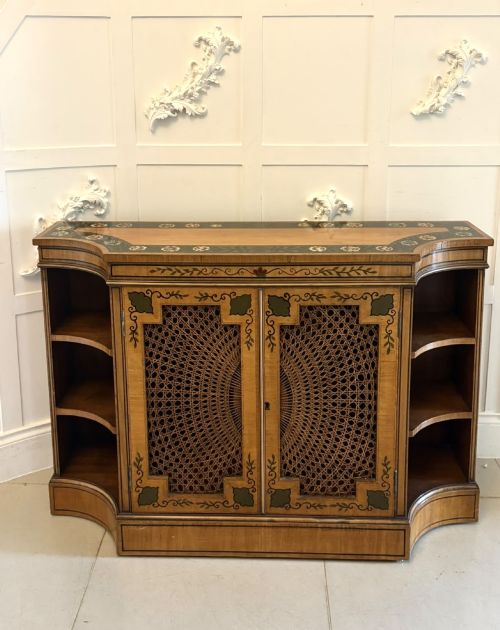
These painted floral credenza examples bring together satinwood, timber, and delicate hand-painted motifs across several historic revival periods.
Painted Floral Credenza
A painted floral credenza unites decorative painting with practical storage, appearing on this page across formats such as side cabinets, sideboards, buffets, and commodes. Buyers seeking this phrase encounter versatile case furniture that ranges from bow front and demi-lune shapes to breakfront bookcases.
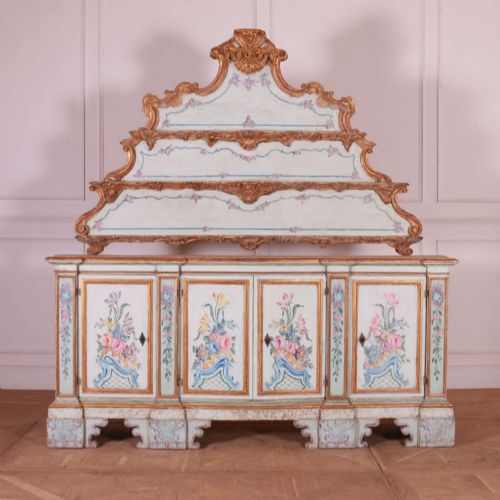
The pieces seen here span diverse eras including the eighteenth century, Victorian period, Edwardian era, and the mid-century modern phase. Revival movements such as Sheraton Revival, Adam Revival, and Venetian Rococo heavily influence the design vocabulary of these cabinets.
Makers utilised timber substrates, notably satinwood and softwood, often incorporating cane panels, giltwood, and brass hardware alongside the painted decoration. Classical panels and floral motifs dominate the surface enrichment across the various side cabinets and sideboards.
How they were made
Cabinet makers constructed these pieces using solid timbers and fine veneers like satinwood, shaped into serpentine, demi-lune, and bow front forms. Structural framing employed sturdy softwood alongside timber panels to support heavy top surfaces and internal shelving.
Surface decoration relies on skilled paintwork applied directly to timber or painted wood grounds, often complemented by classical panels and floral details. Artisans integrated cane inserts and brass mounts to accent the painted finishes on these revival and antique cabinets.
Painted Floral Credenza Retail Price Guide 2026
Typical asking prices for painted floral credenza among the pieces listed under this phrase on Sellingantiques today, from the lower quarter to the upper quarter. They describe what is for sale here now, not the wider market.
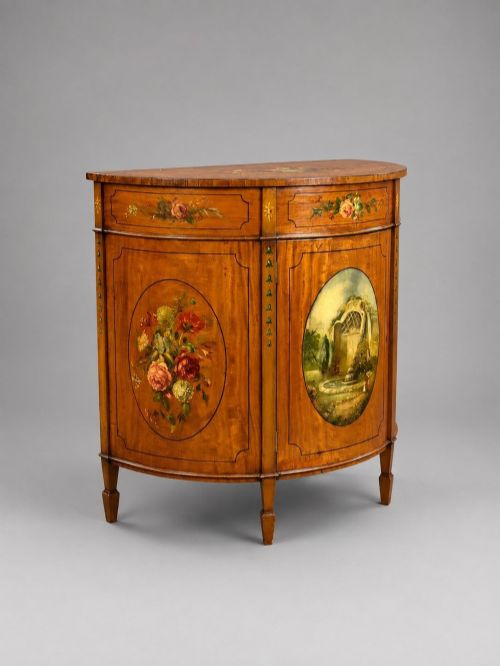
Some nineteenth-century makers evidently decided a standard rectangular cabinet was far too sensible and demanded a half-moon shape instead.
What varies in quality
The refinement of the painted floral motifs and classical panels largely determines the visual success of a piece, distinguishing standard production from exceptional artistry. Crisp execution in revival styles, such as Sheraton or Adam, separates superior decorative cabinets from simpler utilitarian storage.
Material selection and cabinet construction integrity create distinctions across the range, particularly in the handling of curved satinwood veneers and structural timber frames. The integration of auxiliary elements like brass hardware and cane work further influences the overall craftsmanship standard.
The Painted Floral Credenza Glossary
- Credenza
- A sideboard or cabinet used for storage and display, often featuring decorative doors and a flat top. These pieces function as prominent focal points in dining and living spaces.
- Satinwood
- A durable hardwood with a lustrous, golden-yellow sheen frequently employed for fine veneer and cabinetmaking. It provides a smooth surface ideal for detailed painting and inlay.
- Demi-lune
- A half-moon shape characteristic of commodes and side cabinets designed to sit flush against a wall. This profile softens room layouts by replacing sharp rectangular corners with gentle curves.
- Sheraton Revival
- A late nineteenth and early twentieth century design movement drawing inspiration from the lightness and classical ornamentation of eighteenth century furniture. Pieces in this style often feature painted satinwood and symmetrical proportions.
- Commode
- A low cabinet or chest of drawers, typically standing on legs and originating in French furniture design. In later revival periods, the term describes decorative side storage units.
Painted Floral Credenza: Frequently Asked Questions
What is a painted floral credenza?
A painted floral credenza is a decorative storage cabinet adorned with hand-painted floral motifs, spanning various historical styles and revival periods.
These versatile items function as sideboards, buffets, or commodes, offering surface display space alongside enclosed shelving.
How do I date these cabinets?
Dating relies on identifying stylistic markers, construction methods, and materials such as satinwood veneers or specific revival movements like Sheraton and Adam.
Cabinet forms and the application of painted classical panels also provide reliable clues regarding the period of origin.
Where should I place a credenza?
These cabinets suit dining rooms, hallways, or living spaces where they serve both practical storage and decorative display functions.
Their varied shapes, including bow front and demi-lune profiles, allow them to fit against walls or in alcoves with ease.
What materials are typically used?
Construction primarily involves timber frameworks and satinwood veneers, sometimes supplemented by softwood and cane inserts.
Surface ornamentation incorporates painted wood finishes, brass accents, and giltwood details across the various antique and revival pieces.