



Edwardian Ruby Brooch
An edwardian ruby brooch brings together fine gems and delicate goldwork, offering the grace of the early twentieth century for everyday wear.
Edwardian Ruby Brooch
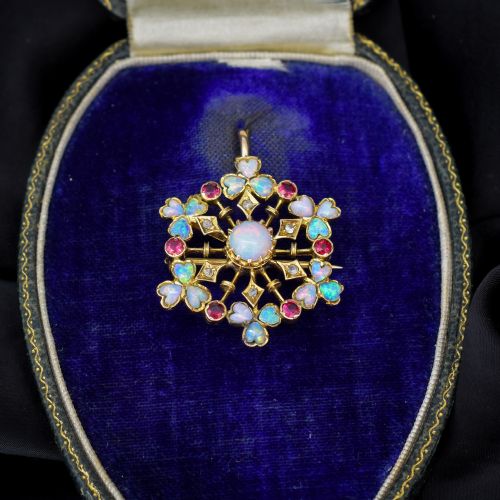
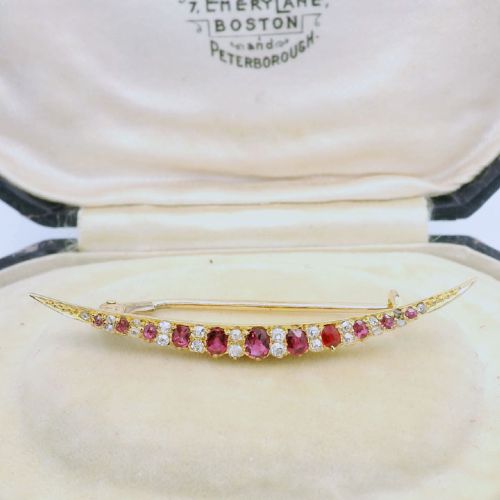
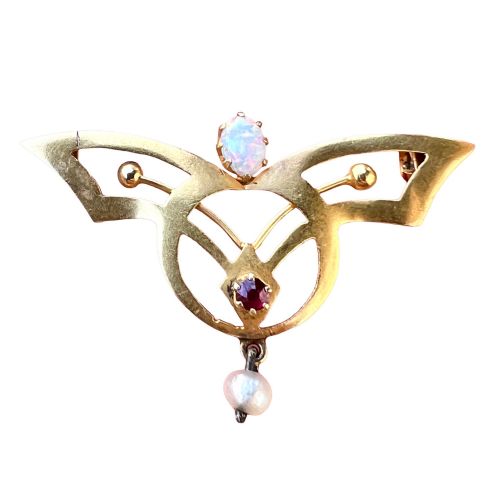
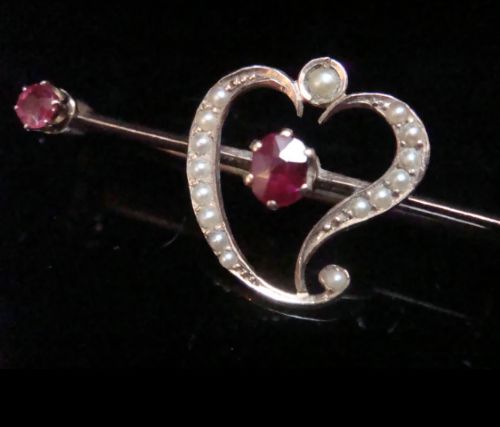
An edwardian ruby brooch combines rich red stones with diamonds and pearls, taking forms that span floral clusters, crescent moons, and naturalistic insects. These pieces belong primarily to the early twentieth century and the Edwardian period, though related examples reach back into the Victorian era and forward into the Art Deco years.
How they were made
Jewellers of this era worked predominantly in yellow gold, rose gold, and platinum-topped silver to house their stones. Gold grades such as 9ct, 15ct, and 18ct provided the structure for delicate wirework and solid bar mounts.
Stones including rubies, diamonds, and seed pearls were set alongside opals and turquoise in configurations that utilised claw settings and flush mounts. Gemstones were cut in various styles, including rose cuts and old cuts, to catch the light within lightweight frames.
Tiny gold beetles and bees set with ruby abdomens crawl across several Edwardian lapels.
What varies in quality
The distinction between pieces lies in the choice of materials and the complexity of the design. Heavier gold weights, such as 15ct and 18ct, alongside platinum settings, separate finer items from lighter 9ct mounts.
Artisanal skill shows in the intricacy of motifs like carved insects, articulated floral sprays, and well-matched natural stones. Superior examples combine multiple gem types, such as diamonds and pearls framing a central ruby, with balanced proportions and secure pin mechanisms.
Chester
The Edwardian Ruby Brooch Glossary
- Bar brooch
- A pin formed around a narrow horizontal metal rod or bar, often accented with central clusters or motifs. This shape was popular throughout the late nineteenth and early twentieth centuries.
- Crescent brooch
- A piece shaped in the curve of a crescent moon, frequently set with graduated rubies, diamonds, or pearls. They often symbolised growth and renewal.
- Old cut
- A diamond cut from the late Victorian and Edwardian periods featuring a small table, high crown, and deep pavilion. It was designed to sparkle warmly under candlelight and gaslight.
- Pendant brooch
- A dual-purpose piece equipped with both a pin fitting and a hidden loop. This allowed the owner to wear it pinned to clothing or suspended from a chain as a pendant.
- Rose cut
- A diamond or ruby cut with a flat base and a dome covered in triangular facets. It resembles an unopened rosebud and produces a soft, translucent glow.
Edwardian Ruby Brooch: Frequently Asked Questions
How do I wear an edwardian ruby brooch today?
These pieces pin securely to the lapel of a jacket, the collar of a blouse, or the fabric of a scarf. Many include loops so you can thread a chain through and wear them as pendants.
Because original pins can be delicate, fasten them carefully through heavier weaves or use a pin protector for security during daily use.
Are these brooches made of solid gold?
The listings feature pieces made from various gold purities, including 9ct, 15ct, 18ct, and 24ct, alongside platinum-topped silver. British pieces often carry hallmarks indicating the metal standard and assay office.
Makers of the period also combined silver with gold to ensure diamond settings appeared bright white while the body remained warm yellow or rose gold.
What is the difference between Victorian and Edwardian brooches?
Victorian pieces tend to be heavier, with sentimental or robust motifs such as multi-gem butterflies and monkeys. Edwardian designs lean towards lighter, airier platinum and goldwork featuring floral sprays, ribbons, and crescent moons.
Both periods overlap on this page, reflecting transitional styles from the late nineteenth century into the 1910s and 1920s.
Can a brooch be converted into a necklace?
Many items listed as pendant brooches arrive with an integrated loop or drop ring on the reverse. This allows you to slide the piece directly onto a neck chain.
If a brooch lacks a loop, some specialists can add a removable converter without altering the original metalwork.
How should I clean my antique ruby brooch?
Use a soft brush with warm water and mild soap to remove dust from around the stone settings. Avoid harsh chemical dips, especially for pieces containing pearls or opals.
Pat the jewel dry gently with a lint-free cloth and store it away from other hard gems to prevent scratching.