




Edwardian Royal Worcester Jar
These edwardian royal worcester jar pieces bring painted porcelain and fine gilding into your home.
Edwardian Royal Worcester Jar
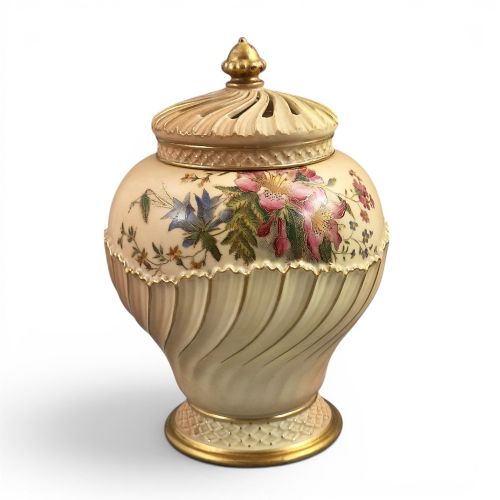
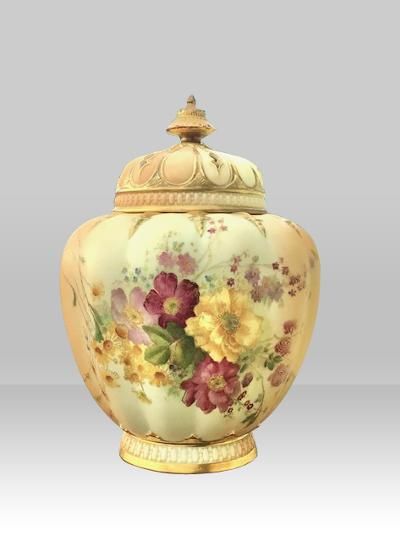
When you search for an edwardian royal worcester jar, you are looking at fine porcelain vessels designed for decorative display or holding pot-pourri. These pieces come in forms ranging from pedestal vases to bow urns and covered jars.
The version you are most likely to meet on this page is the blush ivory pot-pourri jar, often dating from the Edwardian period or around nineteen hundred. They frequently feature hand-painted natural subjects such as swans, pheasants, and blackberries by notable artists.
How they were made
These pieces are made from porcelain, utilising specialised firing and glazing techniques to achieve the characteristic blush ivory ground. Artisans then applied delicate enamel colours by hand to depict birds, florals, and landscapes.
Gilt, gold leaf, and gilding were added to highlight handles, rims, and covers, providing a rich contrast to the soft porcelain body.
Listings here span porcelain, enamel, and gilt, covering periods from nineteen hundred through the nineteen forties.
What varies in quality
The quality of an edwardian royal worcester jar often rests upon the skill of the artist whose signature appears on the porcelain. Pieces painted by recognised specialists command greater attention through the nuance and detail of their work.
The crispness of the moulding on shapes such as bow urns and pot-pourri covers also marks the distinction between standard production and the finest output.
Royal Worcester·Hadley Ware
The Edwardian Royal Worcester Jar Glossary
- Blush ivory
- A softly shaded cream porcelain ground developed by the factory. It provides a warm matte background for floral and animal painting.
- Pot-pourri
- A jar or vase featuring a pierced cover designed to diffuse scent from dried botanicals. These vessels often stand on pedestals.
- Gilt
- A thin layer of gold applied to ceramic surfaces for decoration. It frames the painted scenes and highlights raised moulding.
- Hadley Ware
- A specific line of earthenwares and porcelains associated with the factory. This ware often displays muted tones and distinct textures.
Edwardian Royal Worcester Jar: Frequently Asked Questions
What is an Edwardian Royal Worcester jar?
It is a porcelain vessel produced by the Worcester factory during the early twentieth century. Many of these pieces function as covered containers for pot-pourri.
They are distinguished by hand-painted decoration and gilt highlights on blush ivory porcelain.
Who painted these porcelain pieces?
The factory employed notable artists who specialised in painting birds, flowers, and landscapes directly onto the porcelain body. Signatures from artists such as Stinton, Baldwyn, and Blake often appear on the surface.
Collector interest is frequently tied to the identity of the painter.
How do I care for my jar?
Keep the porcelain out of direct sunlight to protect the enamel colours and gold gilding from fading over time. Dust the surface gently with a dry, soft cloth.
Avoid using water or cleaning solutions on painted and gilt areas.
How can I tell the period?
Factory date marks stamped on the underside of the porcelain provide precise clues to the year of manufacture. Stylistic indicators like the blush ivory ground and Edwardian forms also help narrow down the date.
Artist signatures often align with specific operating decades.