


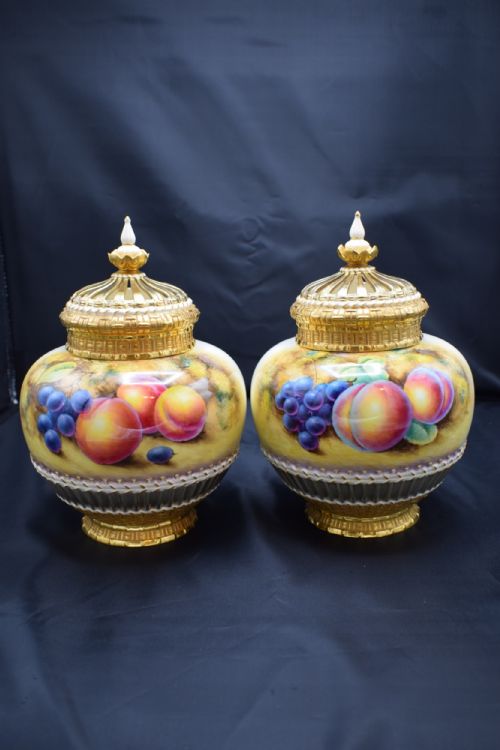


Antique Porcelain Fruit Vase
These antique porcelain fruit vases are hand-painted showpieces from British makers, sought after for their intricate botanical detail and rich gilding.
Antique Porcelain Fruit Vase
An antique porcelain fruit vase brings together fine ceramic bodies and meticulous naturalistic painting, often depicting clusters of peaches, apples, and grapes against shaded backgrounds. When you search for this phrase, you find pieces designed primarily for display rather than holding water, ranging from tall spill vases to lidded pot pourri jars.
The versions met most frequently on this page originate from English kilns, spanning the Victorian era through the mid-twentieth century. Forms vary from simple ginger jars to elaborate pairs of ewers and urns fitted with decorative covers.
Makers utilised porcelain and bone china as canvases for master painters who specialised in fruit studies. These items frequently feature ornate gilt borders and rich gold leaf highlights that frame the central painted panels.
Materials and construction
The foundation of each piece is hard-paste porcelain or fine bone china, shaped into classic vessel forms before undergoing initial high-temperature firing. Artisans then applied delicate white glazes to create smooth surfaces suitable for intricate enamel work.
Painting was executed by hand using specialised ceramic enamels that required multiple kiln firings to fix the vibrant colours of the fruit. Gilding, gold leaf, and gilt accents were added last, often applied by hand around the rims, handles, and footed bases.
Several artists clearly preferred autumn harvests, painting perpetual bowls of bruised-looking plums and rosy apples just as the leaves outside turned brown.
Factors determining quality
The standard of an antique porcelain fruit vase rests heavily on the skill of the artist whose signature often appears on the painted panel. Work by known painters commands greater attention due to the finer shading, more convincing depth in the fruit, and superior brushwork.
The complexity of the vessel shape also influences the tier of quality, with lidded pot pourri urns, ewers, and matched pairs representing more ambitious studio output than standard spill vases. Richness of gilding and the crispness of moulded porcelain details complete the distinction between standard and exceptional pieces.
Royal Worcester·Coalport
The Antique Porcelain Fruit Vase Glossary
- Bone china
- A type of porcelain incorporating bone ash, known for its high strength, chip resistance, and translucent white body. This material formed the pristine base for many twentieth-century fruit studies.
- Pot pourri vase
- A vessel featuring a pierced or perforated cover designed to diffuse scent from dried flower petals and spices. These lidded jars often match the exact painted fruit panels seen on open vases.
- Ewer
- A large jug with a wide spout and elaborate handle, traditionally used for water but produced in porcelain primarily as an ornamental showpiece. Pairs of these decorative items frequently accompany centrepiece displays.
- Gilding
- The application of gold leaf or powdered gold to ceramic surfaces for decorative trim. On these pieces, gilt is commonly brushed along handles, necks, and plinth bases.
- Enamel
- Vitreous coloured glass fused to the porcelain body during firing to create permanent painted imagery. Artists layered these pigments to achieve the naturalistic tones found on autumn fruit.
Antique Porcelain Fruit Vase: Frequently Asked Questions
Who painted these fruit vases?
Many pieces feature signatures from notable studio artists who specialised in botanical and fruit studies. Names recorded on these vessels include William Hawkins, Richard Budd, and Kitty Blake.
These decorators trained extensively within factory studios to master the difficult technique of painting naturalistic fruit over glazed porcelain surfaces.
How do I date a piece?
Dating relies on factory backstamps marked underneath the base, alongside stylistic clues such as the form and the palette used. Edwardian and Victorian examples often display heavier moulded gilt scrolls, while mid-century pieces lean towards cleaner lines.
Comparing the specific signature style and the type of ceramic body also helps narrow down the decade of production.
Can these vases hold water?
Most of these items are designed as decorative display objects rather than functional vessels for fresh flowers. Lidded pot pourri jars and intricate ewers are intended to showcase the painted artwork and gilding safely on a mantel or cabinet.
Using them for cut flowers risks damaging the interior glaze and the delicate exterior enamel over time.
Why are some sold as pairs?
Pairs and multi-piece sets were originally created to balance mantelpieces, sideboards, or large furniture surfaces in formal rooms. Workshops turned out matched ewers or pot pourri urns to flank a central clock or larger ornament.
Finding surviving pairs with matching artist signatures and consistent fruit motifs remains a significant draw for collectors.