




Edwardian Pierced Silver Basket
An edwardian pierced silver basket brings openwork metalwork together with coloured glass liners or swing handles for practical use.
Edwardian Pierced Silver Basket
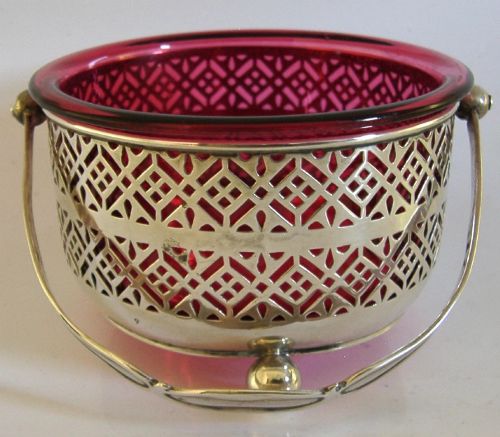
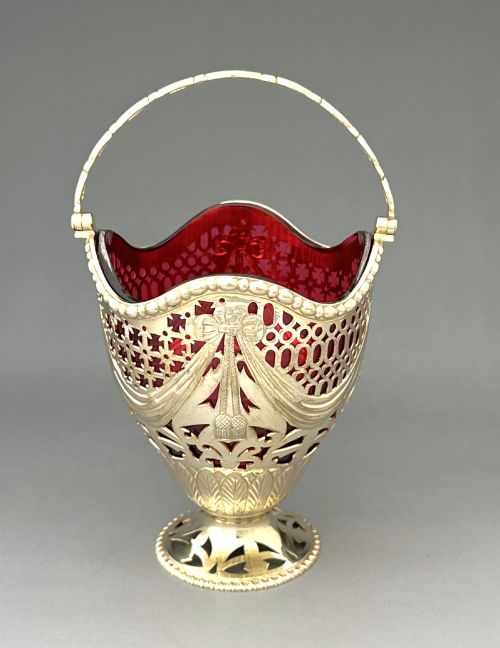
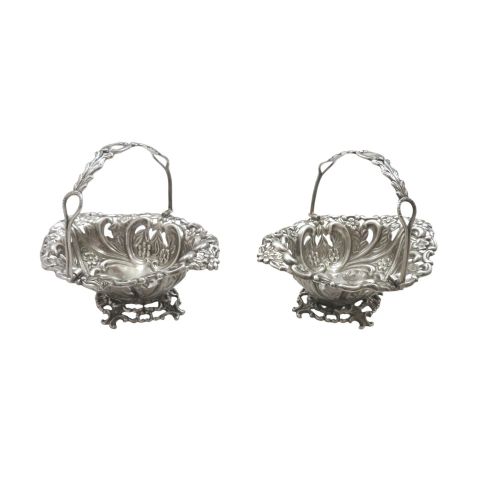
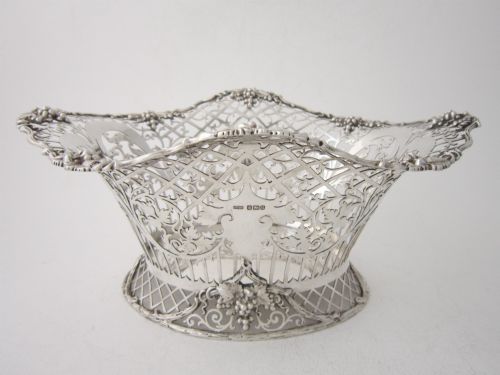
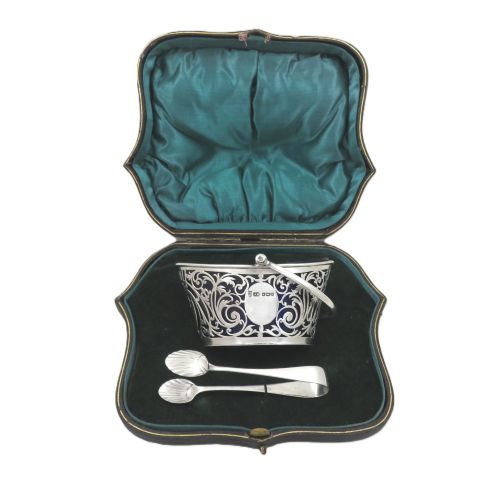
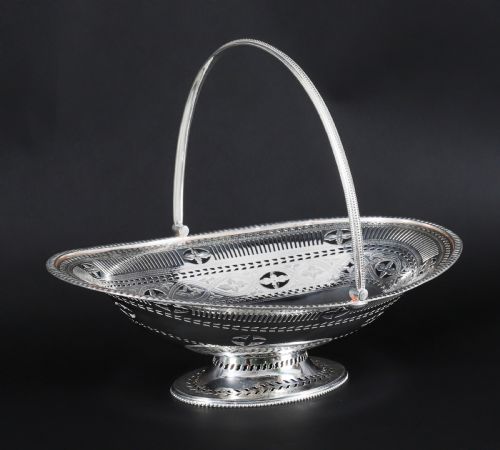
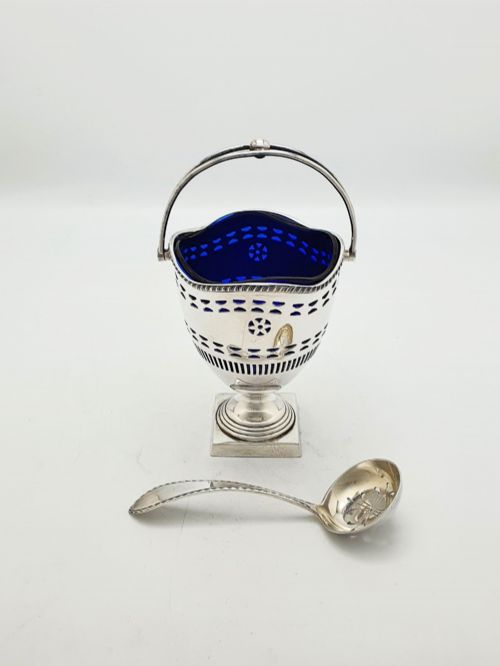
An edwardian pierced silver basket encompasses forms made for domestic service, including sugar baskets, fruit dishes, and bonbon holders. The selection contains both solid sterling silver and silver-plated examples produced during the early twentieth century alongside nineteenth-century precedents. These vessels frequently incorporate swing handles and fitted glass liners in various tones.
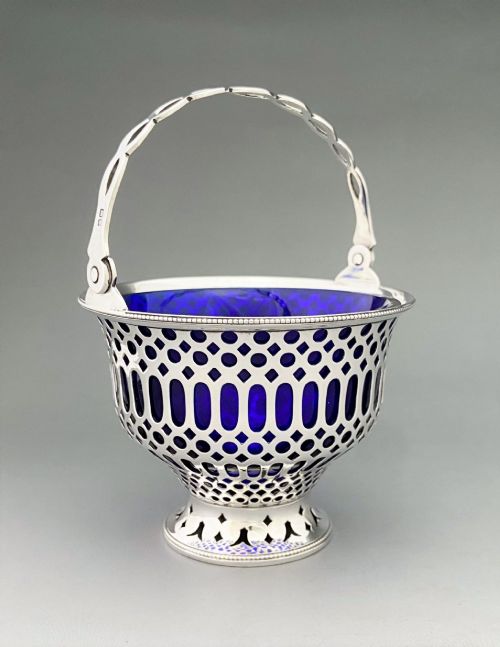
Sugar baskets and fruit baskets dominate the available forms, often featuring pierced lattice patterns or fretwork. Many incorporate removable glass liners in cranberry, cobalt, or ruby glass that contrast with the metal framework. Makers employed these openwork designs to reduce weight while maintaining decorative presence on the dining table.
How they were made
Silversmiths utilised sterling silver and silver plate over base metals, shaping sheets into bowls and dishes. Piercing and fretwork techniques required hand-cutting intricate patterns through the metal walls, supplemented by chased or embossed detailing. Swing handles were attached with pins or hinges to allow movement without straining the rim.
Glass liners were mouth-blown and shaped to fit the interior contours of the baskets precisely. Workshops combined these contrasting materials using silver-gilt finishes or plain polished metal to complement the translucent coloured glass.
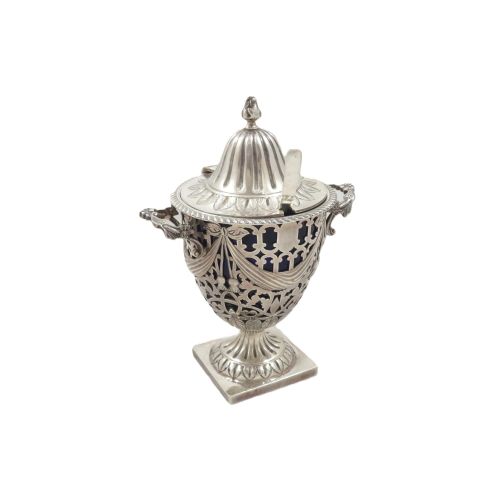
Several baskets include pot pourri lids, designed to let dried lavender perfume a room while concealing the contents within pierced metal domes.
What varies in quality
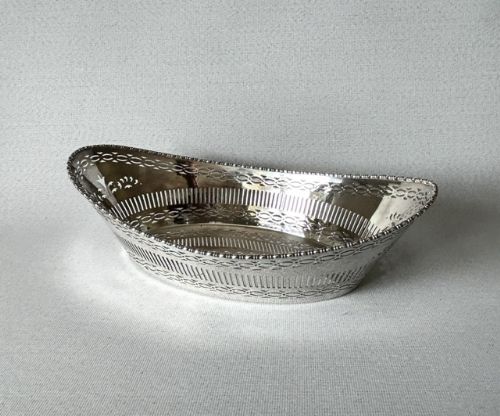
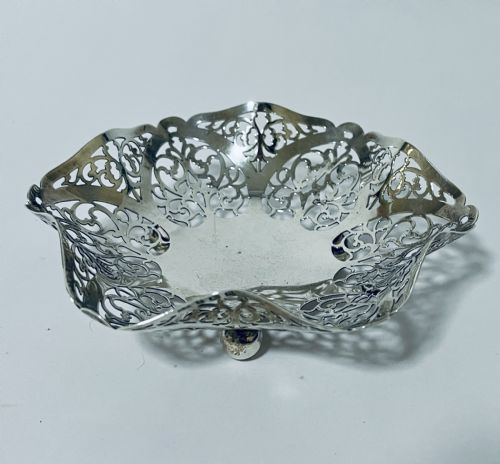
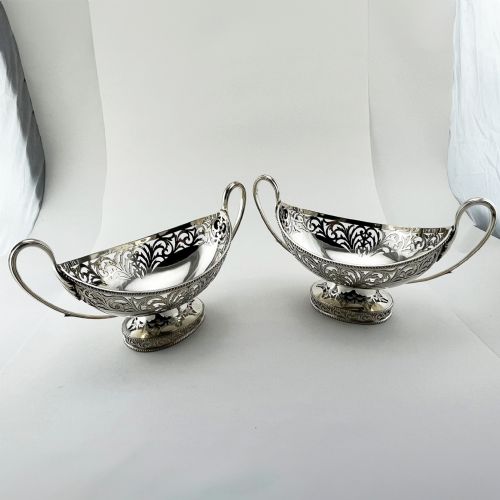
The complexity of the pierced work distinguishes finer examples from simpler production. Intricate lattice and fretwork require skilled hand-piercing rather than straightforward machine stamping, creating crisp edges within the metal design. Substantial gauge silver provides rigidity to large centrepiece bowls and heavy fruit baskets.
The quality of associated glass liners also affects the overall standard. Hand-blown coloured glass with deep hues and polished pontil marks indicates higher production values than standard moulded glass inserts.
Mappin & Webb·Elkington·Thomas Bradbury·Joseph Rodgers·Hammond, Creake And Co·William Hutton & Sons·James Dixon & Sons Ltd·Edward H Stockwell·William Comyns·Jay Richard Attenborough
The Edwardian Pierced Silver Basket Glossary
- Pierced work
- Metal decorated by cutting patterns through the surface to create openwork designs. This technique lightened the object while increasing decorative complexity.
- Swing handle
- A movable handle attached to the rim of a basket by pivots or hinges. It allows the vessel to be carried or lowered easily onto a table.
- Silver plate
- A layer of silver bonded to a base metal such as copper or nickel silver. It provided the appearance of solid silver at a lower cost.
- Glass liner
- A removable vessel inserted into a metal basket to hold moisture or small items safely. They appear in colours including cranberry, cobalt, and ruby.
- Fretwork
- Ornamental openwork cut into metal panels in geometric or scrolling patterns. Silversmiths used this technique extensively on Edwardian baskets.
Edwardian Pierced Silver Basket: Frequently Asked Questions
What were pierced silver baskets used for?
These vessels served functional roles on dining and drawing room tables for holding fruit, bread, or sugar lumps. The openwork design allowed air to circulate around contents such as pot pourri or dry foodstuffs.
Smaller versions functioned as bonbon dishes or sweet stands during formal afternoon teas and receptions.
How do I identify an Edwardian piece?
Edwardian items date from the reign of King Edward VII between 1901 and 1910, though pieces from adjacent years share similar stylistic traits. Hallmarks on sterling silver provide specific date letters and assay office symbols to confirm the exact year of manufacture.
Stylistic elements like delicate pierced fretwork and neo-classical motifs also help distinguish this period from heavier Victorian designs.
Are the glass liners usually original?
Many baskets retain their original cranberry, cobalt, or ruby glass liners, which were blown specifically to fit the dimensions of the metal frame. Finding an intact liner that matches the contours and age of the basket completes the piece.
Replacements do occur due to accidental breakage over the decades, so checking the fit against the interior is standard practice.
What is the difference between sterling and plate?
Sterling silver consists of a regulated high purity standard of silver throughout the entire object, bearing official hallmarked stamps. Silver-plated items use a thin layer of silver applied over a base metal foundation.
Both materials appear frequently across Edwardian basket designs, often featuring identical pierced patterns and swing handles.