





Silver Openwork Basket
A silver openwork basket brings intricate metalwork and refined dining formality to any table.
Silver Openwork Basket
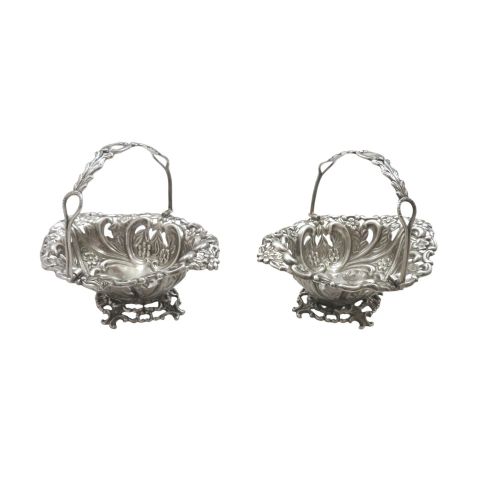
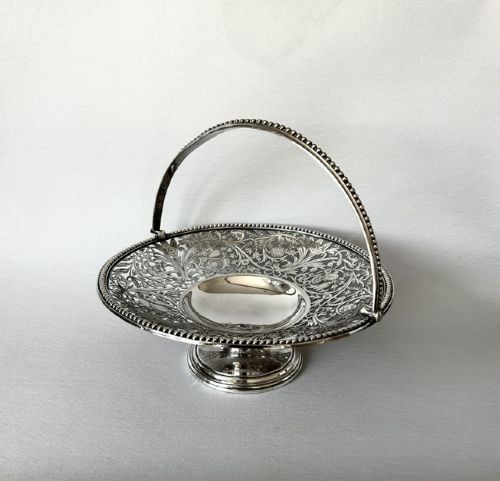
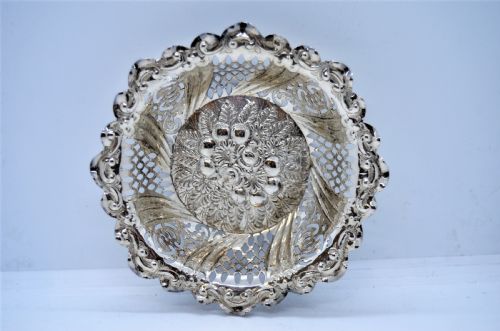
A silver openwork basket combines functional serving ware with decorative metal crafting, primarily appearing in forms such as fruit baskets, bonbon dishes, cream pails and bowls. These pieces emerge across several distinct eras, spanning Georgian wirework, Victorian pierced serving dishes and Edwardian swing-handled designs.
The most common versions encountered on this page belong to the Victorian and Edwardian periods, typically fashioned from sterling silver or silver plate. Makers utilise lattice, piercing and wirework techniques to create light, airy vessels intended for presentation rather than heavy use.
How they were made
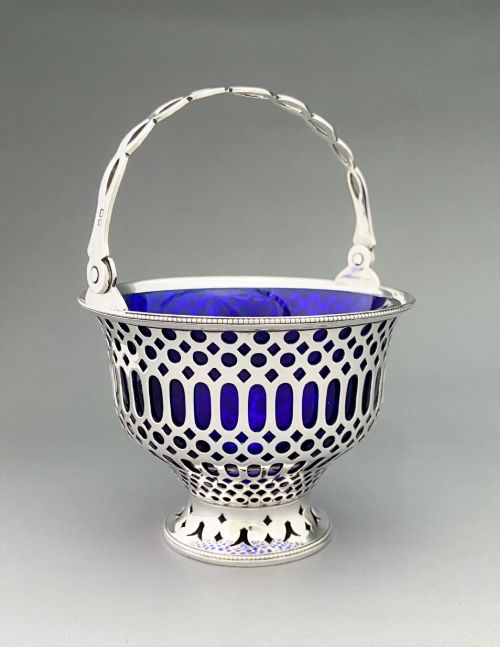
Silversmiths constructed these baskets using sterling silver or silver plate, frequently incorporating cobalt or paste glass inserts for colour contrast. Piercing and wirework formed the primary methods for achieving the characteristic open patterns.
Techniques involved piercing sheet metal with saws or chisels, alongside soldering delicate wirework together to form lattice structures. Handles were often hinged with swing mechanisms, requiring precise metalworking skill to attach securely to the bowl.
Silver Openwork Basket Retail Price Guide 2026
Typical asking prices for silver openwork basket among the pieces listed under this phrase on Sellingantiques today, from the lower quarter to the upper quarter. They describe what is for sale here now, not the wider market.
Listings feature items from the Georgian, Victorian, and Edwardian periods, alongside interwar examples.
What varies in quality
The refinement of the piercing work and the crispness of the openwork patterns dictate the standard of execution. Superior examples display balanced symmetry and cleanly pierced apertures without distortion to the surrounding metal walls.
Weight and structural rigidity also distinguish finer pieces, as higher-grade solid silver baskets maintain their shape without flexing under pressure. The integration of maker marks and assay office stamps adds documentary evidence of origin.
Fenton·William Hutton & Sons·Martin Hall
The Silver Openwork Basket Glossary
- Openwork
- Metal that has been pierced, cut or assembled with gaps to form a decorative pattern. This technique reduces the weight of the object while creating intricate visual designs.
- Piercing
- The method of cutting shapes out of sheet metal using a fine piercing saw. It forms the basis of the intricate patterns seen on Victorian and Edwardian dishes.
- Wirework
- Metal shaped into fine wires and soldered together to form open lattices or baskets. This technique appears notably on Georgian cream pails.
- Bonbon dish
- A small vessel designed for holding sweets or confectionery. These delicate dishes often feature pierced or footed bases.
- Swing handle
- A movable handle attached to the sides of a basket via pivots. It allows the handle to lie flat or stand upright depending on use.
Silver Openwork Basket: Frequently Asked Questions
What were silver openwork baskets used for?
These vessels served primarily for presenting fruit, bonbons, cream or sweetmeats at formal dining tables. Their open design was intended for dry goods and decorative display rather than holding liquids.
Over time, their roles shifted from practical dining accessories to decorative mantel or sideboard pieces. Today, collectors utilise them for similar ornamental purposes or light serving duties.
How do I care for a silver basket?
Maintenance involves gentle cleaning with specialised silver polish to remove tarnish without damaging delicate piercing. Soft cloths and non-abrasive tools help preserve the intricate wirework and recessed details.
Storage in dry environments prevents rapid re-tarnishing, and avoiding harsh chemical dips protects any integrated glass liners. Regular handling with clean hands maintains the polished finish of the metal.
How can I tell a Victorian basket from an Edwardian one?
Victorian pieces often display heavier Rococo Revival influences, deep piercing and robust forms dating from the mid to late nineteenth century. Their hallmarks typically include date letters and registry marks specific to the reign.
Edwardian examples tend towards lighter construction, frequently featuring swing handles and refined lattice patterns produced around the turn of the twentieth century. Hallmarks from this era reflect early twentieth-century British assay office stamps.
Are all silver baskets made of solid silver?
The inventory includes both solid sterling silver and silver-plated examples manufactured by prominent firms and silversmiths. Hallmarks on solid pieces indicate the standard of silver purity and the assay office.
Silver-plated items utilise base metals coated in a layer of silver, offering a similar visual appearance. Examining the hallmarks or base metal reveals whether a piece is solid or plated.