


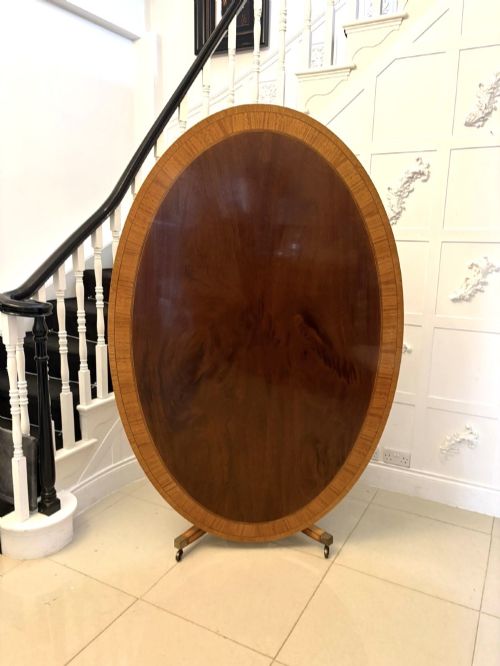
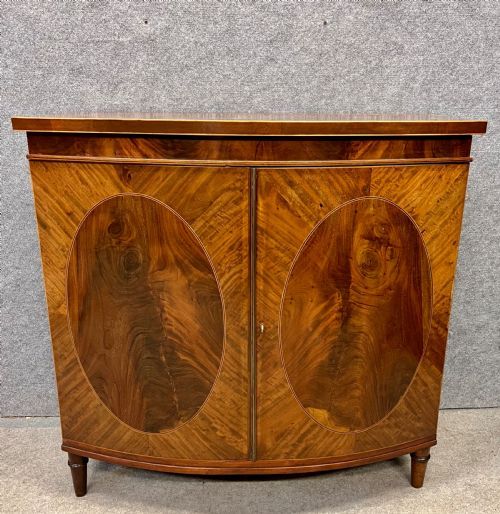
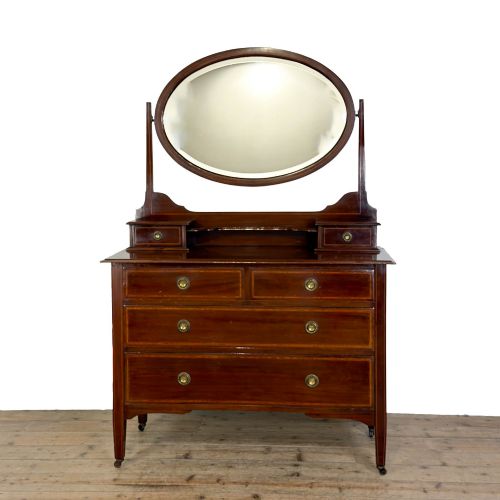
Edwardian Oval Inlay Table
An edwardian oval inlay table brings light wood detail and curved mahogany or satinwood surfaces into a room for daily use.
Edwardian Oval Inlay Table
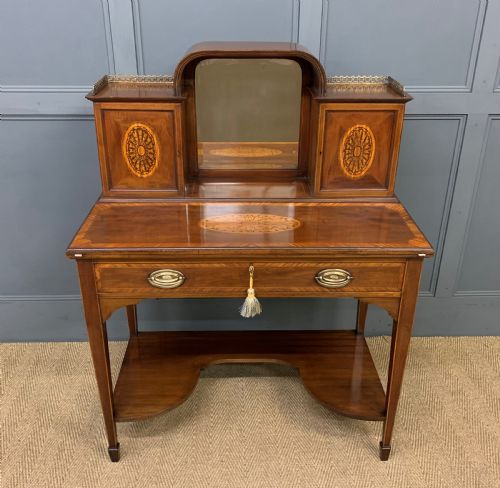
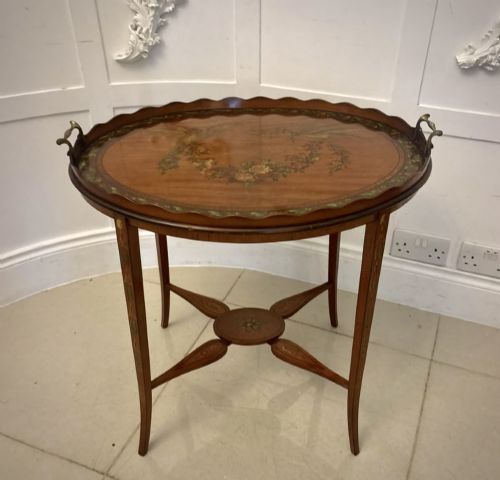
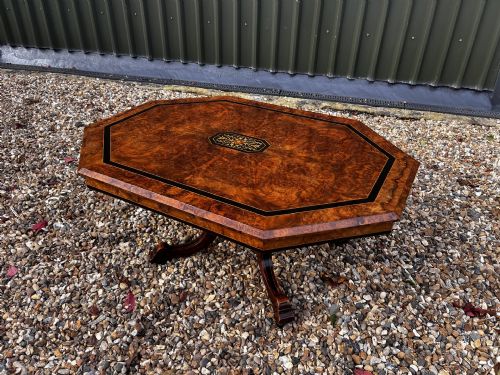
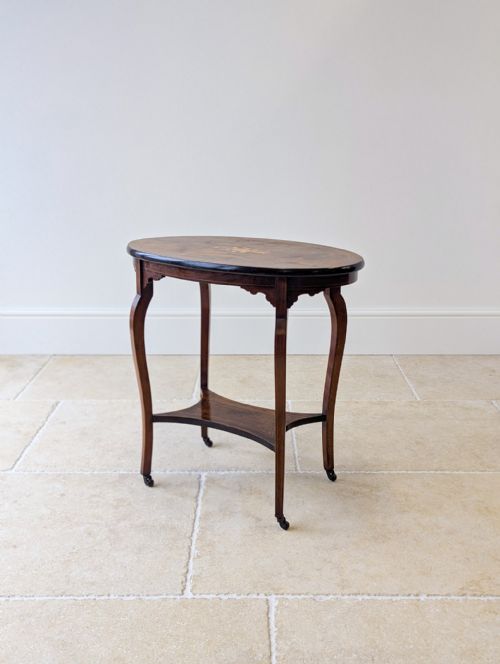
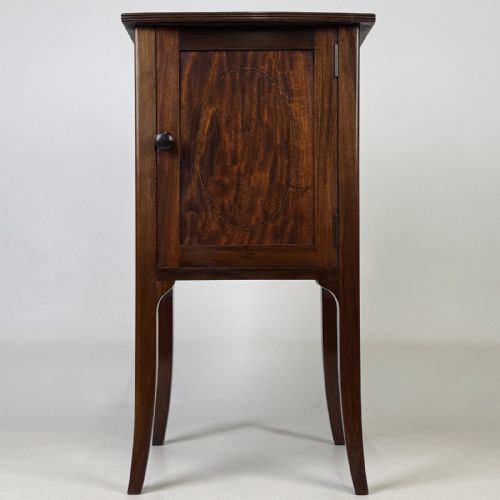
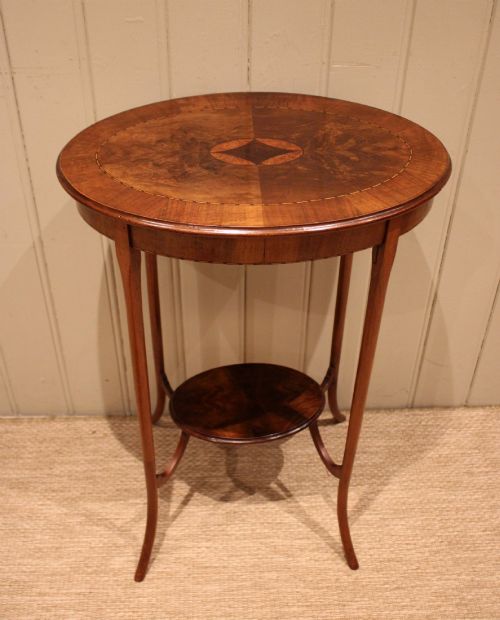
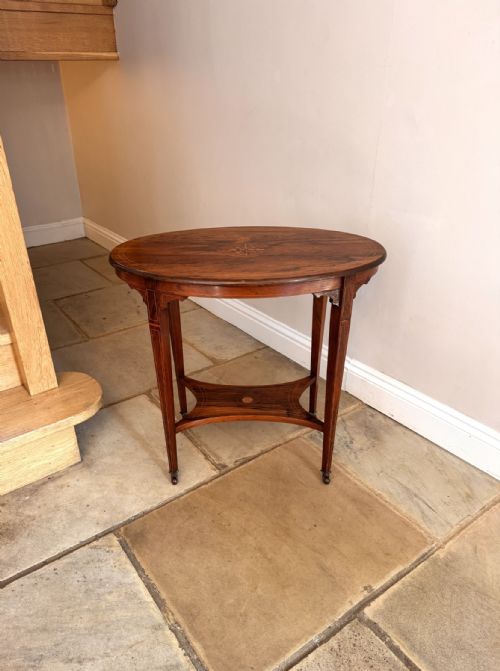
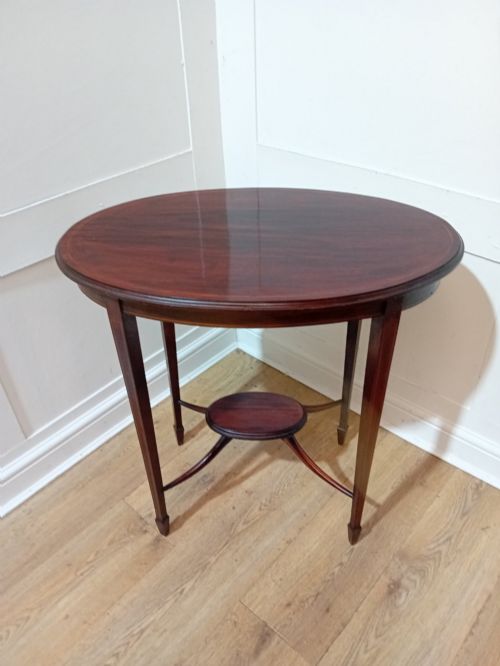
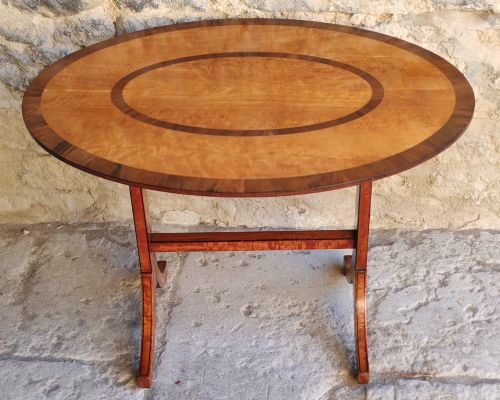
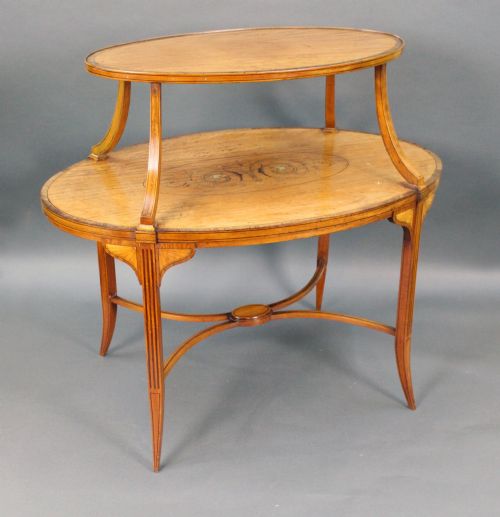
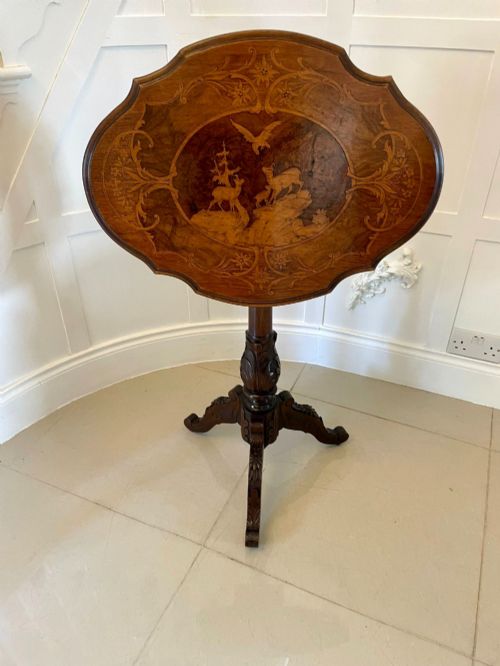
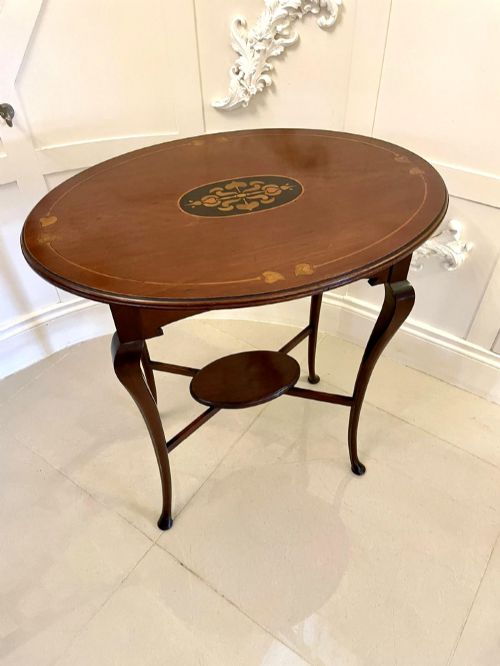
An edwardian oval inlay table spans occasional, side, coffee, and centre forms originating largely from the Edwardian period and the late nineteenth century. These pieces arrive in mahogany, satinwood, and walnut, often bearing delicate contrasting wood details upon curved tops.
The version most commonly met on this page is the occasional or lamp table from around nineteen hundred. These smaller pieces combine slender legs with light surface decoration suited to sitting beside a chair.
How they were made
Cabinet makers built these tables using solid mahogany, walnut, or satinwood frames with matched veneers applied to the top surfaces. Timber choice governed the base tone, upon which lighter wood details were set.
Inlay work involved cutting recesses into the primary wood to receive contrasting strips of boxwood or satinwood, creating geometric or botanical motifs. Crossbanding borders frames the central oval panel to complete the decorative top.
Edwardian Oval Inlay Table Retail Price Guide 2026
Typical asking prices for edwardian oval inlay table among the pieces listed under this phrase on Sellingantiques today, from the lower quarter to the upper quarter. They describe what is for sale here now, not the wider market.
Many an edwardian oval inlay table has spent a century quietly holding knitted blankets and cups of tea without ever losing its balance.
What varies in quality
Quality rests in the crispness of the wood inlay and the selection of figured timber veneers. Better examples show tight, clean lines where the contrasting woods meet without visible gaps.
Proportion and stability separate standard pieces from finer ones. Superior tables maintain slender, well-balanced legs and sound structural joinery that supports the decorative top without wobble.
The Edwardian Oval Inlay Table Glossary
- Inlay
- A technique where pieces of contrasting wood or other materials are inserted into recessed portions of a base surface to form a pattern. This defines the decorative panels seen on table tops.
- Satinwood
- A durable, yellowish timber prized for its smooth grain and luminous finish. Makers utilised this wood for full tables or as contrasting stringing.
- Crossbanding
- A border band of veneer laid around the edge of a table top so that its grain runs perpendicular to the central panel. This frames the primary oval field.
- Sheraton Revival
- A late nineteenth and early twentieth century style drawing inspiration from eighteenth century neoclassical furniture designs. These pieces feature light frames and delicate floral or ribbon motifs.
Edwardian Oval Inlay Table: Frequently Asked Questions
What is an edwardian oval inlay table used for?
These tables served primarily as occasional or lamp tables in domestic drawing rooms and parlours. Their compact curved surfaces held small lamps, decorative objects, or tea items.
Today, they function well beside armchairs or sofas as functional side tables that bring period character into a modern interior.
How do I tell an Edwardian table from a Victorian one?
Edwardian tables generally display lighter timbers like satinwood and finer, more restrained inlay patterns reflecting neoclassical revivals. Victorian examples often utilise heavier burr walnut or darker mahogany with denser marquetry.
Examining the secondary woods underneath and the style of the leg supports helps clarify the specific period of manufacture.
Are these tables suitable for everyday use?
Solid construction in mahogany and walnut allows these pieces to handle regular daily placement in a living space. Placing coasters on the polished top prevents ring marks from cups or glasses.
Gentle dusting and occasional wax polish maintain the lustre of the wood and protect the delicate inlay work over time.
What does Sheraton revival mean on a listing?
Sheraton revival indicates a piece made around the late nineteenth or early twentieth century that copies the lighter geometric designs of the late eighteenth century. These pieces feature tapered legs and symmetrical stringing.
This style revival focused on elegance and proportion, making the furniture popular in middle-class homes of the Edwardian era.