

Edwardian Bedside Pedestals
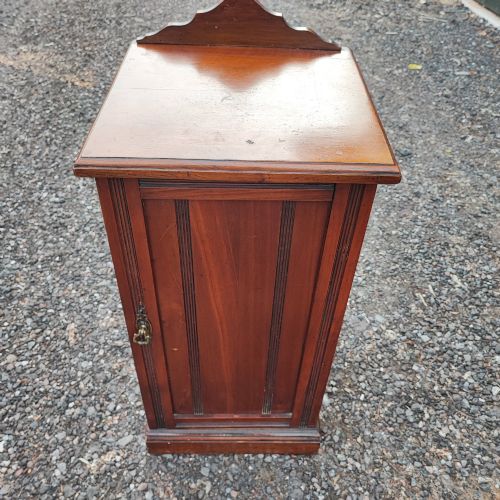
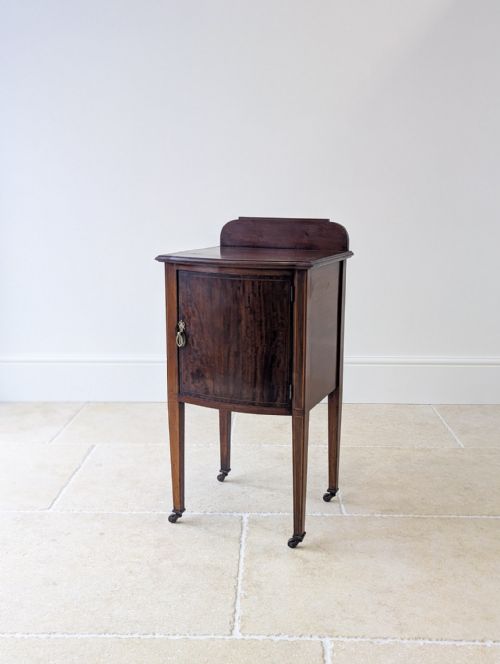
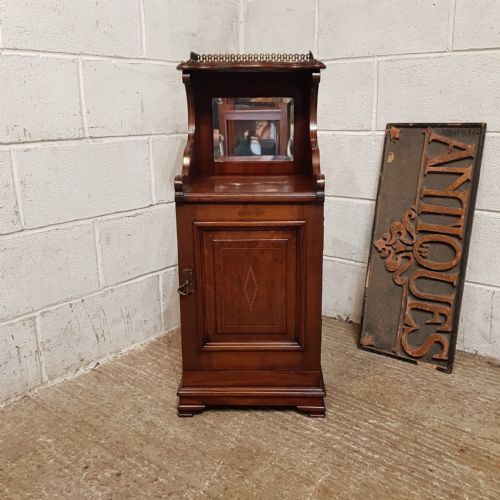
Edwardian bedside pedestals are compact timber cabinets designed for the bedroom, offering enclosed storage beside the mattress.
Edwardian Bedside Pedestals
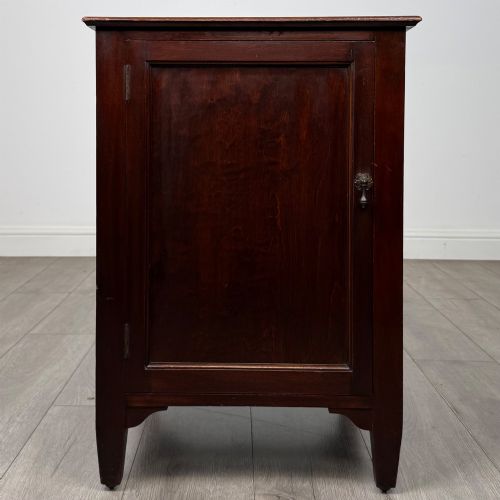
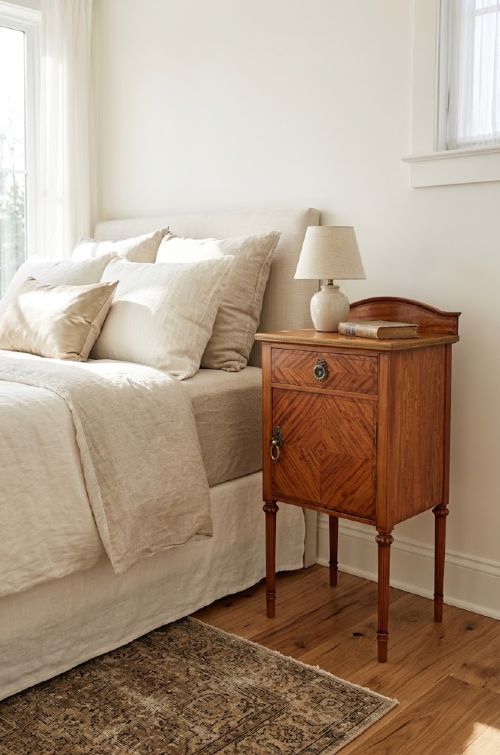
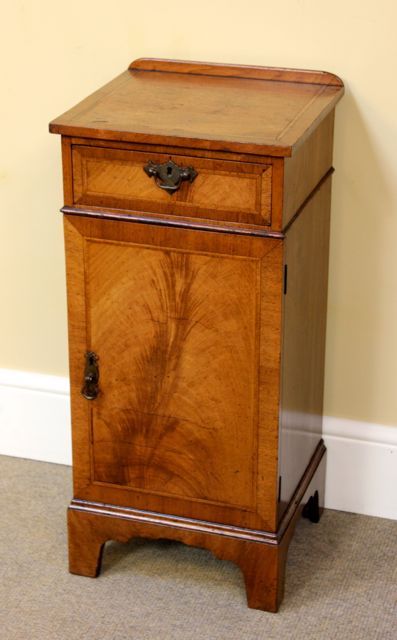
Edwardian bedside pedestals encompass timber bedside cabinets, nightstands and small cupboards originating from the early twentieth century and late nineteenth century. These pieces provide functional storage beside a bed through single doors or stacked drawers.
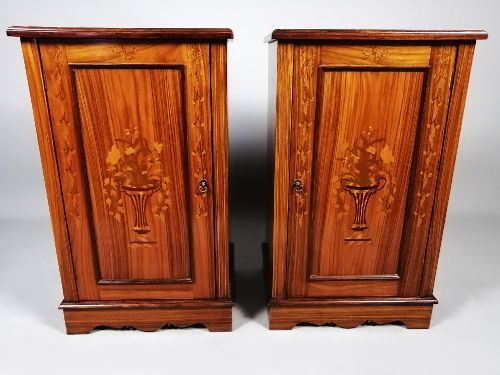
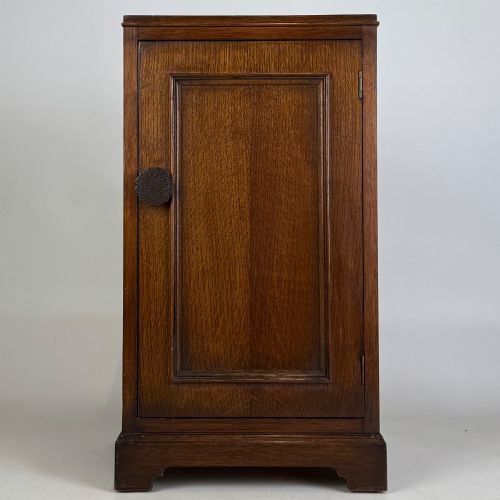
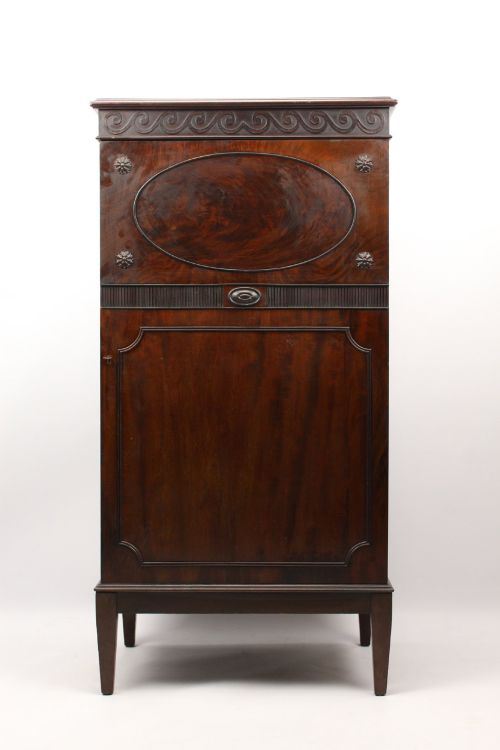
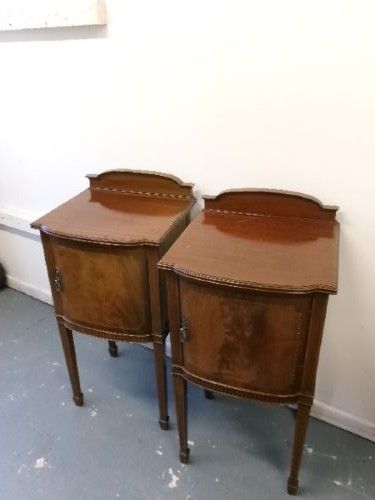
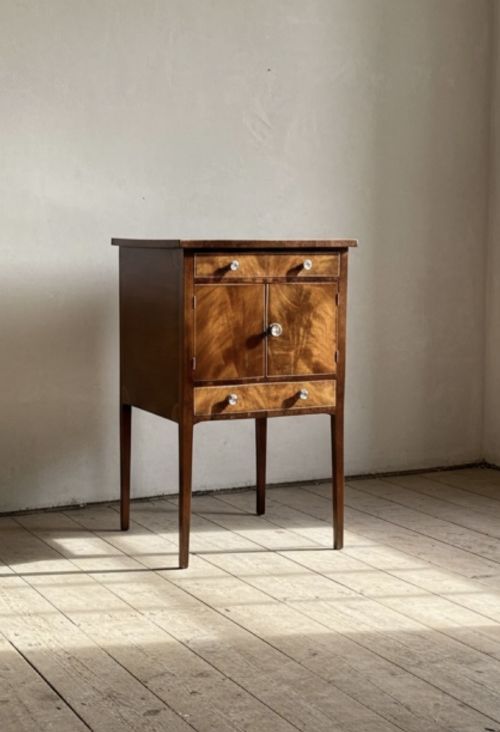
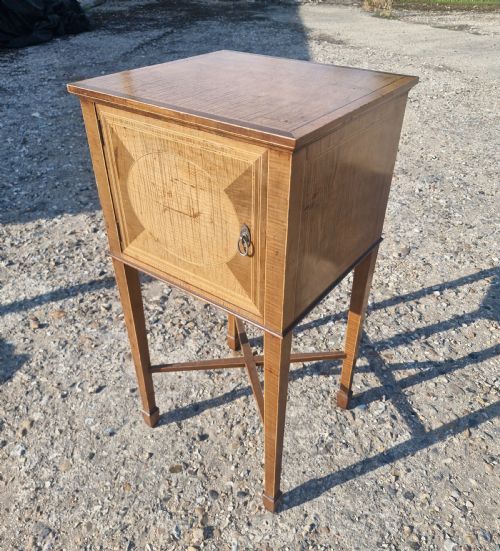
The version most commonly met on this page is the Edwardian mahogany bedside cabinet, frequently featuring inlaid decoration and standing on slender legs. Alongside these, examples in oak, walnut and satinwood appear from the wider Edwardian and late Victorian periods.
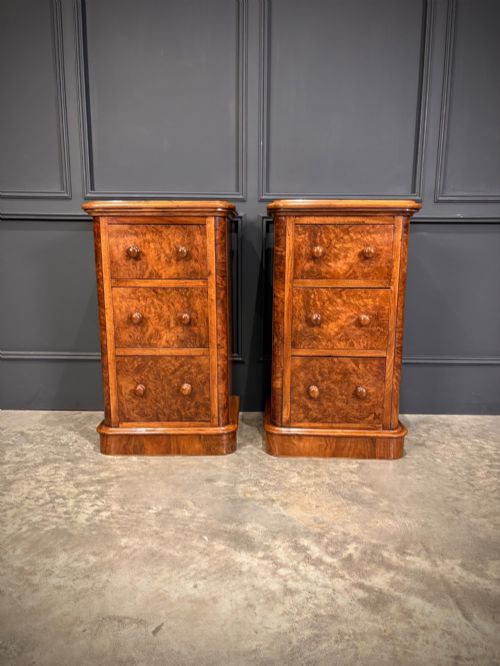
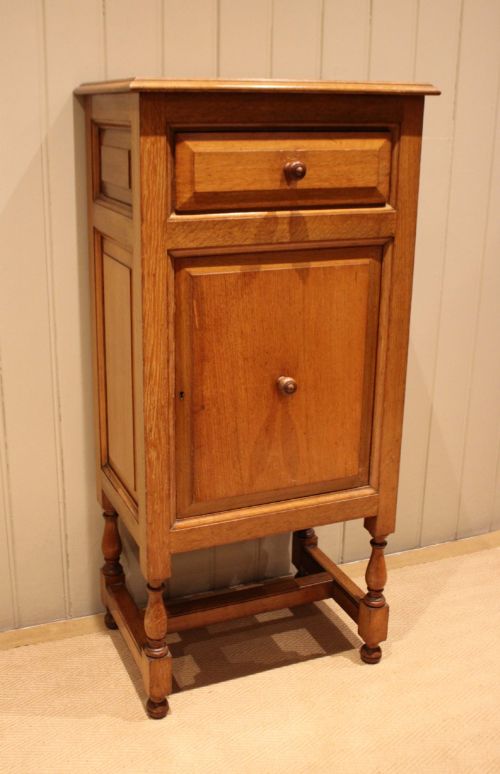
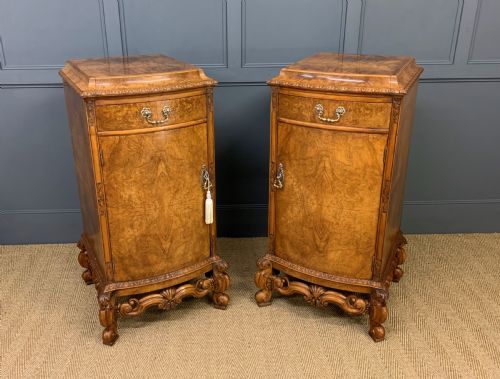
Formations range from simple oak cupboards to grander pairs in burr walnut and rosewood with marquetry detail. Makers such as Denby and Spinks, Morant and Co, and Maple and Co are represented among the cabinet variations.
Materials and Construction
Construction relies heavily on timbers such as mahogany, oak, walnut and satinwood, selected for their grain and durability. Cabinet makers applied marquetry, inlay and exotic hardwoods to elevate the visual appeal of these bedroom pieces.
Surfaces frequently incorporate brass handles and occasional marble tops to protect the wood from candle wax or water jugs. Joinery techniques from the period ensure sturdy carcasses designed to hold heavy items within small footprints.
Some Edwardian bedside cabinets doubled as discreet shoe storage, keeping footwear tidy and hidden right beside the sleeping quarters.
Distinction in Craftsmanship
Quality rests on the selection of timber veneers, such as burr walnut and figured mahogany, matched with precise marquetry and string inlay. Plain oak and stained variants occupy a simpler tier of domestic production compared to intricately detailed Sheraton Revival pieces.
Maker attribution elevates certain pedestals, with stamps from firms like Morant and Co or Maple and Co indicating higher workshop standards. Pairs of cabinets matched by design and timber also demonstrate greater coordination than isolated single items.
Denby and Spinks·Morant and Co London·Maple and Co·Simpson Halifax
The Edwardian Bedside Pedestals Glossary
- Marquetry
- Decorative veneer patterns assembled from different woods to form pictorial or geometric designs. This technique embellishes the doors and tops of finer cabinets.
- Satinwood
- A pale, lustrous timber imported from tropical regions, used extensively for banding and cabinet faces during the Edwardian era.
- Nightstand
- An alternative term for a bedside table or cabinet, providing a small surface and cupboard space next to the bed.
- Sheraton Revival
- A late nineteenth and early twentieth century design style drawing inspiration from eighteenth-century neoclassical furniture forms.
- Burr Walnut
- Timber taken from walnut tree growths, producing swirling, highly figured grain patterns favoured for luxury cabinet doors.
Edwardian Bedside Pedestals: Frequently Asked Questions
What fits inside an Edwardian bedside cabinet?
Edwardian bedside pedestals generally contain a single enclosed shelf space behind a door or a series of small drawers. They were designed to hold nighttime essentials like books, chamber pots or personal items.
The compact internal dimensions suit modern storage needs such as charging cables, reading glasses or small accessories while keeping surfaces clear.
How do I identify an Edwardian piece?
Edwardian furniture typically dates from the reign of King Edward VII between 1901 and 1910, though pieces span from the late Victorian era into the 1920s. Characteristics include lighter timbers, delicate inlaid stringing and Sheraton Revival influences.
Construction methods, timber patination and maker stamps inside drawers or on back panels help confirm the production period and workshop origin.
Are matched pairs common for these cabinets?
Pairs of bedside pedestals appear frequently in walnut, mahogany and satinwood, often built to flank a double bed. Symmetrical placement was standard practice in larger Edwardian and Victorian bedrooms.
Finding a true matching pair increases the desirability of the items, though single cabinets also function effectively as standalone lamp tables.
How do I care for antique wood surfaces?
Antique mahogany, walnut and oak require protection from direct sunlight and sudden changes in humidity to prevent timber movement. Regular dusting with a dry cloth maintains the finish without stripping the original polish.
Application of suitable beeswax nourishes the grain and preserves the historic patination accumulated over a century of domestic use.