

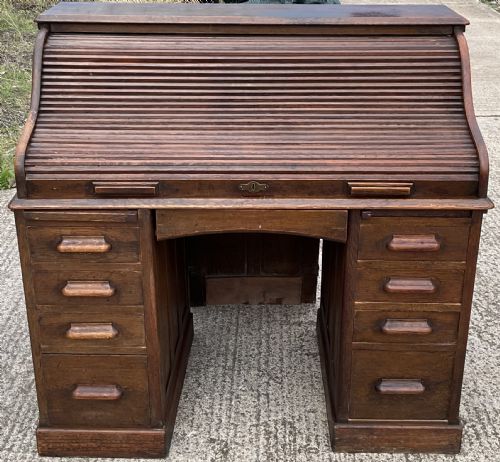
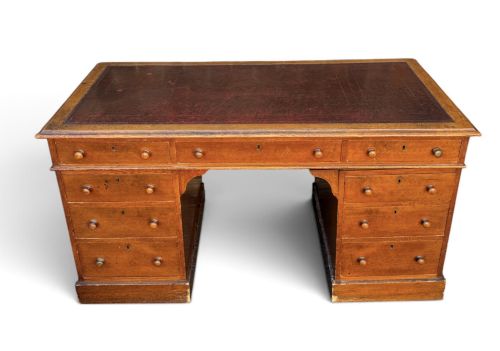
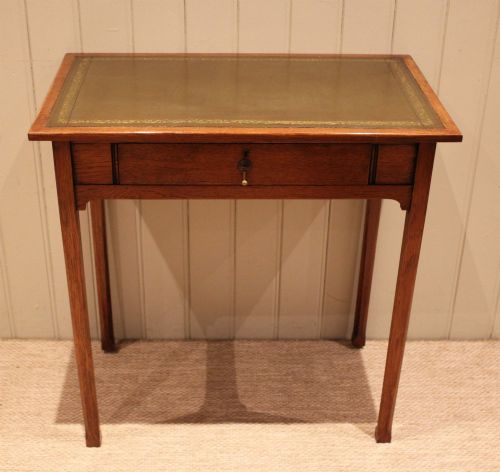
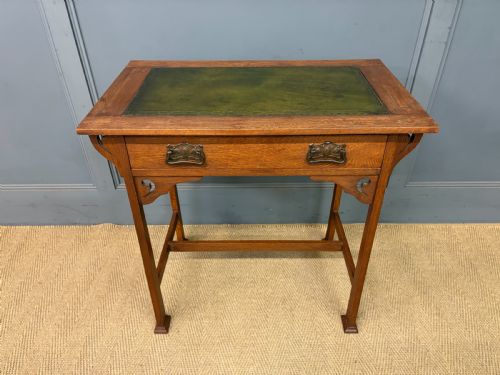
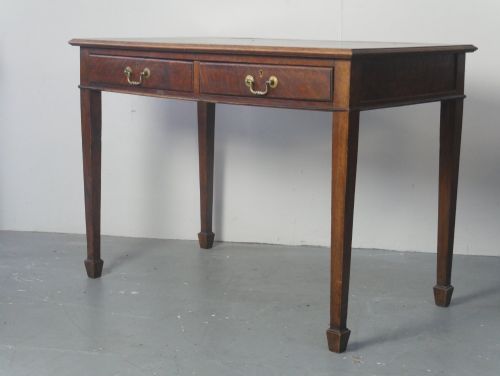
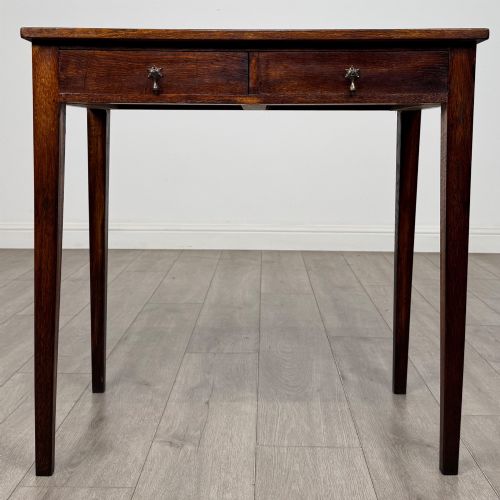
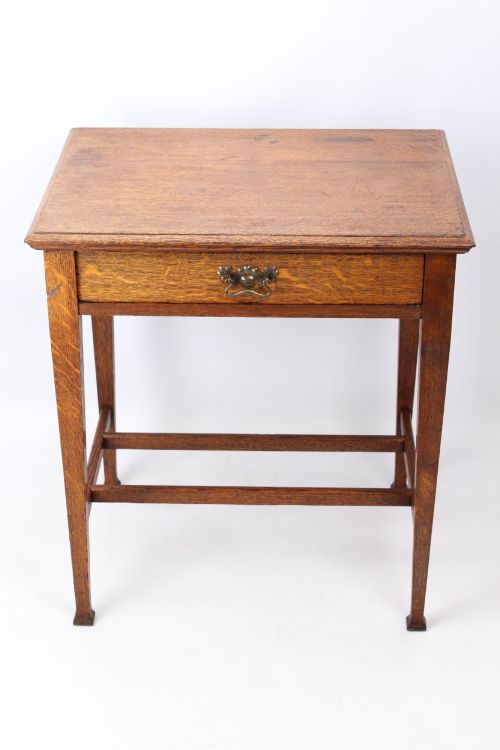
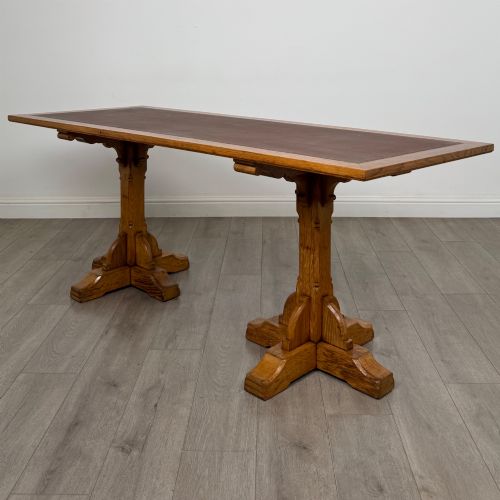
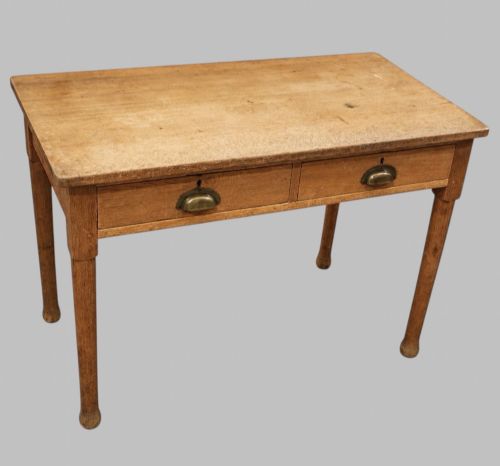
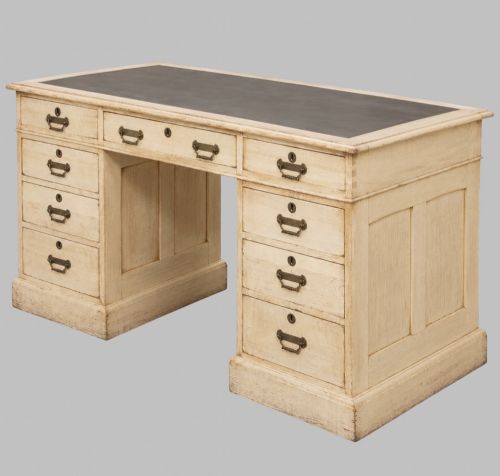

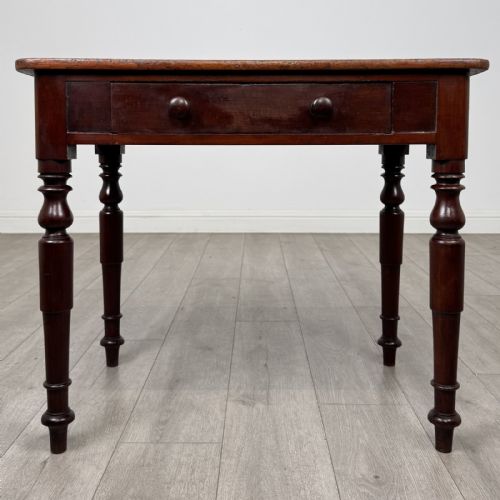
Edwardian Oak Writing Table
An edwardian oak writing table brings durable domestic workspace and honest grain into a room.
Edwardian Oak Writing Table
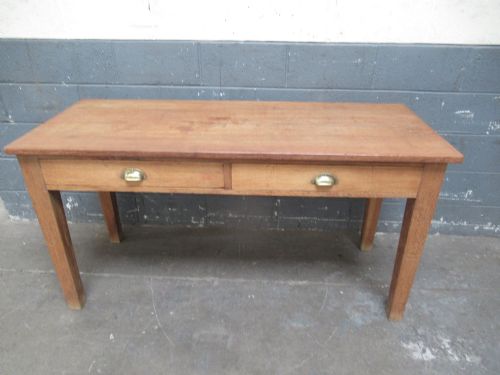
An edwardian oak writing table is a domestic desk or library table produced around the early twentieth century, drawing on periods spanning the late nineteenth century to the nineteen-thirties. You will frequently find simpler single or double drawer side tables alongside sturdier pedestal and library forms.
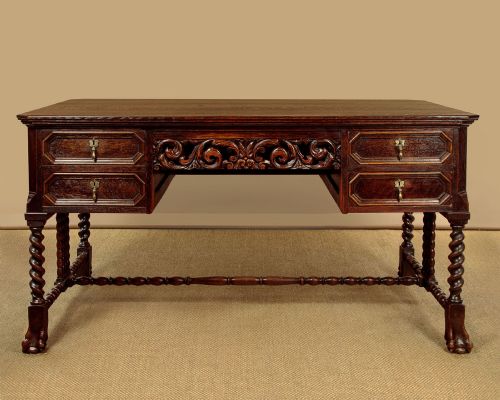
Makers and workshops utilised native and imported hardwoods to construct pieces ranging from modest drop-side study desks to large partners tables with leather inserts. The design vocabulary leans heavily towards Arts and Crafts simplicity, alongside occasional revivals of Jacobean, Gothic, and Georgian styles.
The pieces on this page originate from domestic houses, estate offices, and public institutions, reflecting the practical writing needs of the period. Solid oak and golden quartered oak dominate the listings, often paired with brass handles and fitted drawer linings.
How They Were Made
Joiners built these tables primarily using solid oak, golden oak, and pollard oak, frequently supported by internal drawer linings of secondary woods such as ash. Construction methods relied on traditional mortise and tenon joints, dovetailed drawer construction, and quarter-sawing to reveal prominent medullary rays in the timber.
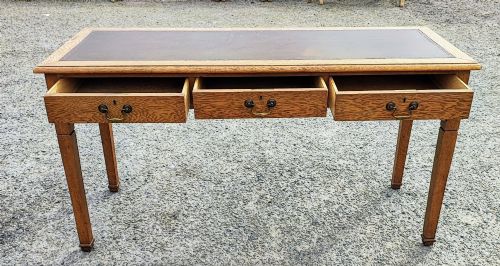
Surface utility was enhanced through the inset of coloured leather writing surfaces, while hardware typically consisted of cast brass drop handles and escutcheons. Carved decorative elements, when present, employed low-relief panels, linenfold motifs, or subtle edge moulding rather than heavy ornamentation.
Edwardian Oak Writing Table Retail Price Guide 2026
Typical asking prices for edwardian oak writing table among the pieces listed under this phrase on Sellingantiques today, from the lower quarter to the upper quarter. They describe what is for sale here now, not the wider market.
Stylistic influences span the Victorian era, Arts and Crafts movement, and Jacobean revival periods.
What Varies in Quality
The tier of a piece depends heavily on the selection of timber, moving from standard plain planks to figured quartered oak or pollard oak with deliberate grain matching. Higher quality examples exhibit precise dovetailing in the drawer boxes, substantial oak framing that resists racking, and original structural integrity.
Exhibition or workshop attribution, such as pieces bearing the mark of known makers like Heal's or James Shoolbred, elevates a table above standard anonymous production. The retention of original brass hardware, fitted interior compartments, and undamaged leather writing skivers further separates everyday utility furniture from superior specimens.
James Shoolbred And Co·Heals·Gillows·Jenners
The Edwardian Oak Writing Table Glossary
- Quartered oak
- Timber sawn radially across the growth rings to produce a distinctive decorative flake pattern. This cut provides superior dimensional stability for desk tops.
- Pedestal desk
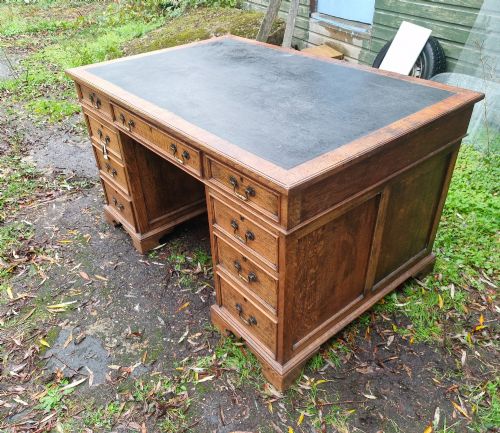
- A form featuring two supporting banks of drawers beneath the work surface, creating a central kneehole space. These offer substantial storage capacity for office work.
- Partners table
- A large desk designed to be used from both sides simultaneously, usually fitted with opposing banks of drawers. They are frequently found in institutional or estate library settings.
- Pollard oak
- Timber taken from trees that were pollarded, producing dense clusters of growth rings and a highly figured, swirling grain. It was utilised for decorative veneering on select surfaces.
- Escutcheon
- A protective plate surrounding a keyhole, commonly cast in brass on these desks. It prevents the surrounding timber from sustaining damage from the key.
Edwardian Oak Writing Table: Frequently Asked Questions
What is an edwardian oak writing table used for?
These tables served as domestic writing surfaces for correspondence, household administration, and study. Their sturdy construction made them suitable for both private homes and estate offices.
Today, they function effectively as home office desks or console tables, providing practical surface area and integrated drawer storage.
How do I tell an edwardian table from a victorian one?
Edwardian examples tend to display lighter finishes, cleaner lines, and simpler Arts and Crafts influences. Victorian pieces frequently feature darker polishes, heavier carved ornament, and more elaborate revival styling.
Examining the construction methods and secondary timbers inside the drawers can also provide clues to the exact manufacturing decade.
Are these tables made of solid oak?
Many listings feature solid oak or golden quartered oak construction, particularly for the tops, legs, and drawer fronts. Some larger library tables and pedestal desks also incorporate oak veneers over stable secondary timbers to prevent warping.
Checking the grain continuity across corners and drawer edges helps identify solid timber construction.
How do I clean the leather top?
Leather writing surfaces benefit from gentle dusting and occasional treatment with specialised leather balms to maintain flexibility. Avoid harsh chemical cleaners that can strip the original dye and dry out the hide.
Preserving the original skiver, even with minor signs of age, maintains the character and authenticity of the piece.