
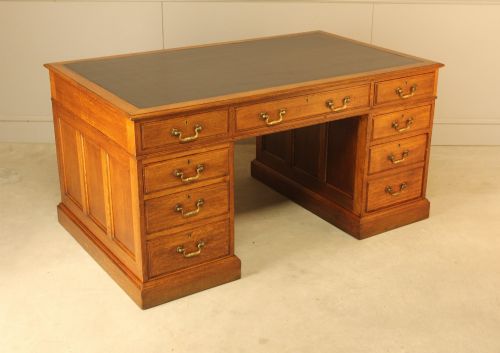
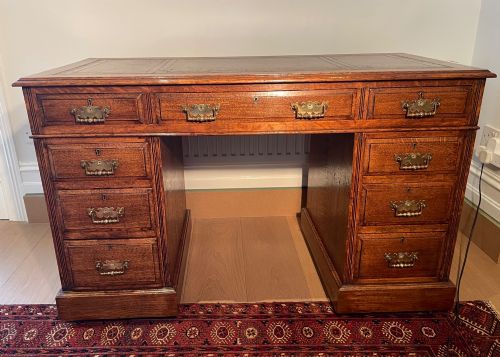
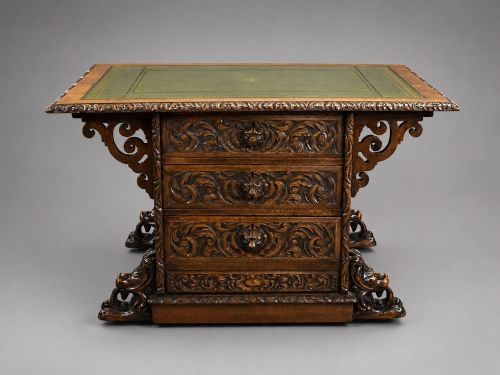
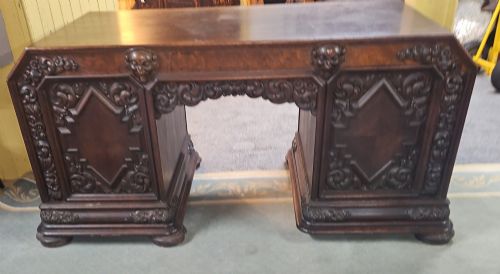
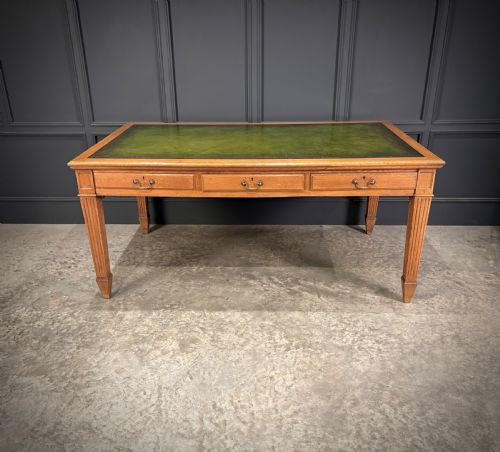


Vintage Oak Partner Desk
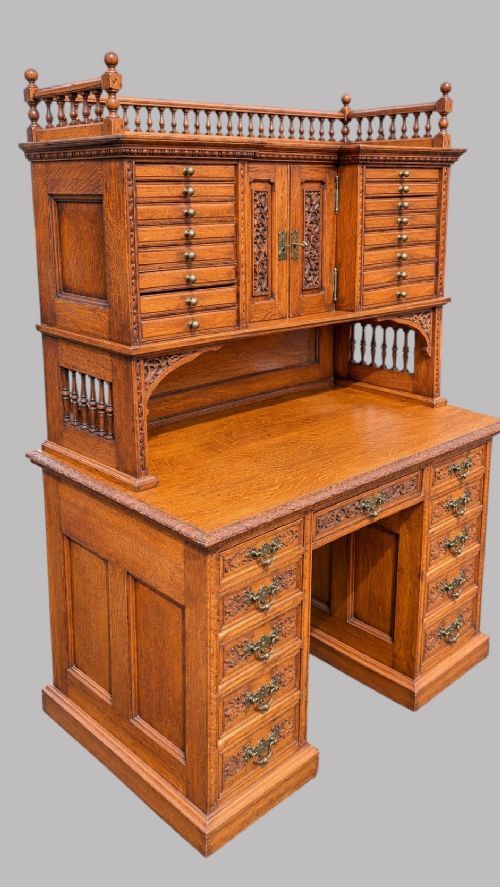
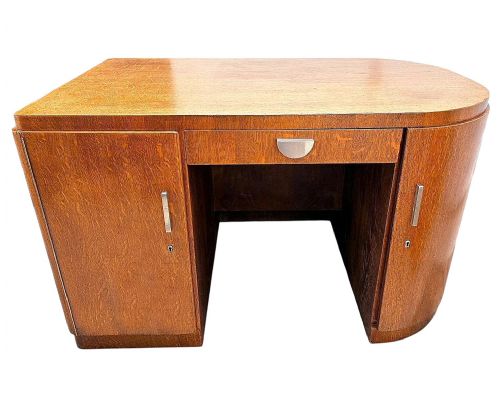
A vintage oak partner desk offers generous twin workspaces and deep drawer banks, making it a commanding centrepiece for any study.
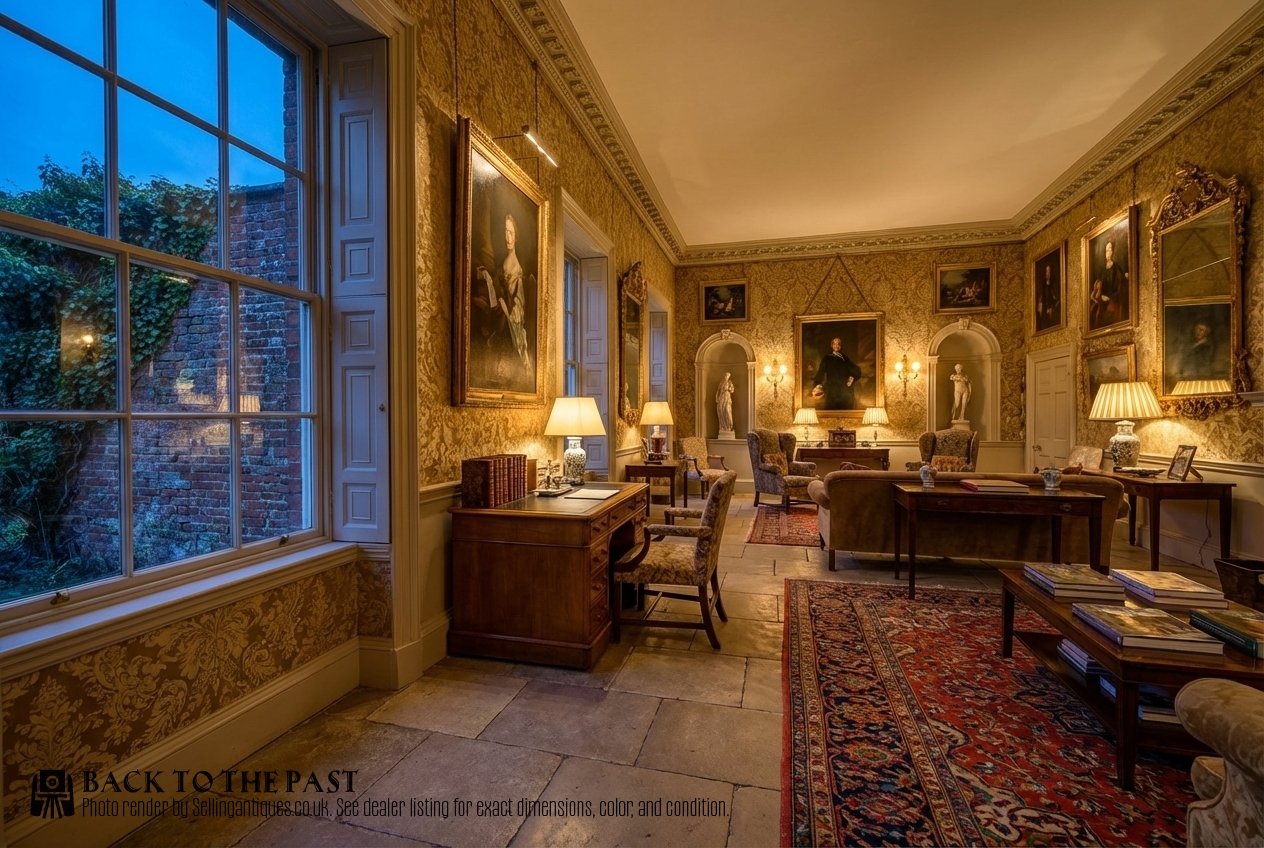
What vintage oak partner desks are
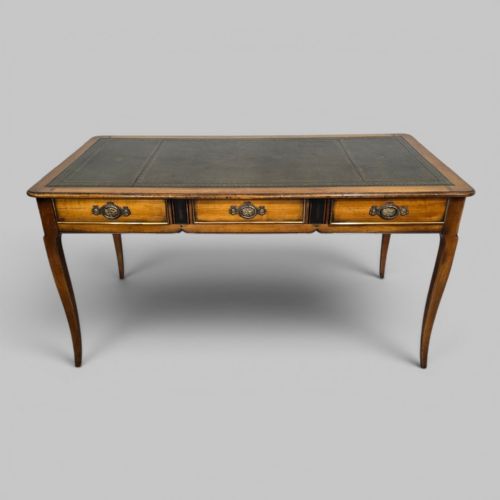
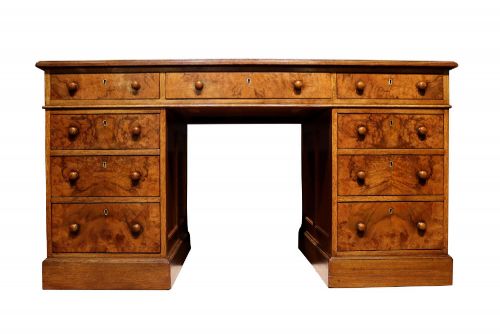
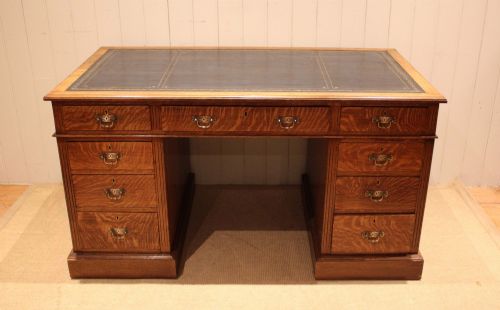
A vintage oak partner desk is a substantial writing table designed for two people to work opposite one another, featuring banks of drawers beneath both working faces. These pieces emerge primarily from the Victorian and Edwardian eras, spanning from eighteen eighty through to nineteen thirty.
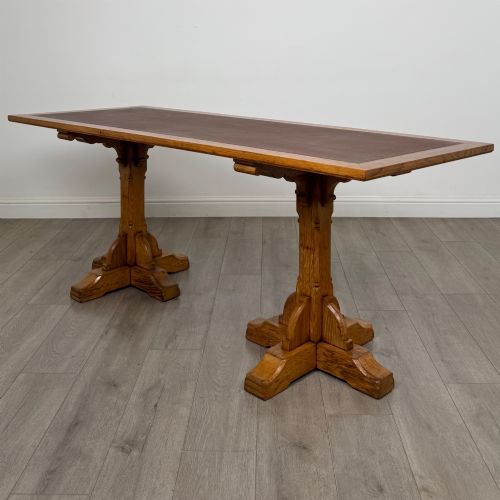
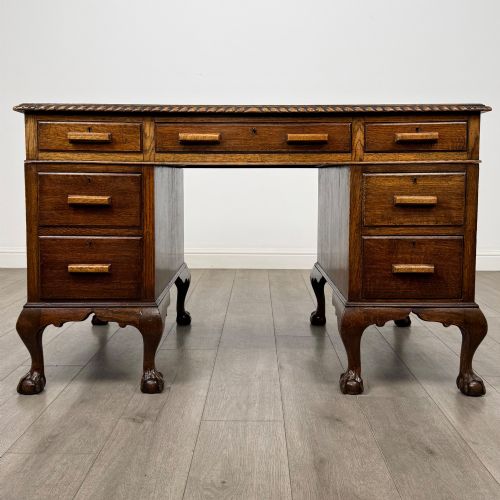
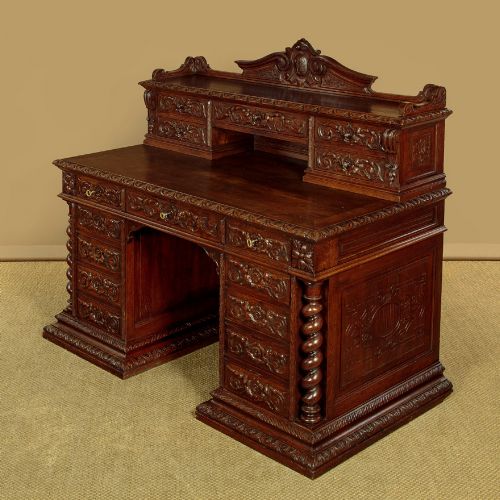
The variations seen on this page range from early nineteenth-century pedestal formats to Chippendale Revival models and pale oak interpretations. Buyers encounter standard pedestal configurations, kneehole variants, and specialised banker's desks built from solid timber.
Origins trace directly to English workshops, with notable construction recorded from makers such as Edwards & Roberts. Each item displays the characteristic grain and robust physical presence typical of period commercial and domestic furniture.
How they were made
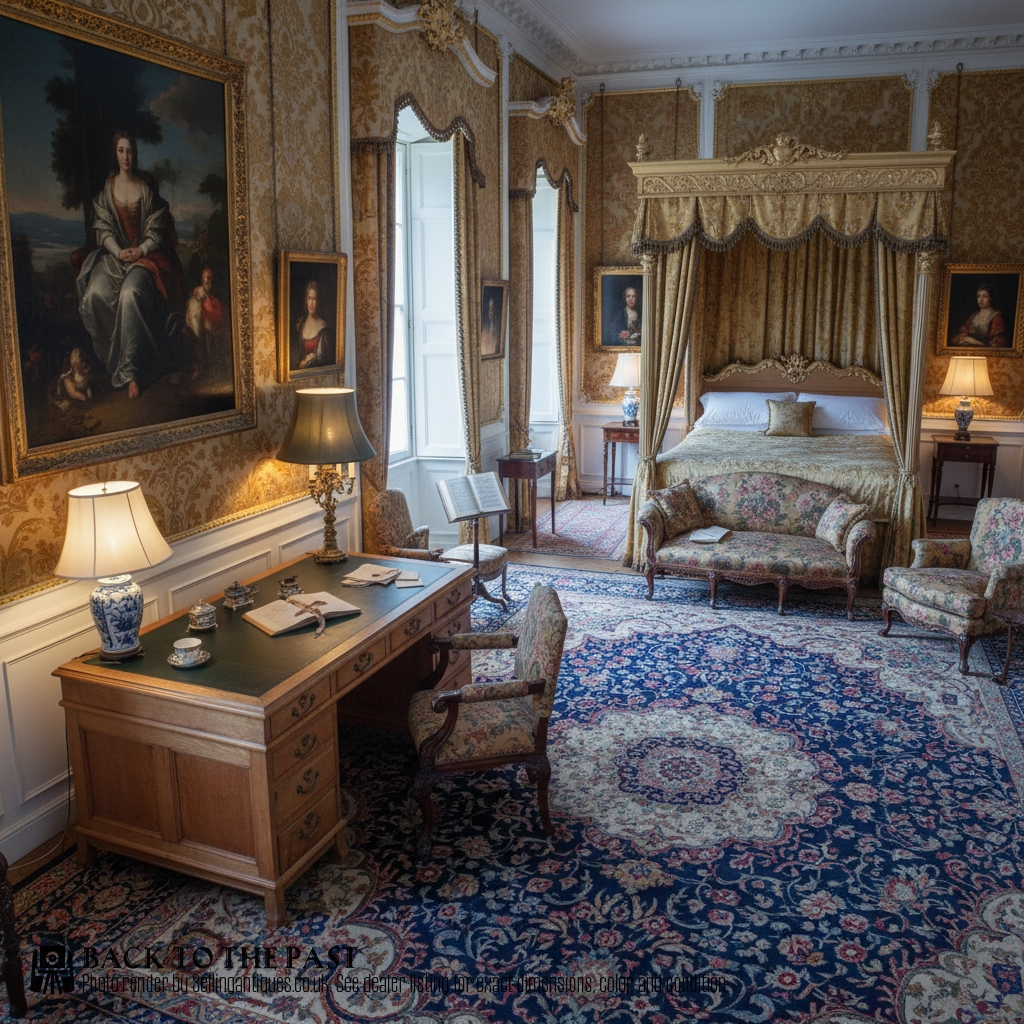
Makers utilised solid oak and timber to construct the primary carcases, plinths, and drawer frames of these desks. The structural integrity relies on traditional joinery methods suited to heavy daily use in offices and libraries.
Surfaces frequently incorporate inset leather writing panels framed by the surrounding timber, while brass handles and pulls furnish the numerous drawers. The hardware is fastened securely to complement the dense wood.
Retail Price Guide 2026
Typical UK retail prices for vintage oak partner desk, calculated from the Sellingantiques database of over a million retail prices indexed since 2003. This retail price guide relies exclusively on Sellingantiques data; no external sources or auction records are used, so the figures do not describe the wider market.
Secret compartments hidden inside pedestal drawers occasionally surfaced to keep private ledges safe from curious clerks.
What varies in quality
Quality separates ordinary utility pieces from exceptional items through the selection of timber figures and the finesse of the joinery. Desks bearing maker signatures, such as Edwards & Roberts, demonstrate superior cabinet-making standards.
The refinement of the brass hardware and the preservation of the original leather inserts distinguish the finest examples. Finer proportioning in the pedestals and kneeholes elevates the overall architectural balance of the desk.
Edwards and Roberts
The Vintage Oak Partner Desk Glossary
- Pedestal desk
- A heavy writing table supported by two vertical banks of drawers, allowing a seated person space in the centre. This form forms the majority of the current selection.
- Kneehole
- The central recessed space beneath the desktop where a person sits. It often contains a concealed single drawer above the opening.
- Chippendale Revival
- A late nineteenth or early twentieth-century style reproducing eighteenth-century motifs. It brings decorative carved details to standard oak furniture forms.
- Leather
- A durable animal hide material inset into the top surface of the desk to provide a smooth writing plane. It is frequently bordered with gilt tooling.
Frequently Asked Questions
What is a partner desk?
A partner desk is a large double-sided writing table built with drawers and cupboards accessible from both the front and the back. This layout allowed two people to sit opposite each other and work simultaneously.
The form became popular in nineteenth-century offices and grand libraries where administrators or business partners needed shared access to storage and writing space.
How do I date an oak desk?
Dating relies on examining the construction methods, wood selection, and style markers present in the piece. Victorian and Edwardian examples show specific combinations of brass hardware and drawer linings.
Makers' marks or stamps, when present, provide a precise attribution to firms active during the nineteenth or early twentieth centuries.
Can I replace the leather top?
Leather writing surfaces can be replaced when the original material has worn away through decades of heavy use. Conservation specialists often install new leather panels matching the historical style.
Retaining the original leather is preferred by collectors, provided the surface remains intact enough to use without further damage.
How should I care for oak furniture?
Oak furniture requires stable room temperatures and protection from direct sunlight to prevent the timber from drying out or splitting. Regular dusting with a dry cloth keeps the surface clean.
Applying natural wax periodically helps nourish the wood grain and preserves the rich tone developed over the decades.