


Antique Home Office Furniture
Antique home office furniture brings period character and enduring utility to a workspace, offering solid timber construction and thoughtful drawer layouts designed for writing and correspondence.
Antique Home Office Furniture
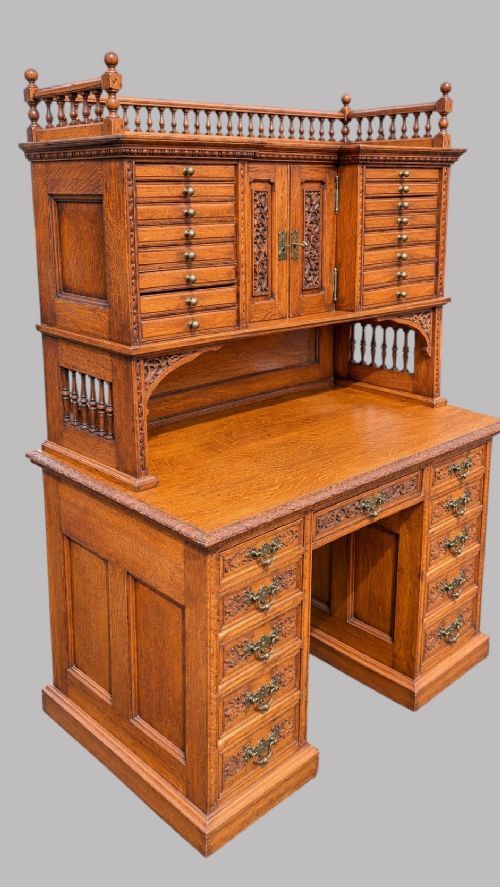
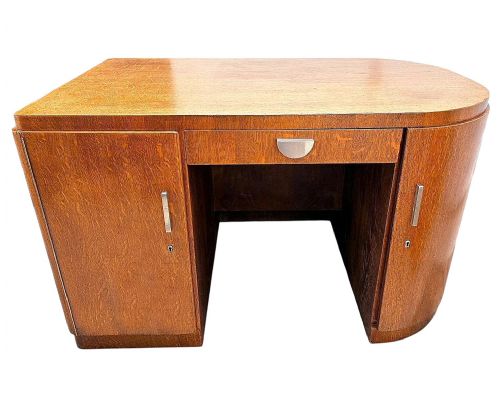
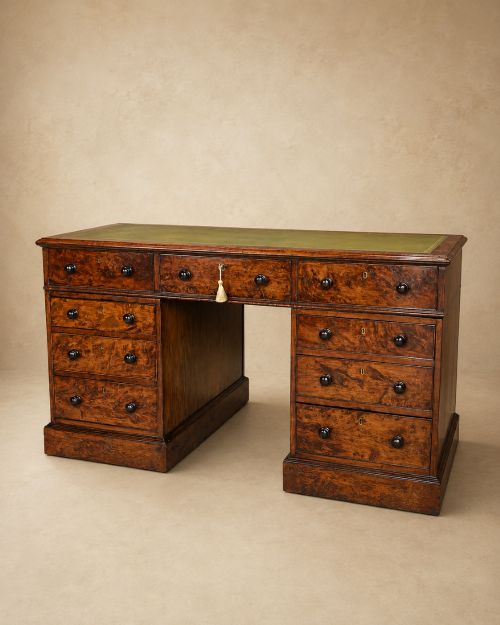
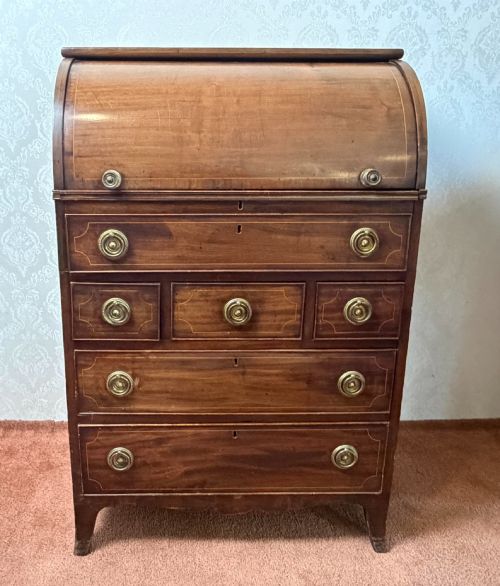
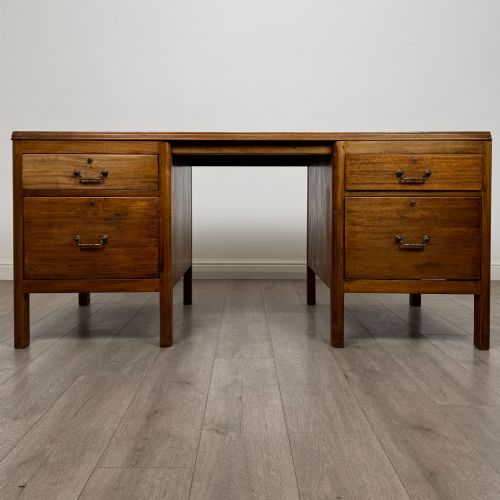
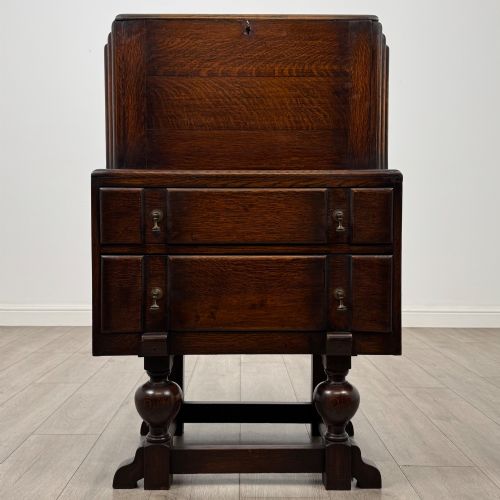
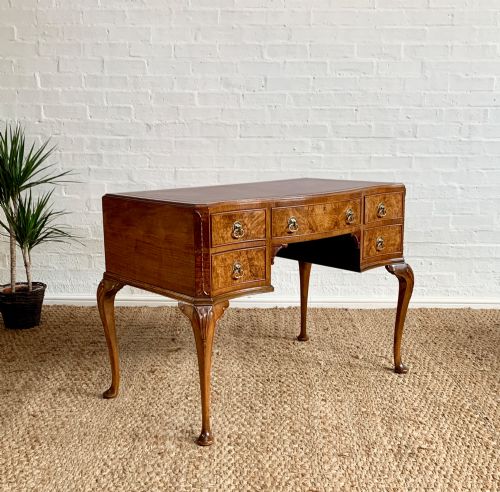
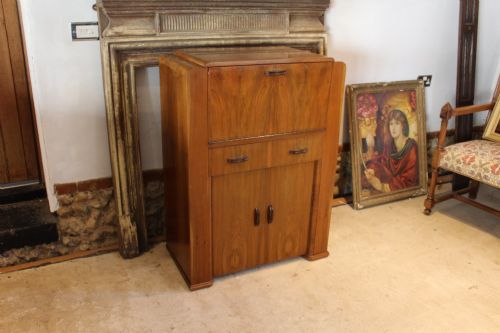
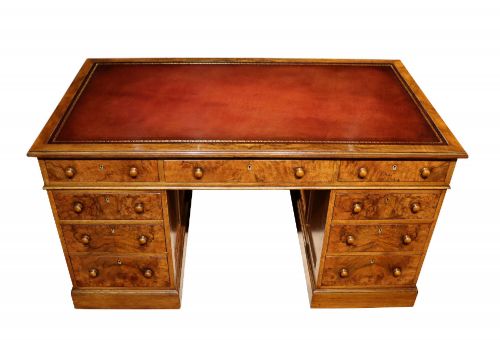
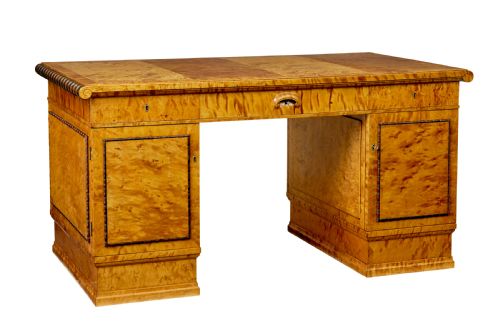
Buyers seeking antique home office furniture encounter a variety of period workspace pieces intended for writing, storage, and administrative tasks. The selection centres on pedestal desks, kneehole desks, writing tables, and bureaus dating from the Georgian era through to the Art Deco period.
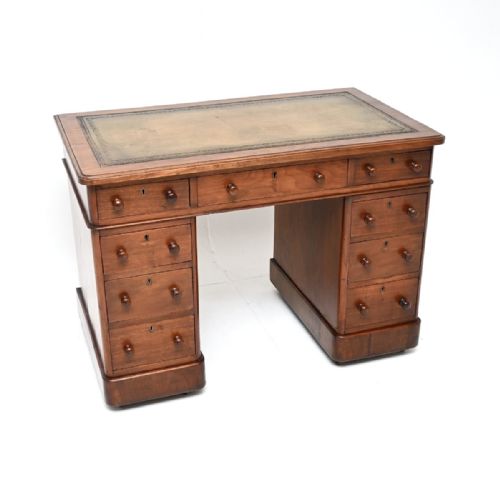
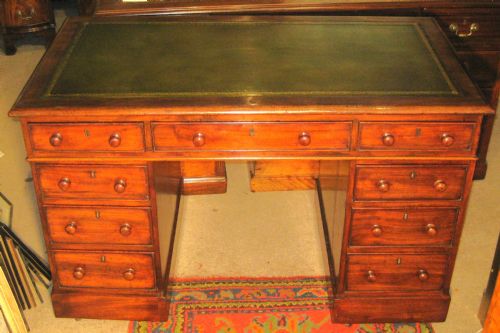
Pedestal desks and writing tables form the most common configurations on this page, often constructed from mahogany, oak, or walnut. These pieces reflect the functional demands of studies and libraries from the nineteenth and early twentieth centuries, scaled for domestic and professional use.
Styles range from restrained Georgian designs and Victorian interpretations to Edwardian craftsmanship and modernist Art Deco forms. Each piece demonstrates the specific cabinetry methods and aesthetic priorities of its decade of origin.
How they were made
Construction relies heavily on timbers such as mahogany, oak, walnut, and burr walnut, frequently accented with brass hardware and inset leather writing surfaces. Cabinet makers utilised solid woods and selected veneers to achieve both structural integrity and decorative figured grain patterns.
Joinery techniques include traditional dovetailed drawers and panelled carcases designed to withstand daily use over centuries. Writing surfaces often incorporate inset tooled leather or skivers, secured with borders and timber surrounds.
Antique Home Office Furniture Retail Price Guide 2026
Typical asking prices for home office furniture among the pieces listed under this phrase on Sellingantiques today, from the lower quarter to the upper quarter. They describe what is for sale here now, not the wider market.
Materials represented across the selection include mahogany, oak, walnut, burr walnut, satin birch, pitch pine, and rosewood.
What varies in quality
Quality rests on the selection of timber, the precision of the cabinet work, and the integration of secondary woods. Pieces featuring finely figured burr walnut veneers, crossbanding, or solid mahogany demonstrate higher levels of workshop investment.
The sophistication of the internal drawer configuration and the retention of original brass fittings distinguish standard production from superior examples. Proportion, balance, and the execution of carved or inlaid details further separate standard utility pieces from workshop-attributed items.
Wylie & Lochhead Glasgow·F.H. Marshall & Co Glasgow·Maples of London·Heal and Son·Jenners·Maurice Adams
The Antique Home Office Furniture Glossary
- Pedestal desk
- A freestanding desk comprising two supporting banks of drawers beneath a main writing top, often inset with leather.
- Bureau
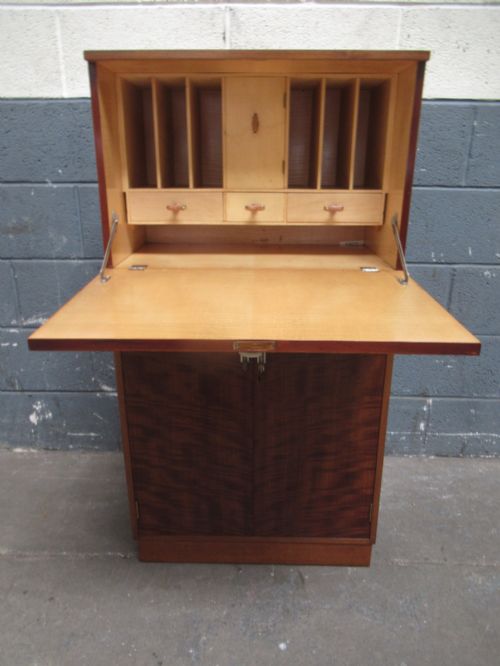
- A writing cabinet featuring a sloping fall-front lid that opens to reveal a fitted interior of small compartments and pigeonholes.
- Tambour
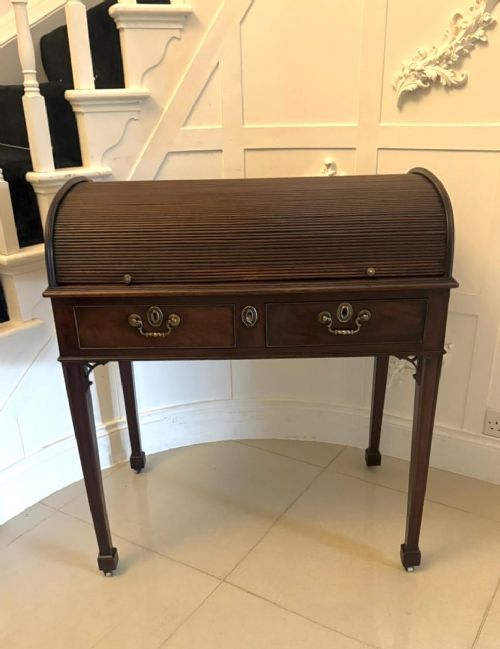
- A flexible sliding shutter formed of narrow strips of wood glued to a canvas backing, used to enclose desk compartments.
- Partners desk
- A large double-sided pedestal desk designed with drawers and cupboards on both faces to accommodate two people sitting opposite one another.
- Davenport
- A compact writing desk featuring a sloped, hinged writing surface above a side-opening set of drawers.
- Crossbanding
- A decorative border veneer applied so that the grain runs at right angles to the surrounding wood.
Antique Home Office Furniture: Frequently Asked Questions
What is a partners desk?
A partners desk is a large double-sided pedestal desk built with drawer compartments and cupboards accessible from both the front and the back. This configuration allowed two individuals to work opposite each other in a shared study or library.
These pieces typically date from the nineteenth century and utilise dense hardwoods like mahogany or oak to support the substantial dual-sided construction.
How do I identify a bureau?
A bureau is distinguished by its sloping fall-front lid, which drops down to create a horizontal writing surface. Inside this enclosed section, you will find small drawers, shelves, and pigeonholes intended for stationery and letters.
Beneath the writing flap, these pieces usually incorporate a stack of full-width drawers for general storage, set on bracket feet or a plinth base.
Where should I place a pedestal desk?
Pedestal desks are generally designed to be freestanding in a room, particularly if they feature finished back panels or double-sided drawer arrangements. Positioning a desk away from the wall highlights the timber grain and the proportions of the pedestals.
Ensure the room maintains stable humidity levels to protect solid timbers and inset leather writing surfaces from drying or warping.
How do I date an oak desk?
Dating an oak desk involves examining construction methods, timber selection, and stylistic details such as brass hardware and drawer linings. Earlier pieces often feature hand-cut dovetails and secondary woods consistent with their period of manufacture.
Comparing the decorative motifs, handles, and overall proportions against documented examples from the Georgian, Victorian, or Edwardian eras helps narrow down the decade of origin.