
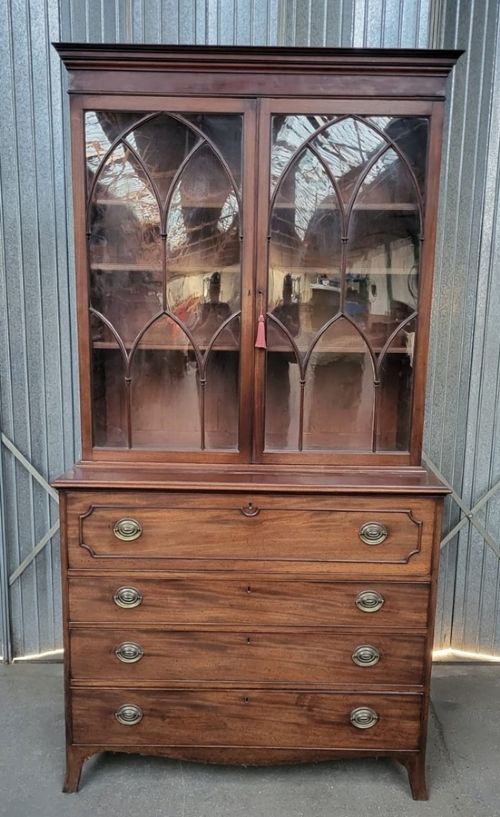
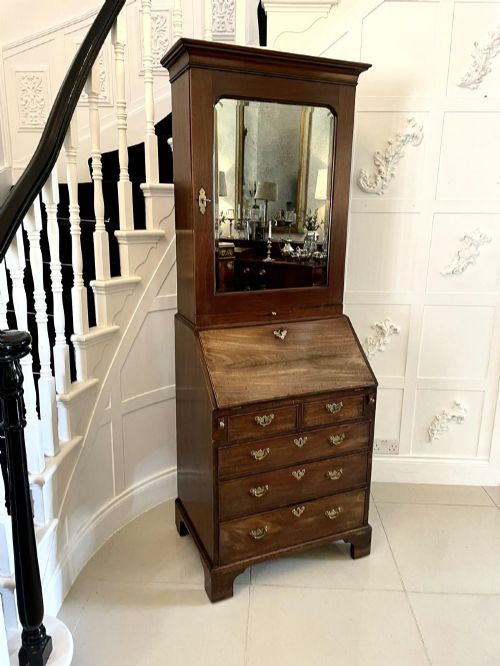


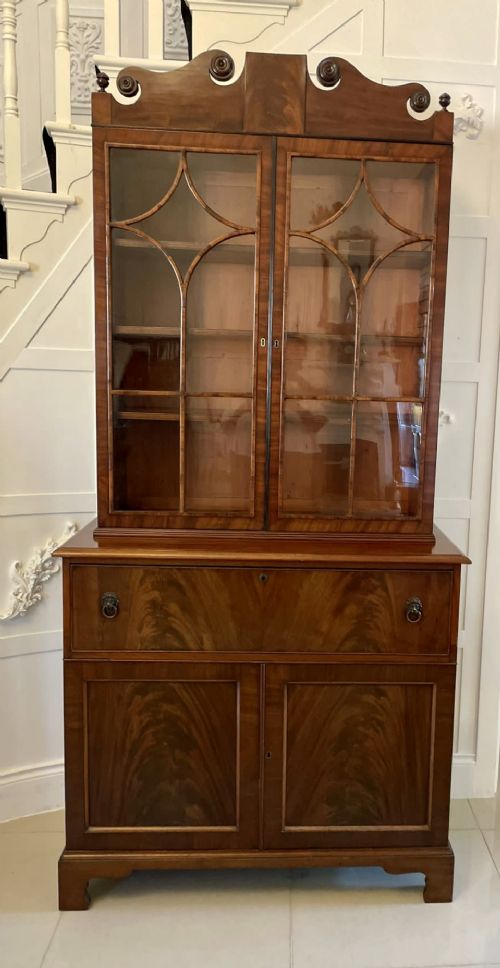
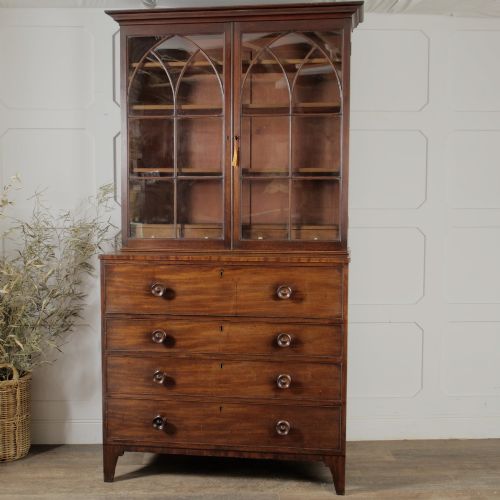
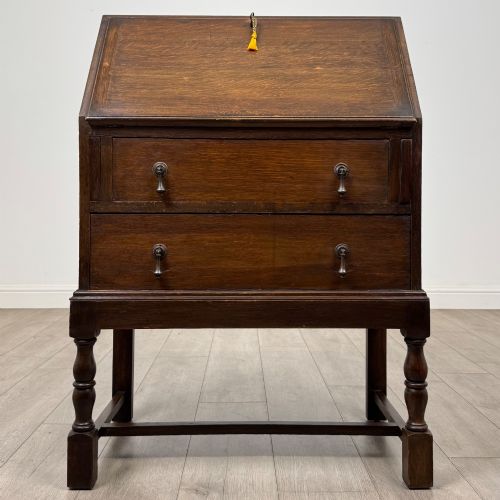
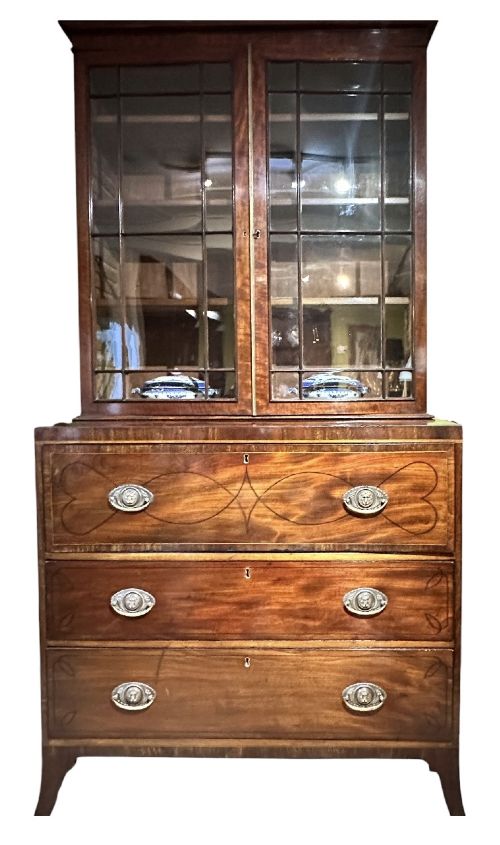
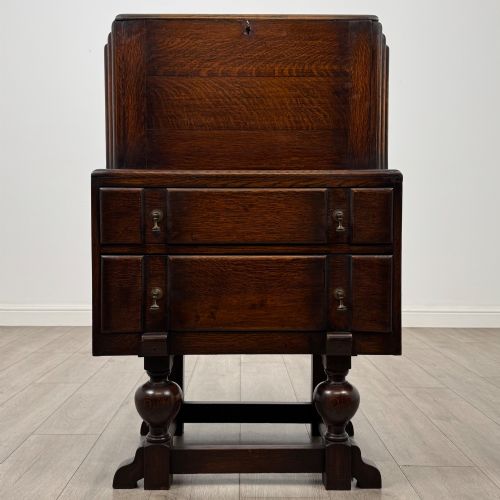
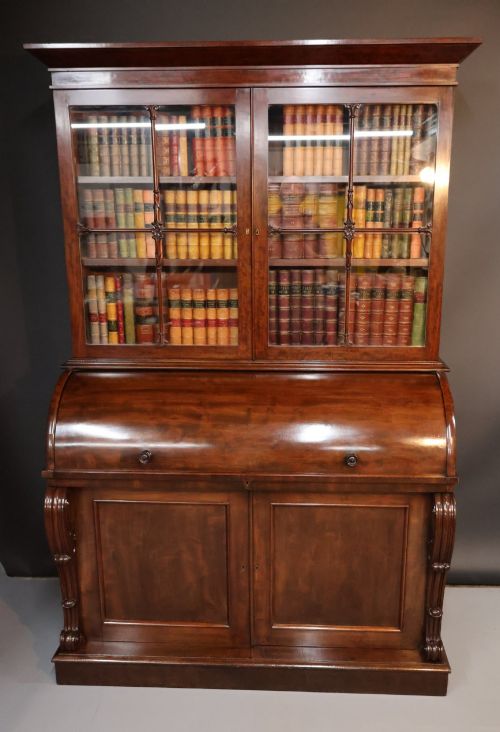


Brown Wood Secretary
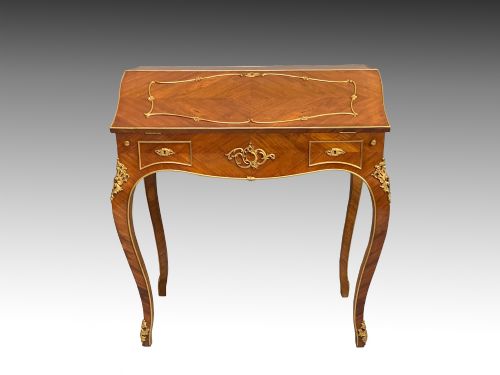
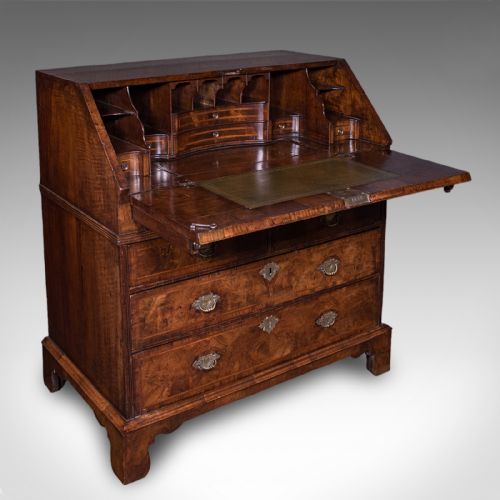
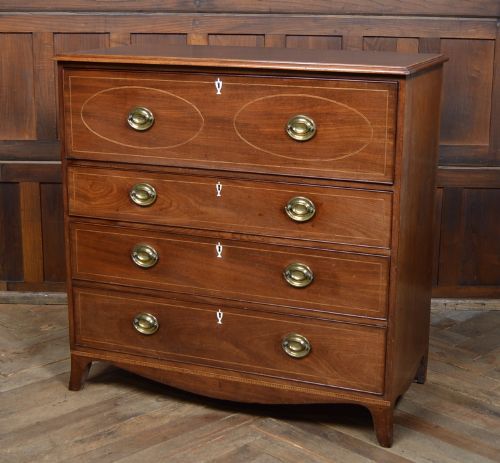
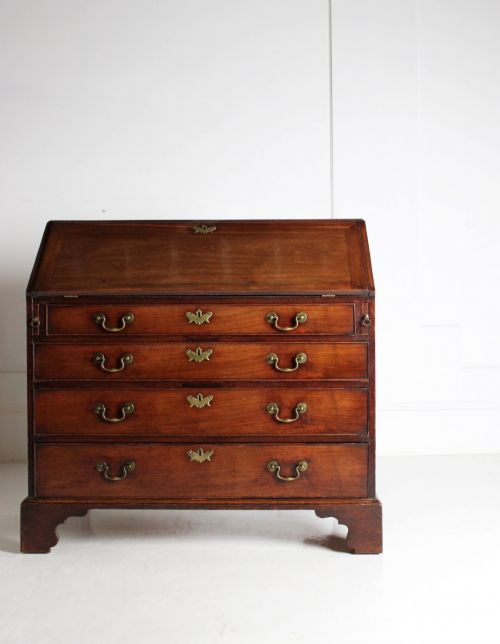
A brown wood secretary unites a fall-front writing surface with concealed compartments and upper shelving, offering practical workspace alongside disciplined storage.
Brown Wood Secretary
A brown wood secretary typically appears as a bureau bookcase, writing cabinet, or fall-front bureau originating from periods spanning the eighteenth to the early twentieth century. Buyers seeking this form encounter pieces catalogued under styles such as Georgian, Regency, Edwardian, and William IV.
The primary variants include tall bureau bookcases featuring glazed upper doors, alongside more compact fall-front desks and cylinder bureaux. These configurations offer fitted interiors with pigeonholes and small drawers behind the main writing flap.
Originating predominantly in English workshops, these items also emerge in Dutch and continental variants exhibiting distinct regional timber choices and bombé or bureau-chest profiles.
Distinguishing quality across examples
Quality separates through the selection and matching of timber veneers, such as figured mahogany and burr walnut, which determine the visual depth of the fall front and drawer panels. The precision of internal fitments, including secret drawers and pigeonhole construction, further distinguishes workshop standards.
Proportion and execution of secondary details, from hand-cut dovetails to brass hardware integration, dictate the overall durability and finish of each cabinet.
Secret compartments hidden behind dummy drawer fronts await discovery inside many period bureaux.
The Brown Wood Secretary Glossary
- Bureau bookcase
- A dual-purpose furniture form combining a slant-front writing desk with an upper shelving or cabinet section enclosed by doors. These units served domestic administration and book storage in period interiors.
- Fall-front bureau
- A writing desk featuring a hinged writing flap that pulls down into a horizontal position for use. This design conceals a fitted interior of small drawers and pigeonholes when closed.
- Cylinder bureau
- A writing desk characterised by a quarter-cylinder rolling shutter that retracts to reveal a sliding desk surface and internal fittings. This mechanism encloses the workspace when not in use.
- Secretaire
- A cabinet or chest incorporating a dedicated writing drawer or pull-out writing compartment disguised as a standard drawer front. It often pairs with upper bookcase shelving.
- Ormolu
- Gilded bronze ornamentation applied to furniture surfaces for decorative effect during specific continental periods. It provides metallic contrast against dark timbers like tulipwood and mahogany.
Brown Wood Secretary: Frequently Asked Questions
How do I use a secretary desk?
Lower the hinged fall-front flap to reveal the internal writing surface, pigeonholes, and small drawers for storage.
Close the flap after use to conceal writing materials and maintain a tidy appearance in the room.
What is the difference between a bureau and a secretary?
In British terminology, a bureau typically refers to a slant-front writing desk, whereas a secretary often indicates a piece with a dedicated pull-out writing drawer.
Both forms frequently incorporate upper bookcase sections for combined storage and writing utility.
How do I date a brown wood secretary?
Examine the timber species, construction joinery, and hardware styles to determine the likely period of manufacture.
Stylistic markers such as Georgian proportions or Edwardian inlay provide specific chronological indicators.
Where should I place a secretary in my home?
Position the piece against a stable interior wall where clearance allows the fall-front flap to open fully.
Keep wooden surfaces away from direct heat sources and strong sunlight to protect the polished timber finish.