


Rustic Wooden Work Table
A rustic wooden work table brings honest utility and history to a room, offering robust surfaces shaped by decades of genuine domestic or workshop use.
Rustic Wooden Work Table
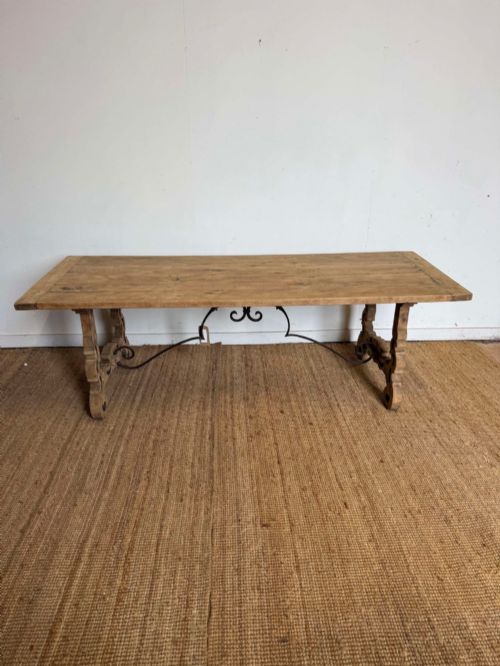
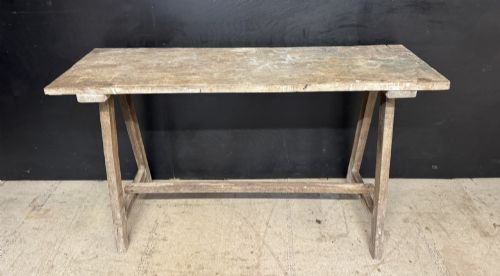
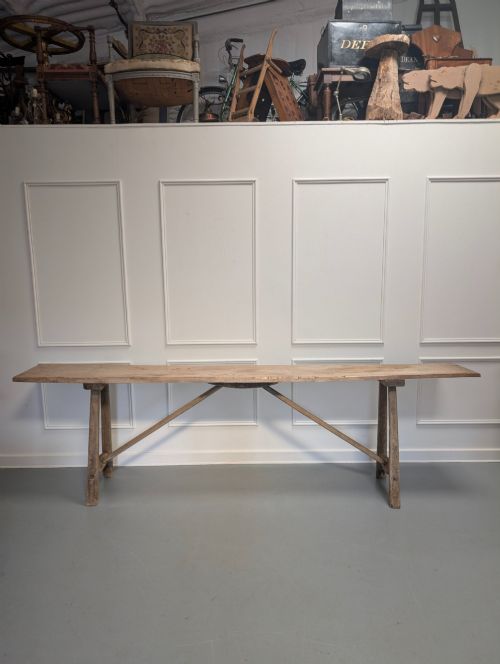
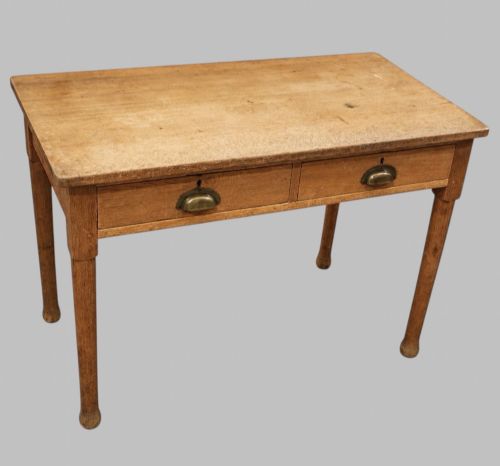
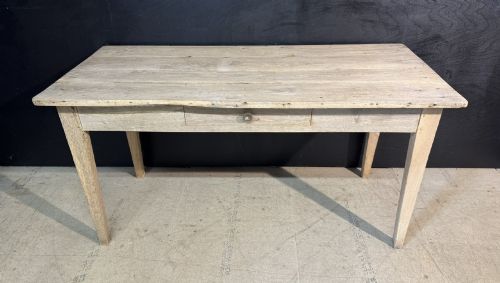
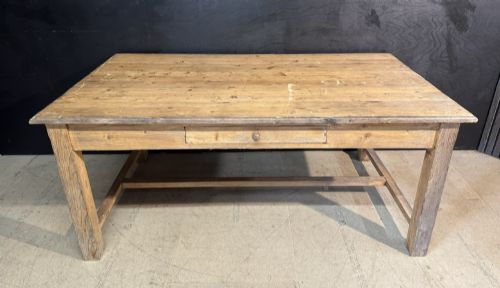
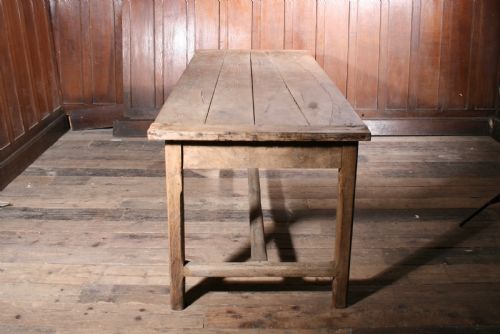
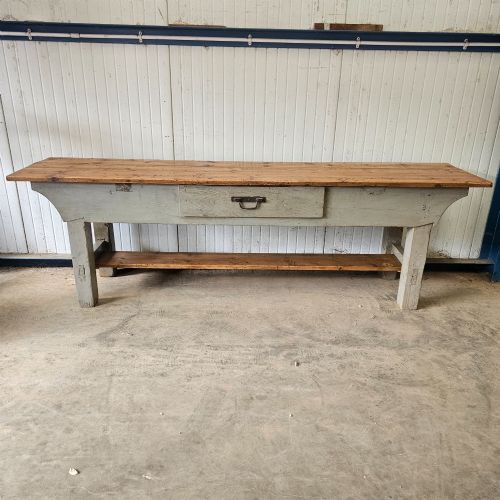
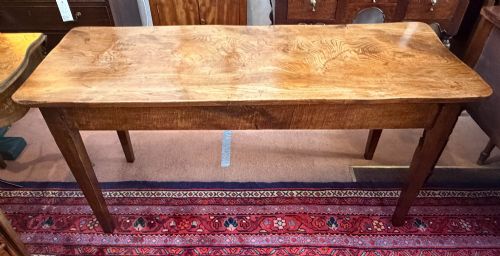
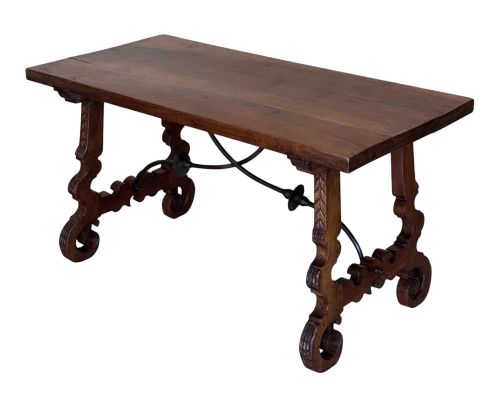
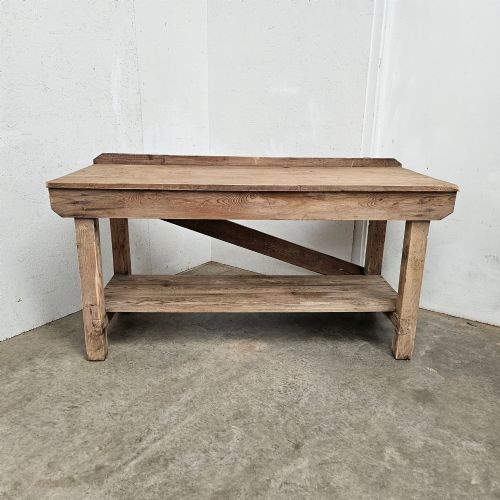
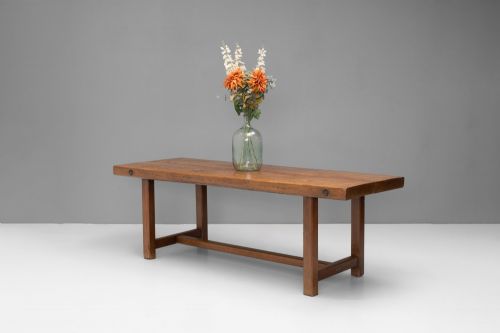
A rustic wooden work table serves as a functional centrepiece drawn from practical environments like kitchens, dairies, and artisan workshops. When you search for this phrase, you encounter heavy timber forms designed primarily for preparation, labour, and daily utility rather than formal display.
The pieces appearing on this page span several centuries, with the nineteenth century heavily represented alongside eighteenth-century and early twentieth-century examples. You will frequently find vernacular forms such as dairy prep tables, farmhouse kitchen tables, and artisans' workbenches.
Regional variations emerge clearly across the inventory, ranging from English pine and oak pieces to French fruitwood and beech designs, as well as Swedish painted pine tables. These items often blur the line between dining surfaces and functional work areas, featuring deep planks, drawers, or lower tiers.
Materials and construction methods
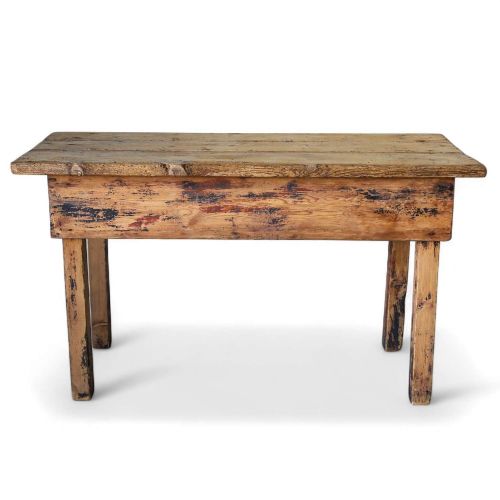
Makers relied principally on sturdy domestic timbers, predominantly pine and oak, supplemented by fruitwood, walnut, beech, and sycamore. These woods were selected for their ability to withstand heavy daily labour, often featuring thick multi-plank tops with cleated ends to maintain stability.
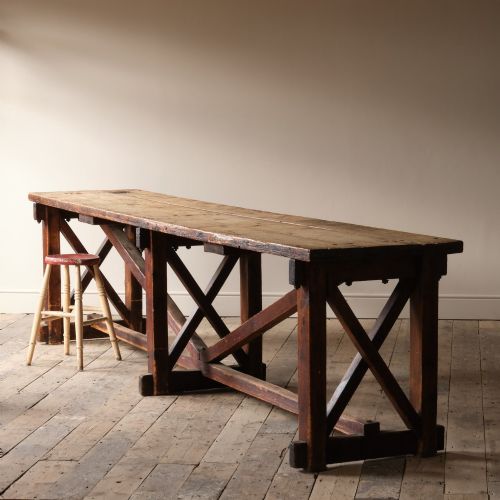
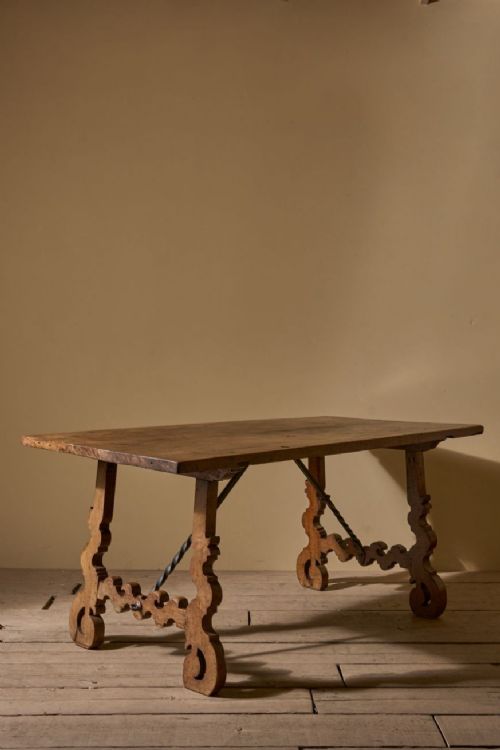
Structural integrity was achieved through traditional joinery, heavy trestle supports, and occasionally wrought iron or X-frame bracing. Surfaces frequently display the marks of their working lives, including later paint, original painted legs, or specialised additions like vices and copper tops.
Rustic Wooden Work Table Retail Price Guide 2026
Typical asking prices for rustic wooden work table among the pieces listed under this phrase on Sellingantiques today, from the lower quarter to the upper quarter. They describe what is for sale here now, not the wider market.
Among the heavy timber and ironwork, an unexpected papier mâché and straw duckling quietly observes the workshop floor.
Judging the character and build
Quality in these utility pieces rests on the integrity of the timber, the honesty of the wear, and the balance of the proportions. A superior example retains its original working character without excessive structural intervention or unsympathetic modern alterations.
The distinction between a standard utility table and a finer piece often lies in regional joinery details, such as well-executed X-frames or thoughtful integration of drawers and lower pot shelves. Original painted finishes, where present, add significant depth to a piece when they show authentic patination.
The Rustic Wooden Work Table Glossary
- Prep table
- A heavy-topped wooden table utilised historically for food preparation, baking, or dairy work. These surfaces often display scars from chopping and kneading.
- Drapers table
- An elongated, narrow table originally used in fabric and textile shops for measuring cloth. They frequently incorporate multiple tiers or deep drawers.
- Cleated ends
- Wooden battens fixed across the grain at the short ends of a table top. This technique prevents the main planks from warping over time.
- X-frame
- A structural base design featuring intersecting diagonal timbers forming an X shape. This configuration provides robust support for heavy working surfaces.
- Potting table
- A utilitarian wooden table used in garden sheds or glasshouses for potting plants. They frequently include lower shelves for storing pots and soil.
Rustic Wooden Work Table: Frequently Asked Questions
How do I clean a wooden work table?
Maintain the surface by wiping it down with a damp cloth and mild soap, avoiding harsh chemical cleaners that strip the historic finish.
Feed dry timber occasionally with a suitable natural wax to preserve the texture without creating an artificial gloss.
Can I use a work table for dining?
These tables adapt exceptionally well to modern dining spaces, offering generous proportions and sturdy construction suited for family meals.
Verify the knee clearance beneath the aprons and drawers before placing chairs around the piece.
What is the difference between a prep table and a kitchen table?
Prep tables were historically built for specific labour-intensive tasks like bread making or butchery, resulting in thicker tops and specialised lower tiers.
Standard kitchen tables generally focus on seating and dining rather than heavy-duty utility work.
How do I date a rustic wooden table?
Examine the tool marks, timber shrinkage, and joinery methods visible beneath the top and along the frame.
Compare the wood species and regional style markers against known periods like the eighteenth or nineteenth century.