


Nineteenth Century Farmhouse Table
A nineteenth century farmhouse table brings honest utility to a room, offering sturdy timber surfaces shaped by generations of daily domestic life.
Nineteenth Century Farmhouse Table
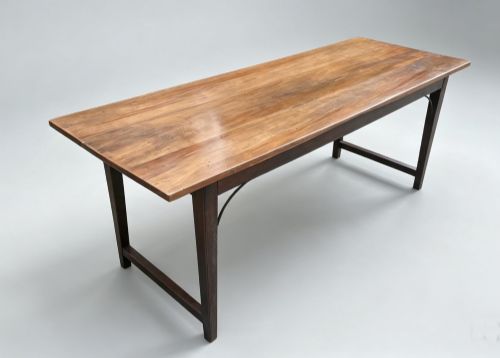
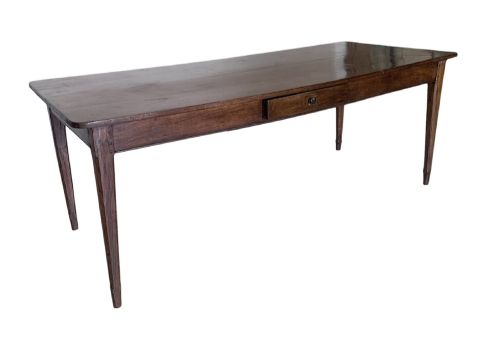
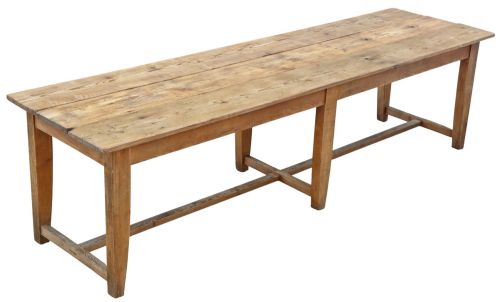
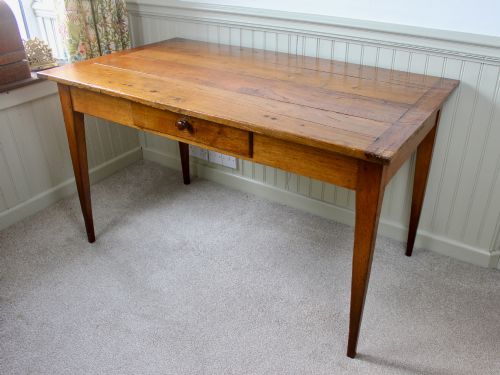
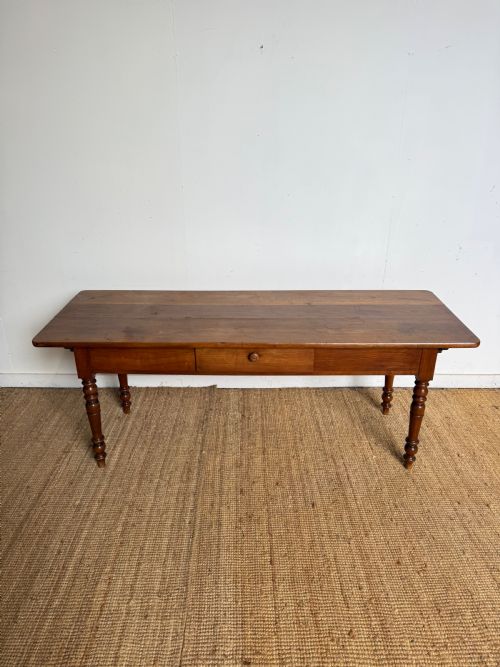
When you search for a nineteenth century farmhouse table, you are looking for a robust surface built for domestic work and daily meals. These pieces span dining tables, kitchen tables, refectory forms, console tables, and even smaller painted coffee tables.
The evidence shows forms ranging from large oak refectory tables down to smaller painted pine kitchen tables and D-end examples. Each bears the marks of its regional workshop and period, whether built around 1850, 1860, 1880, or into the early twentieth century.
How they were made
Makers constructed these tables from solid regional timbers including pine, oak, fruitwood, cherrywood, and elm. Surfaces were joined to support heavy daily use in kitchens and dining rooms.
Metal and wrought iron elements occasionally appeared in structural fixings and fittings. Many examples also carry layers of traditional paint, such as Swedish Falu paint or original English painted finishes.
Materials recorded across the inventory include pine, oak, fruitwood, cherrywood, elm, metal, and wrought iron.
What varies in quality
Quality rests in the selection of timber and the integrity of the original construction. Dense hardwoods like oak and cherrywood provide greater durability than softer pine boards.
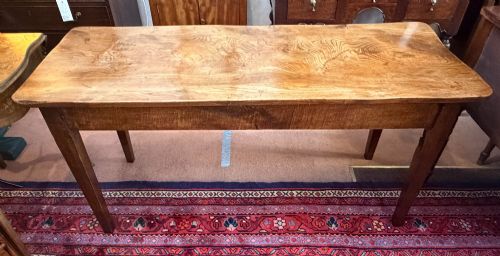
The degree of original surface preservation also distinguishes pieces at different ends of the range. Tables retaining untouched patination, original painted finishes, or burr elm grain carry distinct character.
The Nineteenth Century Farmhouse Table Glossary
- Refectory table
- A long narrow dining table traditionally used for communal meals. These forms often feature stretcher bases for added stability.
- Falu paint
- A traditional deep red or dark paint originating in Sweden, used extensively on timber surfaces for preservation.
- D-end table
- A table with semicircular ends that can stand alone or combine with leaves. This form appears in nineteenth century French examples.
- Burr elm
- A timber growth showing swirling grain patterns prized by makers. It yields rich visual movement on tabletops.
- Provincial
- A designation for items made outside metropolitan centres. These pieces reflect local materials and regional vernacular design.
Nineteenth Century Farmhouse Table: Frequently Asked Questions
Where were these tables used?
These tables served primarily in kitchens, farmhouses, and dining rooms for food preparation and communal family meals.
Over time, many transitioned into general living spaces and studies as versatile working surfaces.
How do I care for the timber?
Keep the wood away from direct heat sources and sudden humidity changes to prevent splitting or warping.
Feed the surface occasionally with natural wax to maintain the patina and protect the grain.
Are painted finishes original?
Many tables retain early or original painted surfaces, such as traditional Falu paint or historic English pigments.
Examining the wear patterns and underlying layers helps determine the age of the paint.
How do I tell regional styles apart?
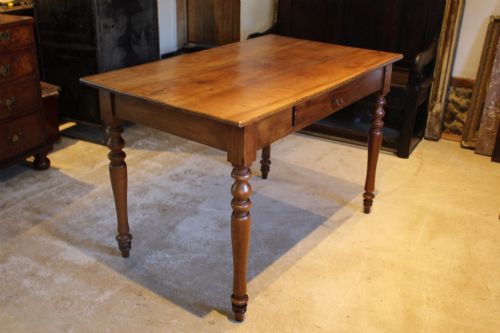
French provincial and country tables often utilise cherrywood or fruitwood with softer lines and stretcher details.
English and Scandinavian examples frequently employ oak, pine, or elm with simpler, heavier framing.