
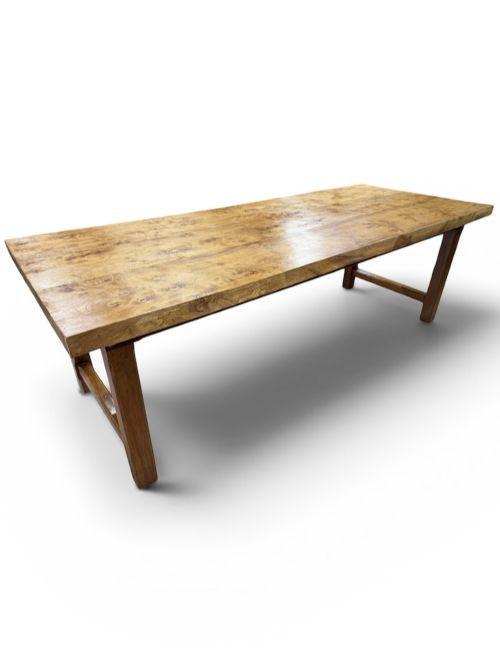
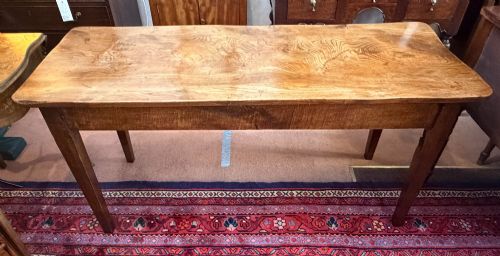
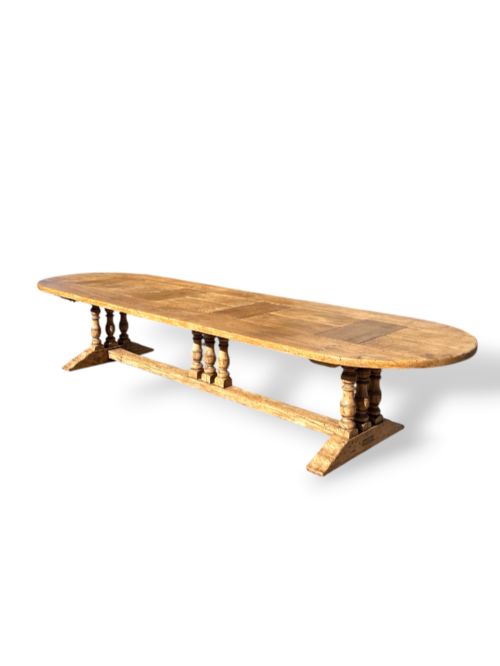
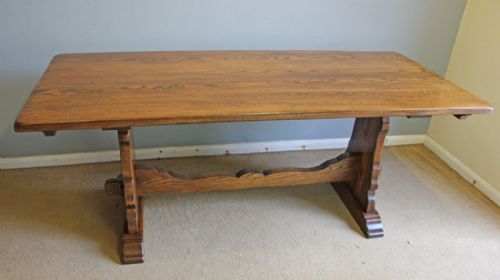
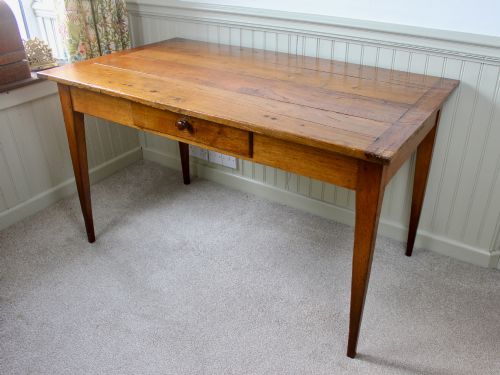
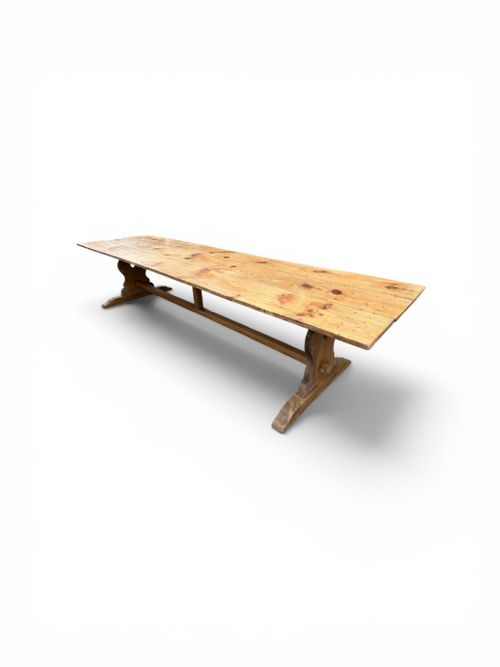


Honey Oak Farmhouse Table
A honey oak farmhouse table brings substantial timber and practical character to a room, offering the surface area needed for daily meals and gatherings.
Honey Oak Farmhouse Table
A honey oak farmhouse table provides a robust dining surface rooted in utilitarian design traditions. Buyers seeking a honey oak farmhouse table encounter pieces originating from the nineteenth and early twentieth centuries, spanning periods from eighteen seventy to nineteen thirty.
Origins stretch across British and continental workshops, with significant representation from French makers working in oak, timber, elm, fruitwood, and pine. These tables serve as the functional heart of a kitchen or dining room, built to endure heavy daily use.
How they were made
Construction relies on solid hardwoods and softwoods, predominantly oak alongside pine, elm, timber, and fruitwood. Carpenters joined heavy planks to form expansive table tops capable of supporting demanding domestic tasks.
Frames utilise traditional joinery methods to anchor thick legs and stretchers, ensuring the structural stability required for large refectory and kitchen tables. Timbers display the natural grain patterns and surface textures developed through period woodworking techniques.
Listings feature dining tables spanning the nineteenth and early twentieth centuries, constructed from oak, pine, elm, timber, and fruitwood.
What varies in quality
The calibre of a table depends on the selection of the timber and the integrity of the original construction. Thick oak plank tops and substantial underframes demonstrate superior structural ambition compared to lighter builds.
Proportion and scale distinguish individual pieces, particularly in larger refectory formats and tables featuring specialised additions like bread slides. The harmony between the top boards and the supporting frame dictates the visual weight of the furniture.
The Honey Oak Farmhouse Table Glossary
- Refectory table
- A long dining table traditionally used in monastic dining halls and later adapted for domestic kitchens. These tables are characterised by their elongated proportions and supportive underframe stretchers.
- Bread slide
- A pull-out wooden shelf integrated beneath the table top historically used for cooling loaves or preparing food. This practical feature appears on specific nineteenth-century French kitchen tables.
- Plank top
- A table surface constructed from multiple individual boards joined lengthwise. This method allowed makers to create wide surfaces from available timber.
- Fruitwood
- A dense wood harvested from fruit-bearing trees such as cherry or pear, utilised by period makers for furniture construction. It offers a distinct grain and warm tone.
- Stretcher
- A horizontal wooden bar connecting the legs of a table to provide lateral support and stability. They often sit close to the floor on larger refectory designs.
Honey Oak Farmhouse Table: Frequently Asked Questions
What is a refectory table?
A refectory table is a long, narrow dining table originally designed for communal dining in monasteries. Over time, the form transitioned into domestic kitchens and dining rooms.
These pieces prioritise length and sturdy construction, often featuring strong stretcher bases to support large gatherings and daily meal preparation.
How do I date an oak table?
Dating an oak table involves examining the tool marks, construction methods, and timber characteristics visible across the piece. Nineteenth and early twentieth-century examples display specific hand-finished details.
Hardware, joint construction, and natural wear patterns accumulated over decades help place a table within periods spanning from eighteen seventy to nineteen thirty.
What is a bread slide?
A bread slide is a secondary pull-out shelf built directly into the framework beneath the main table top. Historically, this surface provided extra space for slicing bread or cooling baked goods.
Today, it functions as a charming and practical indicator of traditional kitchen table design, particularly on French provincial examples.
Where were these tables made?
These tables originate from various European workshops, with a strong representation of French provincial and country pieces. Makers utilised locally sourced regional woods.
Makers worked with oak, elm, fruitwood, and pine to construct durable furniture intended for heavy domestic use in farmhouses and large kitchens.