


Rustic Baluster Leg Table
A rustic baluster leg table brings genuine warmth to a room through sturdy timbers and time-worn character.
Rustic Baluster Leg Table
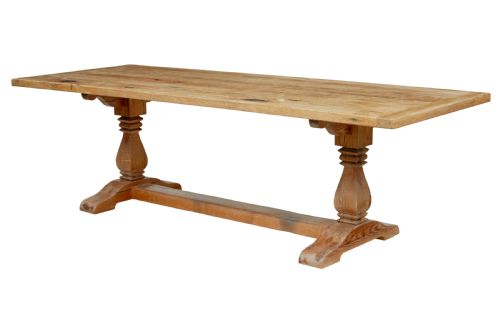
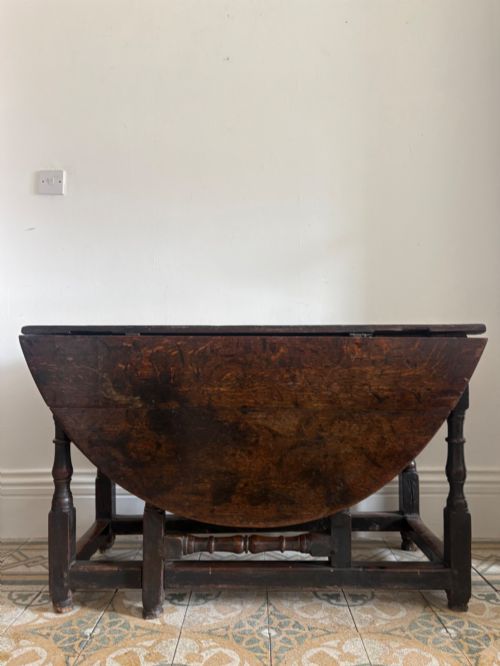
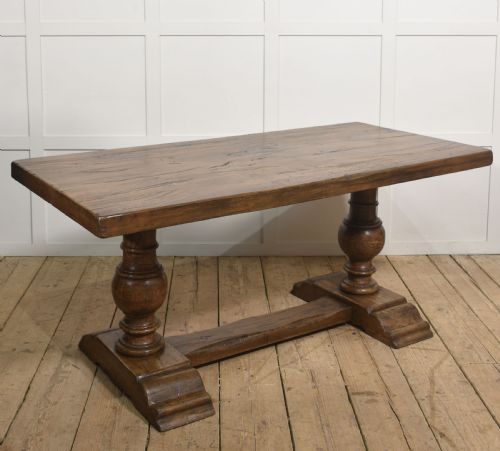
A rustic baluster leg table combines robust structural forms with turned support legs, originating across centuries of domestic and farmhouse design. These pieces serve primarily as dining tables, refectory tables, gateleg tables, and occasional coffee tables.
The versions you are most likely to meet on this page span the seventeenth century, the nineteenth century, and the early twentieth century. They draw upon English country house, French provincial, and rustic farmhouse traditions.
Makers fashioned these utilitarian surfaces in generous proportions, frequently accommodating large gatherings of people. Their utility remains central, whether configured as plank top gateleg designs or long refectory formats.
How they were made
Carpenters utilised solid oak, pine, and scrubbed or bleached oak timbers to build these substantial frames. Iron hardware occasionally reinforces the wooden joints and supports.
Turned baluster posts form the structural legs, paired with thick plank tops and trestle supports. Surfaces display the natural grain of the wood, often left unpainted or stripped to a pale finish.
What varies in quality
The integrity of the timber dictates the distinction between standard and superior examples, with dense solid oak commanding greater presence than softer pine. Older pieces from the seventeenth and eighteenth centuries show different patination compared to later twentieth-century interpretations.
Proportion and scale separate ordinary tables from exceptional ones, particularly in large three-meter formats and monastery dining tables. The execution of the turned baluster legs and the joining of plank tops reveal the underlying skill of the original carpentry.
The Rustic Baluster Leg Table Glossary
- Baluster leg
- A vertical architectural support turned on a lathe with a convex profile, commonly used to hold up heavy table tops. This form provides structural stability while adding decorative weight to the piece.
- Refectory table
- A long dining table traditionally used in communal dining halls and large kitchens. These items feature elongated timber tops supported by sturdy legs or trestles.
- Gateleg table
- A drop-leaf table featuring hinged flaps supported by legs that swing out like a gate. This construction allows the table to expand or contract depending on space requirements.
- Plank top
- A table surface constructed from wide boards of solid timber joined edge to edge. This method creates a durable and utilitarian workspace.
- Bleached oak
- Oak timber treated to lighten its natural dark tone, resulting in a pale, scrubbed appearance. This finish became popular in various nineteenth and twentieth-century design movements.
Rustic Baluster Leg Table: Frequently Asked Questions
Where should I place a rustic baluster leg table?
These pieces suit large kitchens, dining rooms, and open living spaces where their generous scale can be fully appreciated. Their sturdy construction handles daily dining and gathering with ease.
Ensure you measure your room carefully, leaving ample space around the table for chairs and movement, particularly with larger three-meter formats.
How do I care for an oak or pine table top?
Wipe surfaces clean with a damp cloth and avoid harsh chemical cleaners that strip the natural patination of the wood. Use coasters and mats to protect against moisture and heat.
Unfinished, scrubbed, or bleached oak benefits from occasional light waxing if the timber begins to dry out, though many owners prefer to let the surface age naturally.
How do I tell seventeenth-century tables from twentieth-century ones?
Early seventeenth-century examples display hand-cut joinery, pegged joints, and timber patinated by centuries of use. Tool marks and the specific turning style of the baluster legs offer clues to the period.
Twentieth-century pieces often utilise similar traditional forms and materials like solid oak or pine, but lack the deep wear and oxidisation found on antique furniture from the seventeen-hundreds.