



Black Wooden Coffee Table
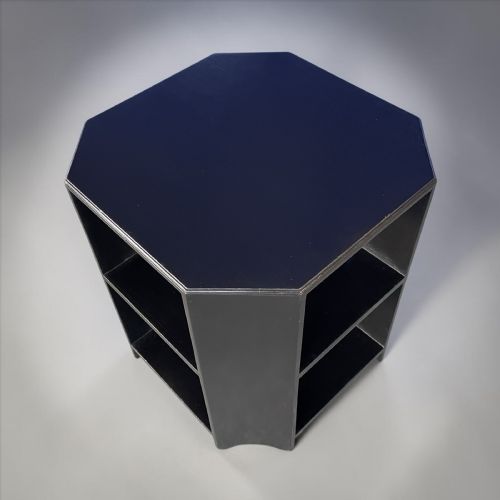
A black wooden coffee table brings dark, grounding character to a room, offering practical surface space with distinct historical presence.
Black Wooden Coffee Table
When you search for a black wooden coffee table, you encounter a diverse mix of forms that span the nineteenth century through the early twentieth century. Many pieces begin life as side tables, occasional tables, or trunks before finding a new role in modern living rooms as low centre tables.
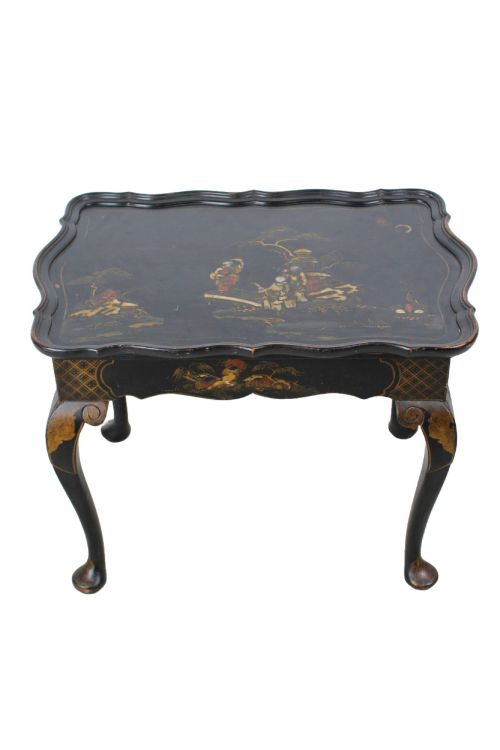
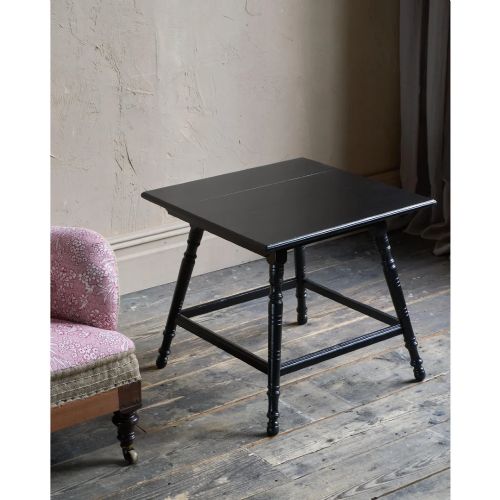
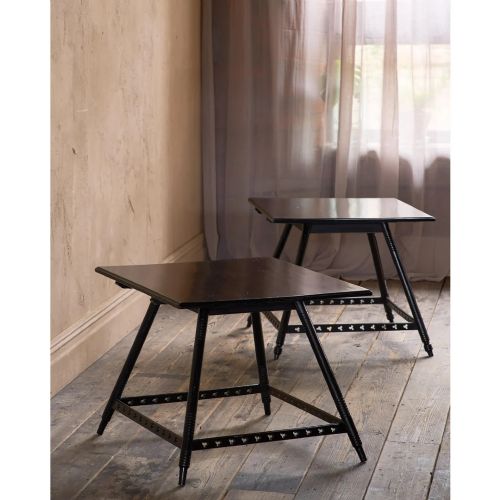
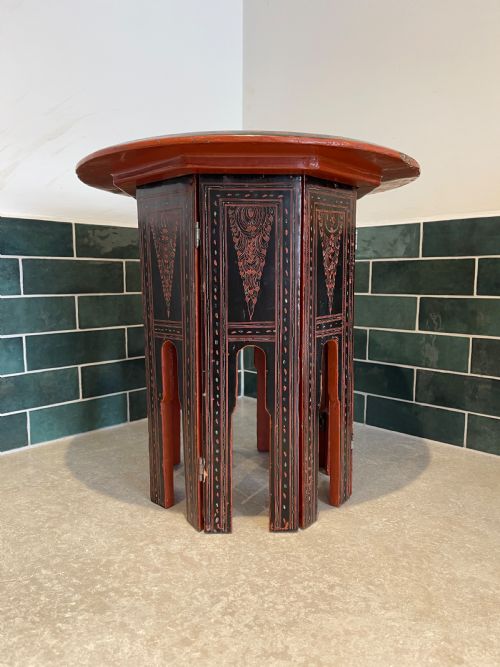
The selection on this page relies heavily on ebonised timber, dark hardwoods, and lacquered surfaces. Styles range from Edwardian Chinoiserie and Aesthetic Movement Japonisme to Art Deco and early twentieth century utility designs.
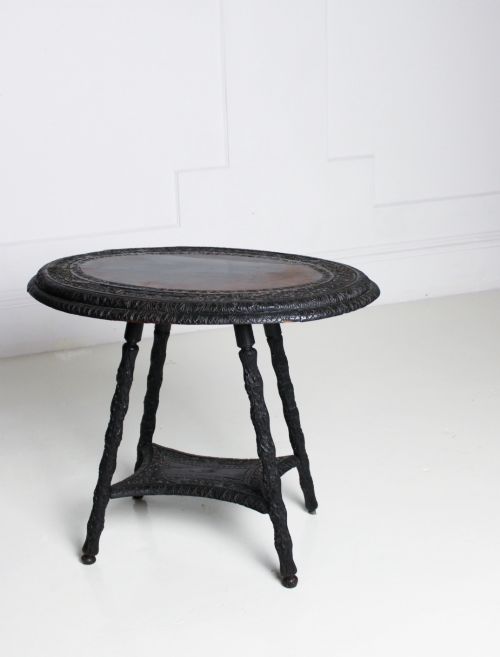
You are most likely to meet ebonised nineteenth-century tables and various Asian-influenced occasional pieces adapted for coffee table heights. These dark wooden forms bring rich texture and historical depth to contemporary interiors.
How they were made
Maker's workshops achieved deep dark finishes through ebonising, a chemical treatment that darkens timber to resemble ebony, or by applying layers of black lacquer. These surfaces often appear alongside hand-carved details, gilt highlights, and applied lacquer panels.
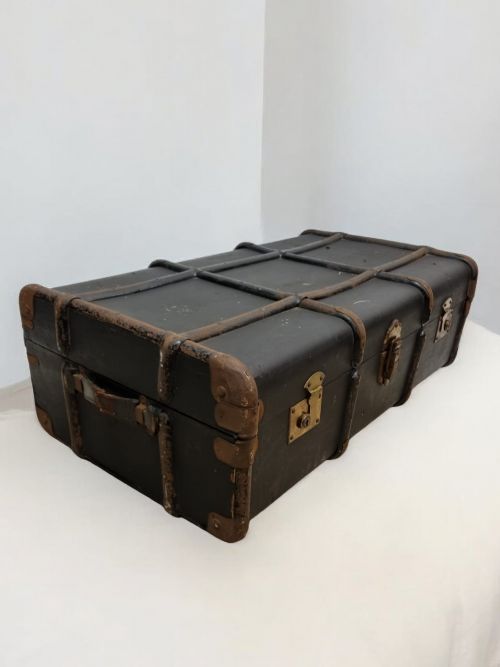
Structural timbers include various hardwoods and pine, sometimes paired with metal hardware such as hinges and brackets found on travel trunks. Joinery relies on traditional carpentry methods appropriate to each period, from Victorian framing to Art Deco construction.
Travel trunks with original hardware invite you to imagine the steamships and railways they once rode.
What varies in quality
Quality rests in the depth of the finish, the crispness of any hand-carved ornamentation, and the integrity of the underlying timber. Superior examples exhibit finely polished ebonising or intact lacquer work that shows careful hand application rather than flat modern paint.
The distinction between ordinary and exceptional pieces also lies in the hardware and decorative flourishes, such as original gilt accents, intricate Anglo-Indian or Chinoiserie motifs, and authentic period fittings on trunk conversions.
Hindley and Sons·Liberty of London
The Black Wooden Coffee Table Glossary
- Ebonised wood
- Timber treated to imitate ebony through staining, painting, or chemical processes. This finish was especially popular during the nineteenth century for furniture influenced by Asian design.
- Chinoiserie
- European interpretation of Chinese and East Asian artistic traditions. It frequently appears on Edwardian tables featuring hand-painted motifs on dark backgrounds.
- Japonisme
- The influence of Japanese art on Western makers during the late nineteenth century. This aesthetic informed many ebonised and carved occasional tables of the period.
- Anglo-Indian
- Furniture made in India by local craftsmen for British colonial residents or export. These pieces often feature dense carving and exotic hardwoods.
- Occasional table
- A small, light table designed for specific, intermittent use rather than permanent placement. Many such tables serve effectively as low coffee tables today.
Black Wooden Coffee Table: Frequently Asked Questions
Are these tables original coffee tables?
Most low tables from the nineteenth and early twentieth centuries began life as side tables, occasional tables, or travel trunks rather than purpose-built coffee tables. Lower heights are frequently achieved through careful adaptation or by selecting naturally low forms.
This heritage means you gain a piece with genuine age and distinct proportions, bringing far more character to a sitting room than a standard modern production.
How do I care for ebonised wood?
Ebonised and lacquered surfaces require gentle maintenance to preserve their deep dark sheen. Dust regularly with a soft, dry cloth and avoid harsh chemical cleaners or excessive moisture.
Using coasters and placemats protects the dark finish from heat and liquid rings, ensuring the wood ages gracefully in daily use.
How do I identify an Aesthetic Movement piece?
Aesthetic Movement tables often feature ebonised wood, clean structural lines, and decoration inspired by Japanese art. They prioritise visual harmony and craftsmanship over heavy Victorian ornamentation.
Look for subtle gilt details, stylized botanical carvings, and influences from the Japonisme craze that swept British design in the late nineteenth century.
Can travel trunks work as coffee tables?
Travel trunks and metal-bound chests make exceptional coffee tables by providing generous hidden storage alongside a sturdy surface. Vintage pieces often retain original hardware, locks, and handles that tell a story of past journeys.
Ensure the lid is stable and flat enough to hold books and cups safely while serving as a bold focal point in the room.