
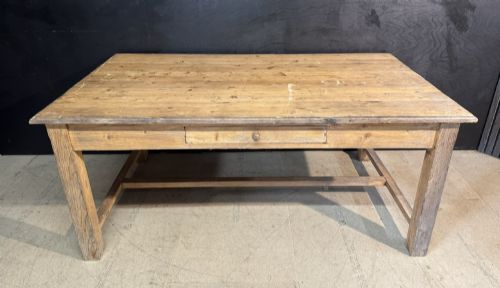
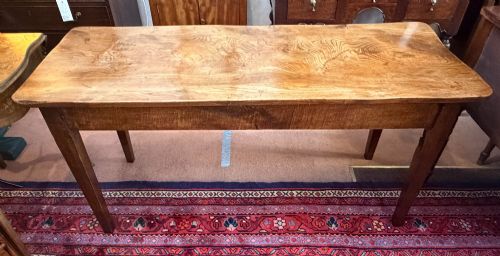
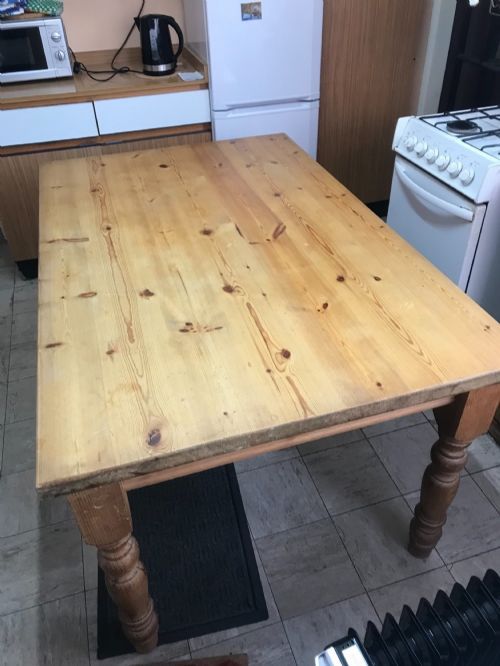
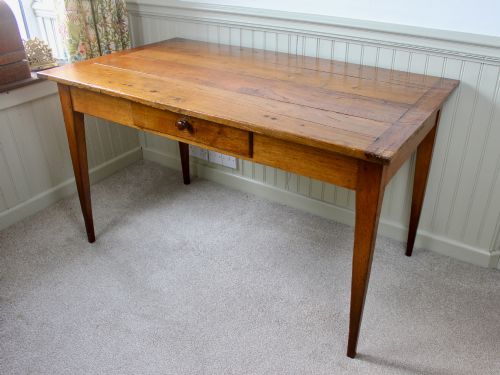
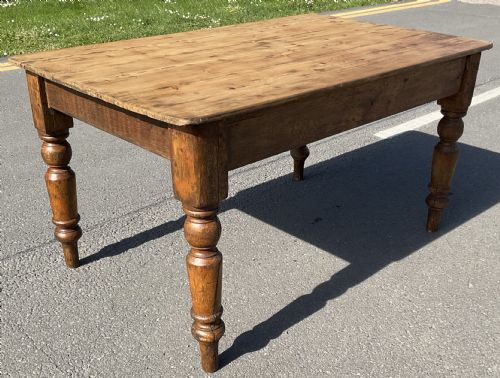


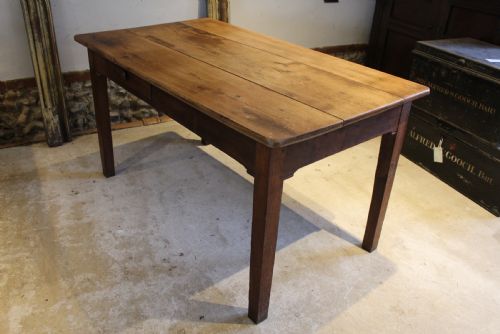


Plank Top Prep Table
These plank top prep table pieces are honest, hard-working utilitarian surfaces built for daily service in kitchens and workrooms.
Plank Top Prep Table
A plank top prep table represents the quintessential working surface of the domestic interior, designed primarily for utility in the kitchen, scullery, or tavern. When you search for a plank top prep table, you enter a category dominated by nineteenth century and Victorian utilitarian furniture built for service.
The versions most frequently encountered on this page are constructed from pine, often featuring sturdy scrubbed tops and occasional drawers. Alongside pine, examples emerge in oak, elm, and fruitwood, spanning styles from English country and rustic farmhouse to French provincial.
These tables function equally well as kitchen dining tables or central work islands in modern interiors. Their robust proportions and honest construction reflect decades of practical use in domestic and commercial settings.
Construction and materials
Makers relied on solid native timbers, chiefly pine, oak, elm, and fruitwood, selecting heavy planks capable of withstanding constant chopping, kneading, and scrubbing. Tops were joined from thick boards, sometimes held with cleated ends to prevent warping, while frames utilised sturdy mortise and tenon joinery.
Surface treatments varied from bare scrubbed timber and polished oak to painted pine and iron framing, as seen on tavern examples. Drawers incorporated straightforward dovetail construction, built to slide smoothly despite seasonal timber movement.
Pine and oak dominate the timber selection across these listings, accompanied by elm and fruitwood.
Judging quality and character
Quality in these utilitarian pieces rests in the integrity of the timber and the honesty of the wear. Superior examples display deep patination built through generations of scrubbing and daily labour, retaining thick original tops rather than heavily sanded boards.
Structural honesty sets the finer pieces apart from later imitations. Original pegging, sound framing, and well-proportioned stretchers indicate a table built by a competent carpenter for heavy work rather than superficial display.
The Plank Top Prep Table Glossary
- Plank top
- A table surface constructed from multiple wide boards joined edge to edge. This method provided a stable and expansive working area for kitchens.
- Cleated ends
- Wooden battens fixed across the short ends of a plank top. They help keep the main boards flat and prevent splitting over time.
- Scrubbed top
- A wooden surface washed repeatedly with water and abrasive stone or brushes. This treatment leaves the grain raised and pale, free from varnishes.
- Refectory
- A long, narrow table style traditionally used for communal dining. These pieces feature elongated proportions supported by sturdy stretchers.
- Fruitwood
- Timber harvested from fruit-bearing trees such as pear or cherry. It yields a dense, smooth grain with warm colour tones.
Plank Top Prep Table: Frequently Asked Questions
What is a plank top prep table?
A plank top prep table is a heavy utility table constructed with a top made from joined wooden boards. These tables were traditionally built for food preparation, baking, and general work in kitchens, farmhouses, and taverns.
Today, they are repurposed as kitchen islands, dining tables, and work surfaces. Their robust build and simple lines make them popular for modern rustic interiors.
How do I date a pine farmhouse table?
Dating a pine table involves examining the construction methods, tool marks, and timber characteristics. Hand-sawn boards, square-headed nails, and pegged joints usually indicate nineteenth century or earlier manufacture.
Wear patterns also tell a story, as genuine kitchen use creates a soft, undulating surface that mechanical sanding cannot replicate. Examining the drawer construction can reveal hand-cut dovetails typical of older periods.
Are these tables suitable for everyday dining?
These tables are exceptionally well-suited for everyday family dining and kitchen use. Their original purpose demanded strength, so the frames are typically sturdy enough to handle daily activity.
Many examples offer generous seating capacity along their lengths. The robust timber surfaces easily accommodate daily meals, children's homework, and food preparation.
How do I care for a scrubbed timber top?
Caring for a bare wood or scrubbed timber top involves regular cleaning with mild soap and warm water. Avoid harsh chemical cleaners that can strip the natural oils and dry out the old pine or oak.
Applying a light coat of beeswax periodically helps protect the wood from spills and stains. Promptly wiping up moisture prevents water rings from forming on the aged surface.