
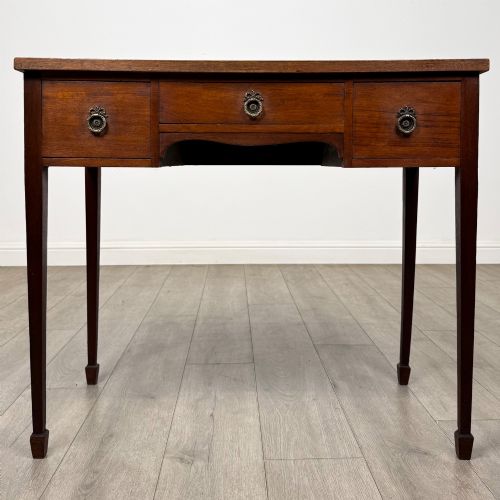
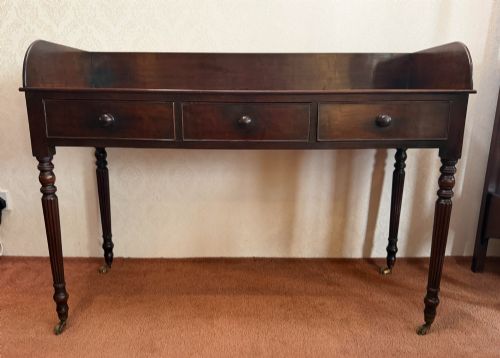
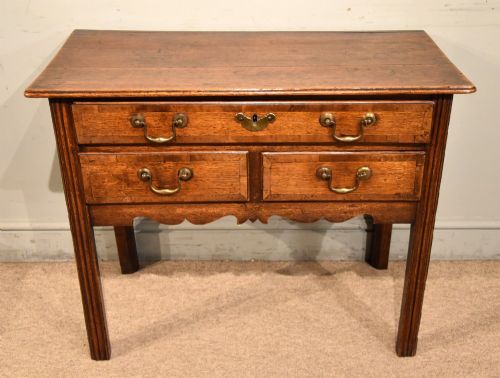
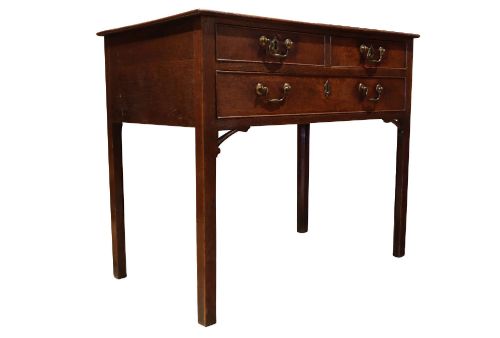
Three Drawer Desk
A three drawer desk offers a compact surface for correspondence, connecting straightforward utility with centuries of traditional cabinet making.
Three Drawer Desk
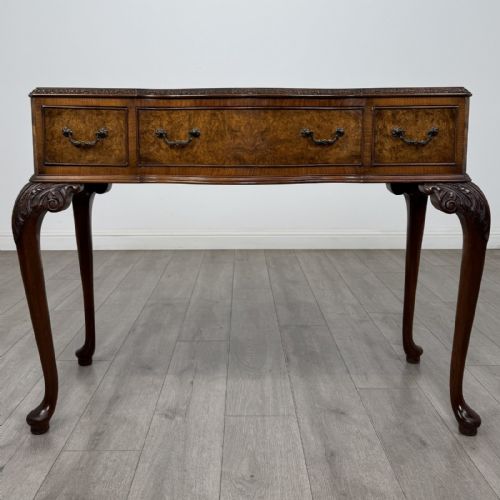
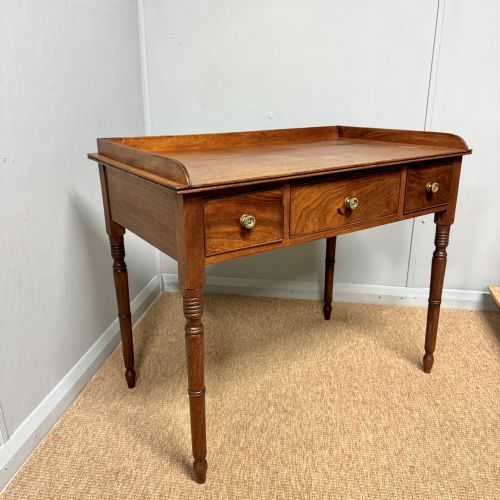
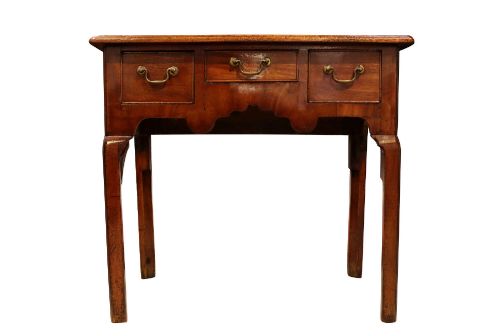
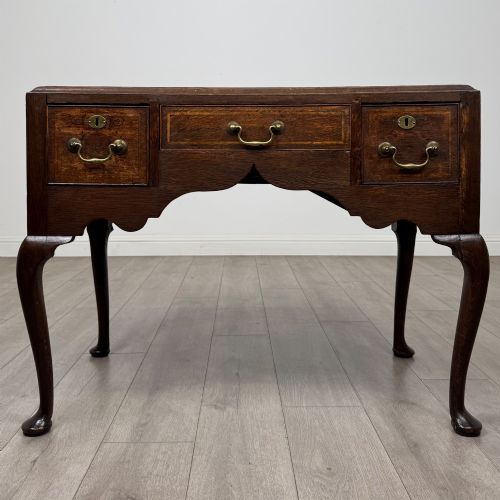
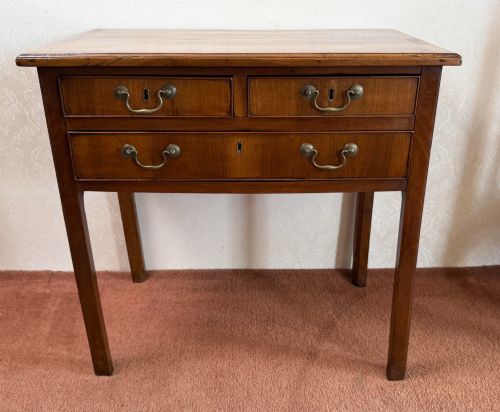
A three drawer desk covers a practical form that bridges writing tables, dressing tables, and lowboys equipped with tripartite drawer arrangements. These pieces appear frequently in eighteenth-century and nineteenth-century formats, drawing on Georgian, Victorian, and Edwardian periods.
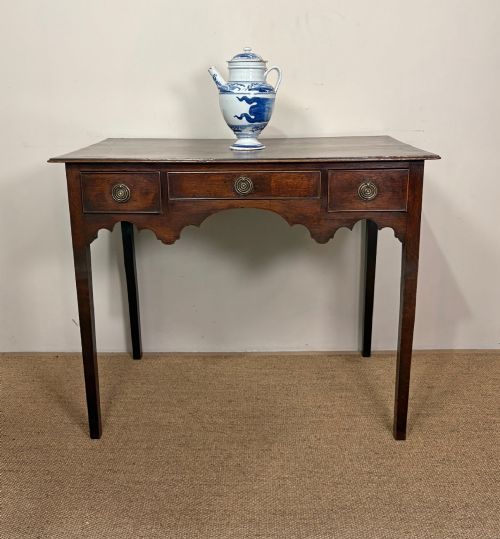
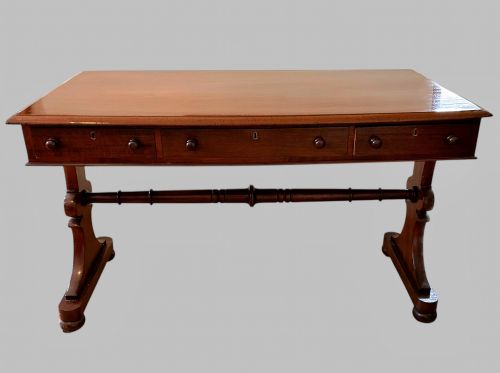
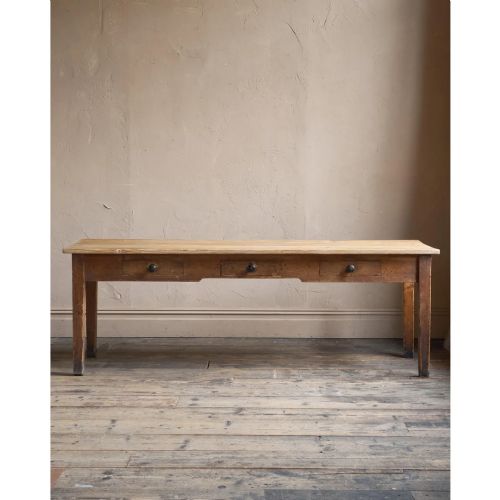
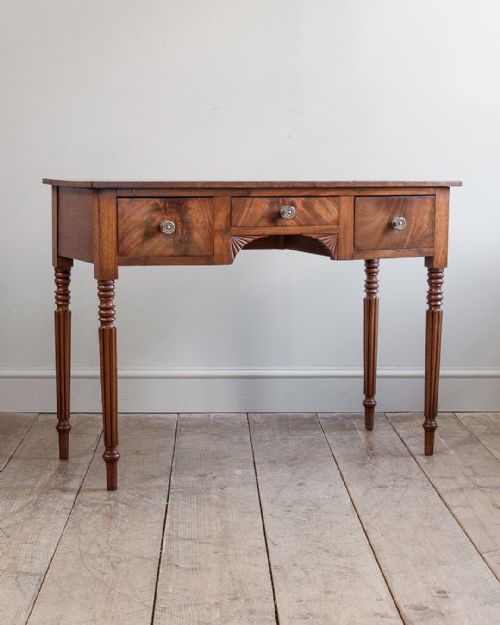
The layout typically combines a central workspace with flanking drawers or a row of three drawers beneath the top surface. Buyers encounter frequent examples fashioned as lowboys or side tables that double as writing surfaces, alongside dedicated library and pedestal desks.
How they were made
Cabinet makers relied on sturdy timbers including mahogany, oak, and walnut, often finished with brass hardware, leather writing inserts, and lacquer. Regional workshops utilised native fruitwood, elm, and pine for simpler utilitarian tables.
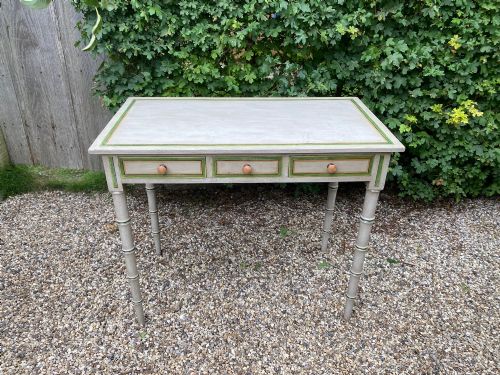
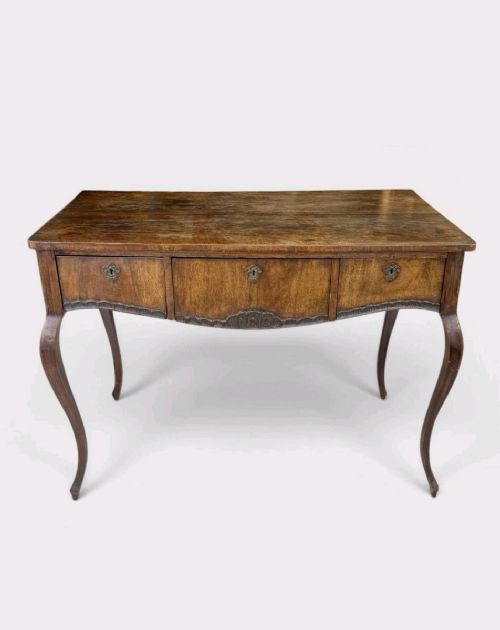
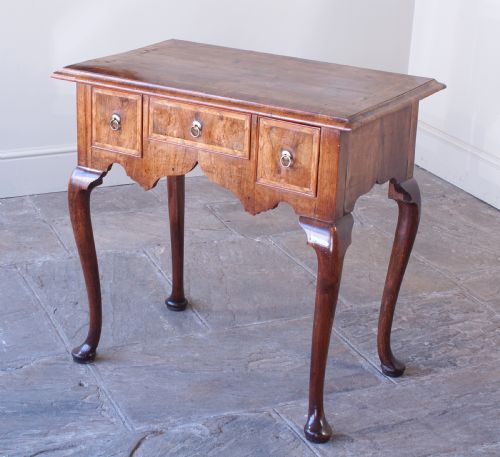
Construction techniques balanced structural support with decorative detail, incorporating inlaid banding, painted finishes like faux bamboo, and carved cabriole legs. Drawers were assembled to fit beneath the main surface, sometimes accompanied by galleries or tray tops.
Listings span the eighteenth century to the twentieth century, with materials ranging from mahogany and oak to lacquer and brass.
What varies in quality
Distinctions in quality arise from the selection of timber and the precision of the cabinet work, such as feather banding or crossbanding on walnut surfaces. Superior examples demonstrate careful integration of brass mounts, tooled leather inserts, and well-proportioned legs.
The choice of primary wood dictates character, ranging from figured mahogany and burr walnut to simpler structural oak or pine. Original hardware and undisturbed surface patination elevate individual pieces above later reproductions or heavily altered items.
Dollond
The Three Drawer Desk Glossary
- Lowboy
- A small chopping or dressing table featuring one or more rows of drawers, commonly raised on tall cabriole or straight legs. These versatile tables date primarily from the eighteenth century in oak and walnut.
- Bureau Plat
- A formal freestanding writing table with drawers situated beneath the top, popular in continental and revival styles. They often incorporate leather panels and gilt bronze mounts.
- Crossbanding
- A decorative border technique where thin strips of veneer are laid across the grain of the primary wood. This method frames drawer fronts and table tops on refined period furniture.
- Cabriole leg
- A furniture leg that curves outward at the knee and tapers inward toward the foot, mimicking animal limbs. It defines much eighteenth-century seating and table design.
- Gallery
- A raised wooden or brass rail running along the edge of a table top to prevent items from rolling off. They appear frequently on serving tables and refined writing desks.
Three Drawer Desk: Frequently Asked Questions
What is a three drawer desk?
A three drawer desk is a compact writing surface featuring a trio of drawers, often taking the form of an antique lowboy, side table, or pedestal desk. These pieces provide surface workspace paired with discreet storage.
Originating across the Georgian, Victorian, and Edwardian eras, they were utilised in bedrooms, libraries, and parlours for correspondence and daily administration.
How do I date an old desk?
Dating relies on examining the timber species, construction methods, and stylistic cues present in the legs and handles. Eighteenth-century versions often use oak or walnut with hand-cut dovetails.
Later Victorian and Edwardian examples frequently employ mahogany or pine with machine-finished elements and different hardware styles that reflect changing domestic fashions.
Were these used for writing?
Many items listed as lowboys or side tables functioned interchangeably for writing, dressing, and serving. The addition of tooled leather tops on specific models indicates a primary purpose for correspondence.
Their proportions allowed them to sit comfortably against walls or beside chairs while offering accessible storage within the three drawer layout.
How do I care for wood surfaces?
Maintaining antique timber requires keeping pieces away from direct sunlight and steady heat sources to prevent the wood from drying out or splitting. Gentle cleaning with appropriate wax helps preserve the historic finish.
Leather inserts benefit from occasional conditioning to keep the surface supple without dampening the surrounding wood framework.